
 Birthday
 Hydrangeas
A two-tone bouquet is one of the easiest ways to make a gift look striking. Two colours are easier to balance than a busy mix, and the contrast or soft transition between them reads at a glance. Here are the pairs that work best, how to distribute colours in a bouquet and which flowers suit the job.
Why two colours work
When a bouquet has many shades, the eye has nothing to hold on to. Two colours tell a clear story: contrast (red and white), complement (yellow and blue) or a soft transition (pink and cream). Such a bouquet is easier to match to a room and wrapping, and it looks considered even with only a few stems.
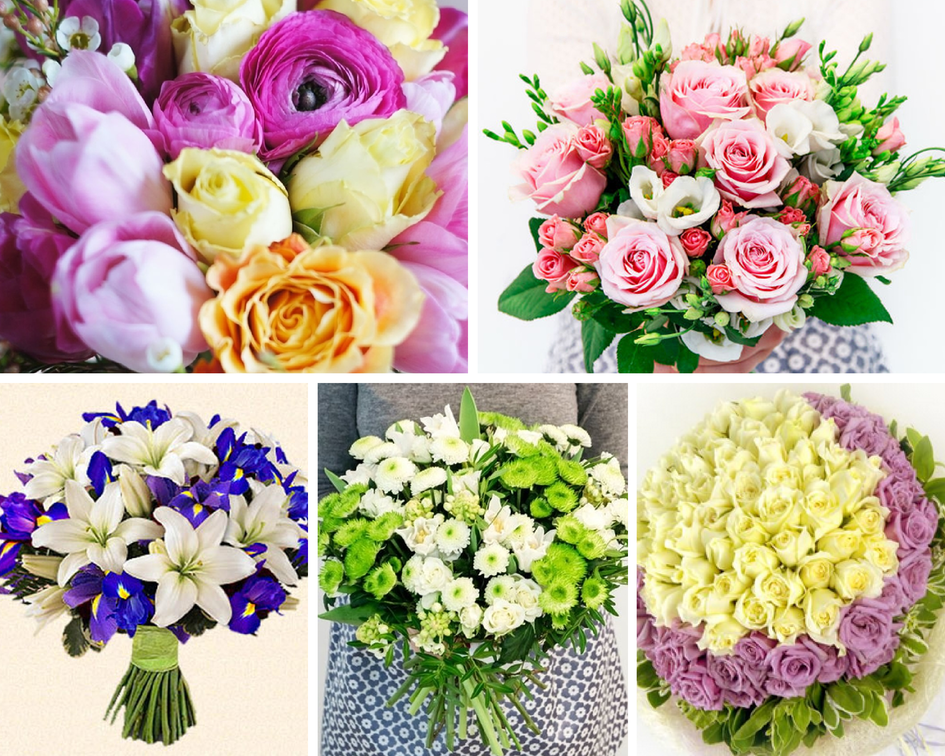
Pairs that always work
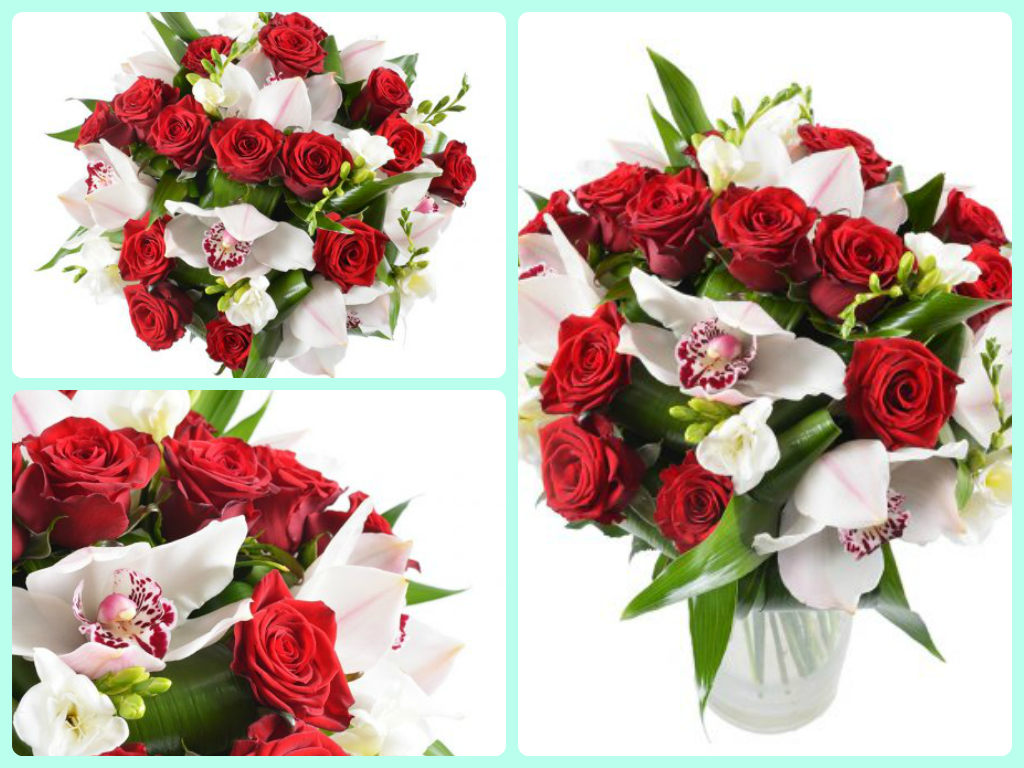
- Red + white — festive classic: roses, carnations, tulips. Right for anniversaries and formal occasions.
- Pink + white — a gentle pair for weddings, a new baby or a gift for Mum.
- Yellow + blue — fresh spring contrast: tulips with irises or muscari, sunflowers with delphinium.
- Purple + yellow — complementary colours for the brightest, most eye-catching look.
- Orange + blue — an energetic summer bouquet for friends and colleagues.
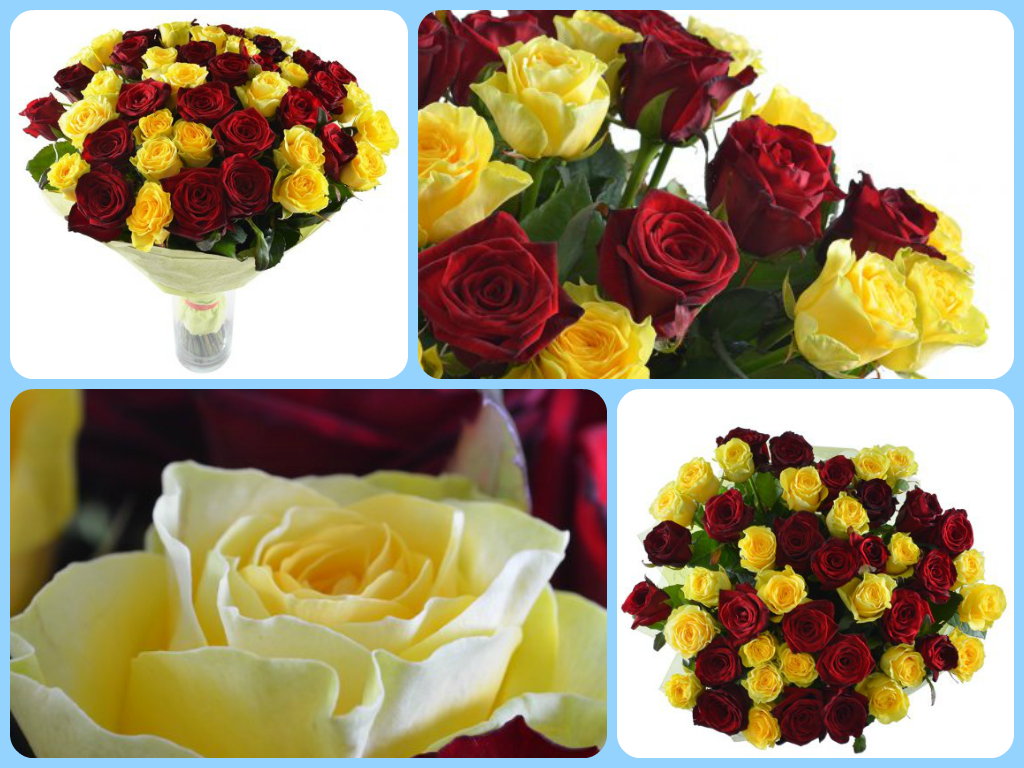
- Burgundy + cream — an elegant autumn pair; swap burgundy for near-black varieties from our article on black flowers.

A little theory: the colour wheel
Florists follow the same rules as designers:
- Complementary colours sit opposite each other on the colour wheel (yellow–purple, orange–blue, red–green) and give the strongest contrast.
- Analogous colours sit side by side (pink–lilac, yellow–orange) and create a soft, harmonious bouquet.
- Light + dark of the same hue (pale pink and raspberry) is a safe choice if you are afraid of getting it wrong.
More ideas in our guide to colour combinations in bouquets.

How to distribute the colours
- 70/30 or 60/40. One colour leads, the other is the accent. An even 50/50 split works too but looks more formal and graphic.
- In groups, not alternating. Flowers of one colour clustered in twos and threes read better than a strict one-by-one pattern.
- Greenery as a neutral. Eucalyptus, pittosporum or ruscus separate the two colours without competing.
- Matching wrapping. Kraft, white or grey paper keeps the pair clean; coloured wrapping can become a "third colour".

Two tones in one flower
Sometimes both colours are already in the flower: edged roses, variegated tulips, picotee carnations, speckled alstroemeria. They look great in a single-variety bouquet — see our selection of two-tone roses.

Who and what occasion
- Colleague — calm pairs: white with green, yellow with white.
- Partner — pink with white, red with cream, burgundy with peach.
- Mum — pastel analogous pairs: peach and cream, lilac and pink.
- Man — blue with white, burgundy with green, clean shapes.
- Wedding — white with one soft accent to match the décor.


FAQ
Can I combine red and pink?
Yes, if the shades differ in intensity (scarlet and powder pink). Two equally bright colours can clash.
What second colour goes with white?
White is neutral and works with anything. Green feels fresh, red festive, blue cool.
Is a two-tone bouquet more expensive?
No — the price depends on the number and type of flowers, not on the number of colours.

View full-size photo
Author: Maria Svitlovir
Graduated from Taras Shevchenko National University of Kyiv, Institute of Biology and Medicine (2001). BSc in Biology, MSc in Horticulture. Writes about plants, works at a garden centre selecting and repotting plants, and contributes to plant reference guides.


