
 Birthday
 Hydrangeas
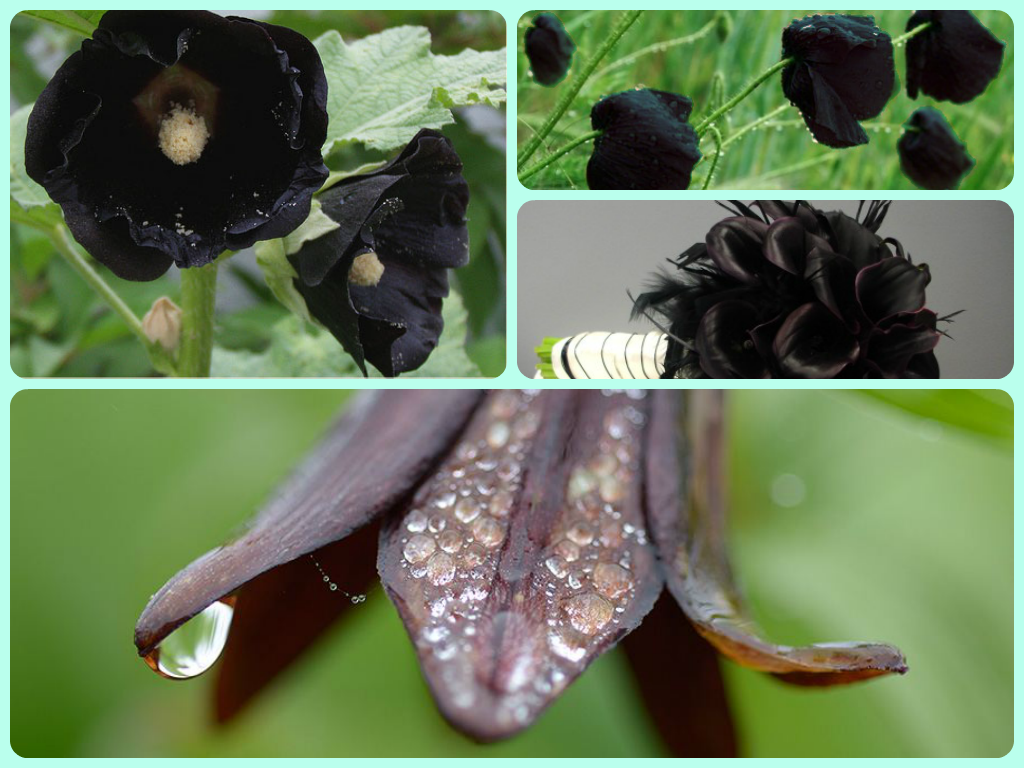
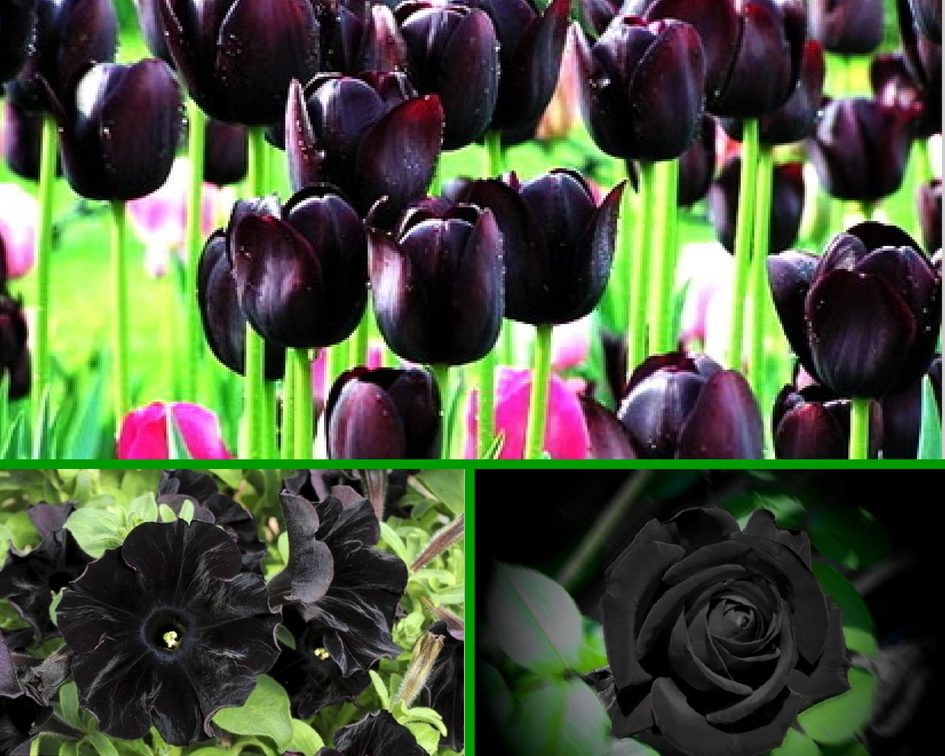
Strictly speaking, black flowers do not exist: plants have no black pigment. What we see as a "black" tulip or calla is a very dark purple or burgundy produced by a high concentration of anthocyanins. Here is where that shade comes from, which near-black flowers exist in nature and in the shops, and how to use them in a bouquet.
Why a flower looks black
Most red, purple and blue flowers get their colour from anthocyanins. When there is a lot of pigment, the petal absorbs almost all visible light and looks black, especially in shade. In sunlight or held against the light, a deep wine, plum or dark blue undertone usually shows through.
- Breeding. Most "black" varieties were created by people, with breeders selecting the darkest plants generation after generation.
- Nature. Near-black flowers also occur in the wild: the black iris (Iris nigricans) of Jordan and the Middle East, for example, or the tropical tacca with its dark "wings".
- Growing conditions. Temperature, light and soil affect colour intensity, so the same variety can be darker or lighter in different places. The best-known example is the Halfeti black rose from Turkey.
Near-black flowers you can find
Tulips
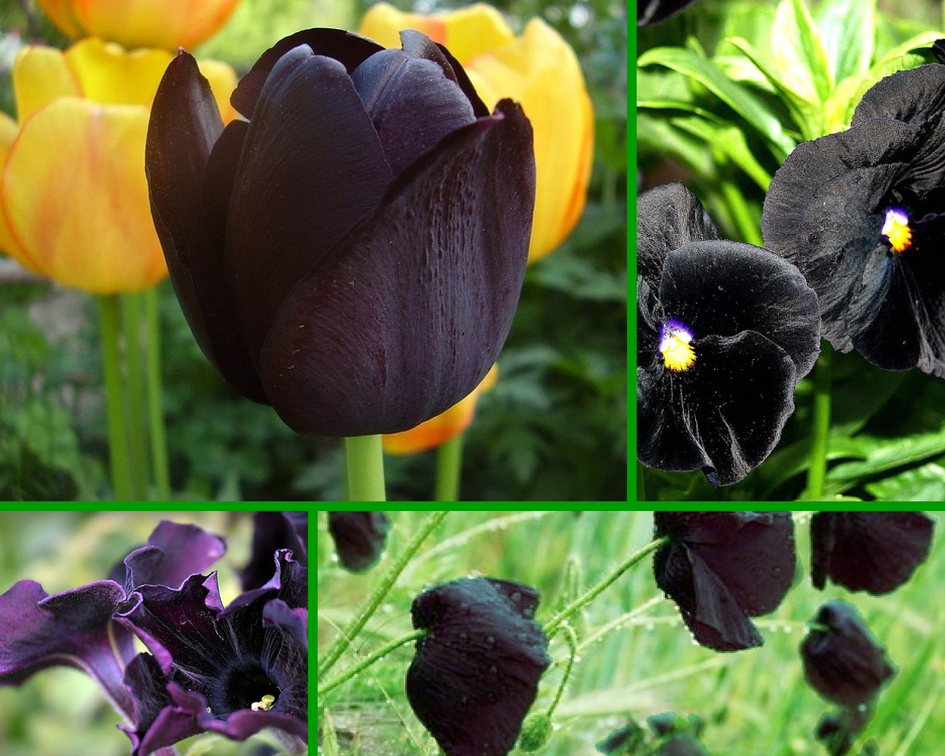
'Queen of Night' has been around since the mid-20th century and is still one of the darkest tulips — deep maroon with a satin sheen. 'Paul Scherer' is another popular choice.
Callas
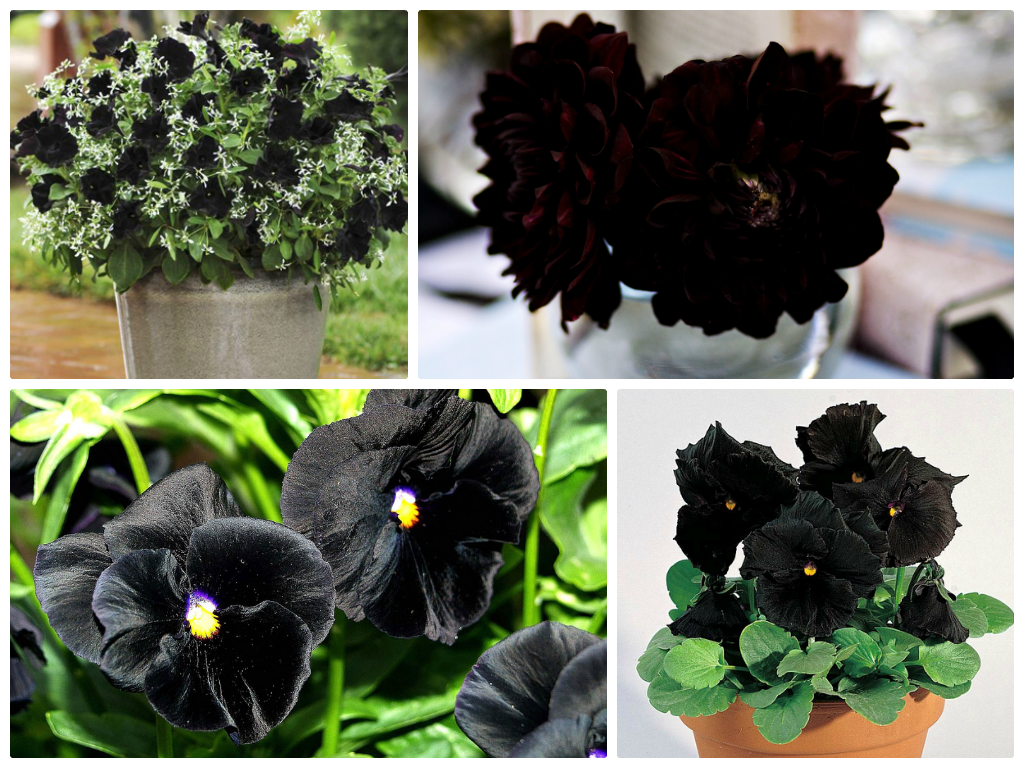
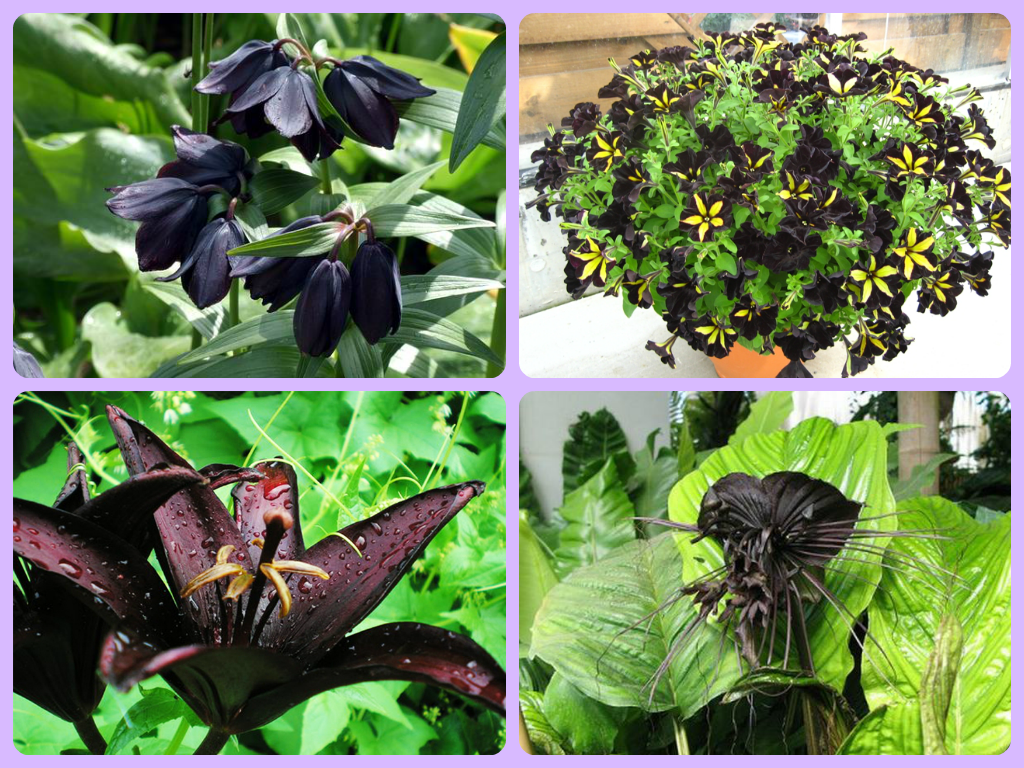
Hybrid callas come in deep burgundy and aubergine shades. They last well as cut flowers and are common in modern bouquets.
Petunias and violas
Petunia 'Black Velvet', launched in the 2010s, was one of the first truly "black" petunias. Violas and pansies also include near-black varieties.
Tacca, the bat flower
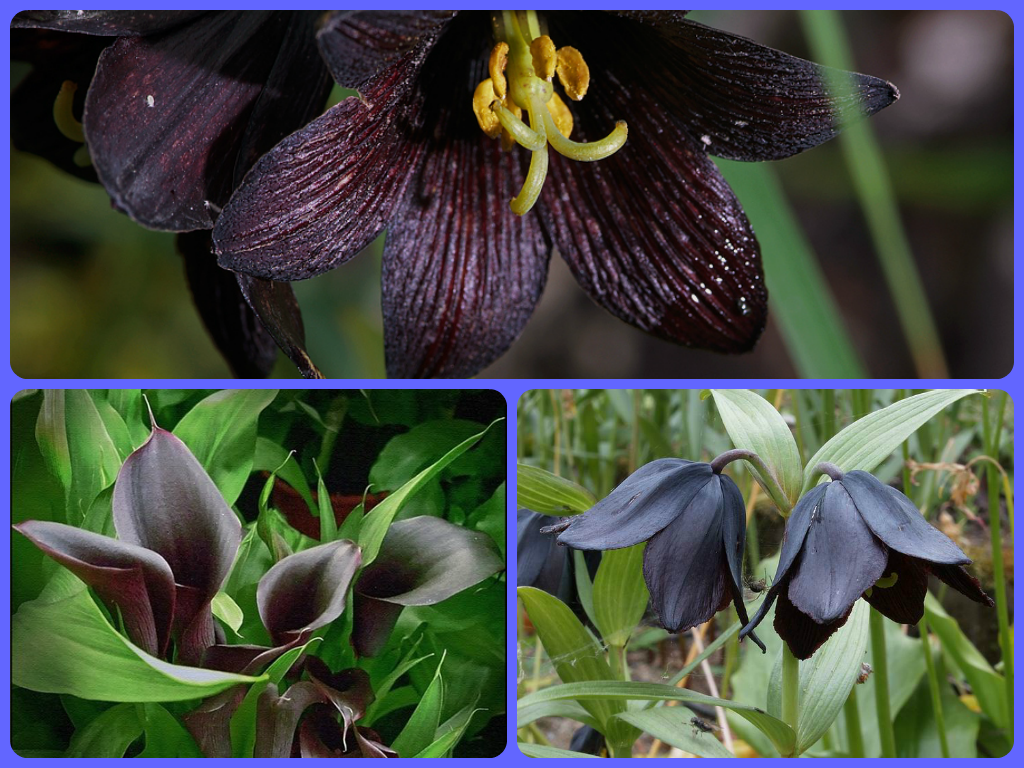
A tropical plant with dark, wing-like bracts and long thread-like "whiskers". In temperate climates it is grown only indoors.
Chocolate cosmos
Cosmos atrosanguineus is a maroon-black flower with a scent reminiscent of chocolate and vanilla. It is considered extinct in the wild in Mexico but survives in cultivation.
Dahlias, hellebores, hollyhocks
Dahlias, hellebores and hollyhocks (Alcea rosea 'Nigra') also have varieties with very dark, almost black flowers.
What dark flowers mean
There is no single "language" of black flowers. In modern floristry dark shades suggest elegance, depth and character rather than mourning. For funeral arrangements in Ukraine white and red flowers are more common, with dark burgundy used as an accent.
- A dark bouquet suits someone who loves the unusual, minimalism or gothic style.
- At "dark romance" weddings, burgundy-black callas and dahlias are paired with white roses and greenery.
- For Halloween and themed parties — dark flowers with orange and copper accents.
How to use near-black flowers in a bouquet
- Contrast. Next to white, cream or peach flowers, dark ones look more striking — see our guides to colour combinations and white roses.
- Tone on tone. Burgundy, wine, plum and near-black together create a deep, velvety bouquet.
- Texture. Dark flowers need light around them: glossy greenery (gaultheria, ruscus) or silvery eucalyptus.
- Proportion. 20–30% dark flowers is usually enough — otherwise the bouquet reads as one dark patch indoors.
.png)
Caring for dark flowers
Care is the same as usual: clean water, recut stems and a cool spot. Dark petals heat up more in the sun, so keep the bouquet in the shade to preserve its rich colour. Dark tulips and callas typically last about a week in a vase.
FAQ
Do black roses exist?
There are no naturally jet-black roses. There are very dark burgundy varieties, and "black" roses sold in shops are usually dyed.
How can I tell a dyed flower?
Dyed flowers usually have uneven colour: the dye collects along the veins and petal edges, and the vase water may turn coloured.
Can I grow black flowers in my garden?
Yes: 'Queen of Night' tulips and dark varieties of dahlia, hellebore, hollyhock and viola are all easy to find for temperate gardens.

View full-size photo
Author: Maria Svitlovir
Graduated from Taras Shevchenko National University of Kyiv, Institute of Biology and Medicine (2001). BSc in Biology, MSc in Horticulture. Writes about plants, works at a garden centre selecting and repotting plants, and contributes to plant reference guides.