
 Birthday
 Hydrangeas
This article was prepared with the support of UFL flower delivery. The iris is stunningly beautiful yet easy to grow, which is why gardeners and florists both love it. It's named after Iris, the Greek goddess of the rainbow, for its huge range of colours. Irises grow in borders, by ponds, in rock gardens and even in pots, and florists value their striking shape. The genus has about 300 species and tens of thousands of registered cultivars.
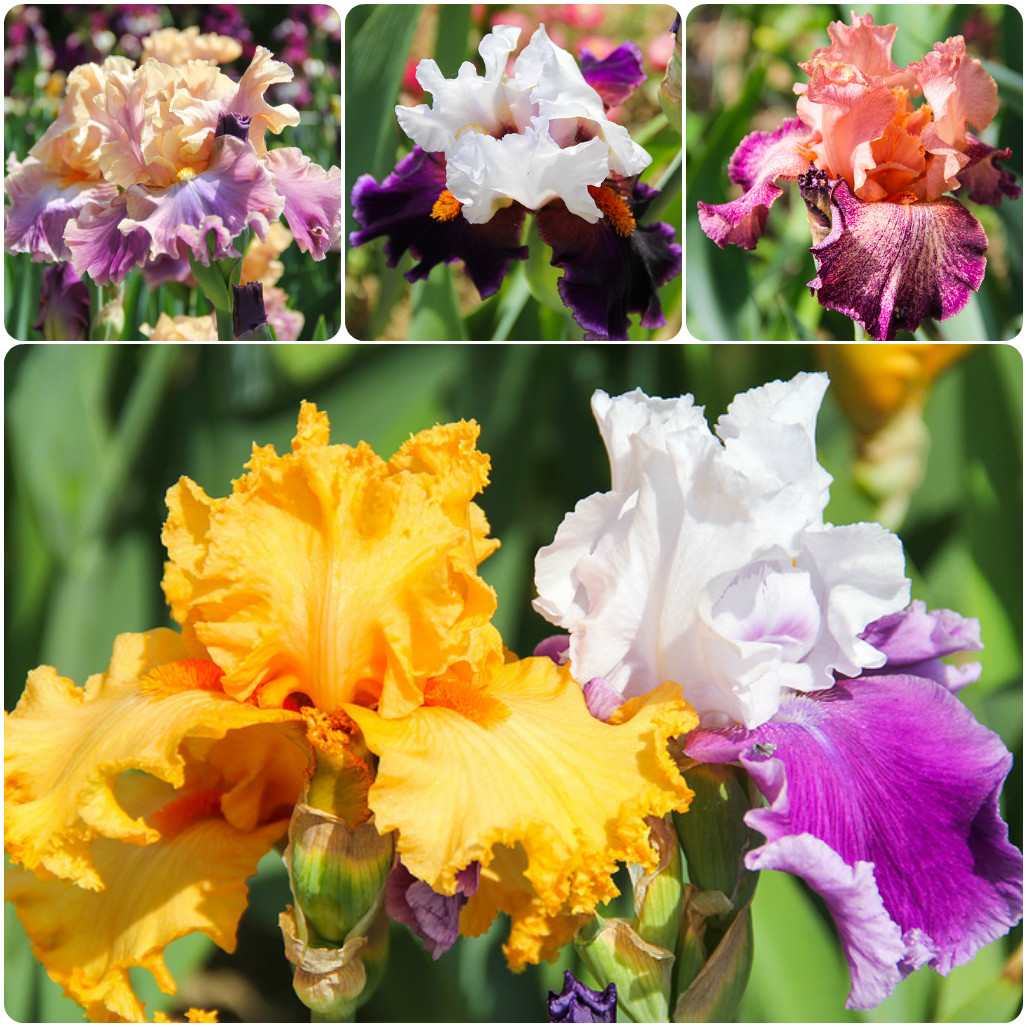
Iris classification
Bearded irises
The largest and most popular group of rhizomatous irises, named for the strip of colourful hairs — the "beard" — on the down-turned outer petals (falls). They're divided into six classes by height:
| Class | Height | Flowering |
|---|---|---|
| Miniature dwarf (MDB) | up to 20 cm | earliest, April |
| Standard dwarf (SDB) | 20–40 cm | late April to May |
| Intermediate (IB) | 40–70 cm | May |
| Border (BB) | 40–70 cm | with the talls |
| Miniature tall (MTB) | 40–70 cm, dainty flowers | with the talls |
| Tall (TB) | over 70 cm | late May to June |
Beardless irises
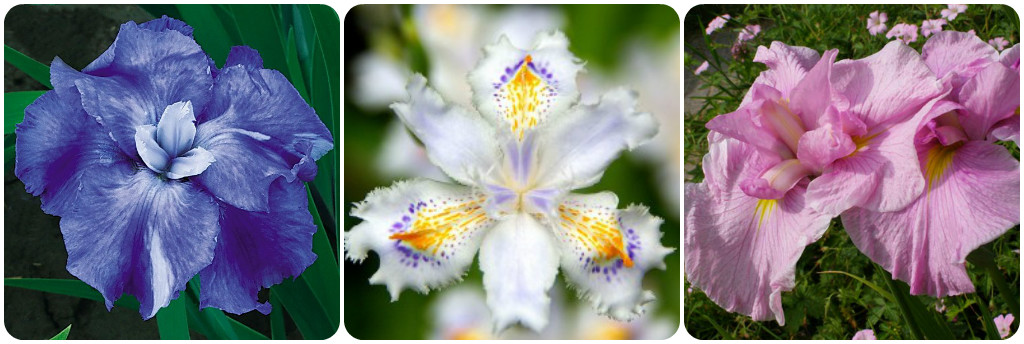
Rhizomatous irises without a beard. Their flowers are usually lighter and more delicate and their leaves narrower. This group includes Siberian, Japanese, spuria, Louisiana and yellow flag irises.
Bulbous irises
They grow from bulbs, bloom early and go dormant in summer. These are reticulata irises, Dutch irises (Xiphium) and Junos. Some botanists treat them as separate genera.
The most interesting species and groups
- Siberian iris is one of the toughest: hardy, happy in moist soil, forming dense clumps of narrow leaves with purple, blue, white or yellow flowers. Ideal for beginners.
- Japanese iris (I. ensata) has large flat flowers up to 20 cm across on stems up to 1 m. It likes acidic, lime-free soil, plenty of water in summer and a dry winter. It flowers later than others, in late June and July.
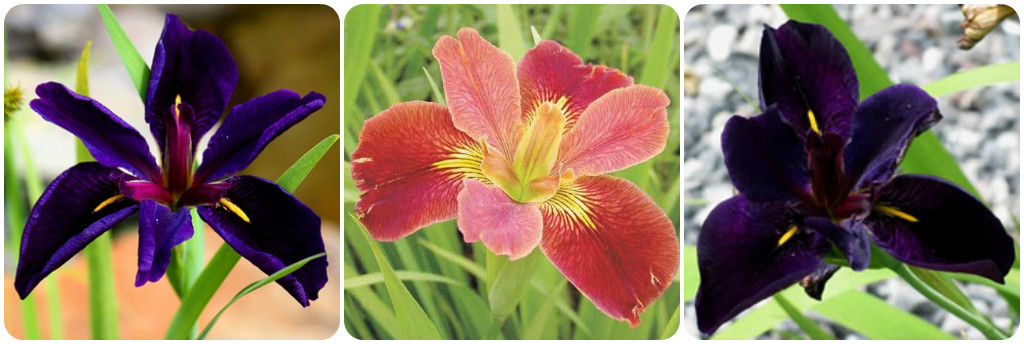
- Louisiana irises love moisture and grow by water or even in shallow water (10–15 cm); they're good for cutting. In our climate they need winter protection.
- Regelia irises come from the mountains of Central Asia and are named after the botanist Eduard Regel. Their flowers have exquisite veining. They need sun, light soil and a dry summer, so they can be fussy in damp gardens.
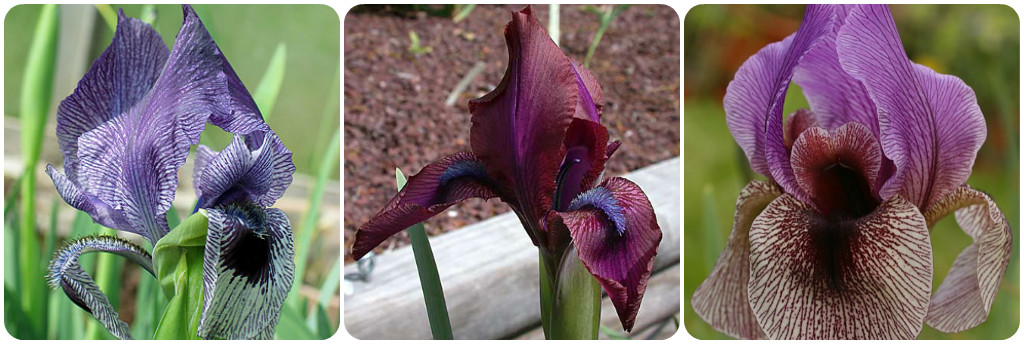
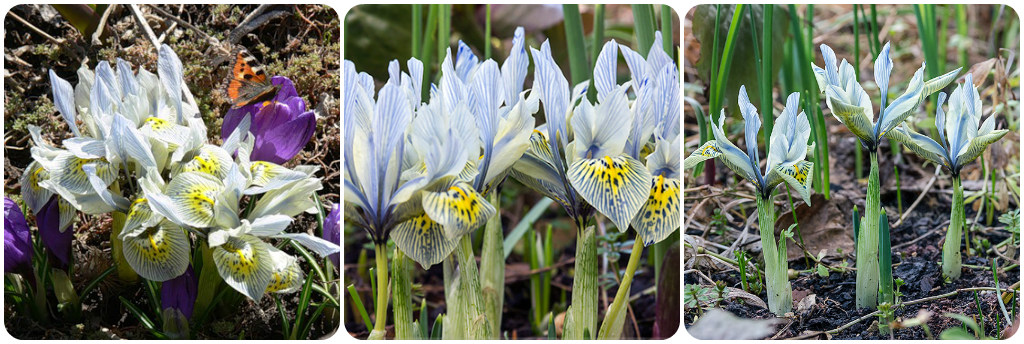
- Iris winogradowii is a miniature yellow reticulata iris with a lovely pattern that flowers in early spring. It likes sun and hates wet soil.
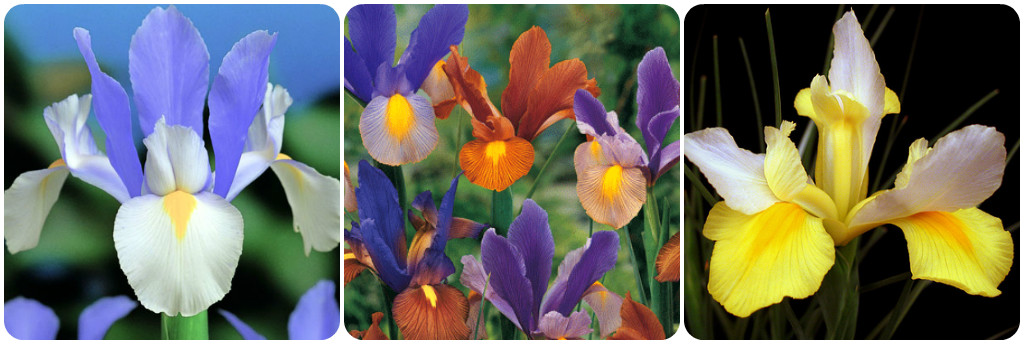
- Dutch iris (Xiphium) is the florists' iris: it's the one most often sold as a cut flower from winter to summer, in blue, purple, yellow and white on straight stems.
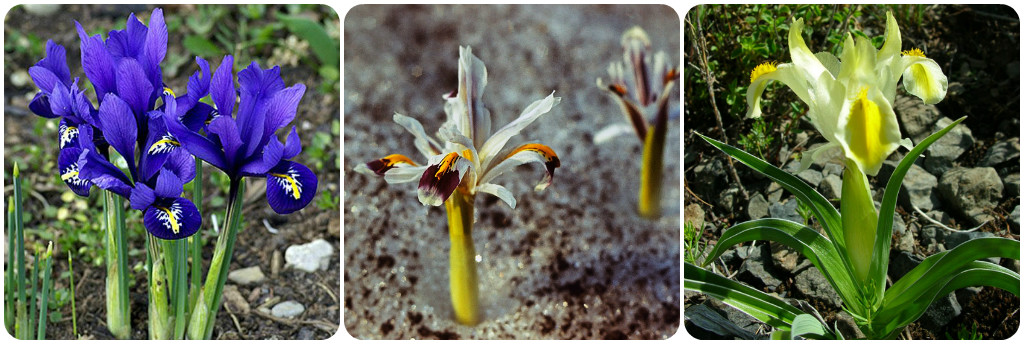
- Juno irises are bulbous irises with fleshy roots and leaves arranged like a corn plant. They flower in spring and like dry summers; breeders are still introducing new varieties.
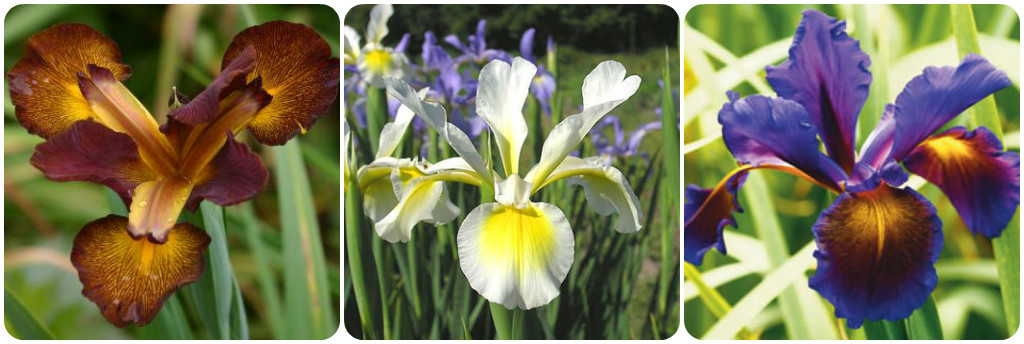
- Spuria irises are tall (up to 1.2 m) rhizomatous irises with elegant, orchid-like flowers. They're drought-tolerant, long-lived and good for cutting.
Choosing and growing irises
- Sun. Most irises flower well only in full sun.
- Soil. Bearded irises need light, free-draining soil; plant the rhizome shallowly so its top stays at the surface. Siberian, Japanese and Louisiana irises need moist soil.
- Watering. Water regularly in spring and during flowering; after flowering bearded irises prefer to be dry.
- Division. Every 3–5 years, 2–4 weeks after flowering, or the clump becomes congested and stops blooming.
- Care. Remove spent flowers and old leaves, and check rhizomes for rot and iris fly.
Irises as a gift
Irises are versatile flowers for a celebration, a birthday, an anniversary or simply to make someone happy, and they suit both women and men. You can order an iris bouquet from UFL with delivery or choose one at our shop at 56a Kostiantynivska Street in Kyiv. Our florists will tell you how to make it last: trim the stems, change the water and remove faded flowers so the buds below can open.
FAQ
How long do irises last in a vase?
Dutch irises last 5–7 days; each flower lives 2–3 days, but new buds keep opening on the stem.
When should irises be divided or moved?
Bearded irises 2–4 weeks after flowering, in July or August; Siberian irises in early spring or late summer.
Can irises be grown in pots?
Yes — dwarf bearded and reticulata irises are best, and Dutch irises can be forced in pots.

View full-size photo
Author: Maria Svitlovir
Graduated from Taras Shevchenko National University of Kyiv, Institute of Biology and Medicine (2001). BSc in Biology, MSc in Horticulture. Writes about plants, works at a garden centre selecting and repotting plants, and contributes to plant reference guides.


