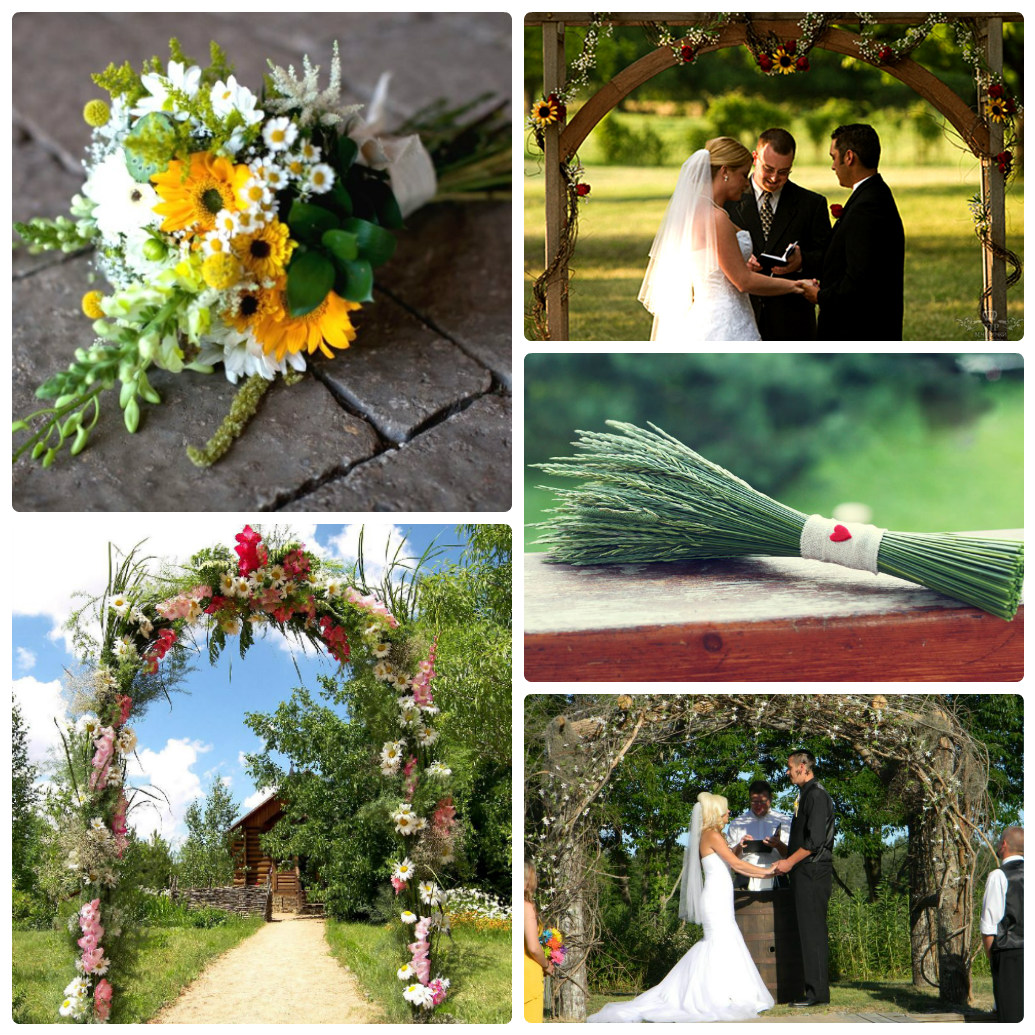
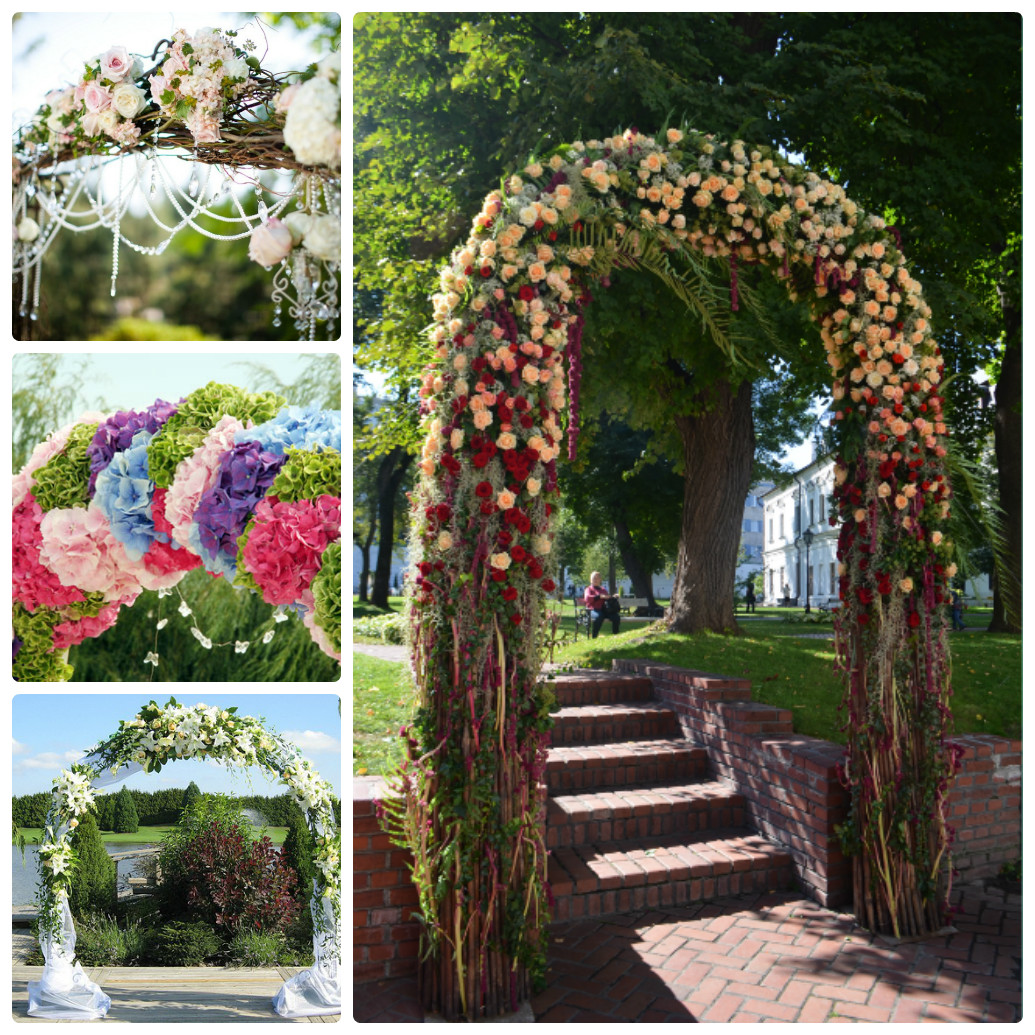
A wedding arch of fresh flowers is the centrepiece of an outdoor ceremony and the main backdrop for photos. Its shape, flowers and fixing shape the look of the whole day. Here are the main types of arches, which flowers survive several hours outdoors, how to save money and how to reuse the arch after the ceremony.
Flowers for wedding decor can be ordered together with a bridal bouquet and flowers for newlyweds.
Choose the shape to suit the wedding style and venue: curved and asymmetric arches work almost anywhere, round and hexagonal ones suit modern, minimalist weddings, and triangular ones suit boho and rustic styles. Frames are usually metal or wood and can be hired from decorators.
The arch colours echo the wedding palette and the bridal bouquet. To choose a palette, see our guide to wedding colours.
The arch can be moved indoors as a backdrop for the head table or a photo spot, and its flowers reused for table decor. Agree this with your decorator in advance so the move is quick.
In floral foam, all day; in strong heat delicate flowers (hydrangeas, peonies) fade within a few hours.
Yes — hire a frame and decorate it with greenery garlands and small corner arrangements.
Indoors, any shape; roses, lisianthus, conifer, cotton and dried flowers work well.

Author: Maria Svitlovir
Graduated from Taras Shevchenko National University of Kyiv, Institute of Biology and Medicine (2001). BSc in Biology, MSc in Horticulture. Writes about plants, works at a garden centre selecting and repotting plants, and contributes to plant reference guides.
© Kyiv 2026 UFL Flower Shop

Trademark UFL №191476 is used under license of the rights holder.
All rights reserved. Any use of materials without a link to the site is prohibited.

 Birthday
 Hydrangeas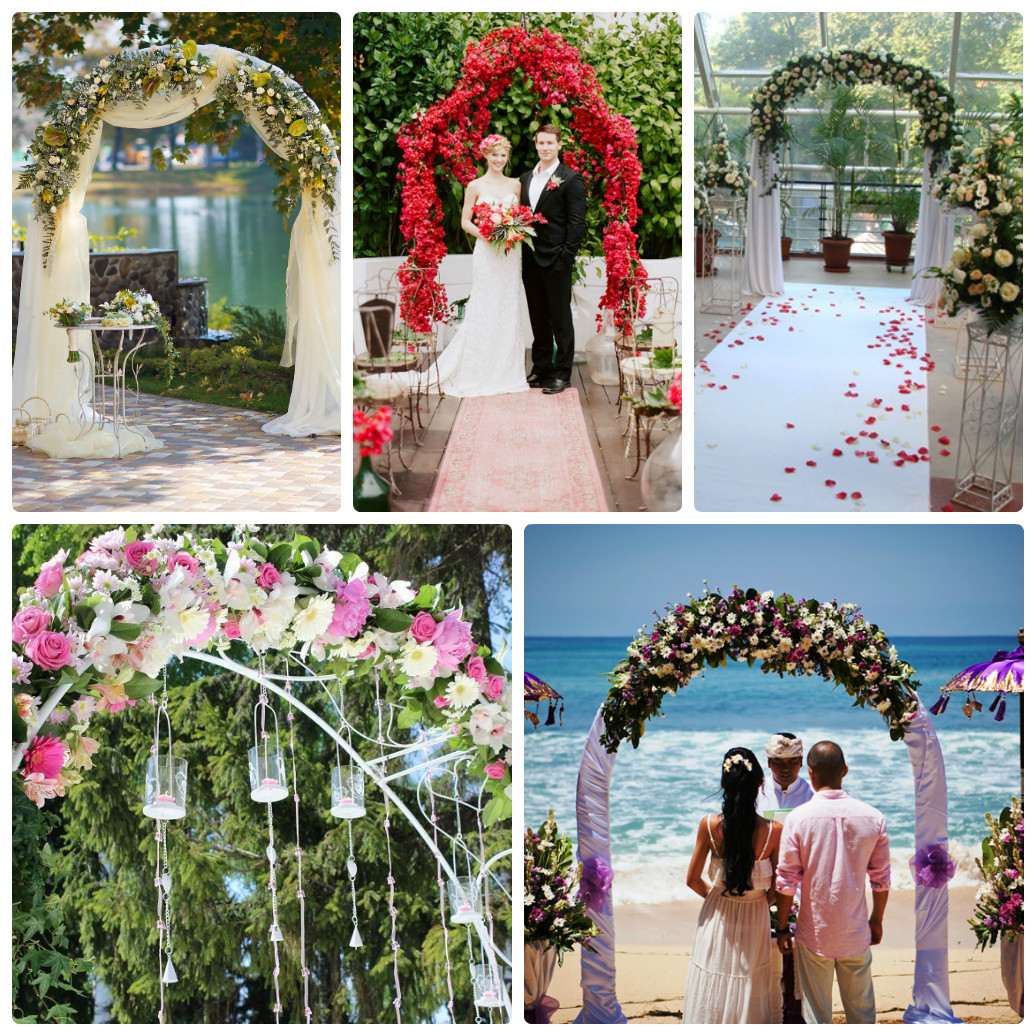
.jpg)