
 Birthday
 Hydrangeas
The white water lily is one of the most poetic flowers: it graces quiet ponds and rivers, inspired Claude Monet and entered Slavic legend as "odolen-grass". No wonder many people want to give a bouquet of water lilies to someone they love. But there are important catches: cut water lilies barely survive in a vase, and wild species are protected in many places. Here is what the white water lily symbolises, whether it's worth giving, and how to grow a nymphaea in your own pond.
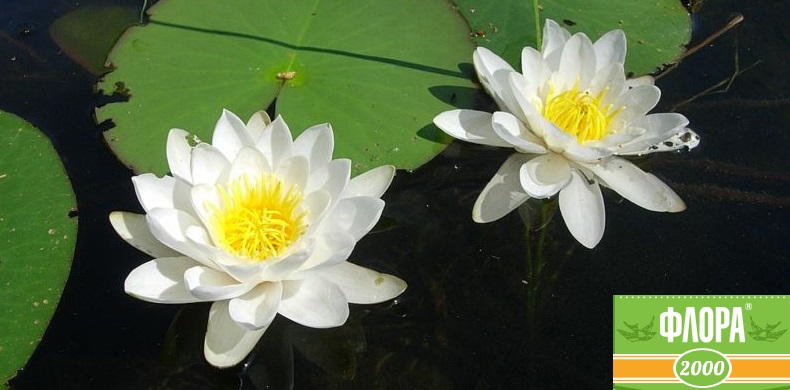
What is the white water lily
The white water lily (Nymphaea alba) is an aquatic perennial in the water lily family (Nymphaeaceae). The genus name comes from the nymphs, the water spirits of Greek myth — hence folk names like "mermaid flower". There are around 60–70 species of Nymphaea worldwide and hundreds of garden varieties.
The rhizome lies on the bottom, while the rounded, deeply notched leaves and flowers float on the surface. In most species the flowers open in the morning and close in the afternoon, which is why the water lily was called a "child of the sun". Some tropical species do the opposite and bloom at night.
In Ukraine's wild waters you'll mostly see the white water lily, the snow-white water lily and the yellow water lily (Nuphar). The snow-white species is listed in the Red Data Book of Ukraine, and the white one is protected in many regions, so wild water lilies should not be picked.
Water lily or lotus?
Water lilies are often confused with lotuses, but they are different plants from different families. The easiest difference: lotus leaves and flowers rise above the water, while water lily leaves and flowers lie on its surface. A relative of the water lily is the giant Victoria amazonica, whose leaves can support the weight of a child — see the giant water lily.
What the white water lily symbolises
- Purity and innocence — snow-white petals rising from dark water.
- Mystery and romance — in European poetry the water lily is linked with mermaids and water maidens.
- Protection — Slavs regarded "odolen-grass" as a charm, and its motif appears in folk embroidery. This is folklore, not proven properties.
- Rebirth — the flower opens anew every day with the sun.
More about flower meanings in the language of flowers.
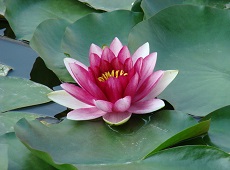
Can you give water lilies as a gift?
A bouquet of water lilies sounds romantic, but in practice there are three problems:
- Water lilies barely last in a vase. A cut flower lives 1–3 days and often closes within hours.
- Wild water lilies are protected. Picking them from rivers and lakes is not allowed, and in some cases is against the law.
- They're hard to buy. Nymphaeas are occasionally sold abroad as an exotic for floating arrangements, but they almost never appear in ordinary bouquets.
If you'd love to give a "water lily", there are beautiful alternatives:
- Look-alike flowers. White peonies, lisianthus, ranunculus or peony-style roses echo the soft cups of a water lily and last well in a vase. See our peonies and roses.
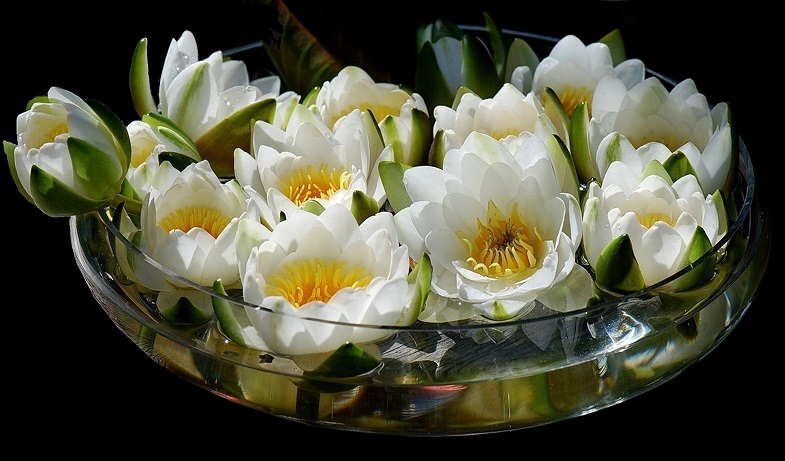
- A floating arrangement. Rose or gerbera heads and candles floating in a wide bowl create a pond-like mood.
- A potted water lily. If the recipient has a pond, give a garden water lily in a planting basket — it will bloom for years.
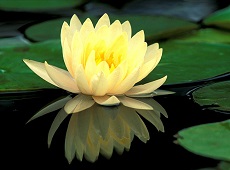
Water lily colours
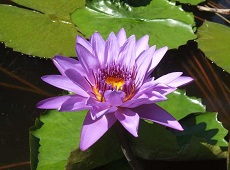
Besides white, garden water lilies come in pink, red, yellow and cream, and tropical species also in blue and purple. Hardy varieties suited to Ukraine's climate are mostly white, pink, red and yellow; blue and purple ones are usually tropical and need warmth in winter.
The most famous water lilies in art are Claude Monet's Water Lilies. He grew nymphaeas in his water garden at Giverny and painted them for about 30 years on some 250 canvases. Many of those plants were bred by the French nurseryman Joseph Latour-Marliac, whose hybrids first brought coloured water lilies to European gardens.
How to grow water lilies in a pond
- Sun. At least 5–6 hours of direct light a day, or you'll get few flowers.
- Still water. Water lilies dislike fountains and currents.
- Planting. Plant the rhizome in a basket of heavy loam and top with gravel so the soil isn't washed out.
- Depth. Dwarf varieties 15–30 cm of water above the basket, medium 40–60 cm, large up to a metre. Start the basket shallower and lower it as the leaves grow.
- Winter. Hardy varieties overwinter on the bottom as long as the rhizome sits below the ice. In a shallow pond, move baskets to a cool cellar in damp moss or a bucket of water.
- Propagation. Divide the rhizome in spring every 3–4 years.
Water lily legends
In a Greek myth, a beautiful nymph rejected by Heracles turned into a white water lily out of grief — hence the name nymphaea. In Slavic tales water lilies were the flowers of rusalki, water spirits said to hide among the leaves and drag under anyone who reached for a bloom. Such stories made the flower both loved and feared, and picking it without reason was considered bad luck. Today these legends are a charming part of folklore that also helps protect rare plants.
FAQ
Can I pick water lilies?
Better not: wild water lilies are protected in many regions, and the snow-white water lily is in the Red Data Book of Ukraine. They also wilt fast in a vase.
How long do water lilies last in a vase?
Usually 1–3 days, and they often close within the first hours after cutting.
What does the white water lily symbolise?
Purity, mystery and romance; among the Slavs, protection ("odolen-grass").
How is a water lily different from a lotus?
Water lily leaves and flowers float on the water, while lotus ones rise above it. They belong to different families.

View full-size photo
Author: Maria Svitlovir
Graduated from Taras Shevchenko National University of Kyiv, Institute of Biology and Medicine (2001). BSc in Biology, MSc in Horticulture. Writes about plants, works at a garden centre selecting and repotting plants, and contributes to plant reference guides.


