
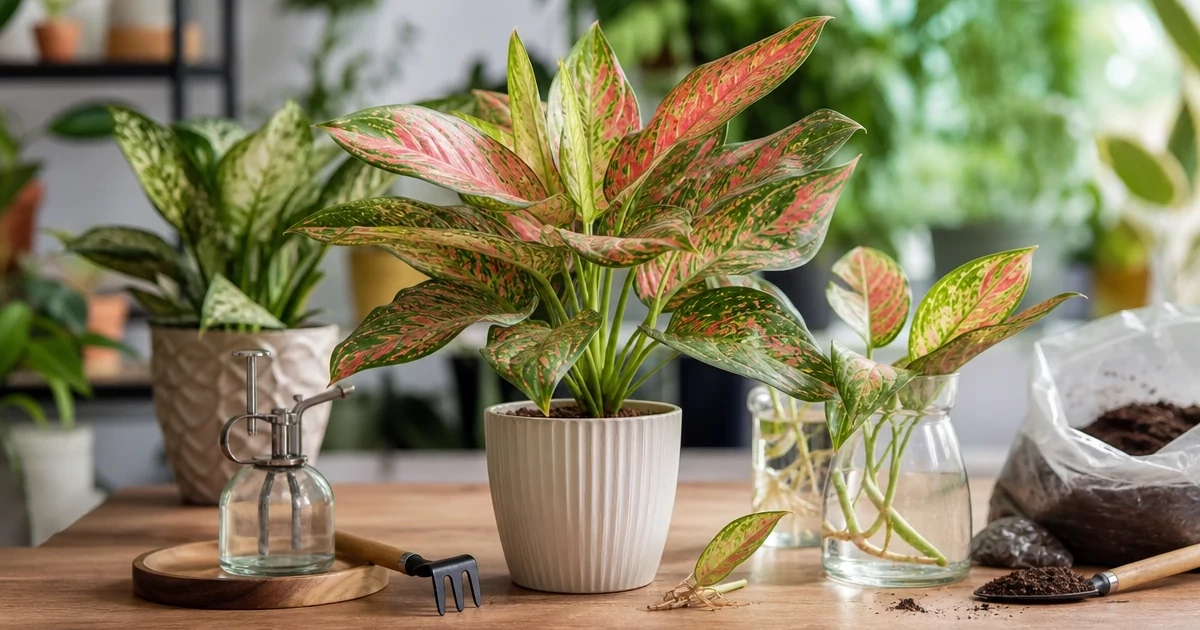
Aglaonema is a plant for anyone who wants colourful leaves without fussy care. Green-silver varieties tolerate shade and infrequent watering, while pink and red ones look like a bouquet in a pot. It grows slowly but compactly and becomes a lush clump over the years. Here is how to choose a variety for your window, how to water and how to propagate aglaonema.
Aglaonema, or Chinese evergreen, is an evergreen herbaceous plant of the arum family from the tropical forests of South-East Asia. It has upright, succulent stems and leathery leaves on stalks, and grows beneath the forest canopy in the wild. Mature plants occasionally flower with a pale spathe and spadix, like a peace lily, followed by red berries.
The rule is simple: the brighter the leaves, the more light the plant needs.
Green varieties are happy with indirect light or even part shade further into the room. Put red and pink ones near an east or west window; midday sun scorches the leaves. Ideal temperature is 20–25 °C. Aglaonema hates cold draughts and sudden changes, which make the leaves darken and wilt.
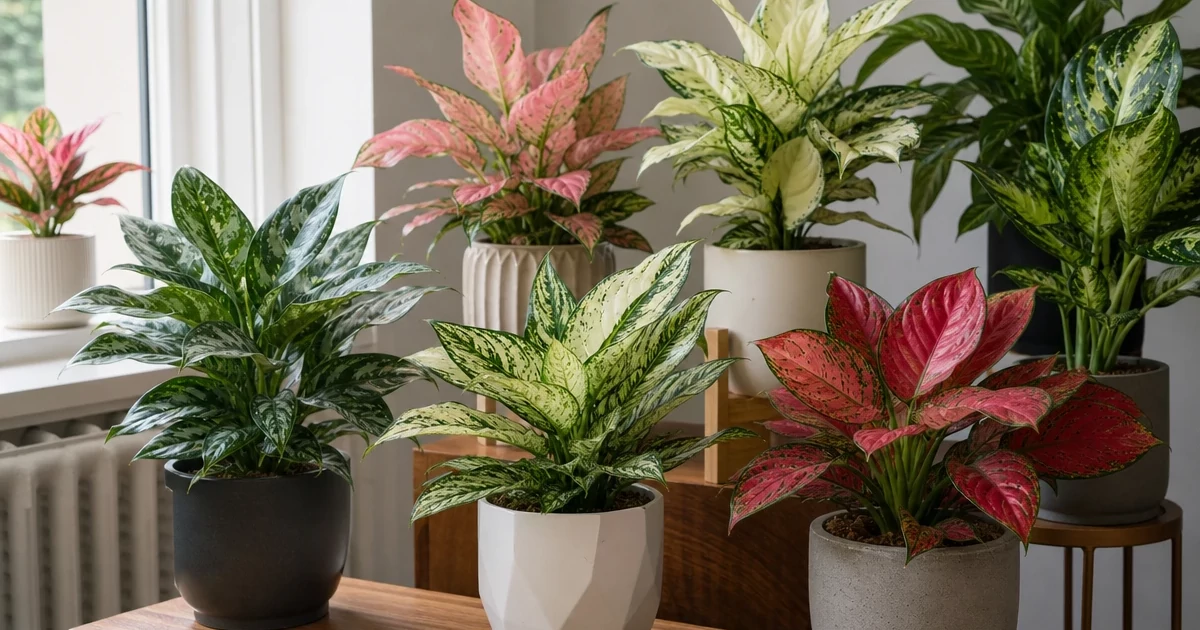
View full-size photoThe photo shows the variety of aglaonema leaf colors.
Water when the top 2–3 cm of soil are dry — usually weekly in summer, less in winter. It copes with underwatering better than waterlogging, which rots the roots and stem base. Use soft, rested water. Moderately humid air prevents brown tips: mist or use a pebble tray. Feed every 2–3 weeks from spring to autumn.
Aglaonema grows slowly, so repot young plants yearly in spring and mature ones every 2–3 years. Use a loose, airy mix: all-purpose compost with perlite, bark and a little charcoal. Go up only 2–3 cm — a snug pot encourages a bushier plant. See how to repot houseplants.
More in houseplant problems and symptoms.
Yes. Like other aroids, it contains calcium oxalate crystals in its leaves, stems and berries. The sap irritates skin and mucous membranes, and chewed leaves cause drooling and mouth pain in cats and dogs. Keep it away from pets and children and wear gloves when pruning. More tough plants: hard-to-kill houseplants; browse potted plants.
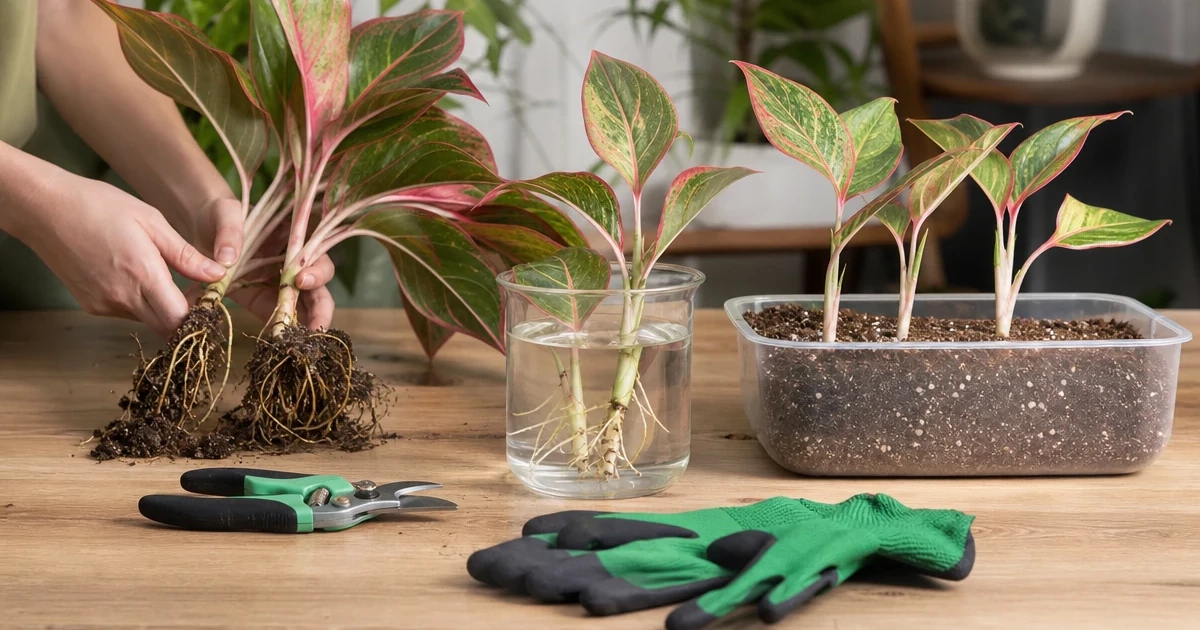
View full-size photoDifferent methods of aglaonema propagation are shown.
Green-silver varieties can — they do well in part shade. Red and pink ones need bright indirect light.
That is its nature: it produces only a few new leaves a year. Light, warmth and regular feeding speed it up a little.
It is optional. Flowering takes energy, so many growers cut the stems to favour leaf growth.

Author: Maria Svitlovir
Graduated from Taras Shevchenko National University of Kyiv, Institute of Biology and Medicine (2001). BSc in Biology, MSc in Horticulture. Writes about plants, works at a garden centre selecting and repotting plants, and contributes to plant reference guides.
© Kyiv 2026 UFL Flower Shop

Trademark UFL №191476 is used under license of the rights holder.
All rights reserved. Any use of materials without a link to the site is prohibited.

 Birthday
 Hydrangeas