
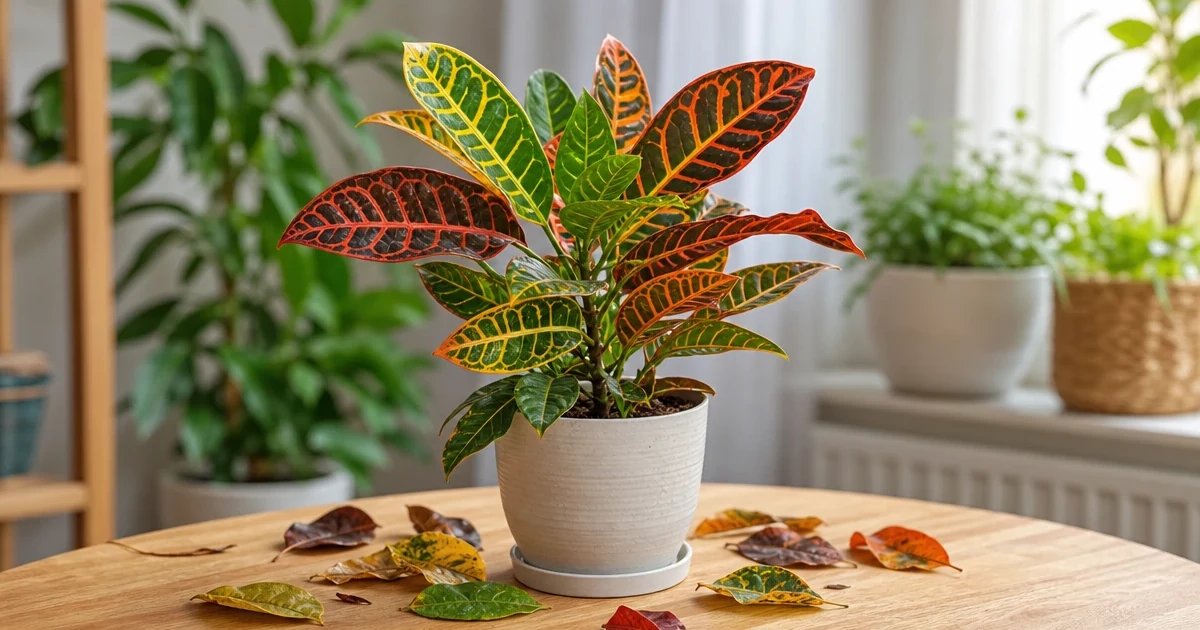
Croton looks like autumn foliage in a pot: yellow, orange, red and almost black veins on leathery, glossy leaves. But to get those colours, croton needs light, warmth and stability — it dislikes change and often responds by dropping leaves. Here is how to care for croton (codiaeum) and keep it vivid.
The houseplant sold as “croton” is botanically Codiaeum variegatum, an evergreen shrub of the spurge family from the tropics of South-East Asia and the Pacific islands. The true genus Croton is a different group of plants, but the name stuck in the trade. In the wild codiaeum reaches 2–3 m; indoors it is usually 50–120 cm. Its flowers are inconspicuous sprays, often removed so the plant does not waste energy on them.
Croton is one of the most light-hungry houseplants. It needs very bright light — a south, east or west window, with light shading from midday summer sun. In part shade new leaves come out green and old ones fade. A grow light helps in winter. Keep it at 20–25 °C, never below 16 °C, away from cold sills and draughts.
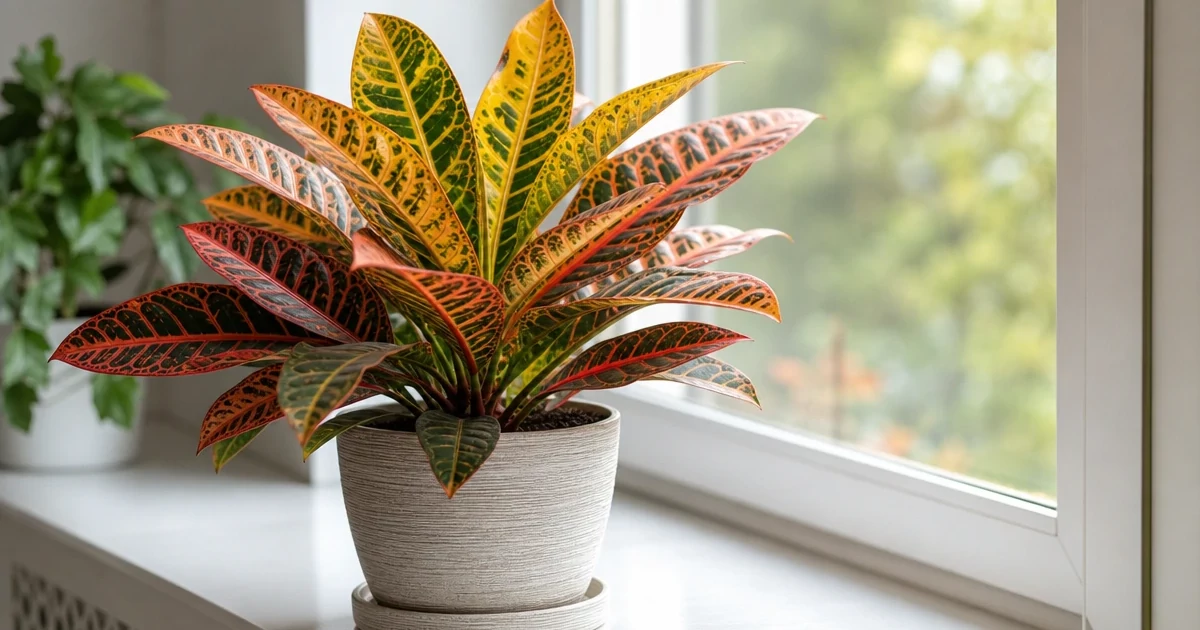
View full-size photoCroton leaves develop vivid colours with sufficient light.
Keep the soil evenly moist: water with tepid, rested water when the top 1–2 cm are dry. Both a dried-out root ball and waterlogging cause leaf drop. Croton needs high humidity, 60% or more: mist the leaves, use a pebble tray and wipe the leaves weekly with a damp sponge, which also deters spider mites. Feed every 2 weeks from April to September.
More in houseplant problems and symptoms.
Repot young crotons every spring and mature ones every 2–3 years into a pot 2–3 cm larger, using rich, free-draining compost with perlite. Prune in spring to encourage branching; cuts bleed milky sap — blot it and dust with charcoal. See how to repot houseplants.
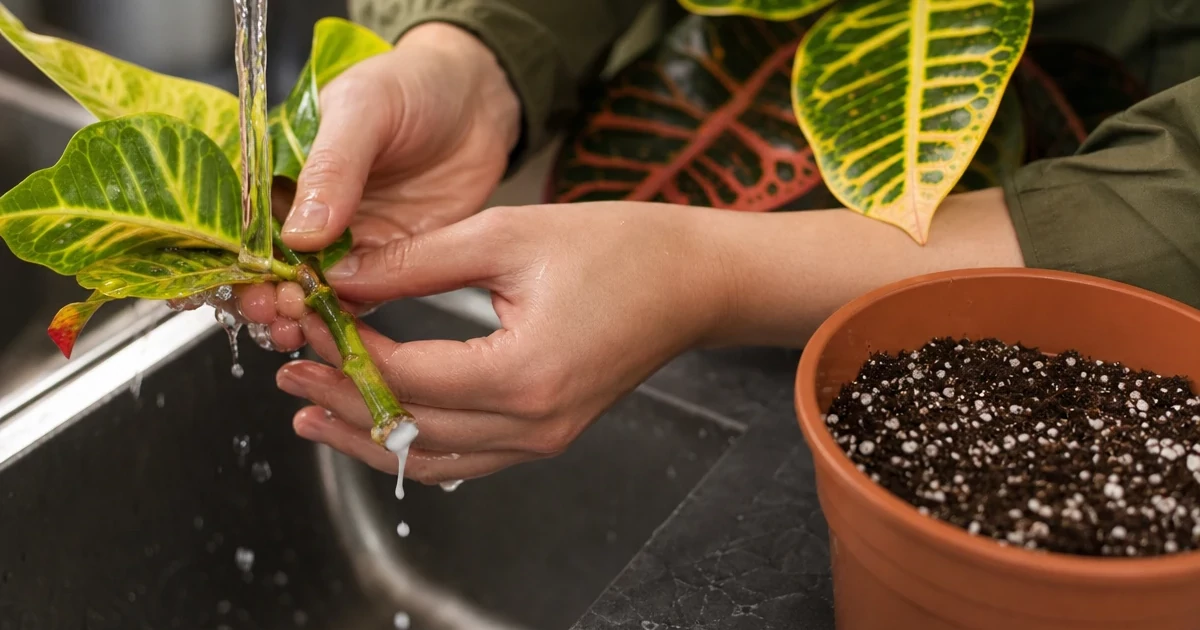
View full-size photoCroton cuttings are rinsed to remove milky sap before rooting.
Rooting takes 4–6 weeks. Large plants can be air-layered.
Like most spurges, croton has irritant milky sap. It can irritate the skin and, if swallowed, cause burning and stomach upset. Croton is toxic to cats and dogs, so keep it away from pets and children and wear gloves when pruning. More colourful foliage plants: foliage houseplants; browse potted plants.
Too little light. New leaves only colour up in bright light — move it nearer a window or add a grow light.
Nothing drastic: keep it in a bright, warm spot with evenly moist soil and good humidity. New leaves usually appear within a few weeks.
Better not: the sap irritates skin and is harmful if swallowed.

Author: Maria Svitlovir
Graduated from Taras Shevchenko National University of Kyiv, Institute of Biology and Medicine (2001). BSc in Biology, MSc in Horticulture. Writes about plants, works at a garden centre selecting and repotting plants, and contributes to plant reference guides.
© Kyiv 2026 UFL Flower Shop

Trademark UFL №191476 is used under license of the rights holder.
All rights reserved. Any use of materials without a link to the site is prohibited.

 Birthday
 Hydrangeas