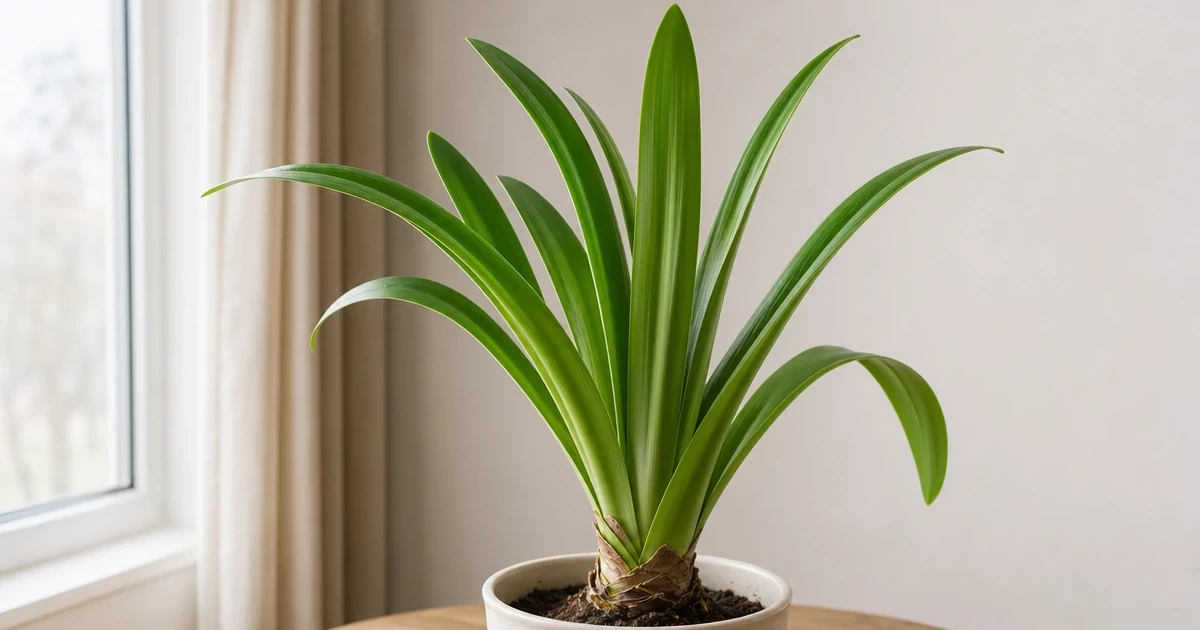
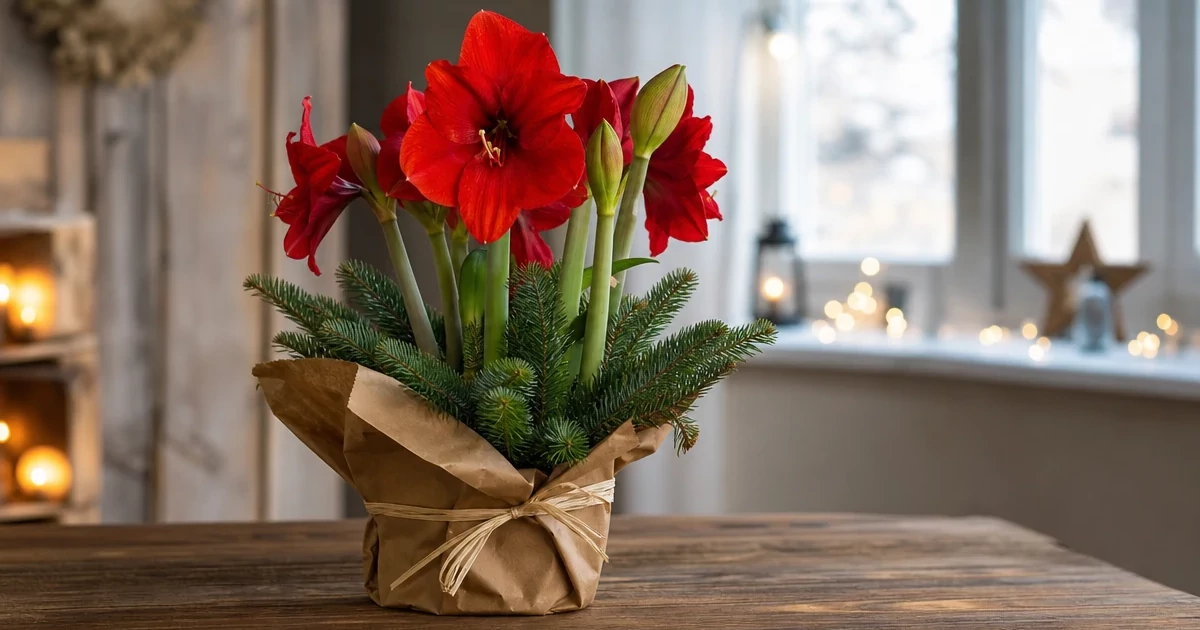
The amaryllis is a bulb plant with huge bell-shaped flowers on a tall stem. What is sold under this name is usually Hippeastrum, a close relative of the true amaryllis from South Africa. Both are cared for in the same way, and with the right care the bulb flowers every year.

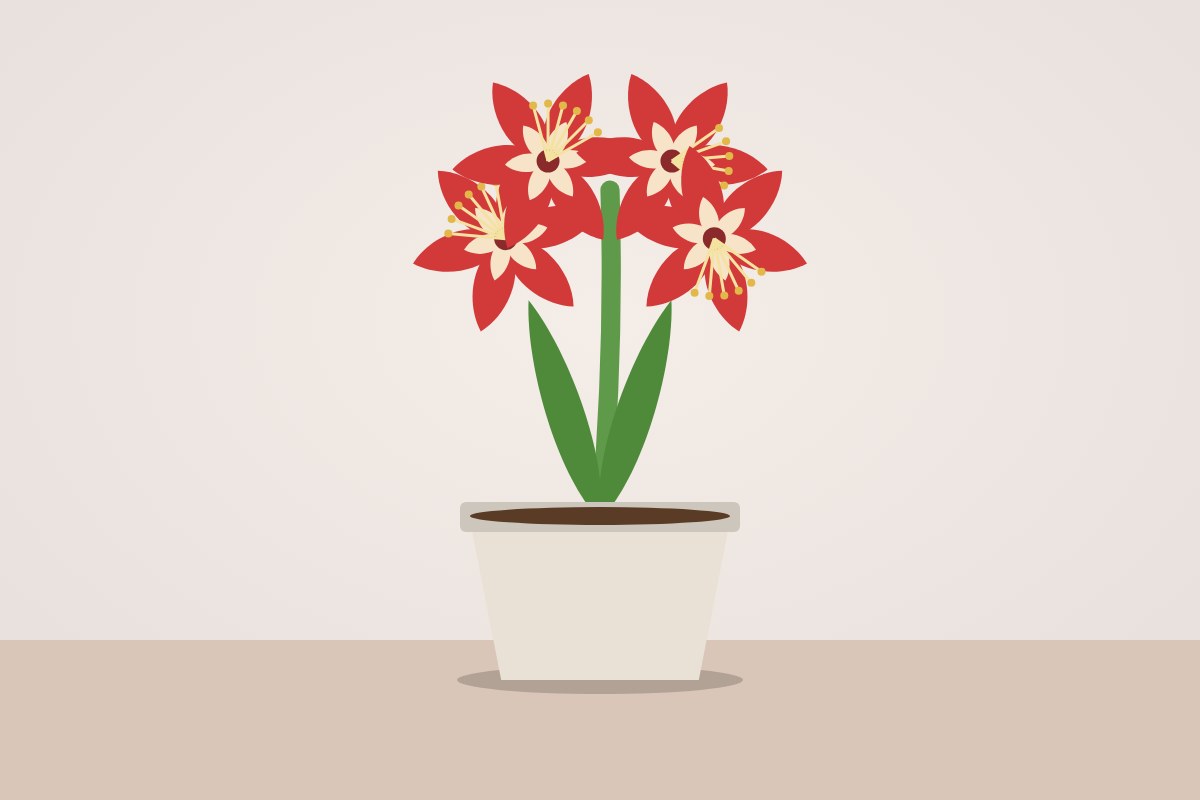
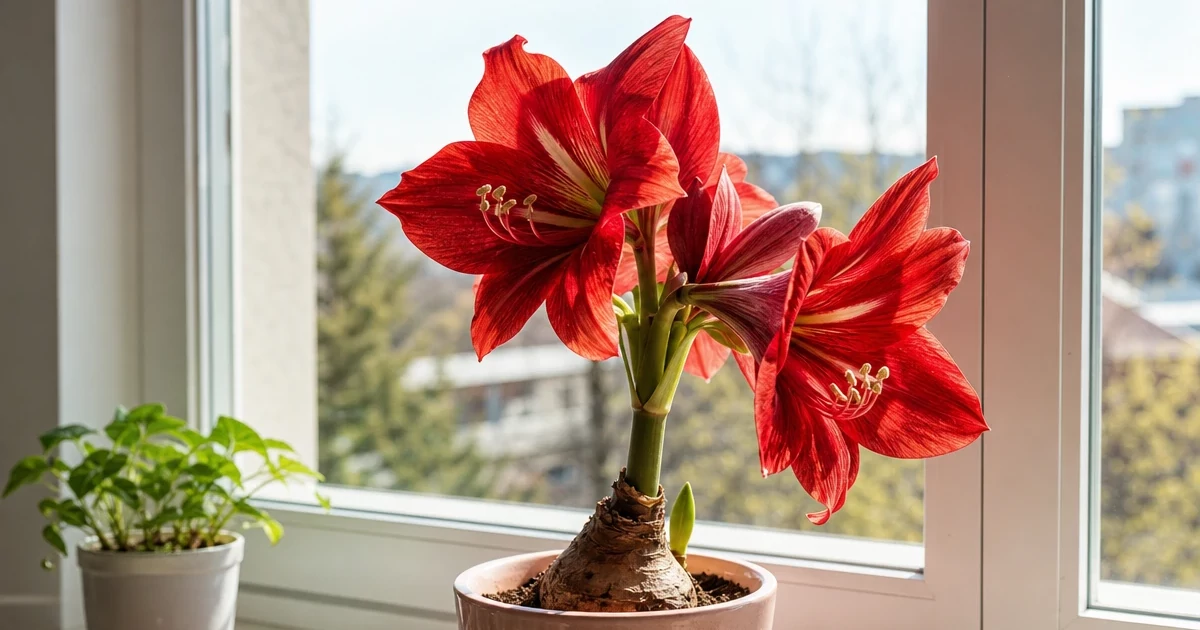
Illustration 1. One stem carries 2–6 flowers up to 20 cm across.
Both belong to the amaryllis family and look alike, so the names have long been mixed up in shops and floristry. Most potted and cut “amaryllis” are in fact Hippeastrum hybrids.
| Feature | Amaryllis belladonna | Hippeastrum (sold as amaryllis) |
|---|---|---|
| Origin | South Africa | South America |
| Flower stem | Solid | Hollow |
| Flowers | 6–12 smaller, scented pink flowers | 2–6 huge flowers up to 20–25 cm, mostly unscented |
| Colours | Pink, white | Red, white, pink, salmon, striped, double |
| Flowering | Late summer–autumn, before the leaves | Winter–spring, with or before the leaves |
| Grown | Mainly outdoors in warm climates | Indoors, forced for the holidays |
The care advice below applies to hippeastrum, the plant everyone calls amaryllis.
| Factor | Ideal |
|---|---|
| Light | Bright, south- or west-facing window |
| Temperature | 18–22 °C in flower, 10–13 °C at rest |
| Watering | Moderate, around the pot edge, not onto the bulb |
| Pot | 3–5 cm wider than the bulb, heavy |
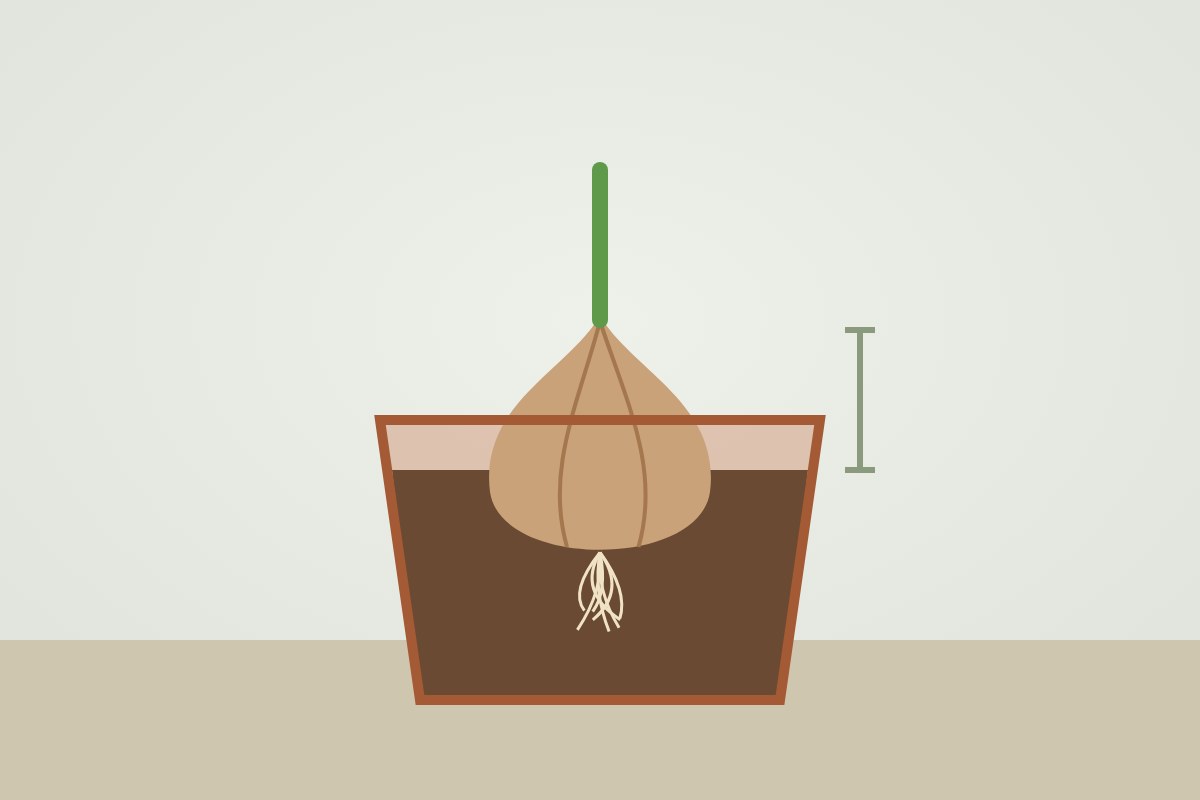
| Planting | Top third of the bulb above the soil |
| Feeding | From flowering to late August, every 2 weeks |
| Dormancy | 8–12 weeks without water |
| Repotting | Every 2–3 years after flowering |
A good bulb is firm and heavy, with no soft spots or mould, and with live roots. The bigger the bulb, the more flower stems it produces: a circumference of 30–34 cm usually guarantees two stems.
Hippeastrum takes 6–10 weeks from planting to flowering, depending on cultivar and temperature: faster at 22–24 °C, slower at 18 °C but with longer-lasting blooms. For Christmas flowers plant in late October or early November; for early March, plant from mid-December to early January. Planting several bulbs two weeks apart spreads flowering across the whole winter. Southern-hemisphere bulbs sold in autumn often bloom faster, in 4–6 weeks.
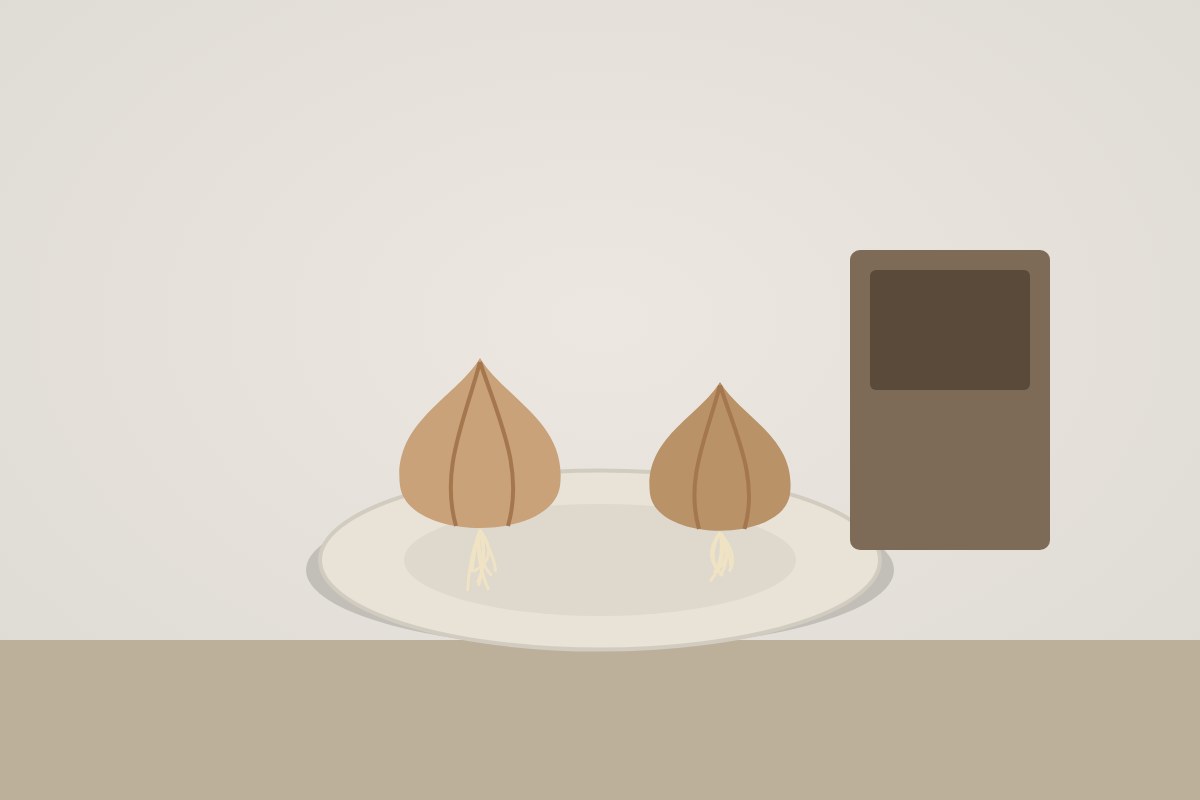
Bulbs hate standing water, so the mix should be loose and rich: flowering-plant compost with 20–30 % perlite or grit, or a ready-made bulb mix, over 2–3 cm of clay pebbles. Choose a heavy, stable pot (ceramic or terracotta): a 50–70 cm stem with several big flowers easily topples lightweight plastic. Leave 1.5–2.5 cm between the bulb and the pot wall; in a roomy pot the soil sours and the plant makes offsets instead of flowers.
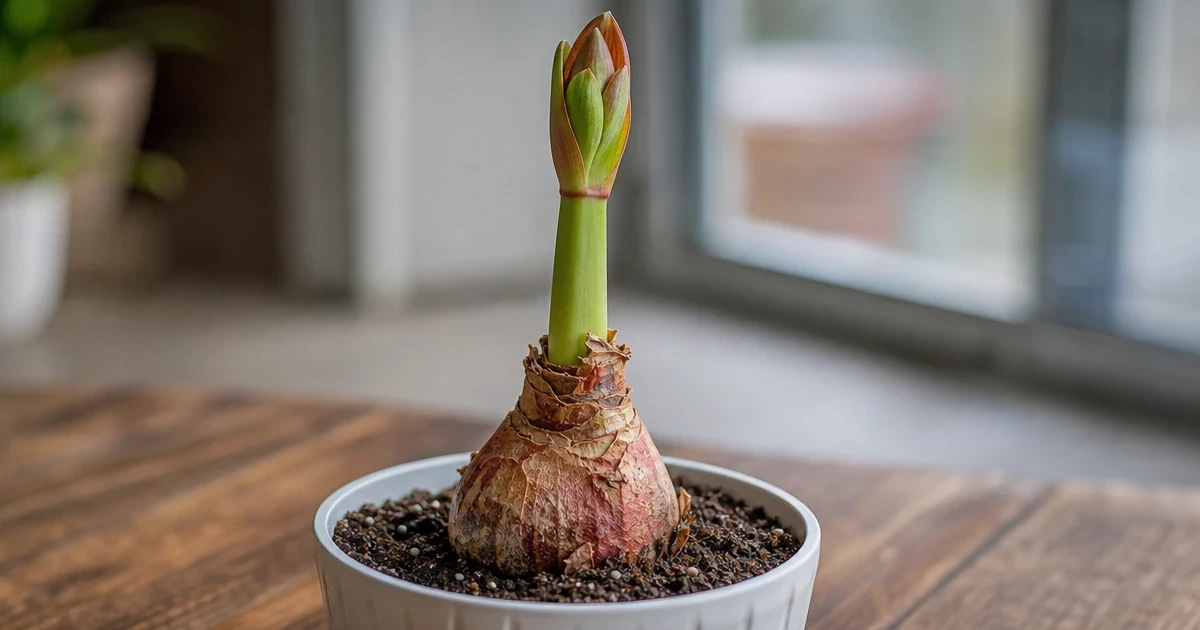
Illustration 3. The top third of the bulb stays above the soil surface.
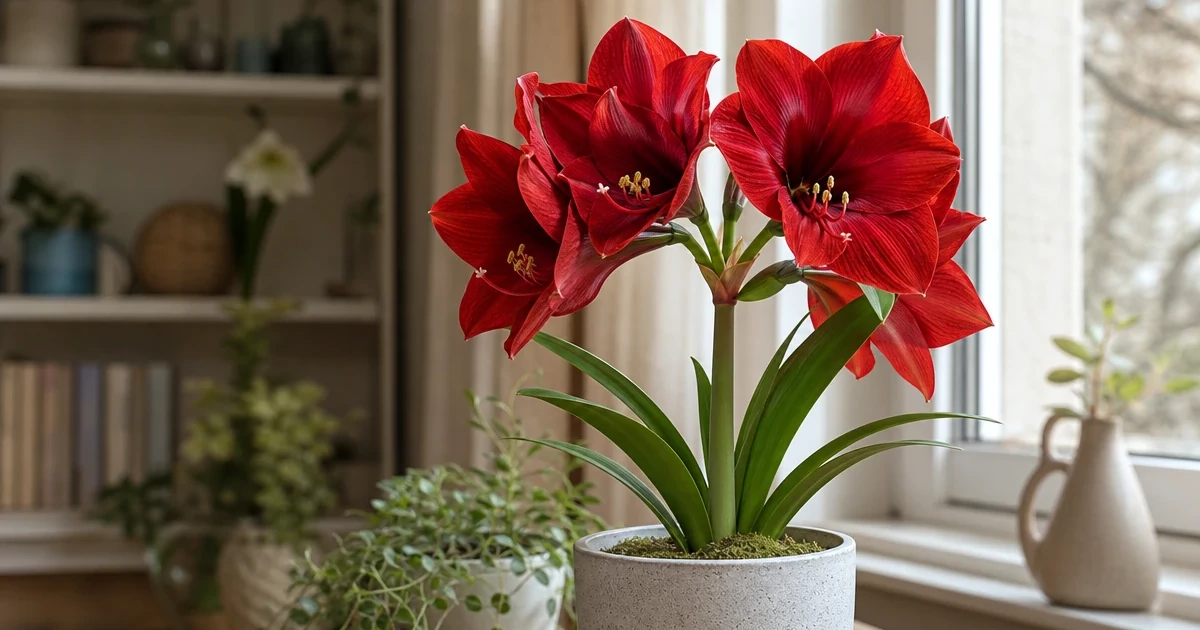
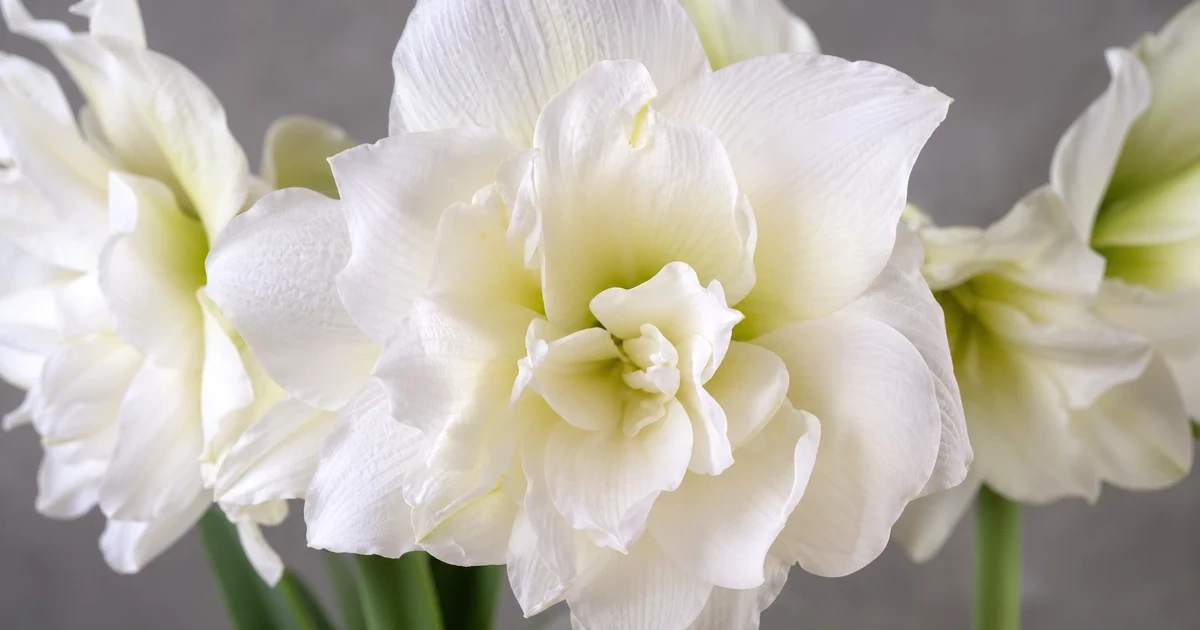
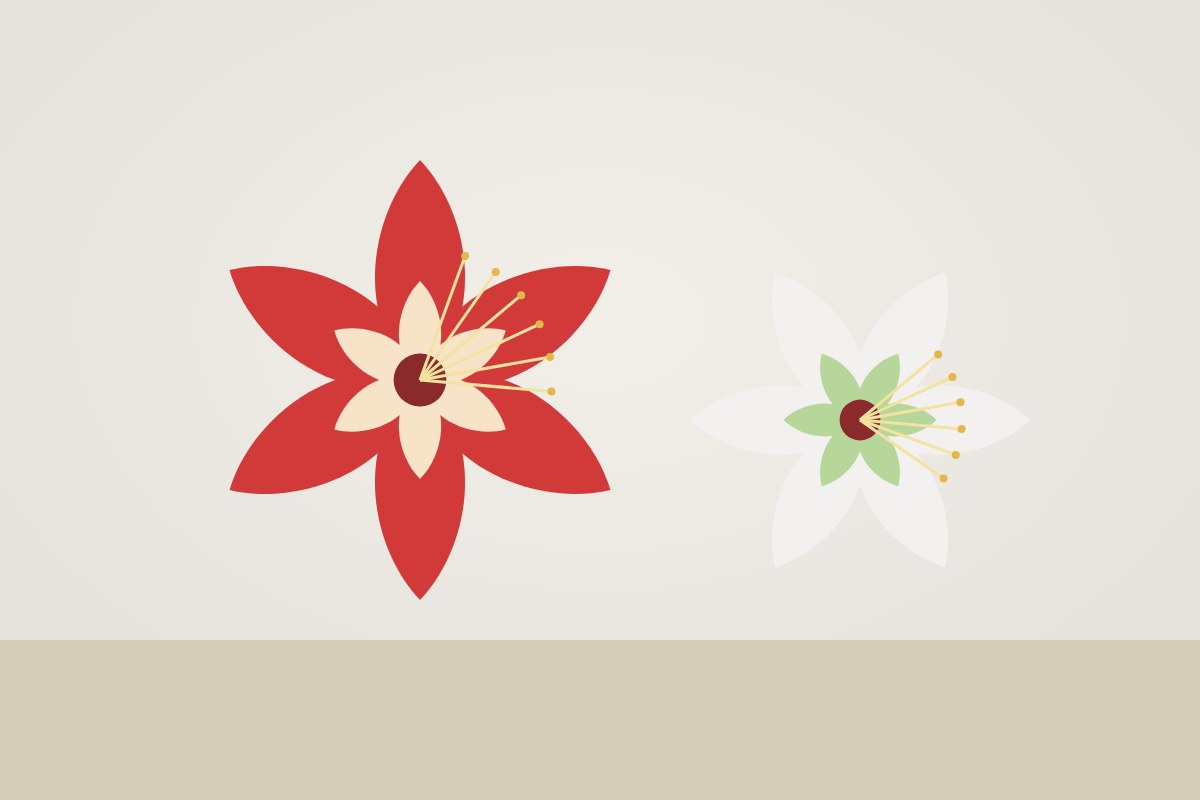
Illustration 2. There are red, white, pink, striped and double varieties.
It usually takes 6–10 weeks from planting to flowering. If you cut the stem when the first flower opens, it will last up to two weeks in a vase.
A waxed amaryllis is a bulb dipped in decorative wax (red, white, gold or glittered), often on a metal stand. Its roots have been trimmed and there is no soil or pot: it flowers entirely on the food stored in the bulb.
After flowering a waxed bulb rarely recovers: it is exhausted and has no proper roots. You can peel off the wax and pot it up, but expect to wait 1–2 years for flowers, with no guarantee. As a gift it is convenient precisely because it needs no care at all.
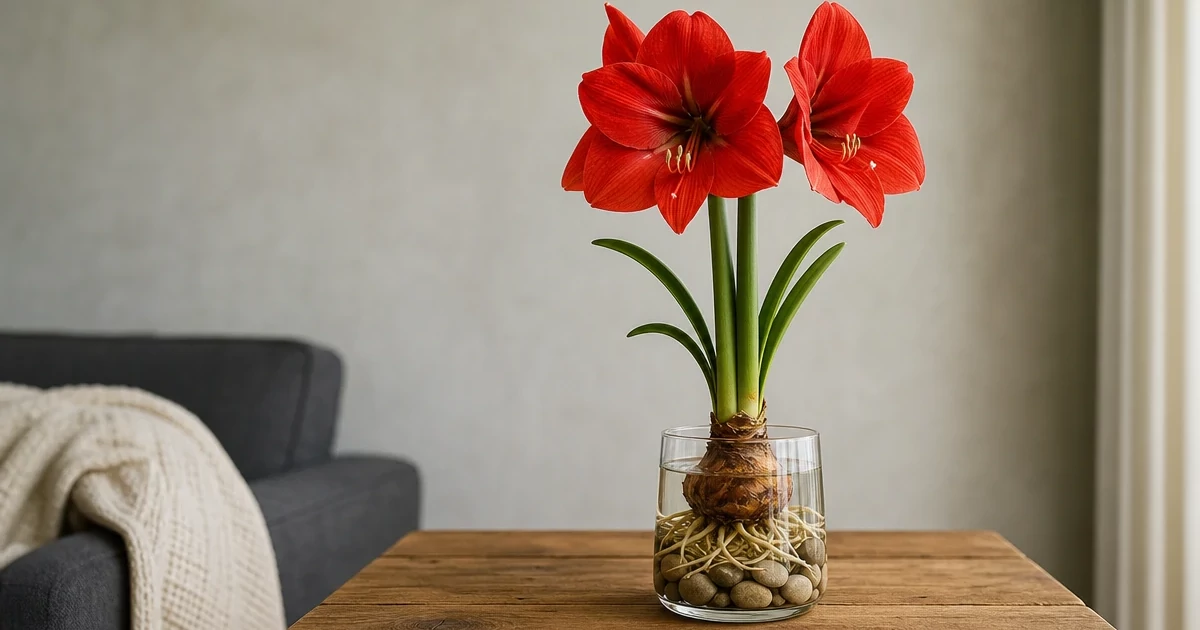
You can force a bulb without soil: set it in a narrow vase or glass on pebbles or a special stand so the water touches only the roots, not the base of the bulb. Top up to the same level and change the water weekly. It flowers just as well as in a pot, but the bulb is weakened afterwards — to keep it for next year, pot it into soil and look after the leaves all summer.
While the stem is growing, amaryllis needs as much light as possible — a south, south-east or west window. The stem leans towards the glass, so give the pot a quarter turn every day or two to keep it straight. The best growing temperature is 20–22 °C. Once the first flowers open, move the plant somewhere slightly cooler (16–18 °C) and out of direct sun — each flower will last 3–5 days longer. Gently removing the anthers also prolongs flowering and keeps pollen off the petals.
Use settled room-temperature water; cold water slows the flower stem.
This is when the next flowering is set:
Illustration 4. A rest period is essential for flowering every year.
| Cause | What to do |
|---|---|
| Bulb too small (under 24–26 cm round) or exhausted | Grow it in leaf for a year and feed regularly |
| Leaves cut off too early after flowering | Leave them until they die back naturally — they feed the bulb |
| No dormancy | 8–12 weeks of dry, cool rest at 10–13 °C |
| Too little light in summer | South window, balcony or a part-shaded garden spot |
| Pot too large | The plant makes offsets instead of flowers — repot into a snugger pot |
| Planted too deep | The top third should sit above the soil |
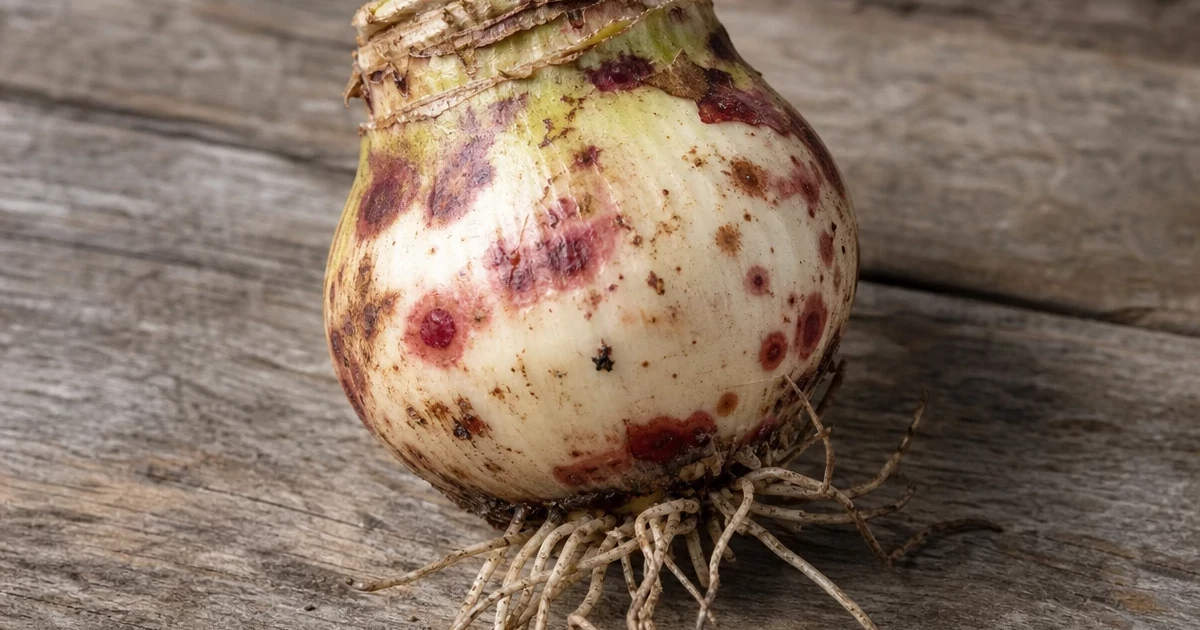
| Pests or bulb rot | Inspect, treat, remove affected scales |
The flower bud forms the previous summer, so this winter’s result depends on how you cared for the leaves last year.
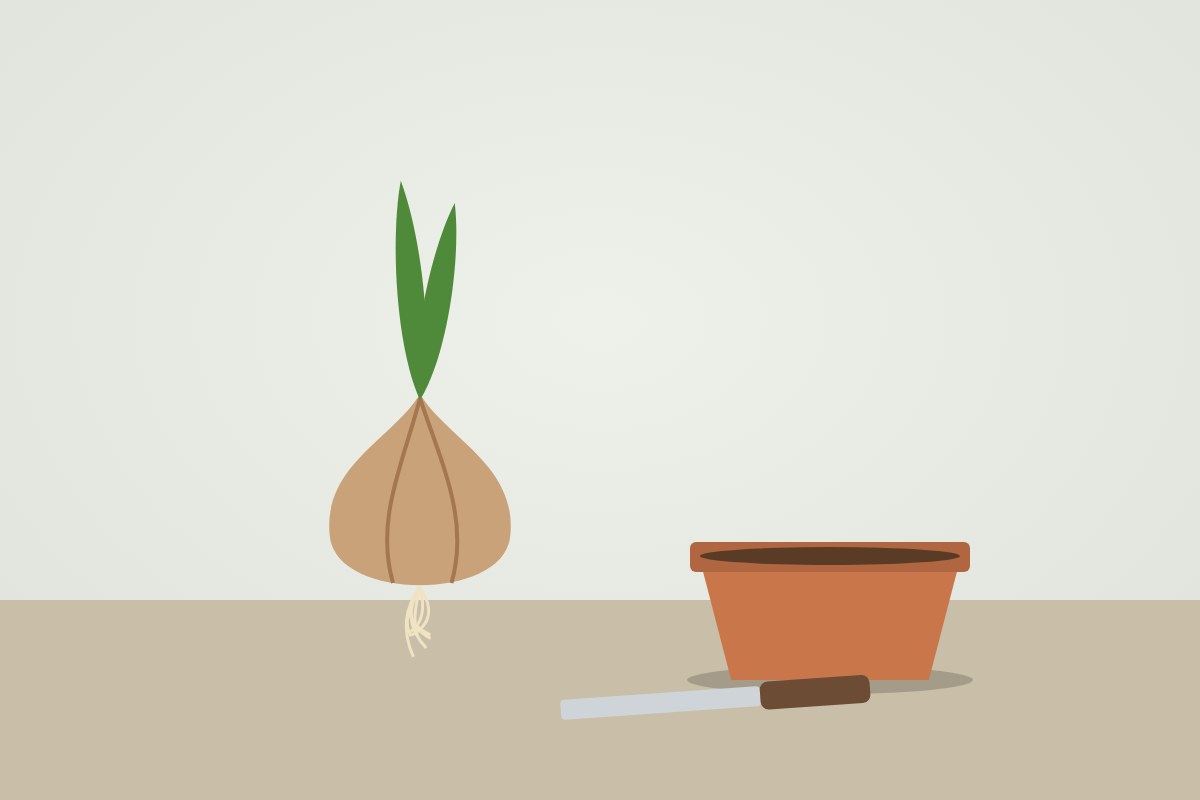
Repot every 3–4 years at the end of dormancy, replacing the top layer of compost every year. When repotting, separate the offsets from the mother bulb: they flower after 2–3 years. You can also grow amaryllis from seed, but you will wait 3–5 years for flowers.
Illustration 5. Repotting is combined with separating the offsets.
All parts of the amaryllis, especially the bulb, are poisonous to people and pets because of the alkaloid lycorine. Wear gloves and keep the pot away from cats, dogs and small children.
Always inspect a bulb before planting and peel off loose dry outer scales so problems are easier to spot.
Cut hippeastrum lasts 7–14 days in a vase, with buds opening one after another. To make it last:
Amaryllis is striking as a single-variety bouquet of 3–5 stems or in winter arrangements with conifer greenery.
After flowering and spring repotting, once nights stay above 12–15 °C (usually from late May), move the pot to a balcony or the garden in light shade, or sink it into the ground pot and all. Outdoors the leaves grow stronger and the bulb bulks up for next year’s flowers. Water regularly and feed every 2 weeks with a fertiliser higher in potassium and phosphorus. From late August cut back on water and bring the plant indoors before the first cold for its dormancy.
| Period | Stage | Care |
|---|---|---|
| October–January | Planting, stem growth, flowering | Light, moderate watering, 18–22 °C |
| February–April | After flowering, leaf growth | Cut the stem, water, feed every 2 weeks |
| May–August | Bulb builds strength | Balcony or garden, regular water and feed |
| September–November | Dormancy, 8–12 weeks | No water, 10–13 °C, dark and dry |
Dates shift if you plant at a different time: what matters is the sequence of flowering, leaf growth and rest.
Amaryllis is one of the best winter gifts: a flowering plant in a pot, a waxed bulb that needs no care, or a bouquet of 3–5 tall stems. Red cultivars suggest Christmas and New Year, white ones weddings and celebrations, pink and double forms spring holidays. Browse flowering houseplants.
In short. Shallow planting, bright light, feeding after flowering and an essential cool rest, and your amaryllis will bloom again.
Each stem lasts 2–3 weeks; a large bulb produces 2–3 stems in succession, so flowering can last 5–6 weeks in total.
Cut the stem 3–5 cm above the bulb once it yellows and keep the leaves. Water and feed until late summer, then rest the bulb.
For reblooming, yes: 8–12 weeks of dry, cool rest. Some bulbs flower without it, but weakly.
Very sparingly until the stem appears, every 7–10 days; during flowering and leaf growth, whenever the topsoil is dry. Water around the edge of the pot, not onto the bulb.
Low light makes it stretch until it cannot hold the flowers. Turn the pot, move it closer to a window and stake it if needed.
Yes, three bulbs in a wide pot look festive. Leave 2–3 cm between them for roots.
Yes, all parts — especially the bulb — contain alkaloids. Keep it away from cats, dogs and children and wash your hands after handling bulbs.
With good care, 10–20 years or more, producing more stems as it ages.
Yes. Cut the stem when the first bud opens — it lasts 1–2 weeks in a vase and the bulb spends less energy.
In autumn it is preparing for dormancy. In summer it signals overwatering, lack of feeding or pests on the bulb.
In Ukraine only for summer. Lift the bulb or bring the pot in before autumn frosts, which it cannot survive.
A large, firm, heavy bulb of 26–28 cm circumference or more, with no soft spots, mould or damage to the base. Bigger bulbs give more stems.
Better not: the plant is putting its energy into flowers and repotting can shorten the show. Wait until flowering ends and repot in spring.
Most hippeastrum hybrids have little or no scent, so they suit bedrooms and dining tables. A few cultivars and the true Amaryllis belladonna are lightly fragrant.

Author: Maria Svitlovir
Graduated from Taras Shevchenko National University of Kyiv, Institute of Biology and Medicine (2001). BSc in Biology, MSc in Horticulture. Writes about plants, works at a garden centre selecting and repotting plants, and contributes to plant reference guides.
© Kyiv 2026 UFL Flower Shop

Trademark UFL №191476 is used under license of the rights holder.
All rights reserved. Any use of materials without a link to the site is prohibited.


 Birthday
 Hydrangeas