
 Birthday
 Hydrangeas
Hedera, or common ivy (Hedera helix), is an evergreen climber with lobed leaves that easily decorates shelves, hanging pots and supports. It grows fast, tolerates partial shade and cool rooms, and rarely gets ill as long as the air isn’t too dry.
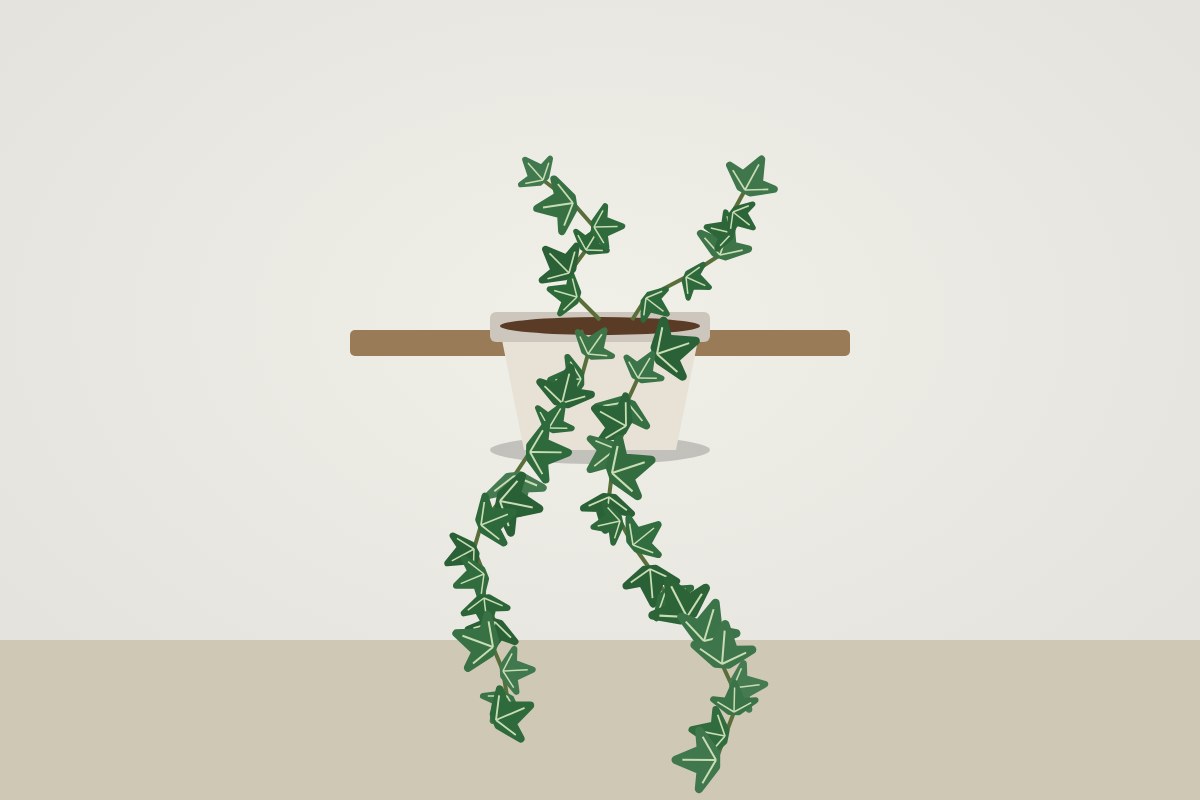
Illustration 1. Long ivy stems trail beautifully from shelves and cupboards.
Ivy varieties
There are hundreds of varieties of common ivy, as well as Canary Island and Persian ivy with larger leaves. They differ in leaf shape and colour:
- Green — classic dark leaves; the hardiest and most shade-tolerant.
- Variegated — with white, cream or yellow edges or a marbled pattern; they need more light.
- Curly and small-leaved — with wavy or star-shaped leaves, for miniature arrangements.
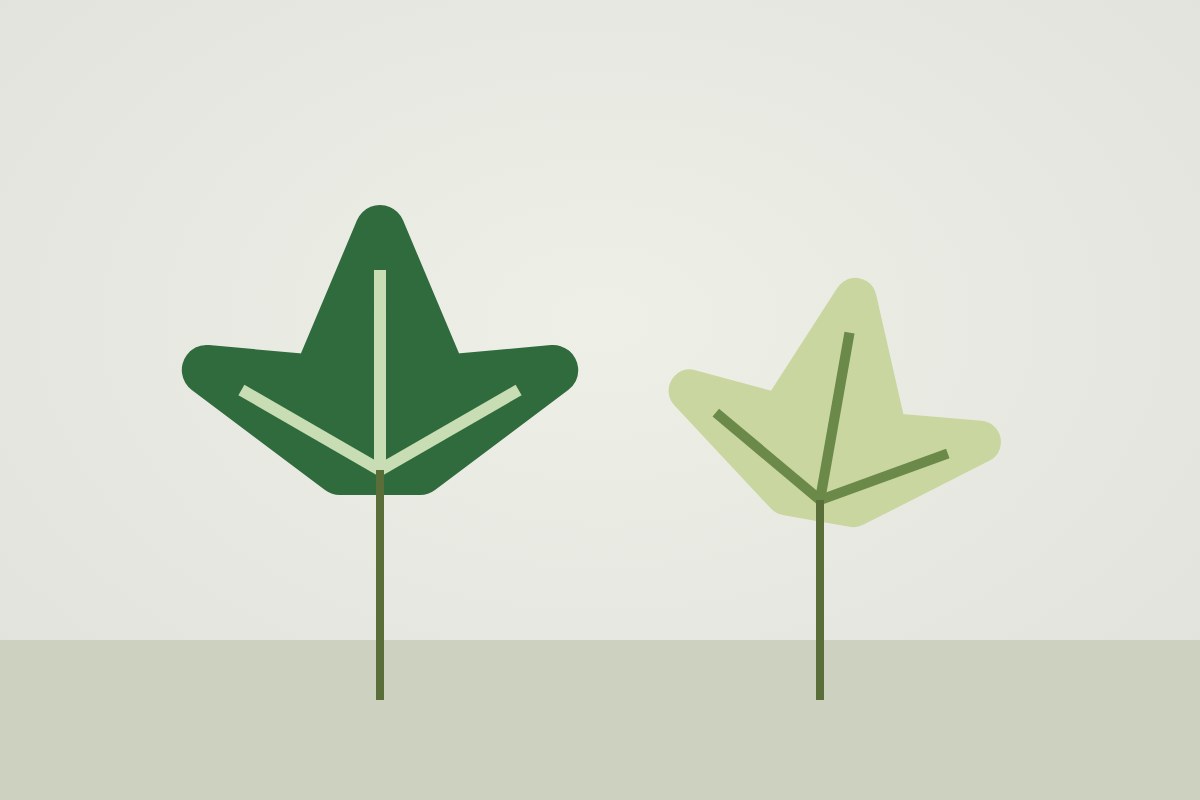
Illustration 2. In shade, variegated varieties turn green and lose their pattern.
Light and temperature
Green varieties grow well in partial shade, even 2–3 m from a window. Variegated ones need bright indirect light. Direct midday sun scorches the leaves.
The ideal temperature is 16–22 °C. In winter ivy likes it cool, 12–15 °C; in a warm, dry room it is attacked by spider mites.
Watering and humidity
- Water when the top 1–2 cm of soil has dried; more often in summer, less in winter.
- Never let it dry out completely or sit in water.
- Mist the leaves regularly and give the plant a warm shower once a month: this is the best protection against spider mites.
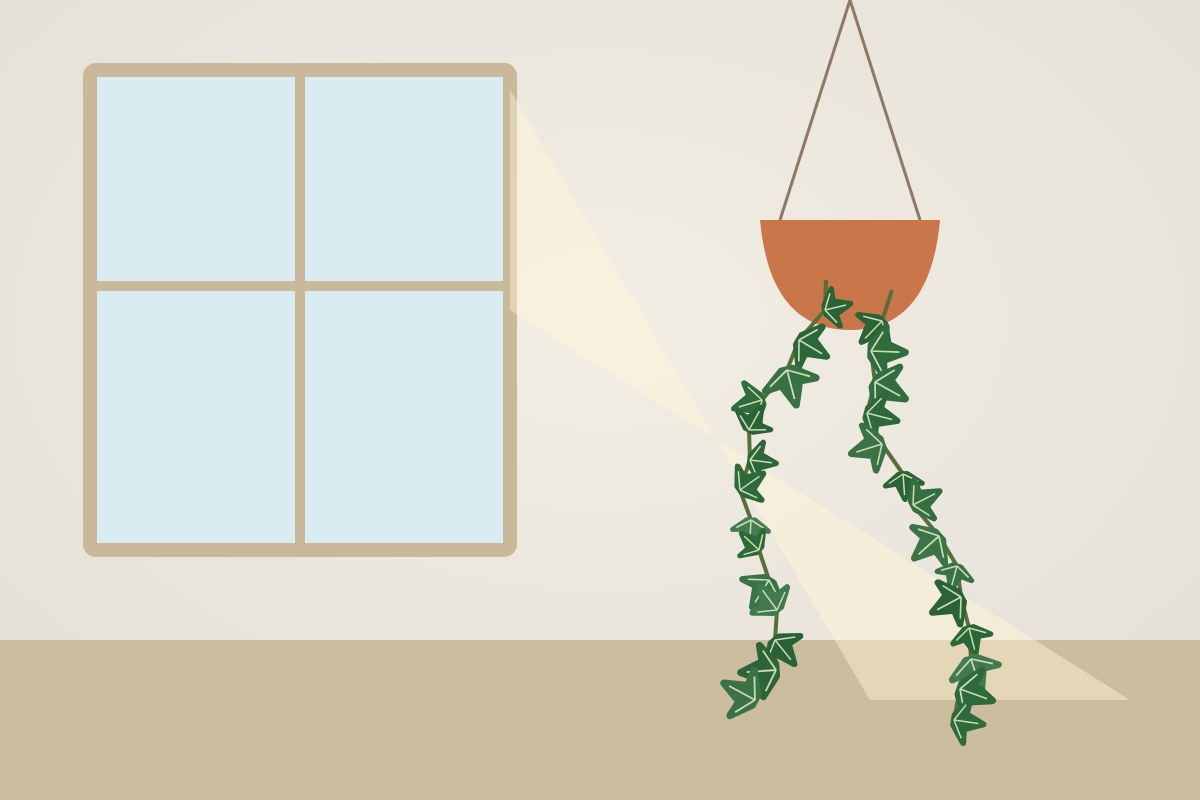
Illustration 5. In a hanging pot near a bright window, ivy grows fast and dense.
Pruning, support and feeding
For a bushy plant, pinch out the tips and cut back bare stems in spring. Ivy clings with aerial roots, so it is easy to train on a support such as a moss pole, a hoop or a mesh. From spring to autumn, feed every two weeks with fertiliser for foliage plants.
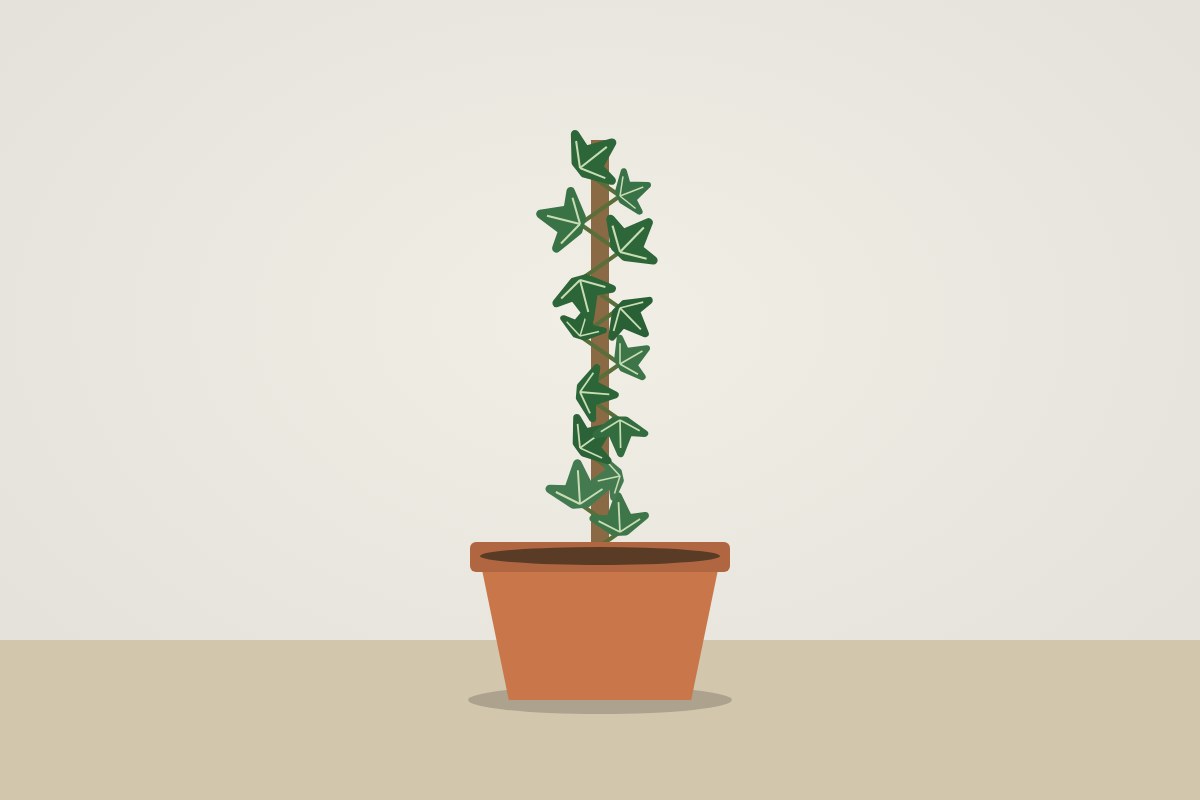
Illustration 3. On a support, ivy turns into a green column.
Propagation
- Cut tip cuttings 10–15 cm long with several nodes.
- Remove the lower leaves and put the cuttings in water or moist compost with sand.
- Roots appear in 1–3 weeks. Plant 3–5 cuttings in one pot for a fuller plant.
Even simpler, pin a stem to the soil in a neighbouring pot: it will root while still attached to the parent plant.
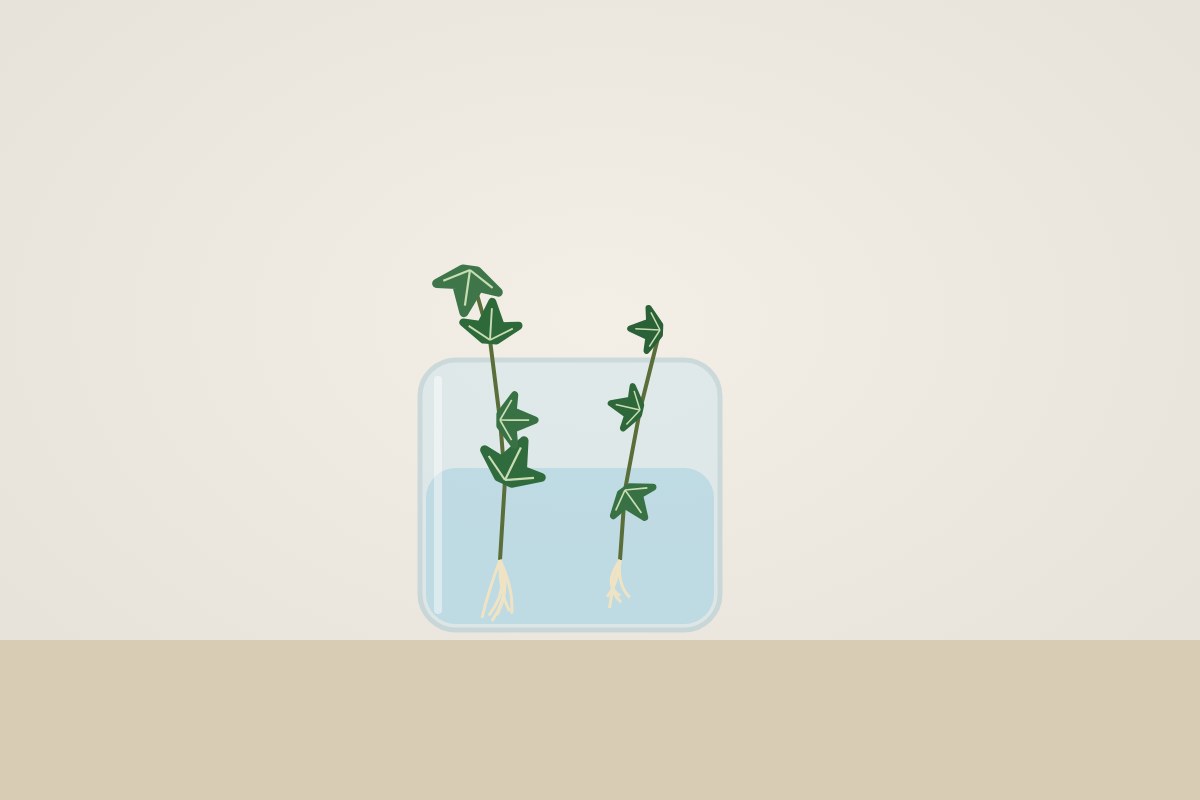
Illustration 4. Ivy roots in water almost without fail.
Safety and common problems
- Ivy leaves and berries are poisonous to people and pets, and the sap can irritate skin.
- Leaf tips dry out — dry air or heat.
- Tiny pale specks and webbing — spider mites; a shower and a miticide will help.
- Leggy stems with small leaves — too little light.
In short. Indirect light, moderate watering, a cool winter and a regular shower, and ivy will turn any shelf into a green cascade.