
 Birthday
 Hydrangeas
The primula, or primrose, is one of the first to open the flowering season, in pots at the end of winter and in beds in early spring. There are hundreds of species and thousands of varieties in every colour. Indoor and garden primroses are cared for in similar ways, and their main need is coolness.
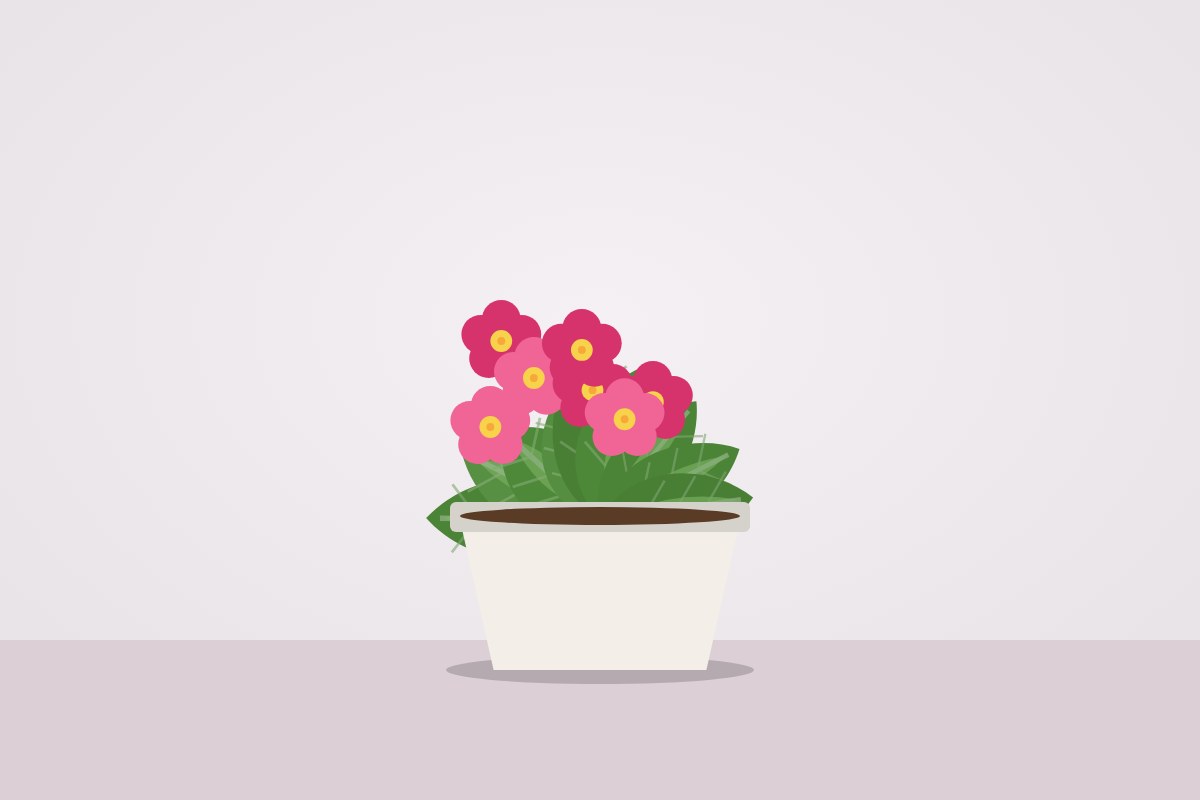
Illustration 1. An indoor primrose flowers from February to April if it is kept cool.
Popular species
- Common primrose (Primula vulgaris) — compact rosettes with large flowers; sold in pots and can later be planted in the garden.
- Poison primrose (Primula obconica) — an indoor plant that flowers for a long time; its leaf sap can irritate skin, so wear gloves.
- Fairy primrose (Primula malacoides) — with delicate tiered flower heads.
- Cowslip (Primula veris) — a garden plant with yellow “key” flowers.
- Drumstick primula (Primula denticulata) — with round flower heads on tall stems.

Illustration 3. Primrose flowers have a bright “eye” in the centre.
Indoor primrose care
- Temperature: 12–16 °C while flowering. In warmth the flowers fade quickly, so keep the pot on a cool windowsill away from radiators.
- Light: bright and indirect, without direct sun.
- Watering: keep the soil just moist at all times. Water around the edge of the pot, not onto the rosette.
- Feeding: once buds appear, every two weeks with fertiliser for flowering plants at half strength.
- Remove faded flowers so that new ones form.

Illustration 5. A cool, bright windowsill is the ideal spot for a primrose.
After flowering, a common primrose can be planted outdoors once the risk of frost has passed. In the garden it becomes a perennial and flowers every spring.
Garden primroses: planting and care
- Position: partial shade under trees or shrubs; in scorching sun the leaves wilt.
- Soil: loose, rich in humus, moisture-retentive but free-draining.
- Watering: regularly in spring and in dry spells.
- Mulch: a layer of compost prevents drying out and feeds the plants.
- Winter: most garden primroses are hardy; the rosettes can be covered with dry leaves.

Illustration 2. Garden primroses form bright spring carpets.
Propagation
- Division — every 3–4 years after flowering or in autumn. Lift the clump, split it into pieces with roots and replant at once. This also rejuvenates the plant.
- From seed. Sow in winter on the surface of the compost without covering. Many species need stratification, 2–4 weeks in the fridge. Seedlings are slow, and flowering comes in the second year.
- Leaf cuttings — a leaf with a bud at its base is rooted in moist sand.
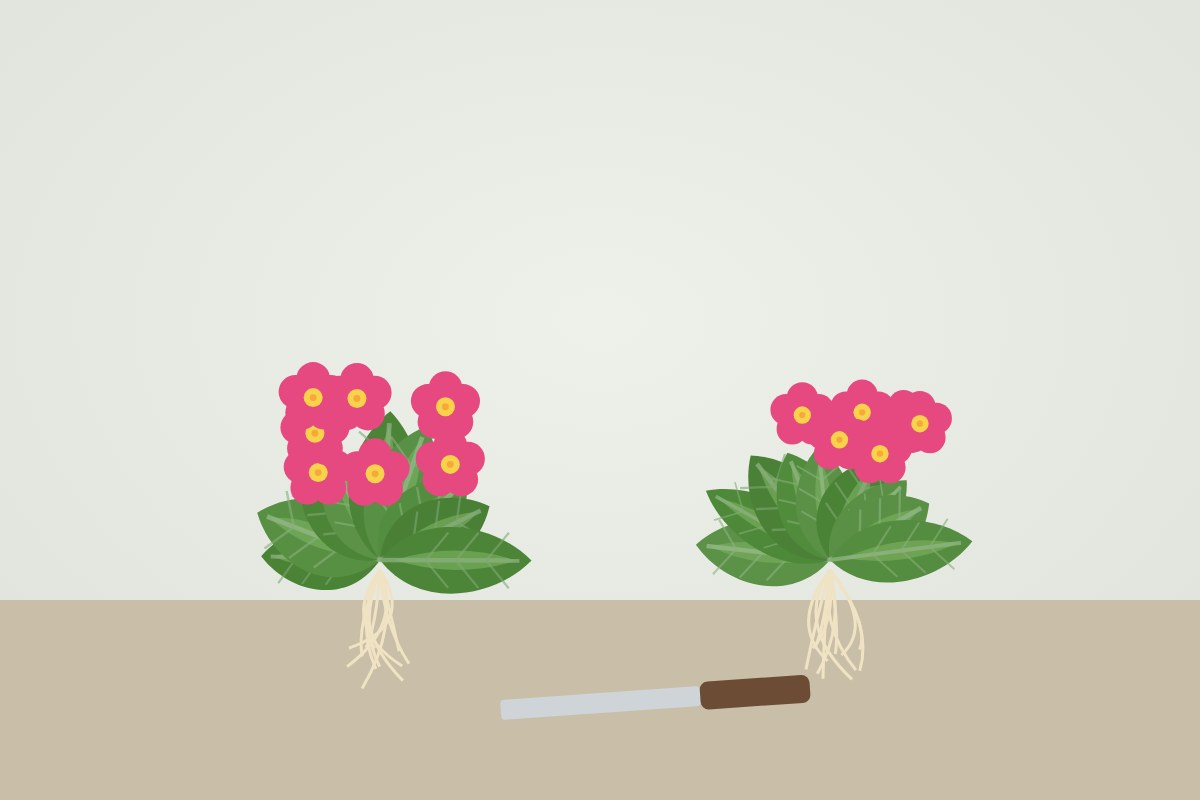
Illustration 4. Division propagates and rejuvenates a primrose at the same time.
In short. Coolness, indirect light and soil that is always moist but never wet are all a primrose needs. An indoor one will cheer you in winter, and one planted in the garden every spring.


