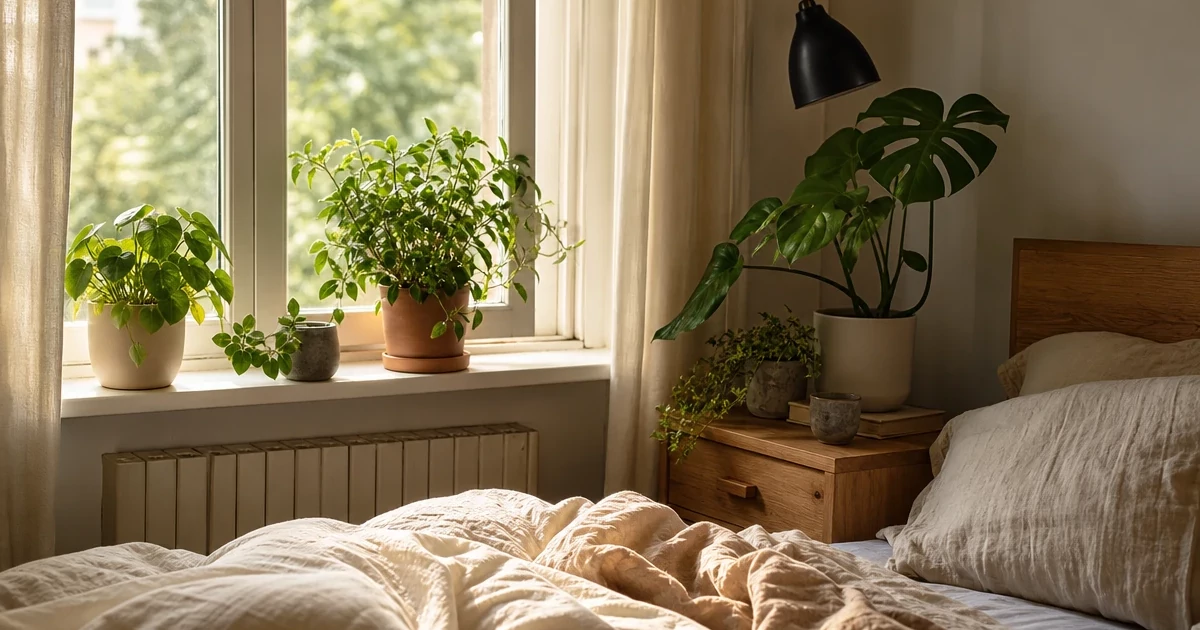
Can you keep houseplants in the bedroom, and which help you rest? No myths here: which plants really make the air feel fresher and less dry, which scents calm, and which plants are better moved out because of heavy scent or pollen. Plus 10 easy options for the room where you sleep.
More on this topic: do houseplants purify the air, houseplants: names and care, snake plant.
Yes. The common fear that plants 'steal oxygen' at night is unfounded: a few pots use a negligible amount compared with one person or pet.
The reverse is just as modest: snake plants, aloe and orchids do release oxygen at night (they use a special type of photosynthesis), but it barely changes the room's air. The honest view: do houseplants purify the air.
The real benefits are slightly moister air in the heating season, calming greenery and the habit of caring for something living.
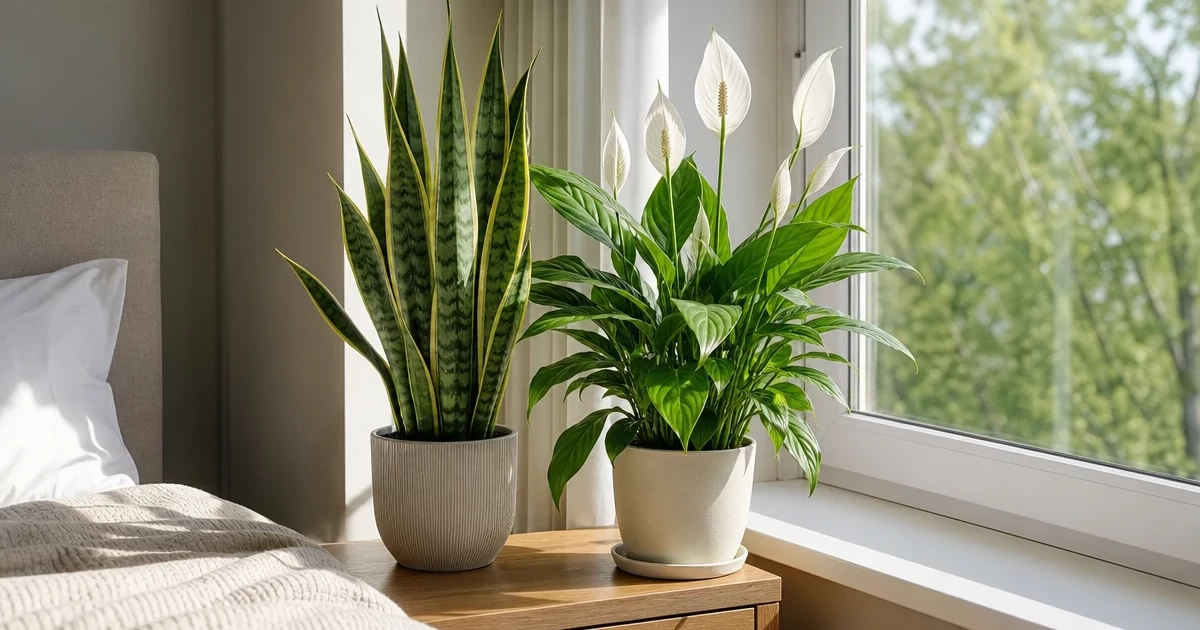
Snake plant: copes with shade and rare watering; see snake plant types.
Aloe: compact, for a bright sill; its gel is handy for minor burns.
Peace lily: releases lots of moisture and flowers in partial shade; see peace lily care.
Spider plant: easy and safe for cats.
Phalaenopsis orchid: flowers for months without scent; see orchid care at home.
Boston fern and calathea: love humid air and add moisture themselves.
Lavender: calming scent, but needs a sunny window and a cool winter.
ZZ plant and pothos: for a darker bedroom with little light. How to keep a fern from drying out: Boston fern care.
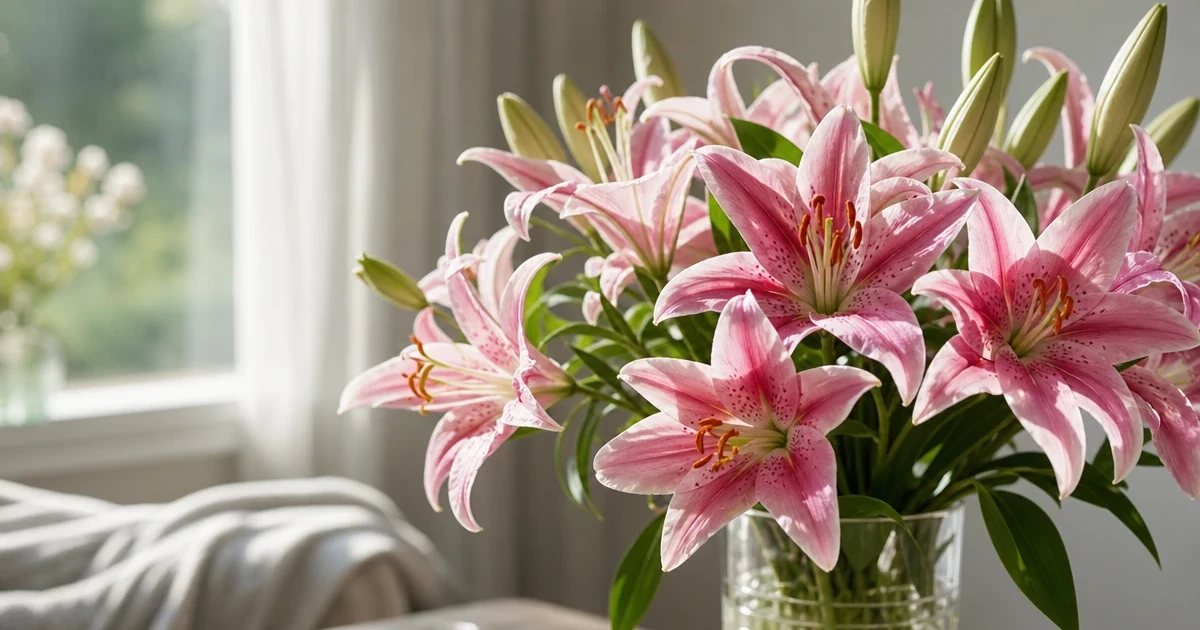
Strongly scented plants such as lilies, indoor jasmine, gardenia, hyacinths and tuberose can cause headaches in a closed room.
Pollen-heavy flowering plants if you have allergies.
Toxic plants (dieffenbachia, oleander, euphorbia) if children or pets sleep in the room.
Very fragrant bouquets are also best moved away from the bed at night.
If your bedroom faces north or a tree shades the window, choose plants that cope with partial shade:
In a dark room water even less than usual: with little light plants drink less, and overwatering is the main cause of root rot.
Feng shui is an Eastern tradition of arranging space rather than a science, but its advice often matches practical sense:
Whatever rules you follow, what matters is that the plant gets enough light and that you like how it looks.
How plants look in a bedroom:
[photo: a snake plant by the bed]
[photo: a peace lily on a bedside table]
[photo: a phalaenopsis orchid on the bedroom windowsill]
[photo: a ZZ plant in a dark corner]
[photo: a Boston fern on a stand]
[photo: lavender in a pot on a sunny window]
[photo: a spider plant on a shelf]
Looking for a living gift that lasts for months? A potted orchid is a great choice for home or office.

See houseplants and orchids.

Yes. A few pots don't affect oxygen levels; just avoid strongly scented plants.
Snake plant, aloe, peace lily, spider plant, phalaenopsis orchid and Boston fern.
Lilies, jasmine, gardenia and hyacinths because of their scent; toxic plants if children or pets are around.
Only a tiny amount, far less than one person.
ZZ plant, snake plant, aspidistra, pothos, peace lily and spider plant — all tolerate partial shade.
Yes if it is sunny, but soft-leaved plants are better by the bed, for the spines and for looks.

Author: Maria Svitlovir
Graduated from Taras Shevchenko National University of Kyiv, Institute of Biology and Medicine (2001). BSc in Biology, MSc in Horticulture. Writes about plants, works at a garden centre selecting and repotting plants, and contributes to plant reference guides.
© Kyiv 2026 UFL Flower Shop

Trademark UFL №191476 is used under license of the rights holder.
All rights reserved. Any use of materials without a link to the site is prohibited.

 Birthday
 Hydrangeas