
 Birthday
 Hydrangeas
The begonia is one of the most popular houseplants: some varieties delight with bright flowers almost all year, others with patterned leaves. It is not fussy, but it has three key needs: indirect light, moderate watering and humid air without misting the leaves.

Illustration 1. A flowering begonia adds a bright accent to a windowsill.
Types of begonias
The genus has more than 1,800 species. Indoors they are conveniently divided into three groups:
- Flowering — Elatior, wax (everblooming) and tuberous begonias, prized for abundant flowers.
- Foliage — Rex, metallic and tiger begonias. The flowers are small; the patterned leaves are the main attraction.
- Cane — the coral “angel wing” begonia with long stems and spotted leaves.

Illustration 2. The Rex begonia is valued for its leaves with silver, burgundy and green patterns.
Light and temperature
A begonia needs bright indirect light from an east- or west-facing window. Direct midday sun scorches the leaves. Flowering varieties need more light than foliage types.
The comfortable temperature is 18–24 °C in summer and no lower than 15–16 °C in winter. Begonias dislike draughts and sudden changes and may drop their buds.

Illustration 3. The best spot is near a window, but out of direct sun.
Watering and humidity
Water when the top 1–2 cm of soil has dried. Use settled water at room temperature. Overwatering and water standing in the saucer quickly cause root rot.
- Water at the base, not over the leaves and flowers.
- Water less in winter; dormant tuberous begonias need hardly any water.
- Begonias like humid air, but do not mist the leaves — this causes spots. Instead, stand the pot on a tray of moist expanded clay.
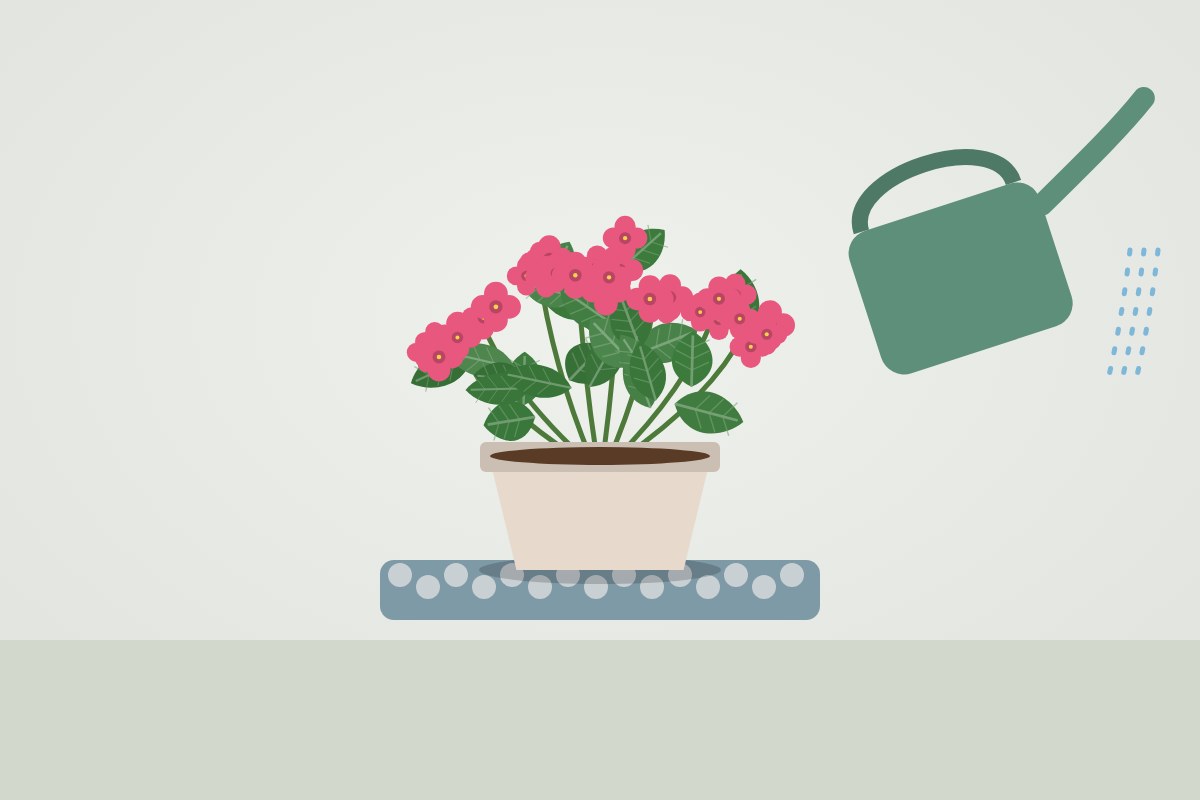
Illustration 5. A tray of moist expanded clay raises humidity without misting.
Soil, feeding and repotting
Use a light, loose potting mix for flowering plants with added perlite. Drainage at the bottom of the pot is essential. Choose a shallow pot that is not too large: in a roomy pot a begonia takes a long time to flower.
During growth and flowering, feed every two weeks with fertiliser for flowering plants. Foliage varieties respond better to nitrogen-rich feeds. Repot in spring every 1–2 years.
Propagating begonias
- Stem cuttings. Cut an 8–10 cm tip with 2–3 leaves and place it in water or moist compost. Roots appear in 2–4 weeks.
- Leaf cuttings. For Rex begonias: nick the veins on the underside of a leaf and lay it on moist compost; young plants will grow from the cuts.
- Dividing the plant or tuber — in spring when repotting.
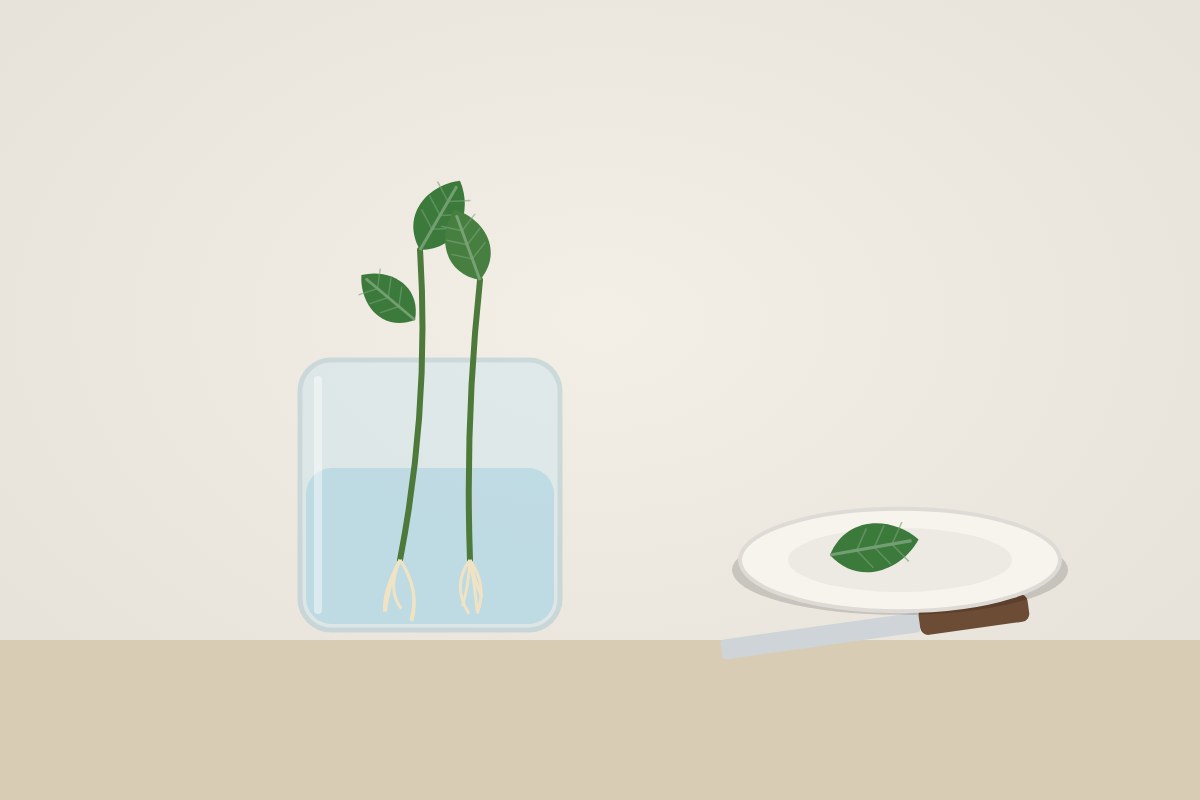
Illustration 4. Begonias root easily from stem or leaf cuttings.
Why a begonia won’t flower or drops its leaves
- Won’t flower — too little light, too large a pot or too much nitrogen.
- Leaf edges dry out — dry air from radiators.
- Buds drop — a draught, a temperature change or moving the pot.
- White powdery coating — powdery mildew; a fungicide and good ventilation will help.
In short. Indirect light, watering once the soil dries, humid air without misting and a snug pot: follow these four rules and your begonia will bloom profusely and show off its beautiful leaves.