
 Birthday
 Hydrangeas
The snake plant, or sansevieria, is one of the toughest houseplants. It forgives missed waterings, grows in shade and is easy to propagate even for beginners. The main rule of care is simple: it is better to underwater than to overwater.
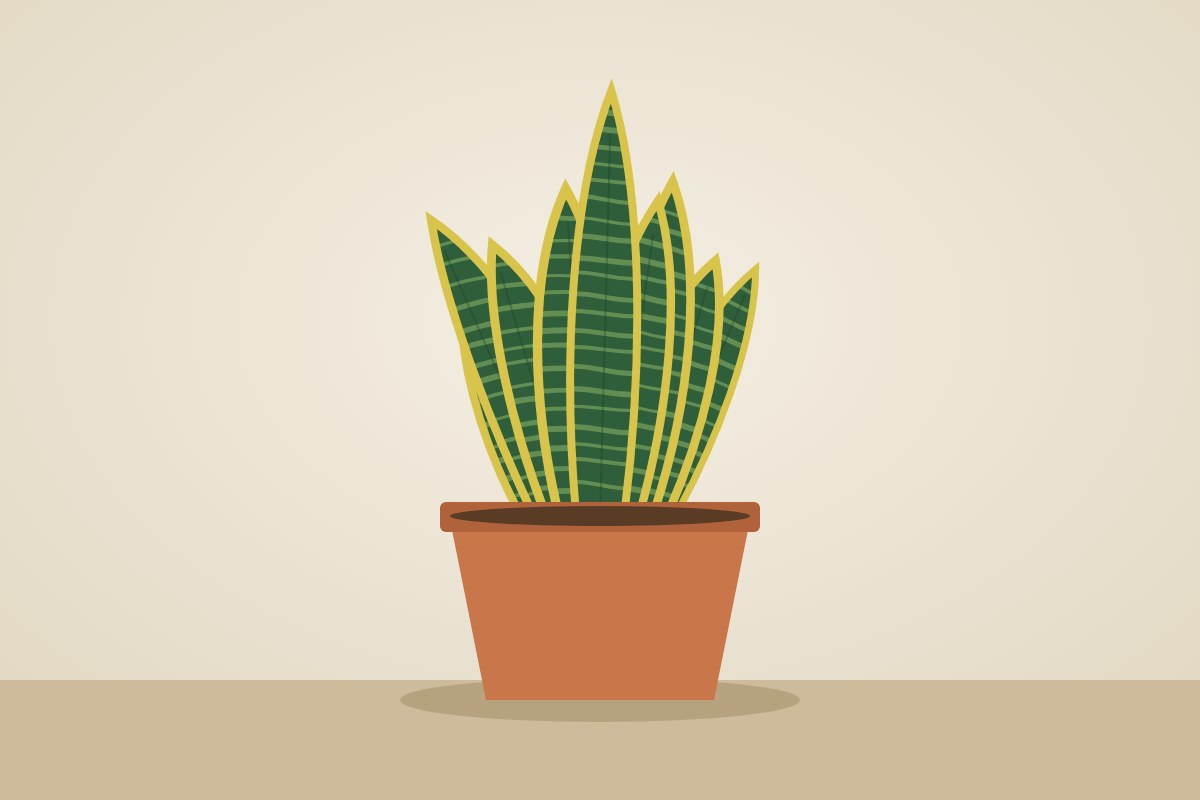
Illustration 1. Snake plant with yellow-edged leaves (‘Laurentii’ variety).
What kind of plant it is
The snake plant comes from the dry regions of West Africa. Botanists now place it in the genus Dracaena (Dracaena trifasciata), but flower shops still call it sansevieria, snake plant or mother-in-law’s tongue. Its tough, fleshy leaves store water, so the plant survives drought without harm.
The most common varieties:
- ‘Laurentii’ — tall leaves with a yellow edge;
- ‘Hahnii’ — a low rosette 15–20 cm tall;
- cylindrical (Sansevieria cylindrica) — round, stick-like leaves that are often braided;
- ‘Moonshine’ — broad silvery-green leaves.
Light and position
A snake plant grows best in bright indirect light, near an east- or west-facing window. It tolerates partial shade, for example in a hallway or far from a window, but then grows more slowly and variegated varieties fade.

Illustration 2. The ideal spot is near a window, but out of harsh midday sun.
- Temperature: 18–27 °C; below 10 °C the leaves can be chilled and rot.
- Humidity: normal room humidity; no misting needed.
- Draughts and a cold windowsill in winter are its main enemies.
Watering and soil
Overwatering is the number one cause of death for snake plants. Water only when the soil has dried out completely, usually once every 2–3 weeks in summer and every 4–6 weeks in winter.
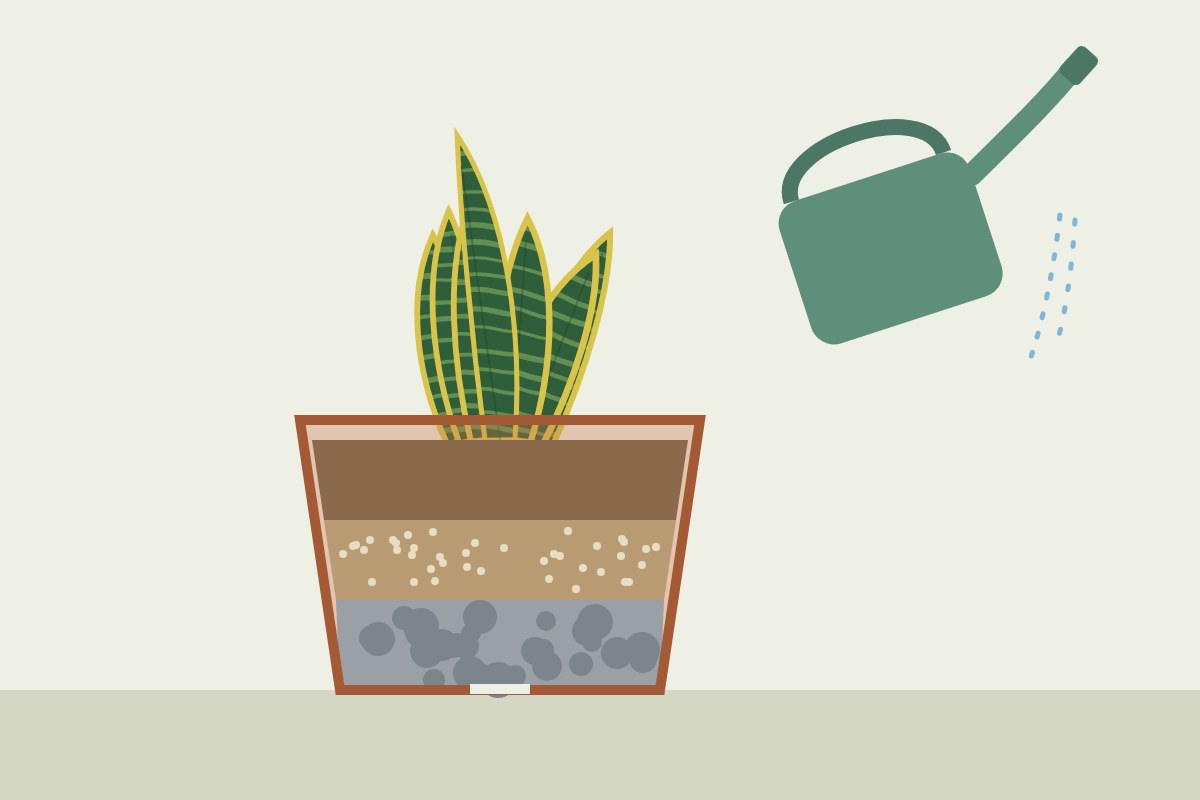
Illustration 3. Loose soil and a thick drainage layer keep water from pooling around the roots.
- Pour water around the edge of the pot, not into the centre of the rosette: water in the leaf axils causes rot.
- After 15 minutes, empty any water left in the saucer.
- Soil: ready-made cactus and succulent mix, or all-purpose compost mixed 1:1 with sand or perlite.
- Pot: must have a drainage hole; a wide, shallow pot is best, as the roots spread sideways.
- Feeding: once a month from April to September with cactus fertiliser at half strength; no feeding in winter.
Propagating a snake plant
There are three ways to propagate a snake plant. The best time is spring and early summer, when the plant is actively growing.
Leaf cuttings
- Cut a healthy leaf at the base with a clean sharp knife.
- Cut it into 5–7 cm pieces and mark which end is the bottom: a cutting roots only from its lower end.
- Let the cut surfaces dry for 1–3 days until they callus over.
- Stand the cuttings in 1–2 cm of water or push them 2–3 cm into moist sand or succulent compost.
- Roots appear after 4–8 weeks, and the first young shoots after 2–3 months.
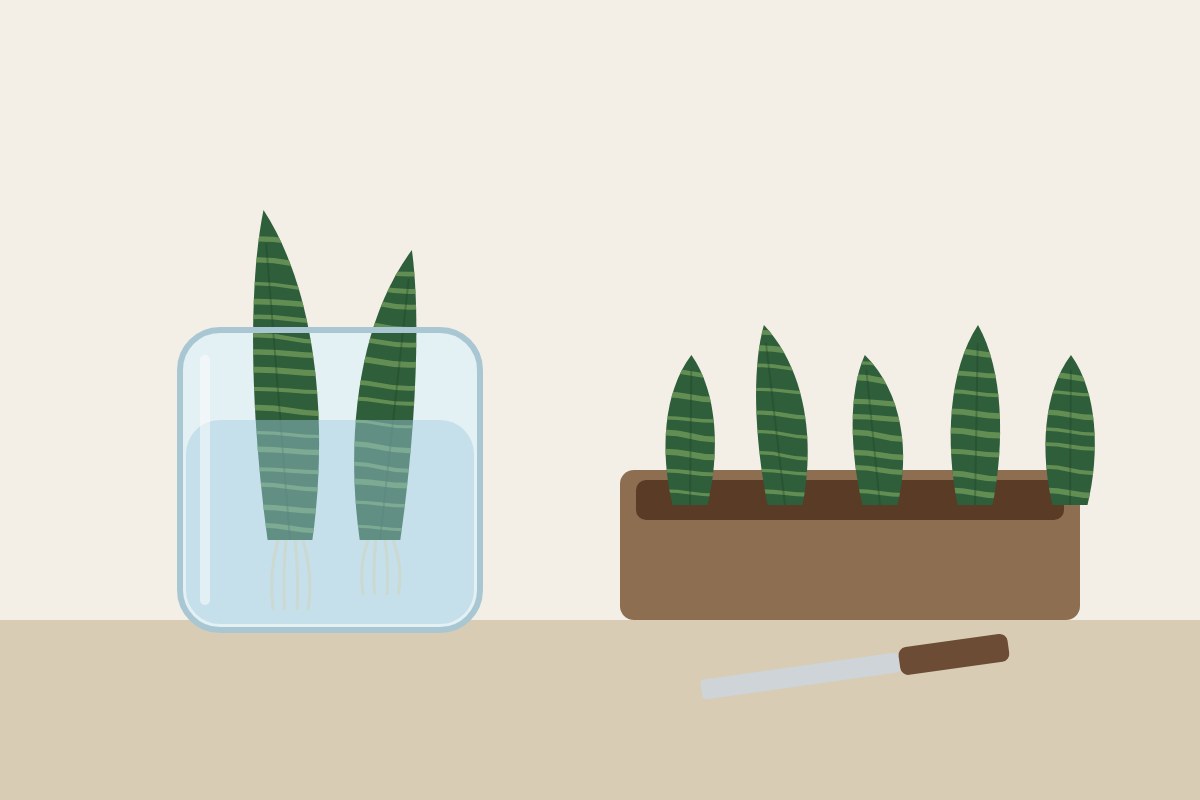
Illustration 4. Cuttings can be rooted in water or directly in light compost.
Important: variegated varieties such as ‘Laurentii’ lose their yellow edge when propagated from leaves. To keep the colouring, divide the plant instead.
Division
The quickest method, which gives a mature plant straight away. Take the plant out of its pot and carefully cut the rhizome with a knife so that each part has leaves and roots. Dust the cuts with charcoal, let them dry for a day and plant in separate pots. Water for the first time after 5–7 days.

Illustration 5. Division keeps the variety’s leaf colouring.
Offsets
A mature plant produces side shoots from its rhizome. When a rosette has 3–4 leaves, separate it with a piece of rhizome and pot it up on its own.
Repotting
Snake plants like a snug pot, so repot only every 2–3 years, when the roots have filled the pot or started to deform it. Choose a new pot only 2–3 cm wider than the old one.
Common problems
- Soft yellow leaves at the base — overwatering and rot. Stop watering, check the roots, remove damaged parts and repot into dry compost.
- Brown dry tips — very uneven watering or leaf damage.
- Leaves flop and splay apart — too little light or waterlogged soil.
- White cottony clumps — mealybugs; wipe the leaves with alcohol and treat with an insecticide.
Is the snake plant safe?
The leaves contain saponins, so the plant is mildly toxic to cats and dogs: chewed leaves can cause drooling or vomiting. Keep the pot where pets can’t reach it.
The snake plant is often called an “air purifier” because of a 1989 NASA study. In a real flat, however, a few plants have no noticeable effect on air quality; ventilation works better. Still, it looks good, needs almost no attention and can delight you for years with small fragrant flowers.
In short. Bright indirect light, sparse watering, light soil and warmth are all the care it needs. You can propagate a snake plant by leaf cuttings, division or offsets.


