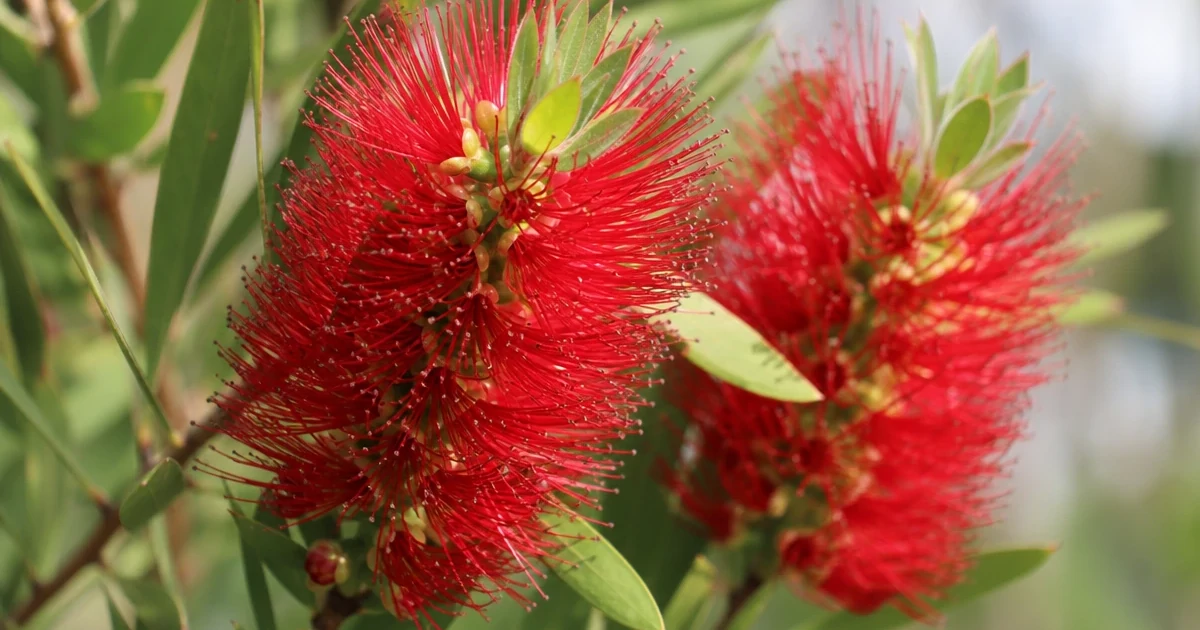
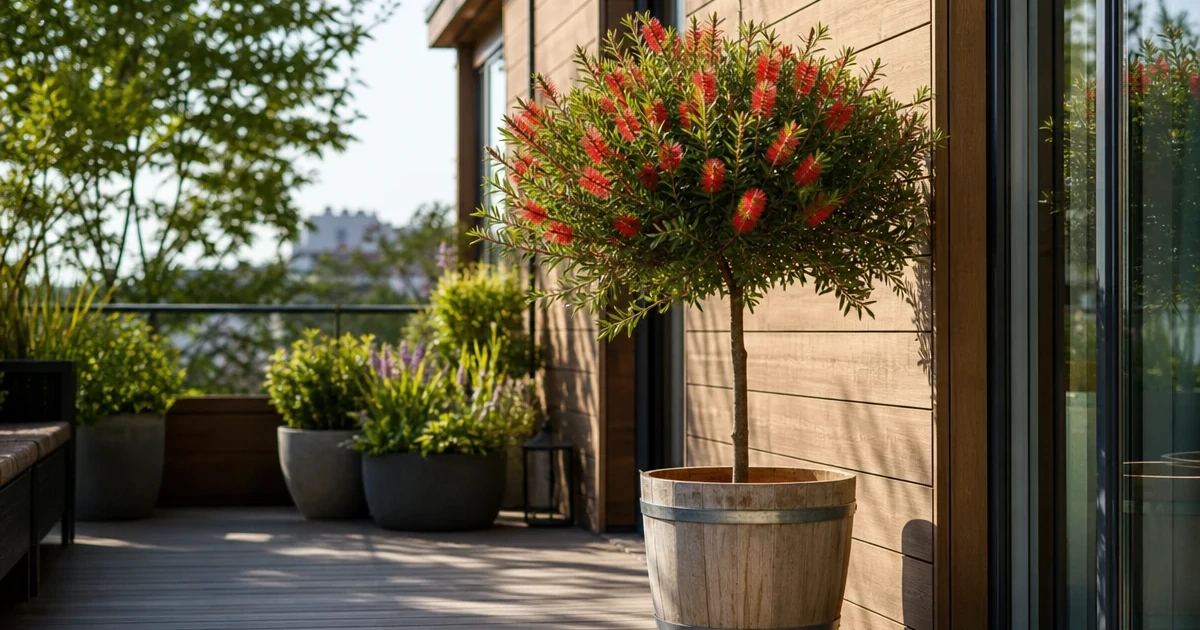
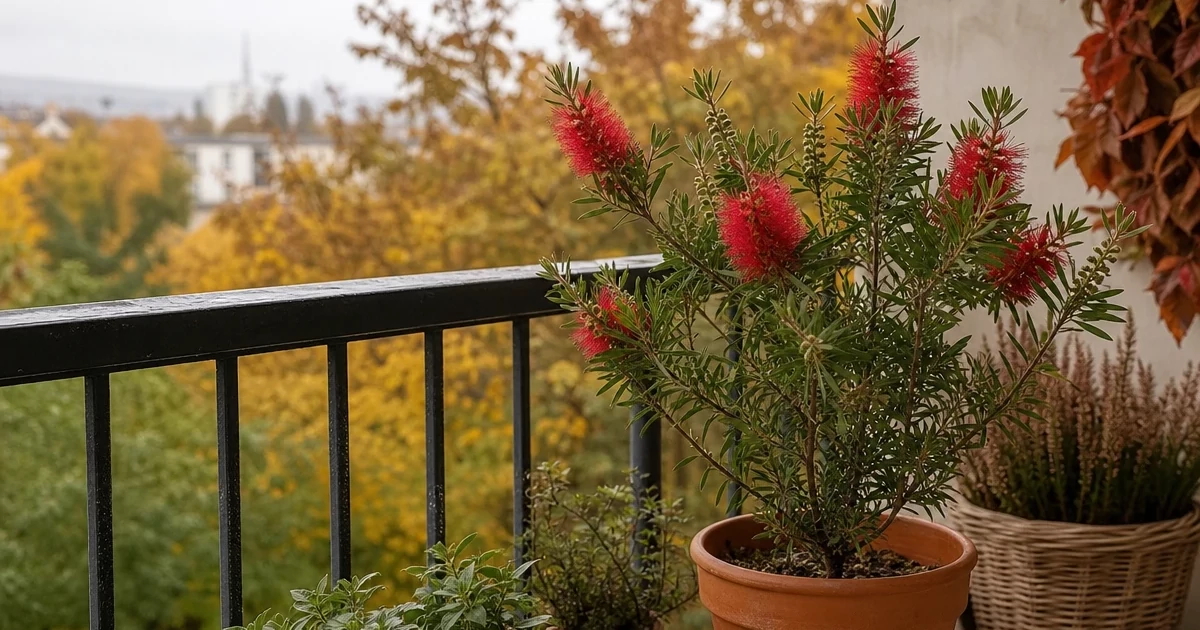
You cannot mistake a callistemon for anything else: its flower spikes look like bright red brushes for cleaning bottles. It is an Australian shrub that in cooler climates is grown in a tub: on a balcony or terrace in summer and in a cool, bright room in winter. With the right care it flowers every year. More flowers with photos, names and meanings are in our types of flowers guide.
Plants for home and balcony: potted plants.
Callistemon belongs to the myrtle family and comes from Australia. Many botanists now include its species in the genus Melaleuca, but it is still sold as callistemon or bottlebrush. The Greek name means “beautiful stamen”: the fluffy look comes not from petals but from long, brightly coloured stamens. The leaves are stiff and narrow and smell spicy when crushed, like many myrtles. After flowering, woody seed capsules stay on the branches for years.
Flower buds form during the cool season. In winter keep the plant somewhere bright at 10–15 °C, such as a glazed balcony or a cool room, and water moderately. In a warm flat next to a radiator it usually will not flower and may drop leaves.
A mature plant survives only brief, light frosts, roughly down to −5 °C, and young plants and roots in a pot are even more sensitive. So in most of Ukraine callistemon is grown in a container: outside on a balcony, terrace or garden from May to October, then brought into a cool, bright room before the first frosts. Do not rush in autumn: a few cool nights at +5…+8 °C harden the shrub and help it set buds.
Right after flowering, cut the shoots back just above the spent flower spikes: the new growth will carry next year’s buds. Regular shaping makes the plant bushier, and a bottlebrush can even be trained as a standard.
Bottlebrush combines well with other sun lovers on a balcony; see “Sun-loving houseplants”. An olive tree in a pot likes a similar cool winter.
Inspect the shoots: they should be densely covered with leaves, without brown tips or bare patches — leaf drop often means the plant dried out in the shop. The soil should be moist but not soggy. If buying in bud, choose a plant with unopened “bottlebrushes” so flowering lasts longer. At home give it 2 weeks to adjust in a bright spot, without repotting or feeding.
Only where winters are mild without hard frosts. In cold climates grow it in a tub and bring it in for winter.
Usually from late spring into summer; with good care it may flower again later.

Author: Maria Svitlovir
Graduated from Taras Shevchenko National University of Kyiv, Institute of Biology and Medicine (2001). BSc in Biology, MSc in Horticulture. Writes about plants, works at a garden centre selecting and repotting plants, and contributes to plant reference guides.
© Kyiv 2026 UFL Flower Shop

Trademark UFL №191476 is used under license of the rights holder.
All rights reserved. Any use of materials without a link to the site is prohibited.


 Birthday
 Hydrangeas