
 Birthday
 Hydrangeas
This article was prepared with the support of UFL flower delivery. Greenery is the invisible framework of a bouquet. It sets the shape, adds volume, separates the flowers, softens transitions between shades and makes the arrangement look natural. Many types of foliage also last longer in a vase than the flowers themselves. Here are the most popular florist greens and which ones you can grow yourself.
Why a bouquet needs greenery
10 popular types of bouquet greenery
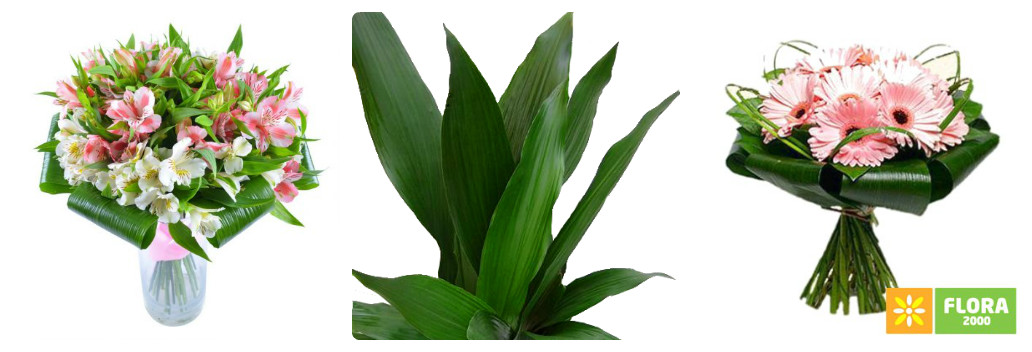
1. Aspidistra
Large, glossy, dark green leaves without stalks. Florists loop them, staple them or use them as a collar around the bouquet. They look especially good with red roses, gerberas and anthuriums and last 2–3 weeks in a vase.
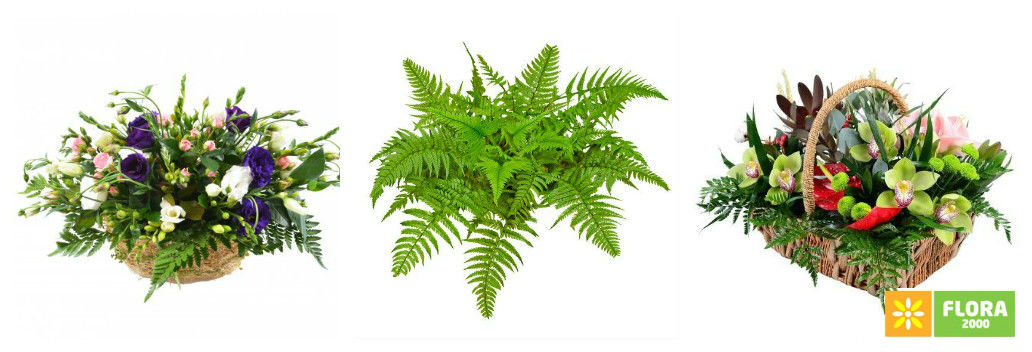
2. Fern
Florists mostly use leatherleaf fern (Rumohra) with its tough, finely cut fronds. It creates a dense background around the edge of a bouquet and stays fresh for a long time.
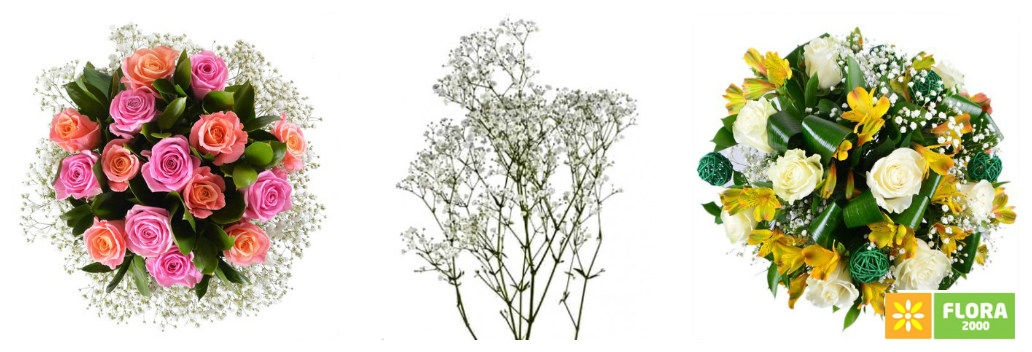
3. Gypsophila (baby's breath)
Strictly speaking, it is a filler flower rather than greenery: masses of tiny white or pink flowers on branching stems. It adds lightness, is a favourite in wedding bouquets, and single-variety gypsophila bouquets have become a trend. It dries in the vase without losing its shape.
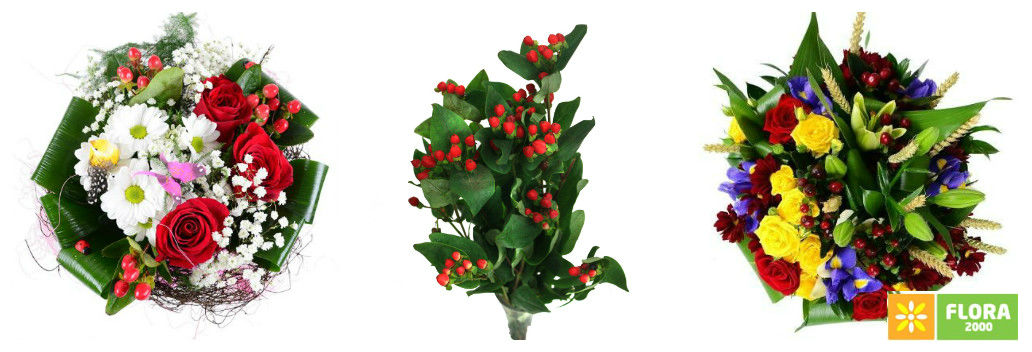
4. Hypericum
St John's wort with decorative berries in red, pink, green or cream. The berries add texture to autumn and winter arrangements and last 1.5–2 weeks. They are inedible and toxic to pets.
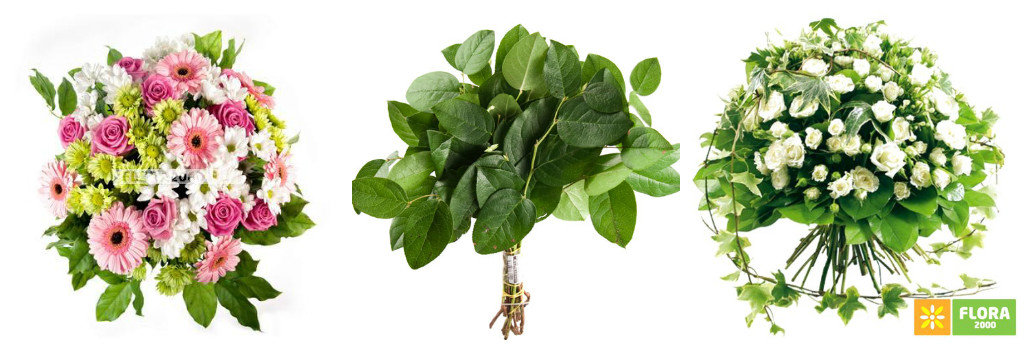
5. Salal
The leathery, rounded leaves of Gaultheria make a versatile base: they add fullness without competing with the flowers and last up to three weeks.
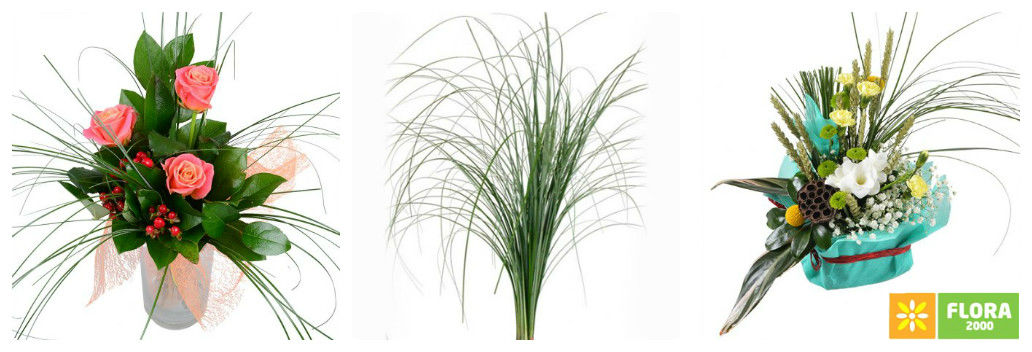
6. Bear grass
Thin, stiff blades gathered in bunches. Florists use them to frame bouquets and create loops and "fountains" for a graphic, dynamic look.
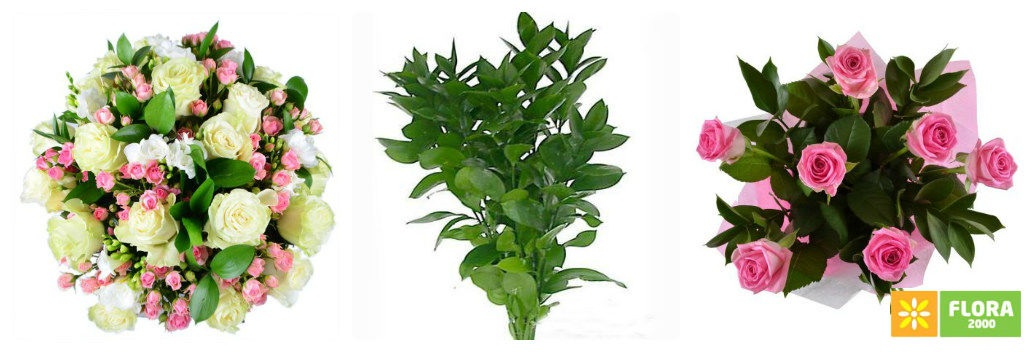
7. Ruscus
The stiff, glossy "leaves" of ruscus are actually flattened stems called cladodes. Ruscus holds its shape well, pairs with roses, orchids and lilies and lasts more than three weeks in a vase.
8. Eucalyptus
Silvery blue, rounded eucalyptus leaves ('Cinerea', 'Populus', 'Baby Blue') are the big trend of recent years. It smells fresh, dries beautifully and suits pastel and white flowers.
9. Pistacia and pittosporum
Small-leaved branches for a full, fluffy base. Pistacia (mastic tree) is loved for its rich green, pittosporum for its pale variegated leaves.
10. Monstera and other tropical leaves
A large split monstera leaf is a statement for exotic and minimalist arrangements with anthuriums, strelitzias and orchids.
How to make greenery last
- Strip any leaves that would sit below the water line; they rot and spoil the water.
- Recut the stems every 2–3 days and change the water.
- Wipe aspidistra and monstera leaves with a damp cloth to keep them glossy.
- Eucalyptus and gypsophila can be dried at the end for a dried arrangement.
Greenery you can grow yourself
- Indoors: asparagus fern, aspidistra, Boston fern, ivy and monstera, whose leaves and sprigs you can cut for home bouquets.
- In the garden: hosta, bergenia, heuchera, box, eucalyptus grown as an annual, ornamental grasses and perennial gypsophila.
Cut greenery in the morning, put it straight into water and let it rest somewhere cool for a few hours before arranging.
FAQ
Does every bouquet need greenery?
No. Single-variety bouquets of roses, peonies or tulips are often made without it and look modern and minimal.
Which greenery lasts longest?
Ruscus, aspidistra, salal and bear grass: three weeks or more.
Order a bouquet made by florists with the right greenery: roses, orchids and other flowers with delivery in Kyiv from UFL.

View full-size photo
Author: Maria Svitlovir
Graduated from Taras Shevchenko National University of Kyiv, Institute of Biology and Medicine (2001). BSc in Biology, MSc in Horticulture. Writes about plants, works at a garden centre selecting and repotting plants, and contributes to plant reference guides.


