
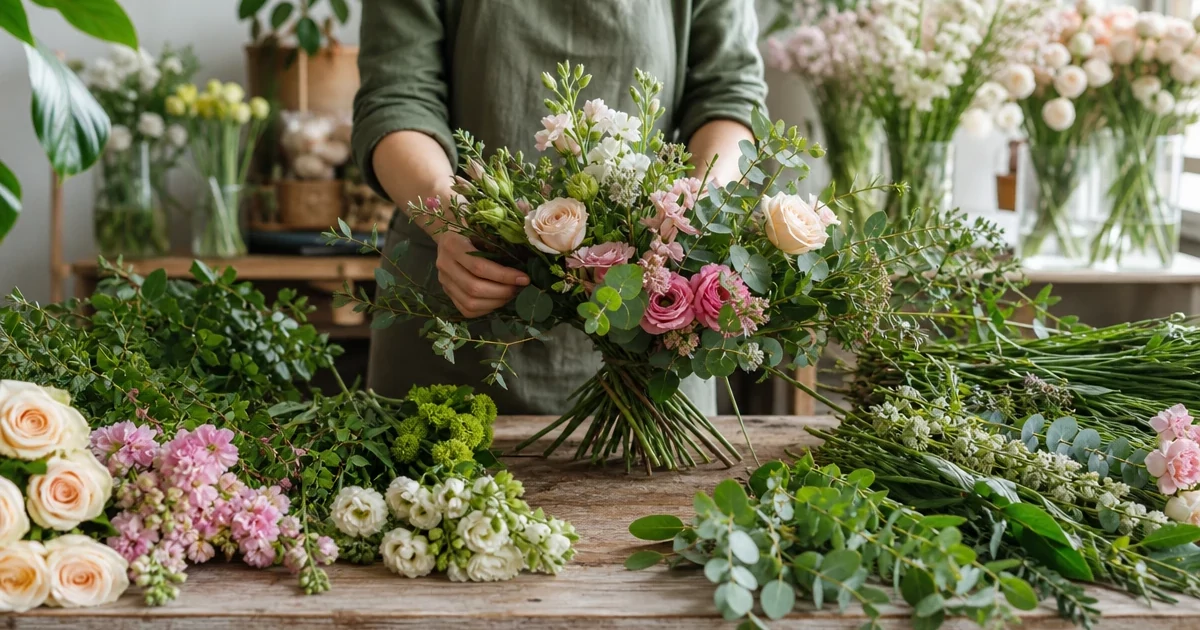
Received a bouquet and wondering what that blue star or sprig of berries is called? This glossary lists the flowers and greenery you will most often find in bouquets, with a short note on how to recognise each one and why florists use it. Each name links to a detailed article on varieties, care and vase life.
Large blooms that an arrangement is built around.
A few more focal flowers you will find in our bouquets: cymbidium, gentian, Jumilia rose, Avalanche rose, Mondial rose.
Small flowers that add volume, airiness or a touch of colour.
Detailed guides to more fillers: waxflower, trachelium, solidago, veronica, skimmia, astilbe.
Broad, tough leaves for wraps and loops come from aspidistra.
Dried flowers make lasting home decor once the fresh blooms in a bouquet have faded.
Other great dryers are craspedia, brunia, eryngium (sea holly).
Product cards usually list the focal flowers, fillers and greenery. If a name is unfamiliar, look it up here — it helps you understand how long the bouquet will last and how to care for it. Ruscus, hypericum and chrysanthemums last longest, while stock and snowball viburnum need frequent water changes. Browse ready-made bouquets in roses and chrysanthemums.
Chrysanthemums, alstroemerias, hypericum and ruscus usually last 2 weeks or more.
Small flowers or sprigs that fill the gaps between large blooms and add volume: gypsophila, tanacetum, ozothamnus, spray chrysanthemums.
Statice, ozothamnus, ruscus, gypsophila and eucalyptus dry best.

Author: Maria Svitlovir
Graduated from Taras Shevchenko National University of Kyiv, Institute of Biology and Medicine (2001). BSc in Biology, MSc in Horticulture. Writes about plants, works at a garden centre selecting and repotting plants, and contributes to plant reference guides.
© Recklinghausen 2026 UFL Flower Shop

Trademark UFL №191476 is used under license of the rights holder.
All rights reserved. Any use of materials without a link to the site is prohibited.

 Birthday
 Hydrangeas