For many people carnations are still associated with official holidays and memorial ceremonies. But this flower has a rich history: Leonardo da Vinci painted it, Oscar Wilde wore it in his buttonhole, and today carnations are back in fashion with florists and brides. Here is what carnations mean and who to give them to. More flowers with photos, names and meanings are in our guide to types of flowers. This is a birth month flower; see January flowers.
The carnation's botanical name, Dianthus, comes from the Greek dios (of Zeus) and anthos (flower) — "the divine flower". Garden carnations have been grown for more than two thousand years.
In Leonardo da Vinci's "Madonna of the Carnation", the Virgin holds a red carnation, which in Christian symbolism is linked to love and Christ's Passion. In 15th- and 16th-century Flemish and German portraits, a carnation in the sitter's hand signalled an engagement, earning it the name "flower of betrothal".
In the 19th century, the era of the "language of flowers", each carnation colour gained its own meaning. Buttonholes became fashionable too: gentlemen wore a carnation in their lapel, and Oscar Wilde and his circle famously sported dyed green carnations. In 1908 Anna Jarvis made the white carnation the symbol of Mother's Day in the USA, and in 1974 red carnations gave their name to Portugal's bloodless Carnation Revolution.
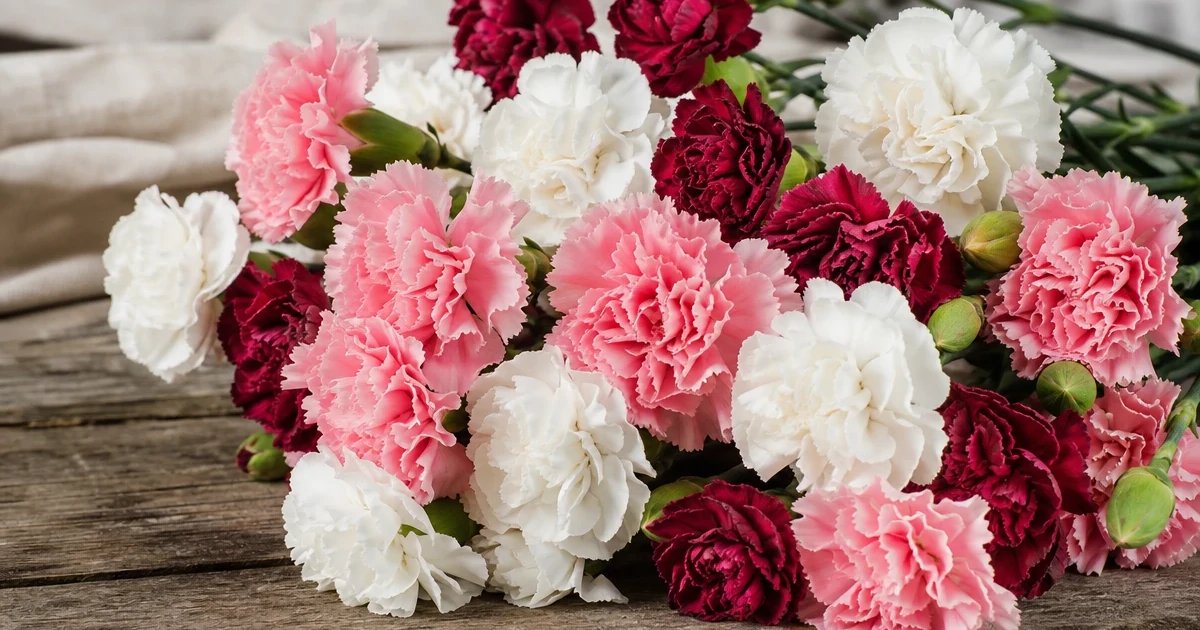
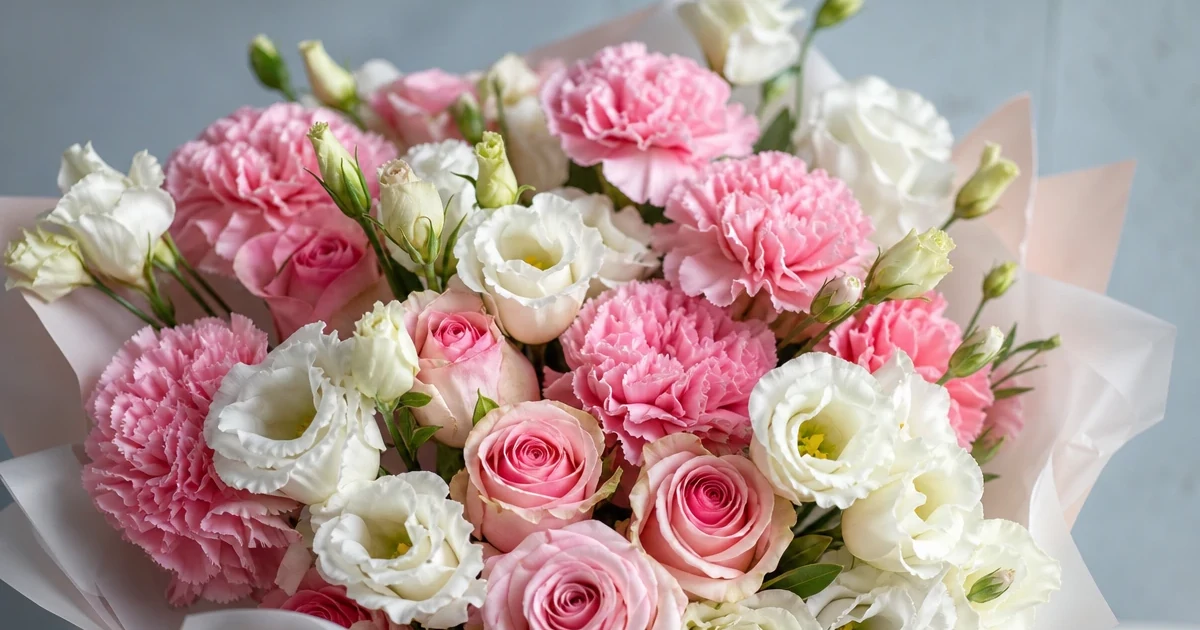
Florists increasingly use carnations in wedding bouquets. Their ruffled double flowers add volume and texture, pastel shades create a soft look and bright ones a bold contrast. Carnations pair well with roses, lisianthus, gypsophila and eucalyptus and are more affordable than many premium flowers.
Carnations go with almost any flower and add texture with their frilled petals. Soft pairings: roses, lisianthus and gypsophila in pastels; modern ones: button chrysanthemums, eucalyptus and dried flowers; festive ones: burgundy carnations with white roses and fir in winter. Spray carnations fill gaps between larger blooms, while single-stem carnations massed in one colour make a dome arrangement that looks chic and expensive.
Carnations are among the longest-lasting cut flowers: with proper care a bouquet lasts 2–3 weeks. Recut the stems between the nodes, change the water every 2–3 days and keep the bouquet away from fruit — carnations are sensitive to ethylene.
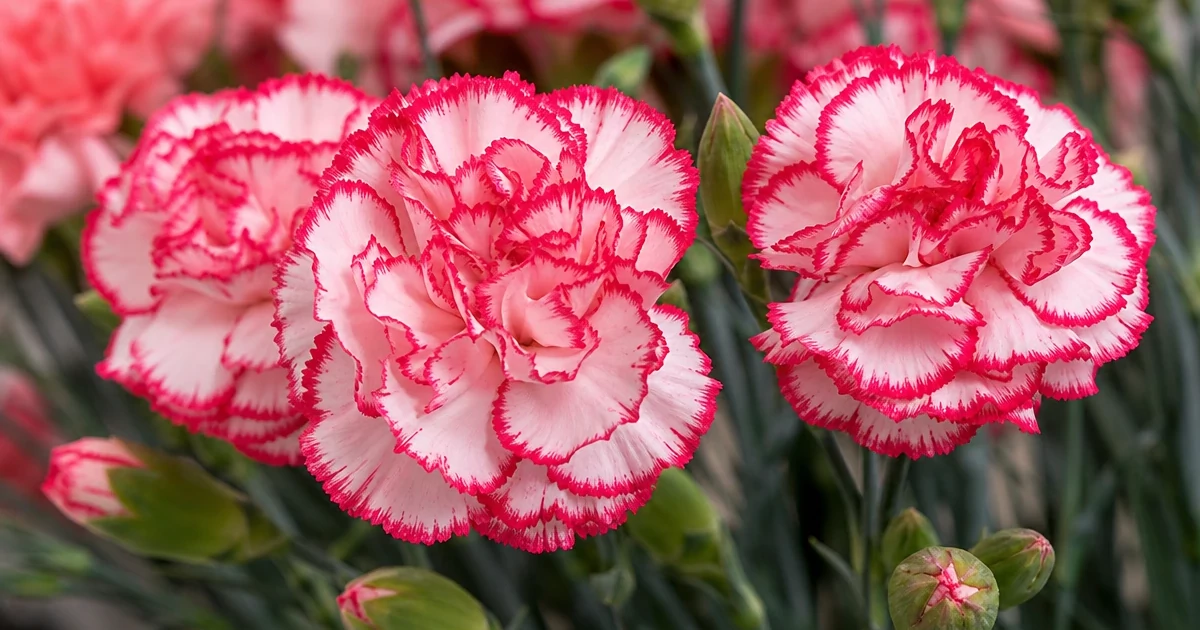
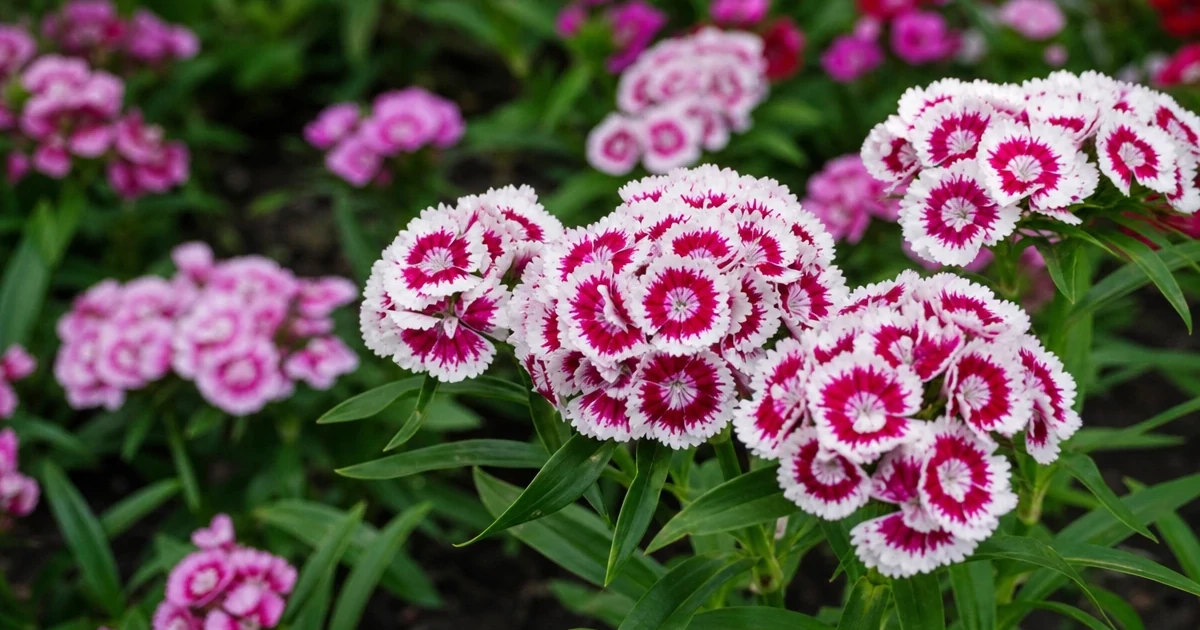
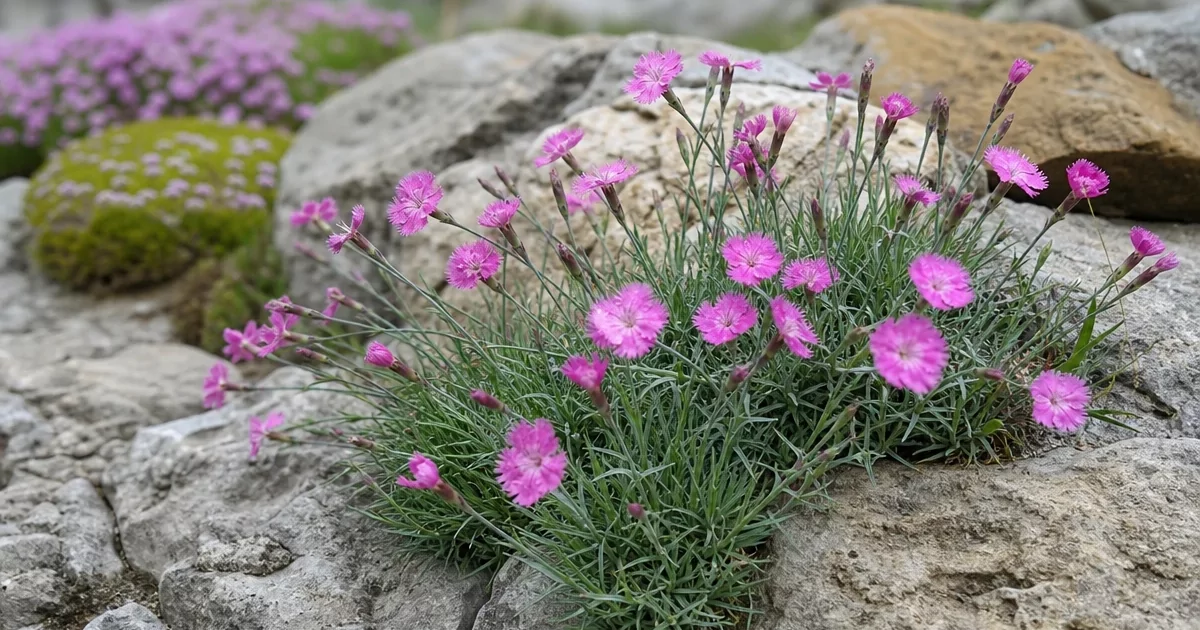
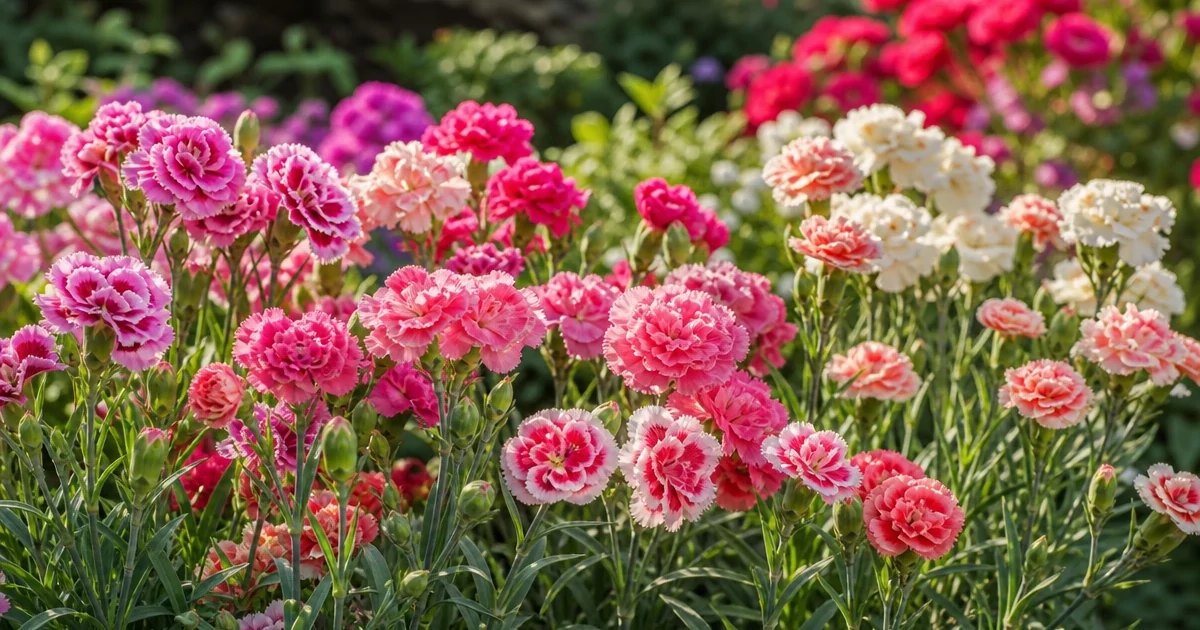
All carnations love sun and light, free-draining soil without standing water, as the crown rots quickly in damp spots. Chabaud carnations are sown indoors in January–February because they take 5–6 months to flower; Sweet William is sown outdoors in summer and blooms the following year. Perennial types are propagated by division and cuttings. Deadhead after flowering, and in winter lightly cover perennial pinks with conifer branches to protect them from spring sun and rot.
Of course. Modern varieties — pastel, bicoloured or spray — look delicate and romantic.
Usually 2–3 weeks — longer than most cut flowers.
Admiration, respect and deep love. Because red carnations are traditionally laid at memorials in Ukraine, romantic bouquets often use burgundy or bicolour ones instead.
Sweet William is a biennial with dense heads of small flowers for borders; the florist’s carnation has large single blooms on long stems, mainly for cutting.
Mothers and grandmothers (pink), colleagues and teachers (white, yellow), a partner (burgundy and bicolour) and men too — carnations are understated and long-lasting.
A single-stem carnation has one large bloom on a long stem; a spray carnation has 5–10 smaller blooms on a branched stem. Sprays suit mixed bouquets, while single stems suit mono bouquets and wedding work.
Cut the stems at an angle between nodes, remove leaves from the water, change it every 2–3 days and keep the bouquet away from fruit, radiators and direct sun — carnations then last up to three weeks.
Yes. White, cream and blush double carnations are increasingly used in bridal bouquets and buttonholes: they look delicate and stay fresh all day.
Order a bouquet with carnations or roses with UFL delivery in Kyiv.

Author: Maria Svitlovir
Graduated from Taras Shevchenko National University of Kyiv, Institute of Biology and Medicine (2001). BSc in Biology, MSc in Horticulture. Writes about plants, works at a garden centre selecting and repotting plants, and contributes to plant reference guides.
© Kyiv 2026 UFL Flower Shop

Trademark UFL №191476 is used under license of the rights holder.
All rights reserved. Any use of materials without a link to the site is prohibited.


 Birthday
 Hydrangeas