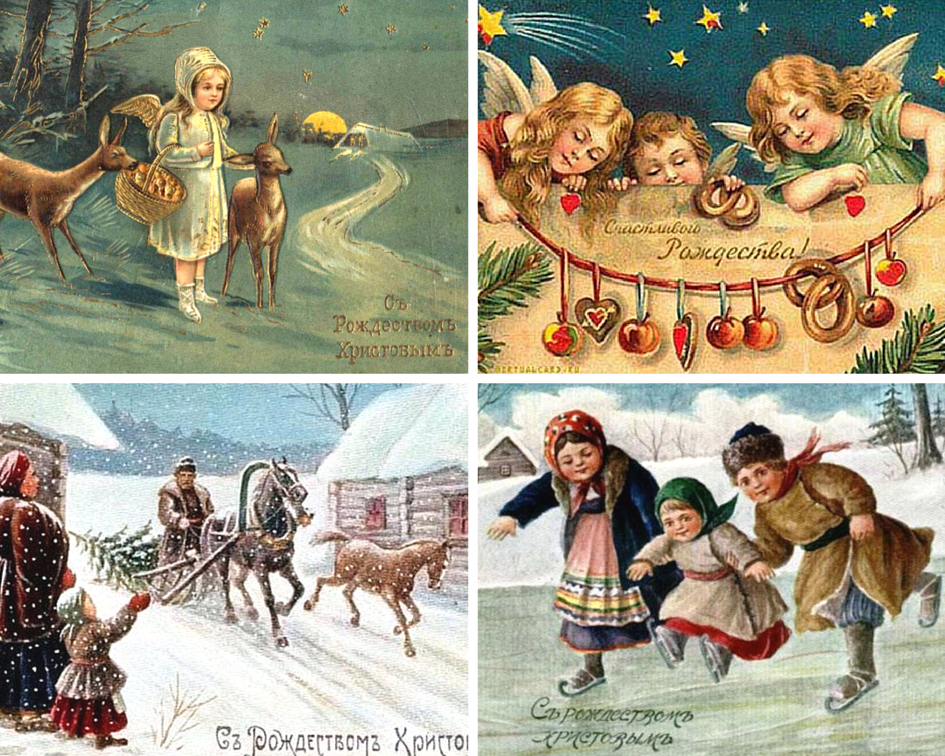
Today you can send greetings in a second, yet a paper card is still a special sign of attention. Here is how the first Christmas card appeared, why cards became a mass product in the 19th century, where Easter cards came from and how the tradition lives on in Ukraine.
You can order a bouquet with a card in our flower baskets and flowers in a box sections.
In 1840 Britain introduced the Penny Post: sending a letter became cheap and correspondence grew rapidly. In 1843 the civil servant and patron of the arts Henry Cole, who lacked the time to answer all his acquaintances, commissioned the artist John Callcott Horsley to design a Christmas card. About a thousand copies were printed. Its central scene showed a family at a festive table — and the fact that a child was among those raising glasses caused controversy at the time.
In the late 19th century Easter cards spread in the wake of Christmas cards. Popular motifs were painted eggs, chicks, rabbits, the first spring flowers and pussy willow branches, and in the Ukrainian tradition, pysanky and embroidery.
In the early 20th century illustrated postcards with folk motifs were printed in Ukrainian cities. In Soviet times religious holidays were discouraged, and the New Year card became the main one. After 1991 Christmas and Easter cards returned, and today Ukrainian artists and illustrators create original series featuring Petrykivka painting, embroidery and winter landscapes.
For the traditions of the holiday itself, see "Christmas in Ukraine".
In 1843 in Britain: it was commissioned by Henry Cole and drawn by John Callcott Horsley.
Postage became cheap and colour printing affordable, so cards could be produced in large numbers.
A short personal wish — a few sincere words are worth more than a long poem.

Author: Maria Svitlovir
Graduated from Taras Shevchenko National University of Kyiv, Institute of Biology and Medicine (2001). BSc in Biology, MSc in Horticulture. Writes about plants, works at a garden centre selecting and repotting plants, and contributes to plant reference guides.
© Kyiv 2026 UFL Flower Shop

Trademark UFL №191476 is used under license of the rights holder.
All rights reserved. Any use of materials without a link to the site is prohibited.

 Birthday
 Hydrangeas

.jpg)