
Clivia is one of the longest-lived houseplants: with good care it lasts for decades and every late winter sends up a stalk topped with an umbrella of orange bells. It tolerates shade and dry air and rarely needs repotting. The one thing it cannot do without is a cool autumn rest. Here is how to give it one and why your clivia might not be flowering.
The indoor clivia is Clivia miniata, an evergreen herbaceous plant of the amaryllis family from the subtropical forests of South Africa. It has no bulb: long strap-shaped leaves form a fan, their bases tightly wrapped into a false stem. The roots are thick and fleshy and store water. A stalk carrying 10–20 bell-shaped flowers usually appears in February–March; flowers are orange, less often yellow or cream.
Clivia likes indirect light: an east or west window or a spot further into a bright room. Direct sun scorches the leaves. Keep it at 20–25 °C while growing and flowering; in summer it can go on a shaded balcony.
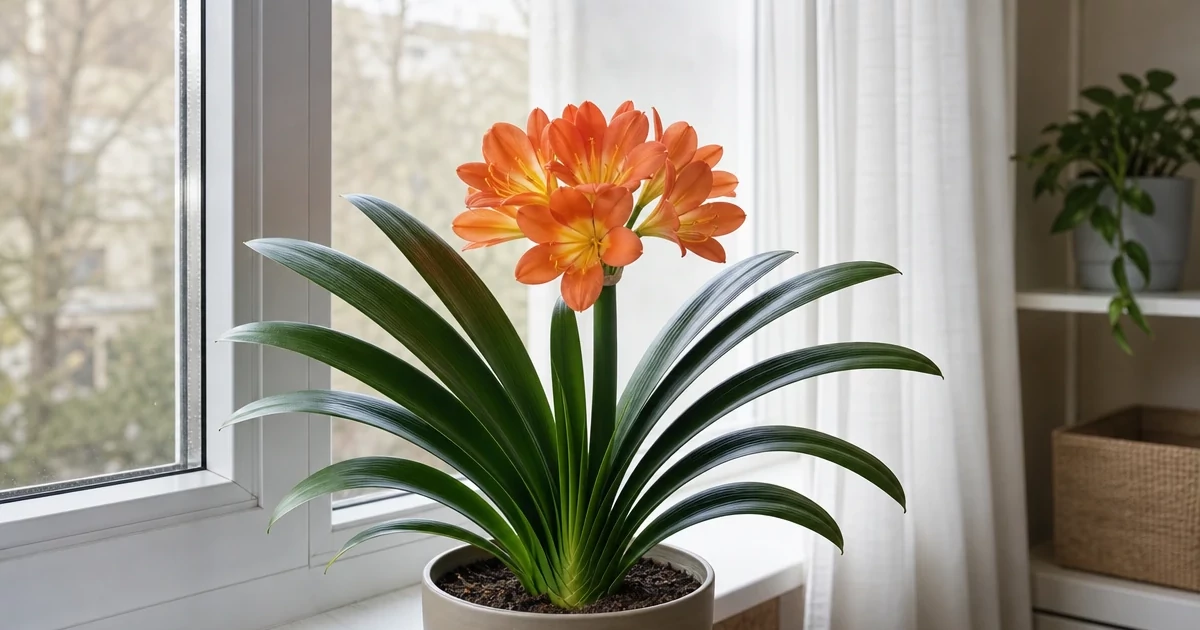
View full-size photoClivia blooms in late winter with proper care.
Water moderately when about half the pot has dried — the fleshy roots rot easily. Use rested, room-temperature water and never leave it in the saucer. Wipe the leaves with a damp sponge. Feed every 2 weeks from spring to late summer.
Clivia needs a rest to flower. From October until a flower stalk appears (usually late December to January), keep it cool at 10–14 °C in good light, water minimally — every 2–3 weeks, just to stop the leaves wilting — and do not feed. Young plants need about 2 months’ rest, mature ones 3–4.
When the stalk reaches 10–15 cm, move the pot somewhere warm and bright and gradually resume watering. Do it too early and the stalk stays short, with flowers opening among the leaves.
Clivia dislikes repotting and flowers best when slightly pot-bound. Repot only when roots push out of the pot — mature plants every 3–4 years, right after flowering — into a pot just 2–3 cm wider. The fleshy roots snap easily; dust damaged spots with charcoal. Do not bury the base of the leaves, or the lower leaves rot. For large plants, simply replace the top layer of soil each spring. See how to repot houseplants.
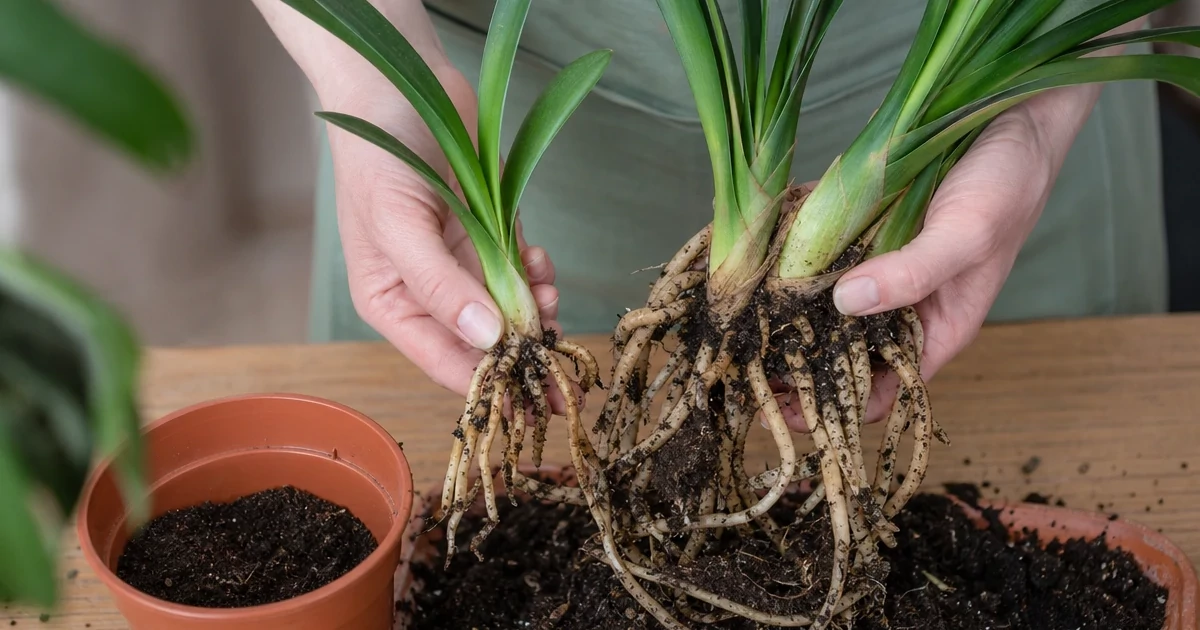
View full-size photoClivia offsets are separated during repotting for propagation.
Clivia contains alkaloids, mostly in the roots. If swallowed they can cause vomiting, drooling and stomach upset, and the plant is toxic to cats and dogs. Wear gloves when repotting and keep it away from pets and small children. More winter bloomers: winter-flowering houseplants; browse potted plants.
Usually in February–March, after a cool winter rest. The flowers last 3–4 weeks.
It was moved into warmth too early or kept too dry as the stalk began to grow. Move it once the stalk reaches 10–15 cm.
Only when roots push out of the pot — every 3–4 years for mature plants, after flowering.

Author: Maria Svitlovir
Graduated from Taras Shevchenko National University of Kyiv, Institute of Biology and Medicine (2001). BSc in Biology, MSc in Horticulture. Writes about plants, works at a garden centre selecting and repotting plants, and contributes to plant reference guides.
© Kyiv 2026 UFL Flower Shop

Trademark UFL №191476 is used under license of the rights holder.
All rights reserved. Any use of materials without a link to the site is prohibited.

 Birthday
 Hydrangeas