UFL logo

Floristry styles: classic, European, eco and more

ID:
1178
Total views:
1903
Category:
Published:
Updated:


Bouquets, like clothes or interiors, come in styles. A classic round bouquet, an airy European one, a restrained minimalist design, an eco bouquet with dried flowers — each creates its own mood and suits its own occasion and recipient. Here are the main floristry styles, so it is easier to tell a florist what you want.

Bouquets in different styles: peony-style roses and flowers in a box.

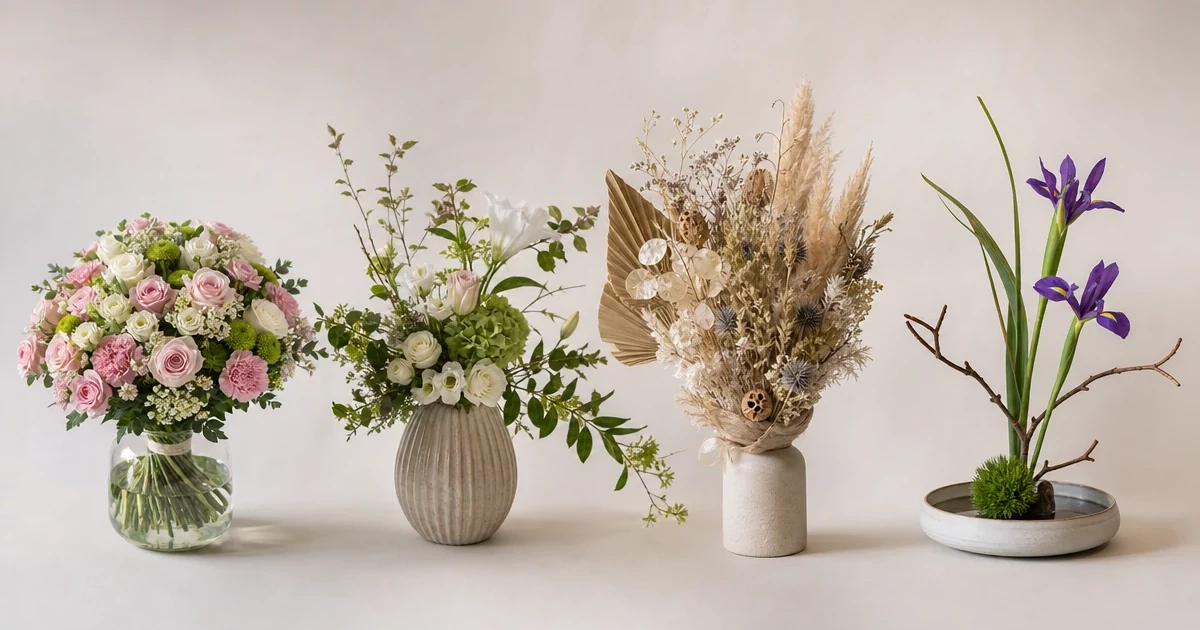
Arrangements in different styles: classic, European, eco, ikebana
View full-size photo

The main styles

Floristry stylesClassicRound shapeA dense domeEuropeanNatural and airyTexture, greeneryMinimalistFew elementsLines, empty spaceEco and bohoDried flowers, grassesMuted tonesVintagePastels, lacePeony-style rosesVegetativeAs it grows in natureSeasonal plants
Six popular floristry styles
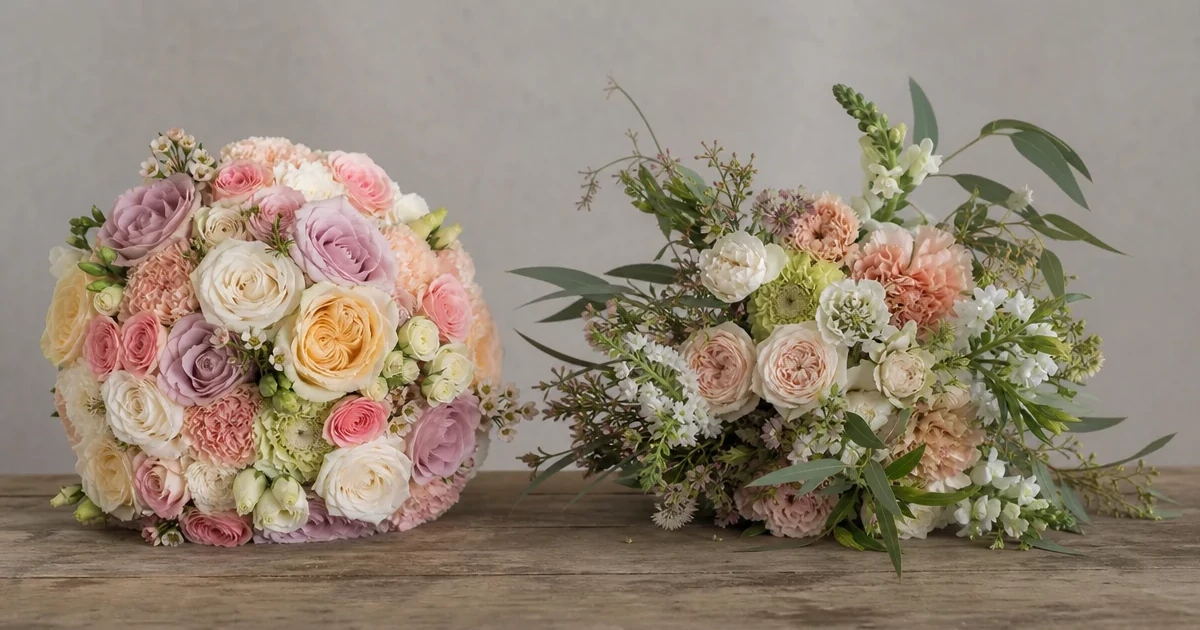
  • Classic — a dense round bouquet with flowers at one level; formal and festive.
  • European — natural and airy, with varied flower heights, textured greenery and a garden feel.
  • Minimalist — a few striking flowers or branches, lines and empty space; close to ikebana.
  • Eco and boho — dried flowers, grasses, pampas, muted natural tones.
  • Vintage — pastels, peony-style roses, lace and linen.
  • Vegetative — plants placed as they grow in nature, following the season.

Classic round and European-style bouquets side by side
View full-size photo

Bouquet-making techniques

  • Spiral — stems are laid at an angle in one direction; most hand-tied bouquets are made this way.
  • Parallel — stems stand upright, as in nature; the basis of the vegetative style.
  • Floral foam — for boxes, baskets and flower cakes.
  • Cascade — flowers and greenery trail downwards; a wedding classic.
  • Japanese — a few lines on a kenzan, see ikebana.

Technique also defines the shape — more on bouquet shapes.

How to explain the style you want to a florist

  • Show 2–3 photos of bouquets you like and one you definitely do not.
  • Name the occasion and the recipient: age, personality, favourite colours.
  • State your budget and size — the florist will choose flowers accordingly.
  • Mention whether scent matters and any allergies.
  • Say how the bouquet will be kept: in a vase, in a box, or travelling.

Choosing a style

  • For a formal business gift — classic or minimalist.
  • For a girlfriend, mum or friend — European or vintage.
  • For a long-lasting interior piece — an eco arrangement with dried flowers.
  • If unsure, show your florist photos of bouquets you like.

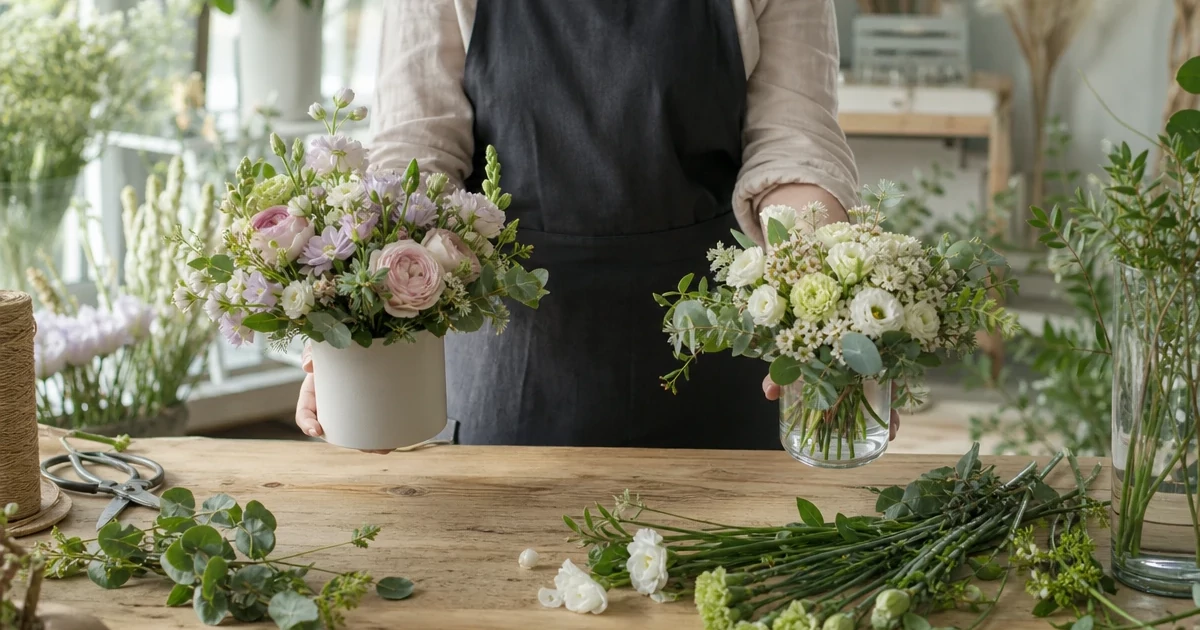
Florist showing two arrangement options
View full-size photo

On bouquet shapes see Types of bouquets, on the Japanese approach see Ikebana, and on dried arrangements see Dried flower arrangements.

FAQ

How does a European bouquet differ from a classic one?

A classic bouquet is dense and even; a European one is loose, with varied heights and plenty of greenery.

Which style is in fashion now?

Natural, garden-style bouquets and minimalism, plus combinations of fresh and dried flowers.

Author: Maria Svitlovir

Graduated from Taras Shevchenko National University of Kyiv, Institute of Biology and Medicine (2001). BSc in Biology, MSc in Horticulture. Writes about plants, works at a garden centre selecting and repotting plants, and contributes to plant reference guides.