
 Birthday
 Hydrangeas
Cyclamen is one of the few houseplants that flowers lavishly from autumn to spring. It is loved for its bright "butterflies" above beautifully patterned leaves, yet has a reputation for being fussy. In fact a cyclamen needs just three things: coolness, the right watering and a summer rest. Here is how to care for cyclamen at home, how to repot and how to propagate it.
Flowering potted plants, including cyclamen in season, are in our potted plants section.
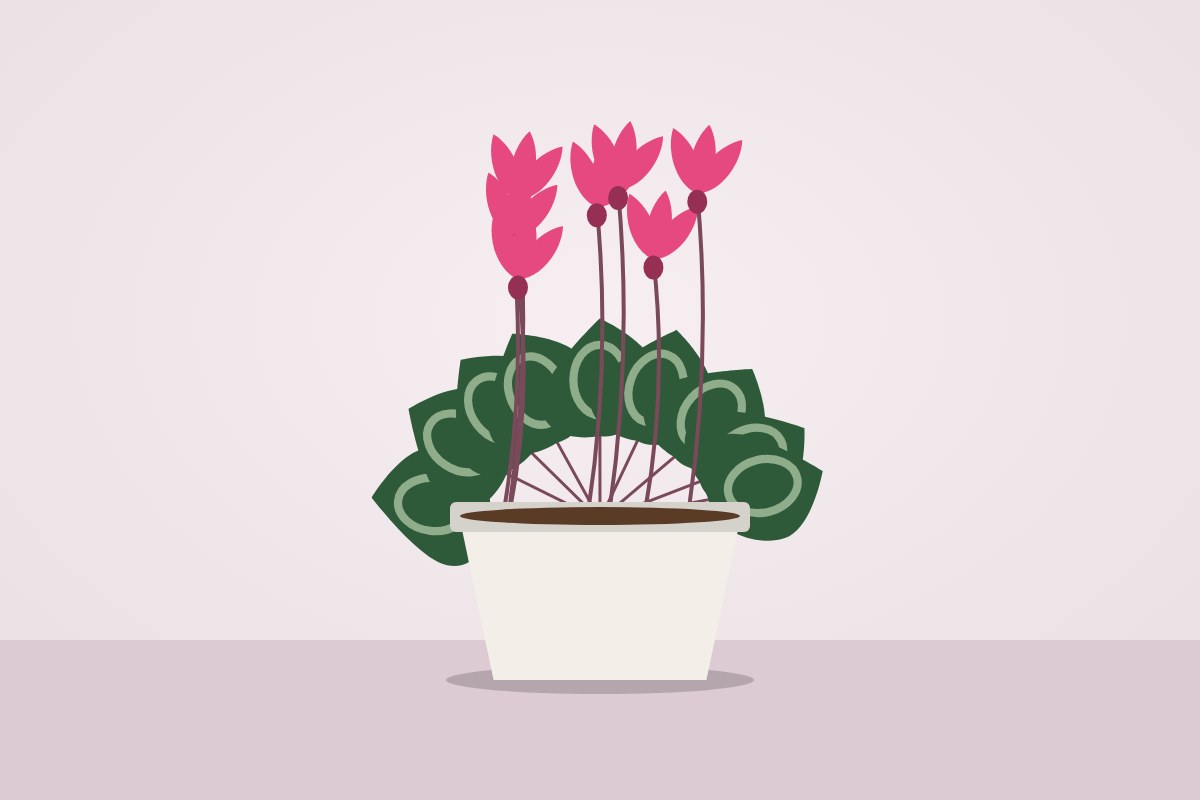
Types of cyclamen
- Persian cyclamen (Cyclamen persicum) — the most common in shops: large flowers and a pronounced summer dormancy.
- European cyclamen (Cyclamen purpurascens) — more compact, with small fragrant flowers and a less pronounced dormancy.
- Mini cyclamen — small varieties of Persian cyclamen, handy for windowsills.

A cyclamen's year
Where to put it
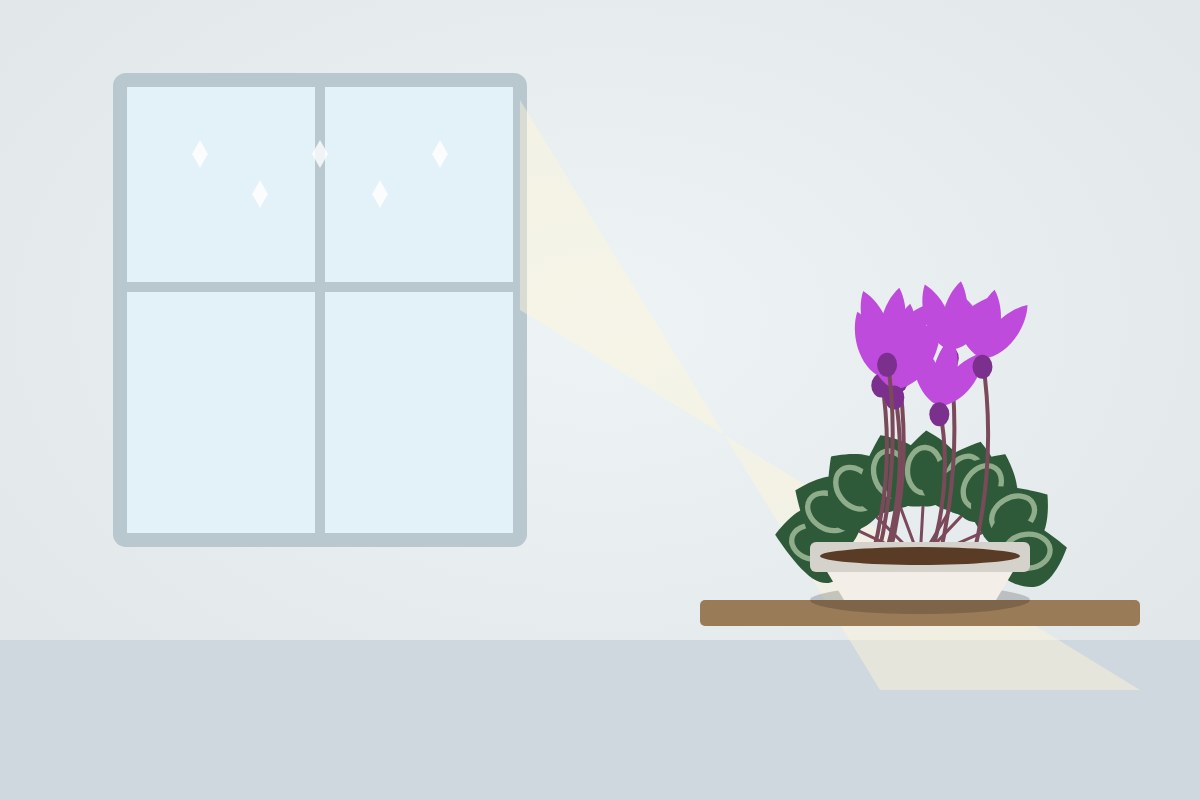
- Temperature — ideally 12–16 °C. In a warm room flowering soon ends.
- Light — bright and indirect, without strong midday sun.
- Away from radiators: dry hot air is a cyclamen's main enemy in winter.

Watering and feeding
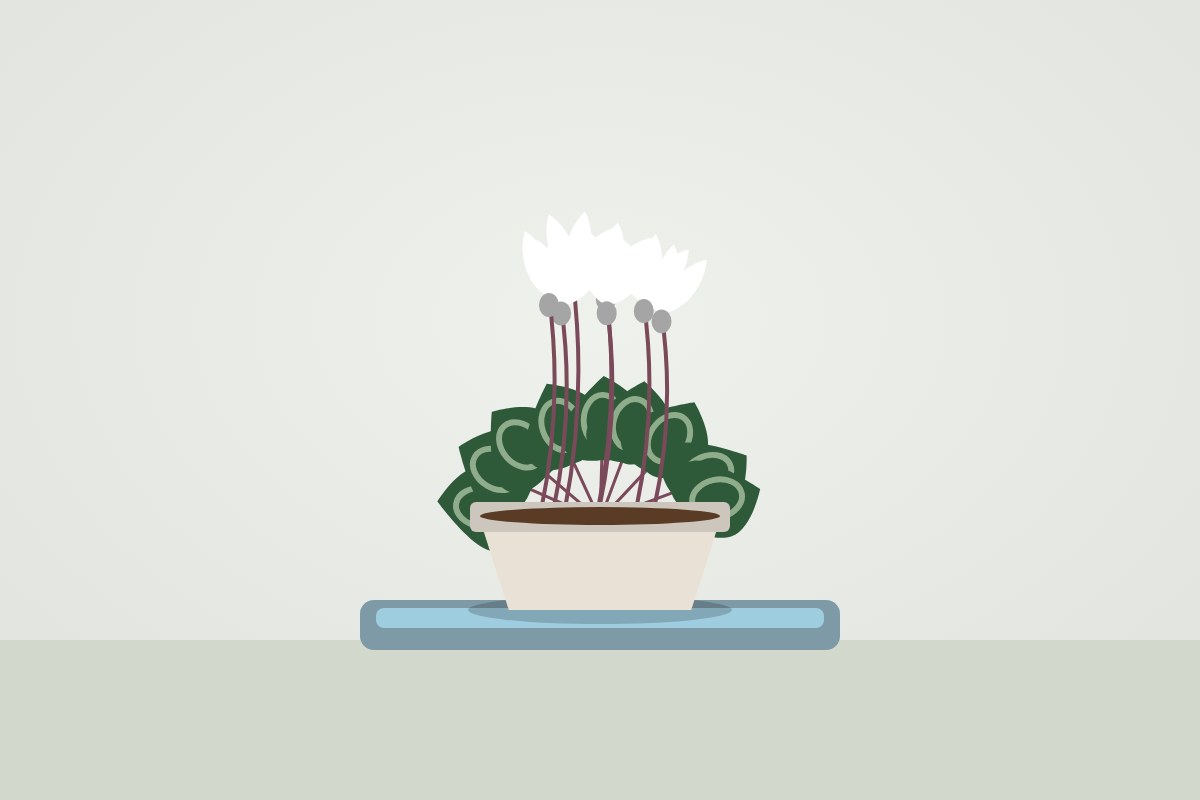
- Water from below. Stand the pot in water for 20–30 minutes, then let the excess drain. Keep water off the tuber and the centre of the plant, or it will rot.
- When to water. When the top layer of soil has dried; the plant dislikes both drying out and waterlogging.
- Feeding — every two weeks while flowering, with a fertiliser for flowering plants at half strength.

How to prolong flowering
Faded flowers and yellow leaves are not cut off but twisted out together with the stalk right at the base: a leftover stub can rot. Cool conditions and regular removal of spent flowers help a cyclamen flower for several months.
Dormancy
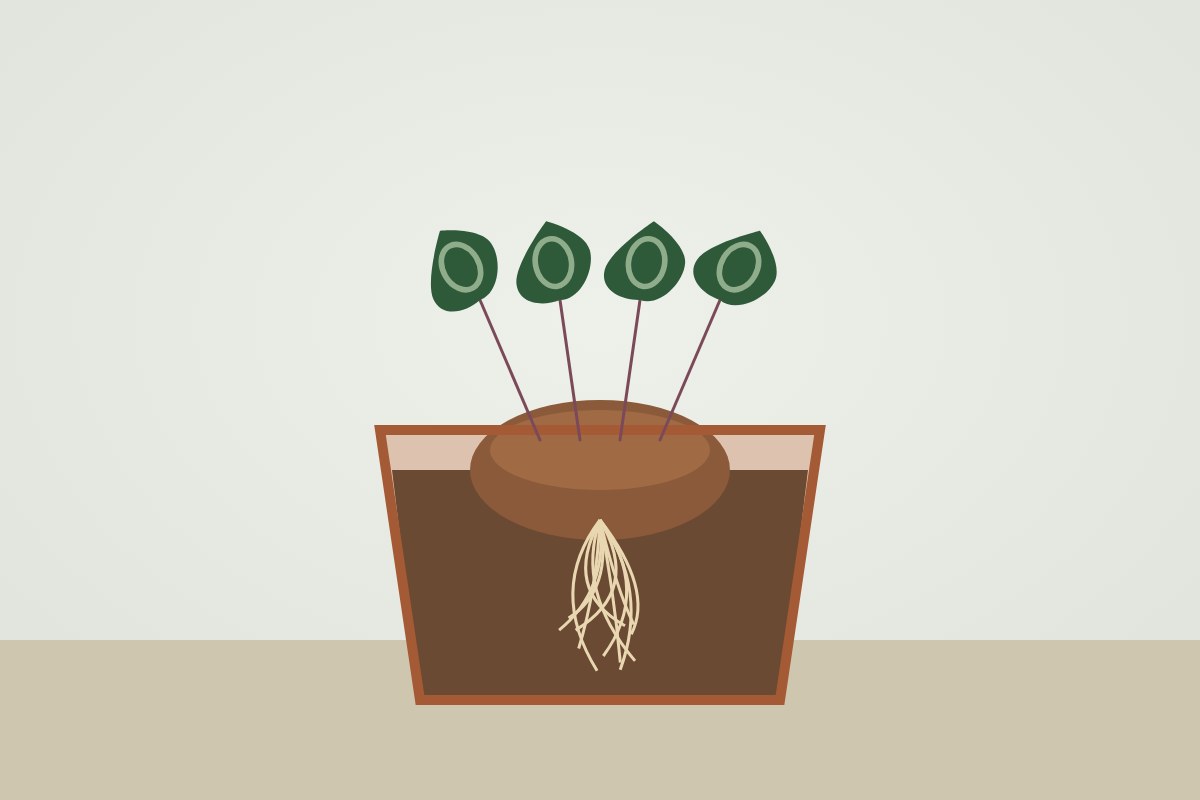
In spring the Persian cyclamen gradually yellows and loses its leaves. This is not a disease but preparation for summer dormancy. Water less and keep the pot with the tuber in a cool, shaded place, only occasionally moistening the soil lightly. In late summer, when new leaves appear, repot the plant and resume watering.

Repotting and propagation
- Repotting — in late summer, into a pot slightly larger than before. The tuber of a Persian cyclamen is buried about halfway, with the top above the soil.
- Seeds are the main way to propagate at home; seedlings flower after about 12–18 months.
- Dividing the tuber is possible but risky: the cut surfaces rot easily.
Common problems
- Leaves yellowing in winter — too warm or too dry.
- Rotting tuber — overwatering or water in the centre of the plant.
- Grey mould — too much moisture and cool, stagnant air.
- Distorted leaves and buds — possibly cyclamen mite; isolate the affected plant.

Important: cyclamen tubers are toxic to cats and dogs. Keep the plant where pets can't chew it. Other plants that flower in the cold season are covered in "Houseplants that bloom in winter".
FAQ
Why are my cyclamen's leaves turning yellow?
In winter because of warmth and dry air; in spring because it is naturally going into dormancy.
How should I water a cyclamen?
From below, through the saucer, for 20–30 minutes, keeping water off the tuber.
Should I throw a cyclamen away after it flowers?
No need: after its summer rest it will flower again in autumn.

View full-size photo
Author: Maria Svitlovir
Graduated from Taras Shevchenko National University of Kyiv, Institute of Biology and Medicine (2001). BSc in Biology, MSc in Horticulture. Writes about plants, works at a garden centre selecting and repotting plants, and contributes to plant reference guides.