Daffodils are among the first garden flowers of spring: yellow, white or cream, often with an orange or pink cup. They are easy to grow, come back in the same spot for years and are rarely touched by rodents. But they have one quirk worth knowing before you make a bouquet: their sap harms other cut flowers. More flowers with photos, names and meanings are in our types of flowers guide. This is a birth month flower; see March flowers.
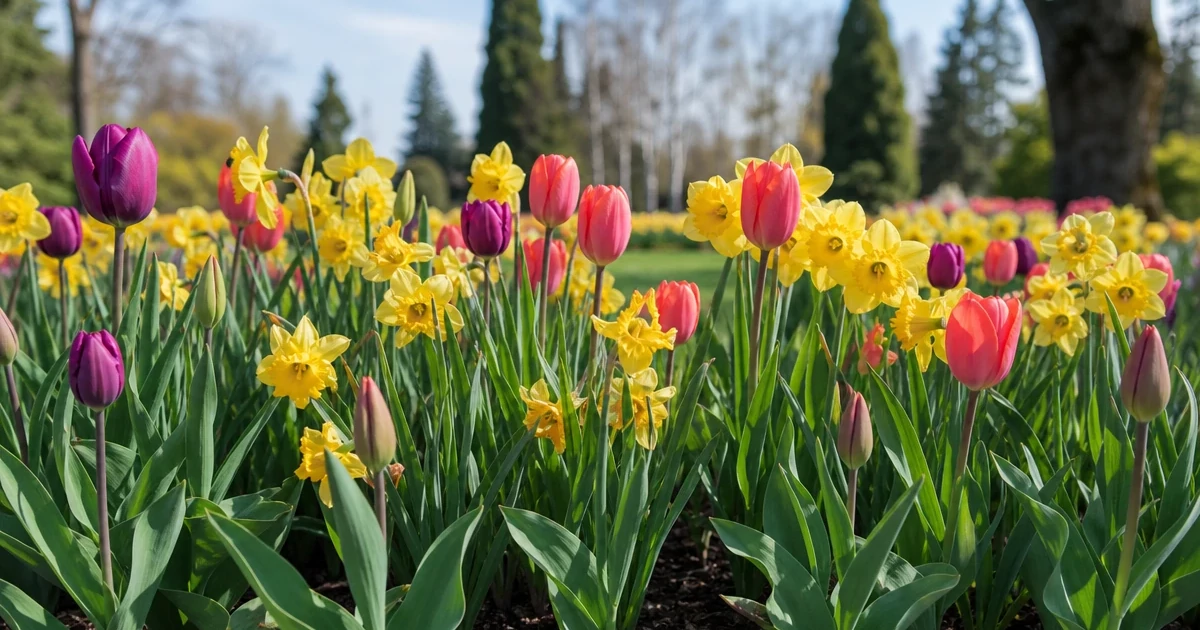
Spring flowers: tulips and potted plants.
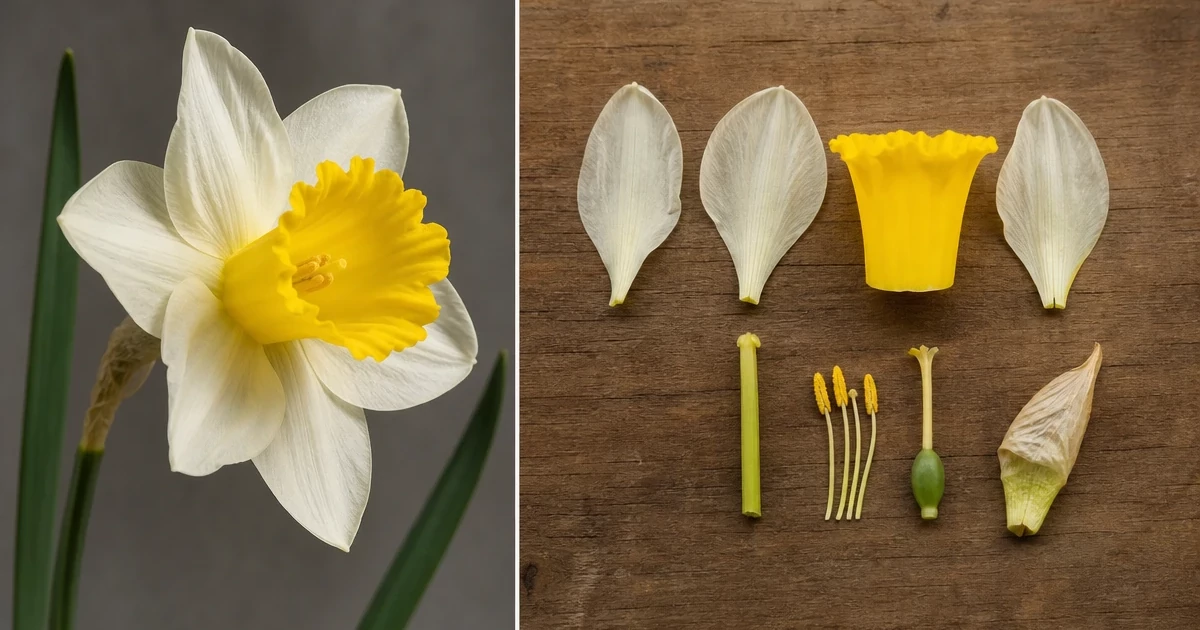
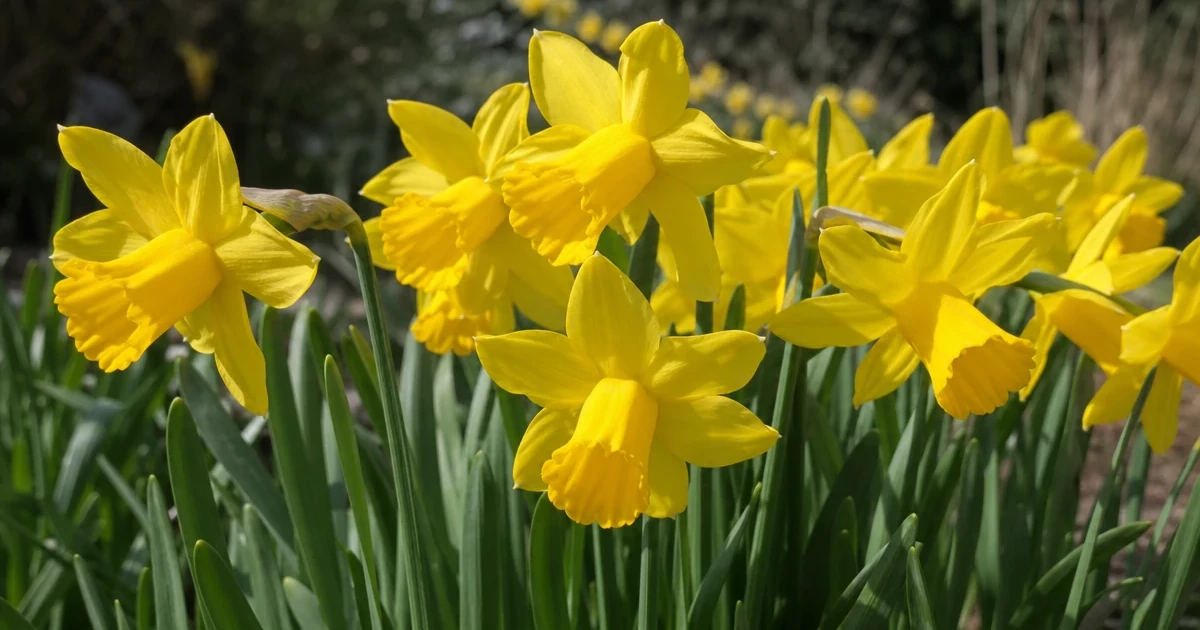
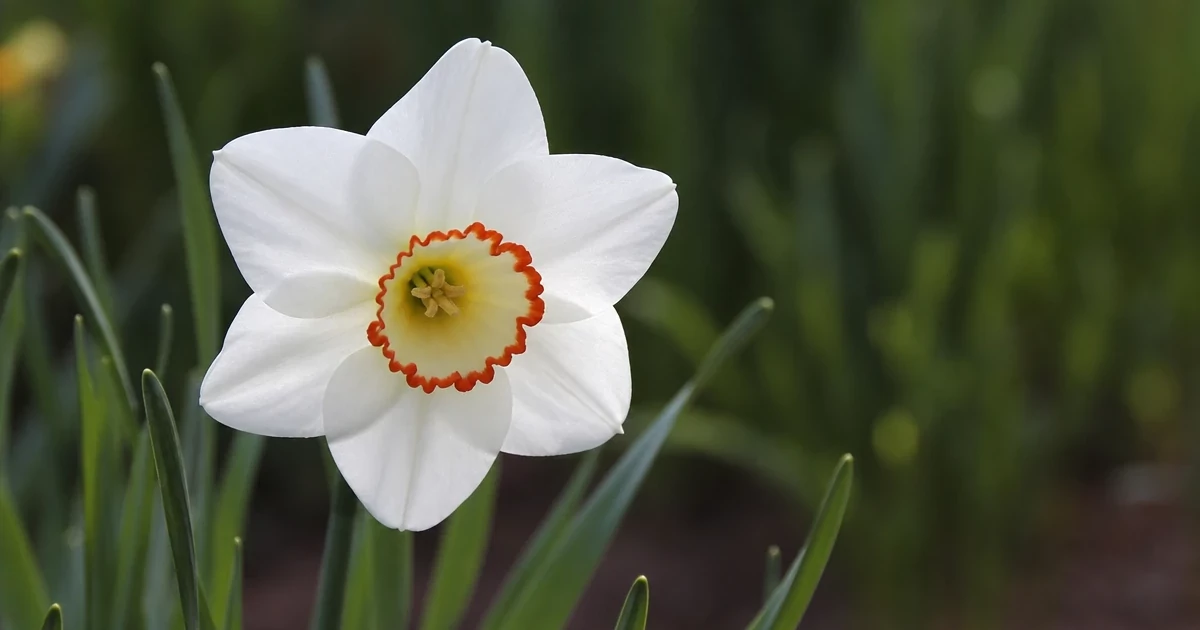
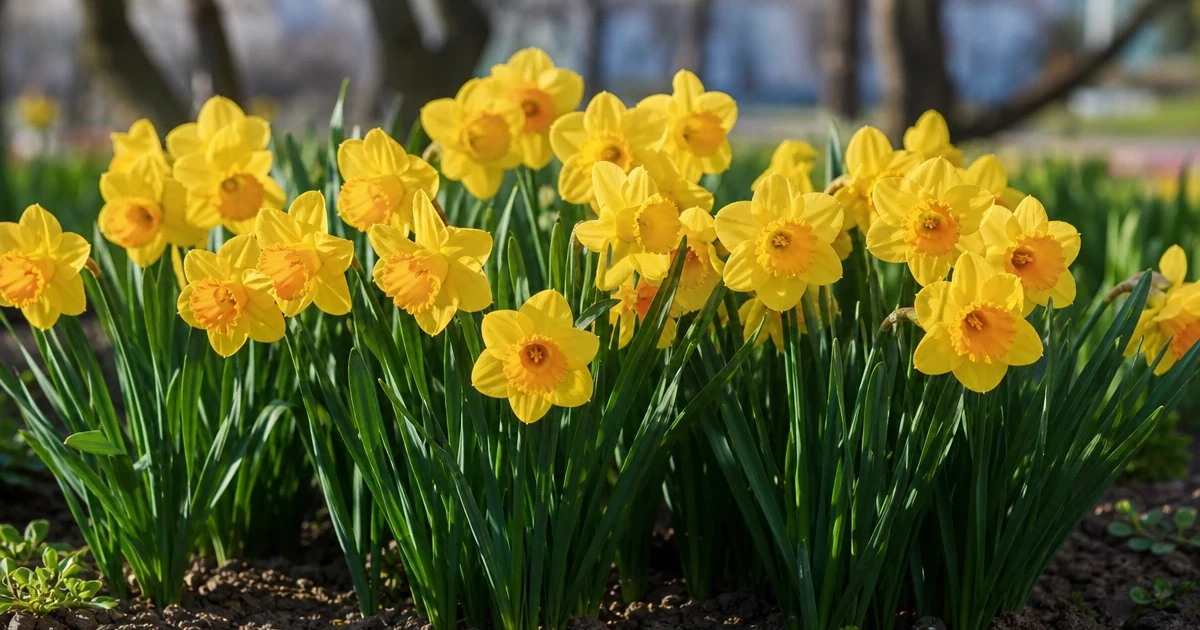
The daffodil (Narcissus) is a perennial bulb in the amaryllis family, 15–50 cm tall, with narrow strap-like leaves. The flower has two parts: the perianth, six petals opening like a star, and the corona, a trumpet or cup in the centre. The corona’s shape and length define the variety’s division. Colours include white, yellow, cream, orange, pink and bicolours, and many varieties are lightly fragrant. Daffodils bloom in April–May, just after crocuses and alongside early tulips.
The genus Narcissus belongs to the amaryllis family. There are several dozen wild species and tens of thousands of cultivars; the international register is kept by the Royal Horticultural Society (RHS). Garden daffodils are grouped into 13 divisions by flower shape.
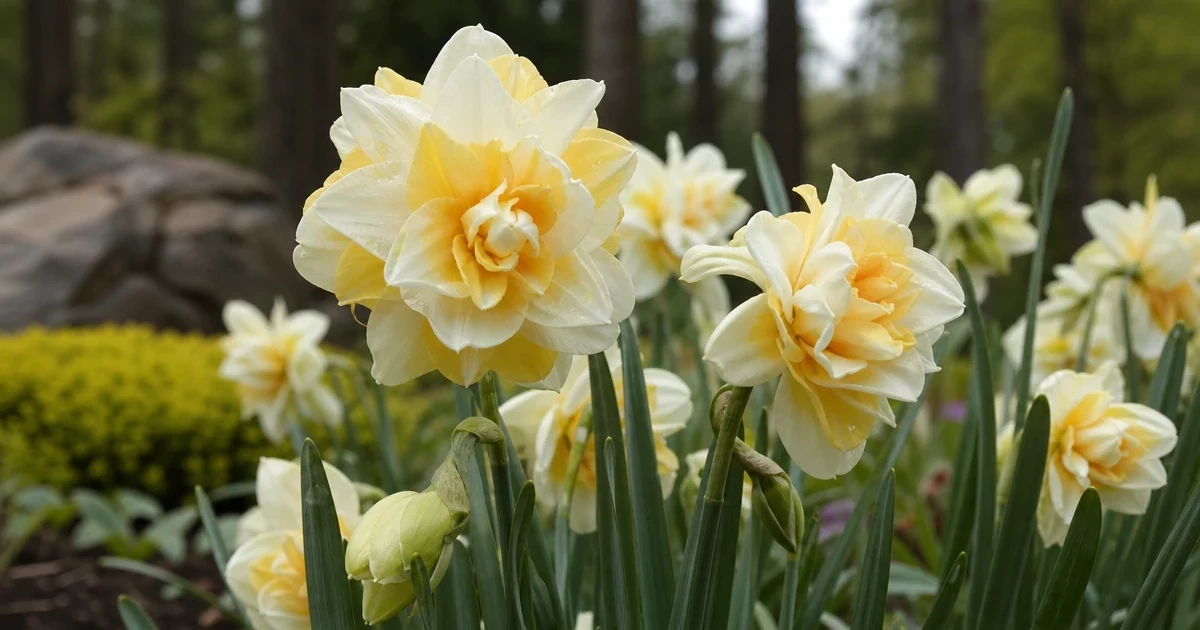
The international classification divides daffodils into 13 divisions. The most common in Ukrainian gardens are:
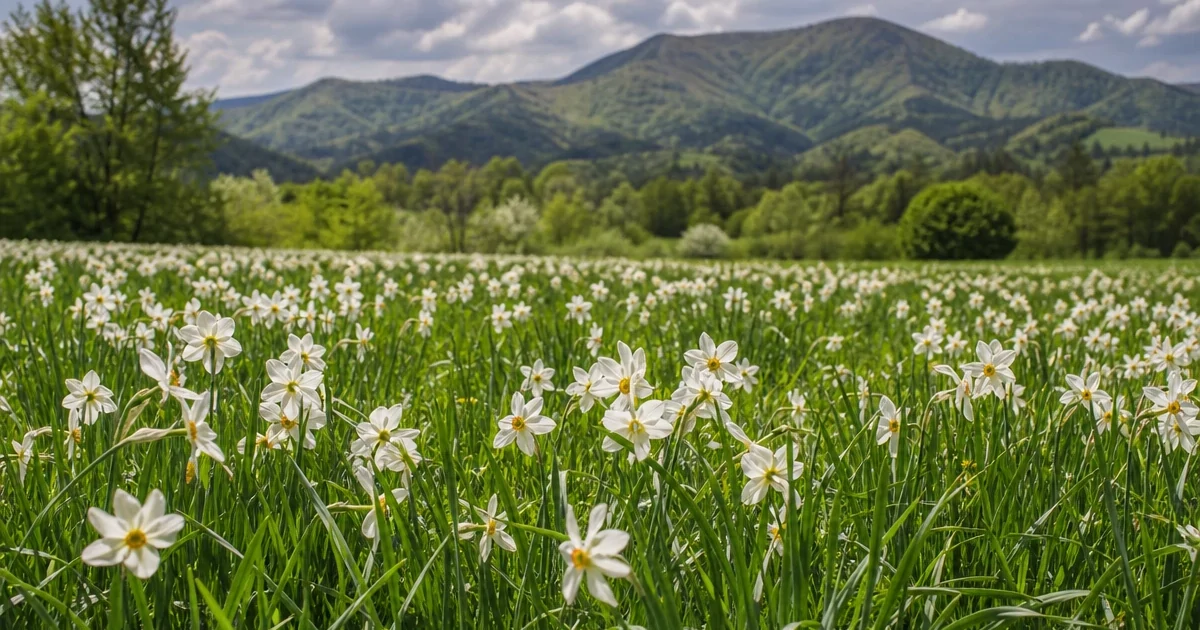
Ukraine’s only wild daffodil is the narrow-leaved daffodil (Narcissus angustifolius), with white starry flowers and a small yellow cup rimmed in red. It is listed in the Red Data Book of Ukraine, so picking or digging it up in the wild is prohibited. The largest lowland population is the Valley of Daffodils near Khust in Zakarpattia, part of the Carpathian Biosphere Reserve. Mass flowering usually comes in May, when thousands of visitors arrive.
Plant the bulbs in autumn, from mid-September to late October, so they can root before the frost. Set them two to three bulb heights deep and 10–15 cm apart, in sun or light shade and in loose soil that does not stay waterlogged.
In spring, as soon as shoots appear, feed daffodils with a balanced fertiliser, then a potassium-phosphorus feed as buds form. Water during budding and flowering if spring is dry, so the soil is moist to root depth (about 20–30 cm). Snap off spent flowers so the plant doesn’t waste energy on seed, but leave the foliage until it yellows on its own. In summer, mulch the area or plant annuals nearby to hide the fading leaves.
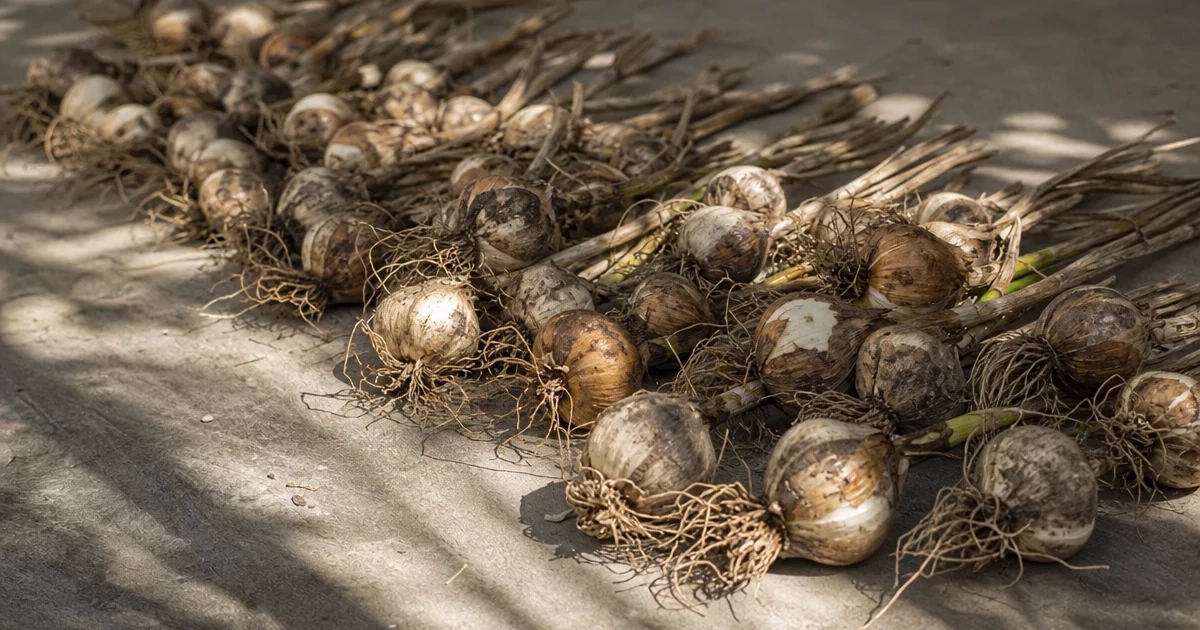
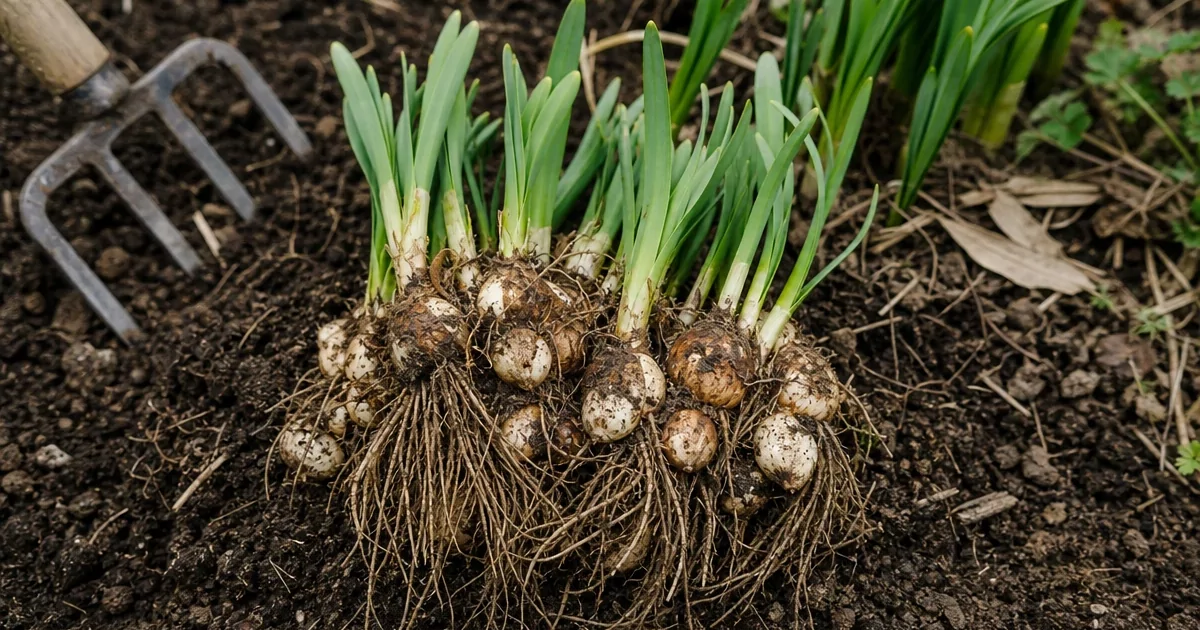
Daffodils can stay in one spot for 3–5 years, but eventually the clump becomes crowded and the flowers shrink, so it’s time to replant. Lift them once the foliage yellows and flops, usually in late June or July. Clean the bulbs gently, split the clumps, dry them in the shade for a few days and store somewhere dry and airy at room temperature.
Replant in September or early October, when the soil has cooled to +8…+10 °C, so they root before frost. Never cut green leaves after flowering — they feed the bulb for next year.
The easiest way is by offsets: when replanting, detach the young bulbs that come away easily and plant them separately; small ones flower in their second or third year. Growing from seed is left to breeders, as seedlings take 5–7 years to flower and don’t come true to the variety.
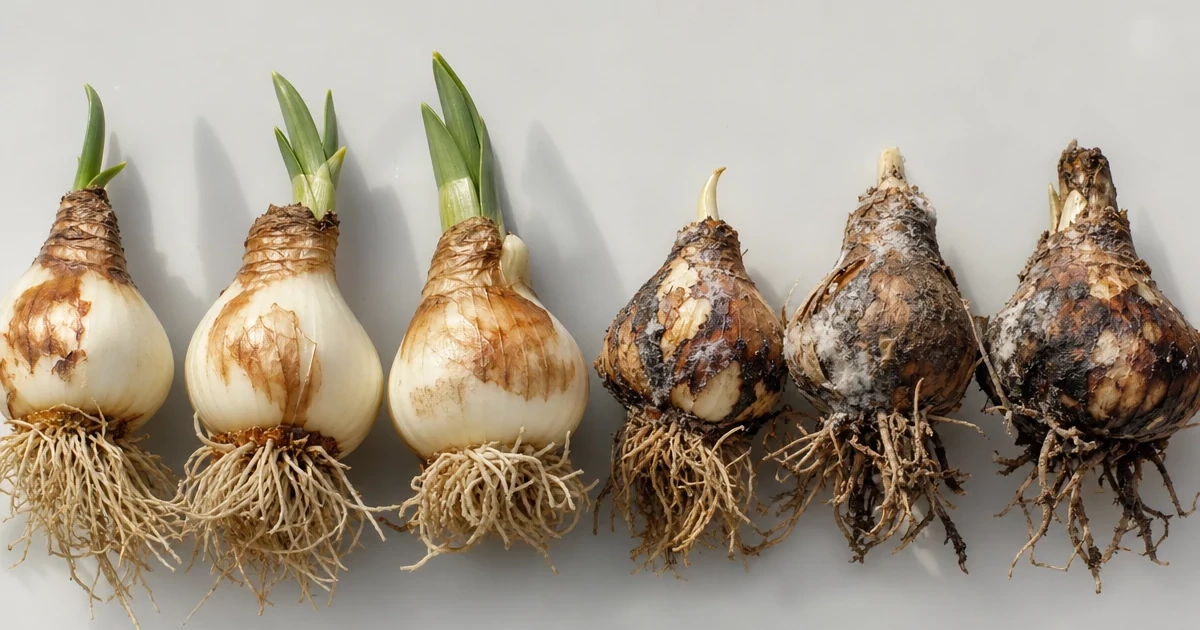
The best prevention is a sunny, well-drained spot, crop rotation and inspecting bulbs before planting. Rodents leave daffodils alone because every part of the plant is poisonous.
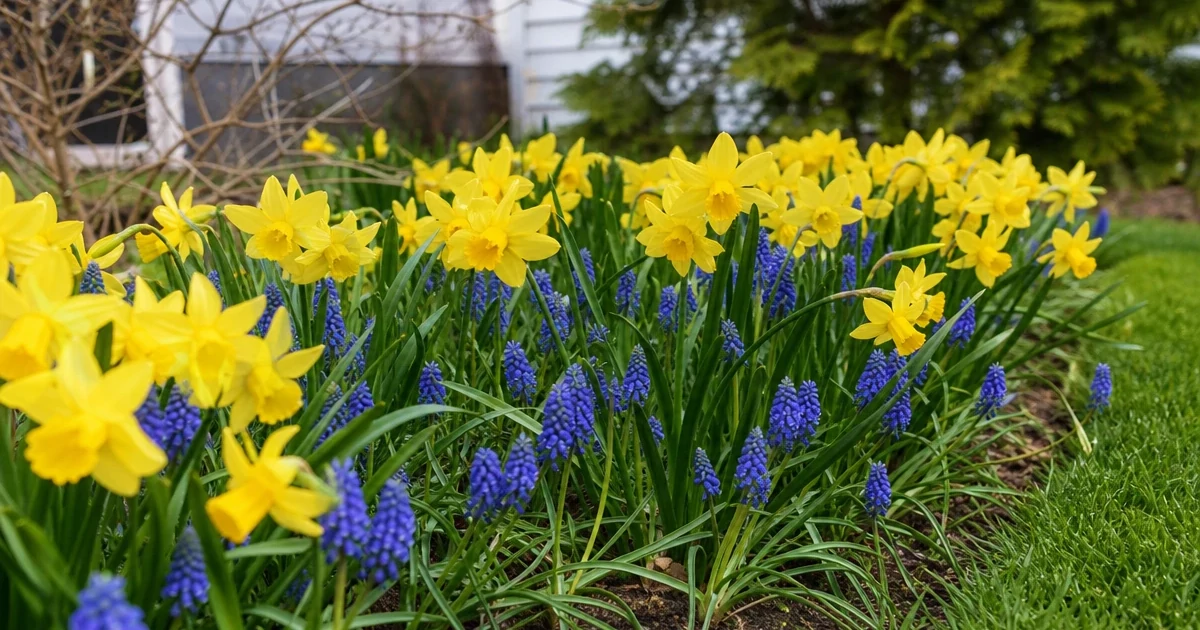
Most daffodil varieties overwinter in Ukraine without protection. Only fresh autumn plantings and tender tazettas need a 5–8 cm mulch of peat, compost or leaves once the soil has frozen, removed again in spring. In a border, daffodils pair beautifully with blue grape hyacinths and scillas, early tulips, hyacinths and forget-me-nots, while hostas, peonies or annuals later hide their fading leaves.
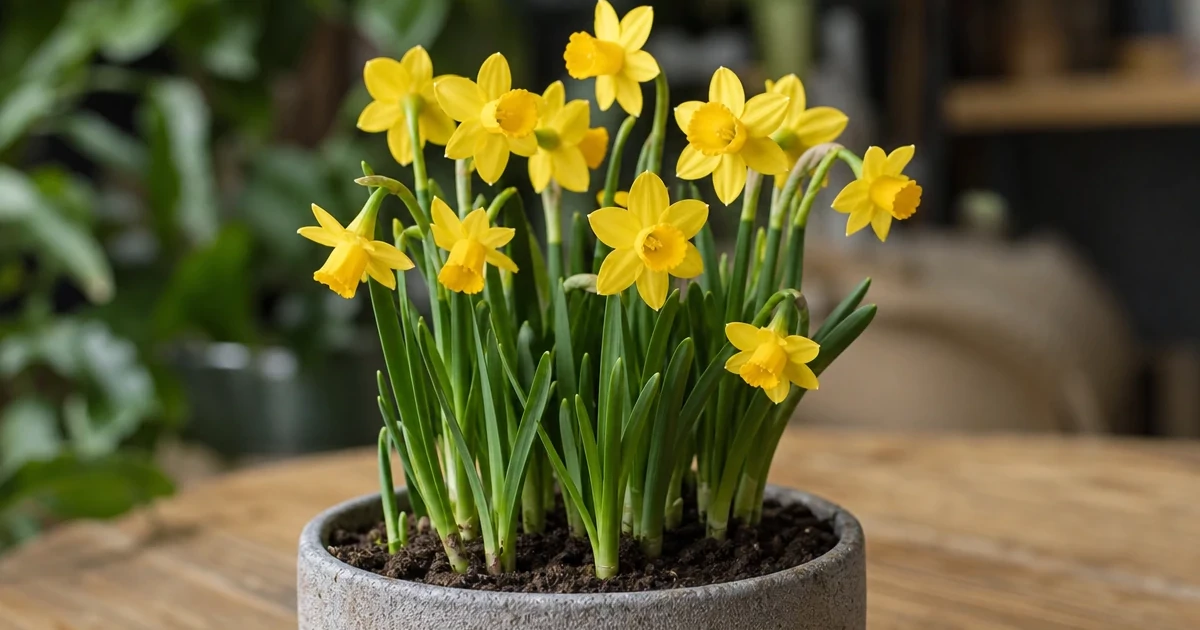
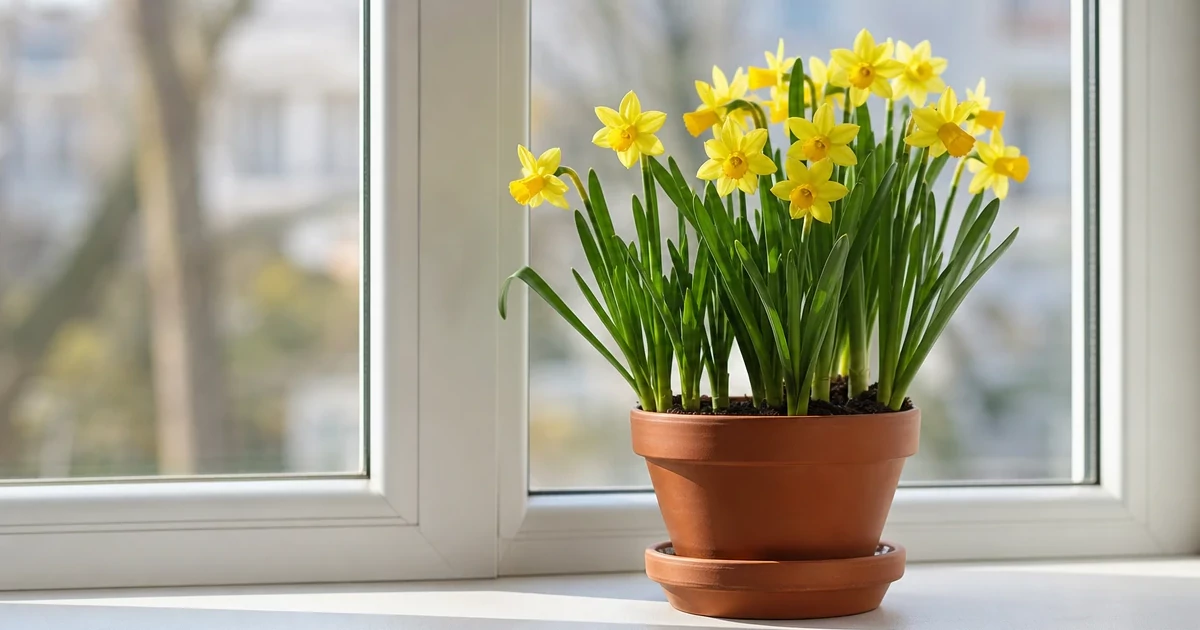
Dwarf varieties such as Tête-à-Tête and fragrant multi-headed tazettas suit pots best. For flowers in winter or early spring, plant the bulbs shoulder to shoulder in autumn, keep them cold (+5…+9 °C) for 10–12 weeks, then move them somewhere bright and cool. After flowering keep watering until the leaves yellow, then plant the bulbs in the garden in spring.
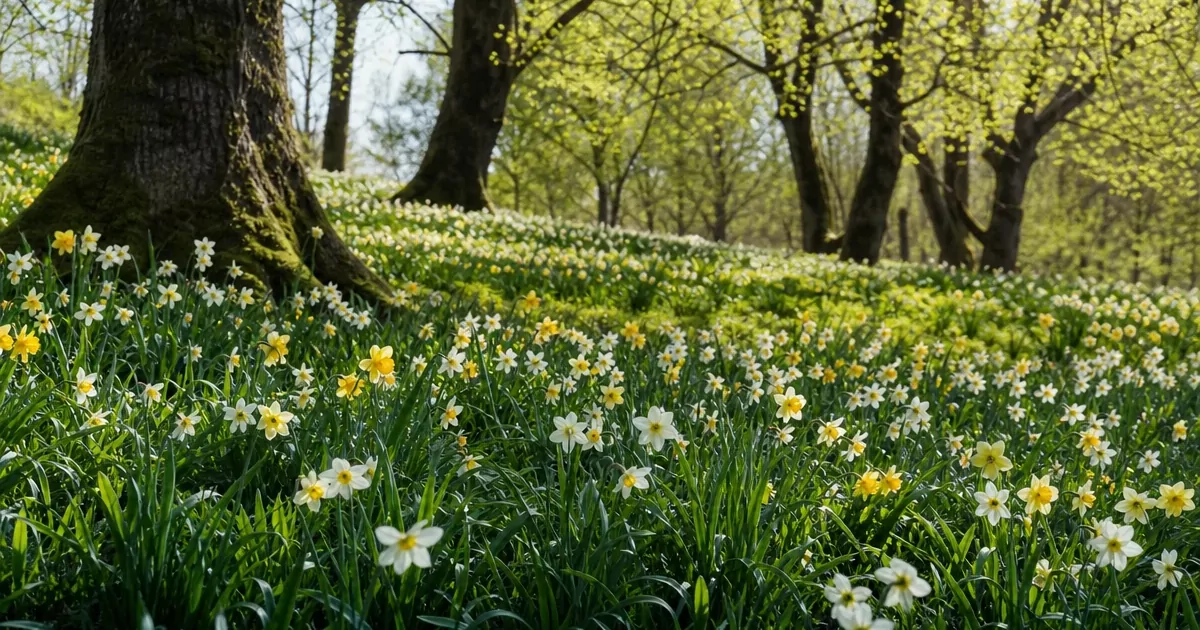
Daffodils naturalise beautifully, spreading on their own into spring meadows. Plant them in groups of 10–30 bulbs in lawns, under deciduous trees or along paths, where there is still plenty of light in spring before the trees leaf out. Toss a handful of bulbs and plant them where they land for a natural look, and don’t mow those areas until the daffodil leaves yellow, usually by mid-June.
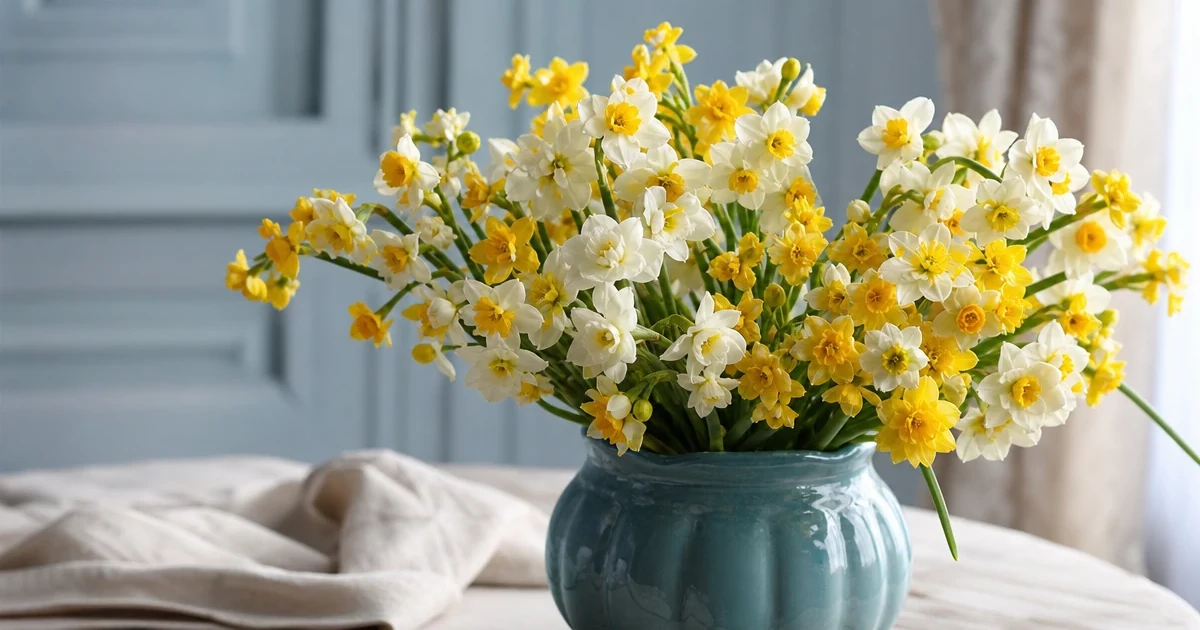
Florists favour varieties with sturdy stems and several flowers for cutting: double Bridal Crown and Replete, fragrant tazettas, large-cupped Ice Follies and Pink Charm, and triandrus Thalia. Cut daffodils at the “goose-neck” stage, when the bud has bent over and coloured but not yet opened, for the longest vase life.
A cut daffodil stem releases a slimy sap that clogs the stems of other flowers, so tulips and roses next to fresh daffodils wilt sooner. That is why freshly cut daffodils go into a separate vase for 6–12 hours first. After that they can join a mixed arrangement, but do not recut the stems, or the sap will flow again.
All parts of the daffodil are poisonous, especially the bulbs: never mistake them for onions or store them next to food. The sap can irritate skin, so gloves are handy when you handle a lot of stems. Keep the plants away from cats and dogs.
The plant is named after the Greek myth of Narcissus, a handsome youth who fell in love with his own reflection, could not tear himself away and was turned into a flower where he died. Another theory links the word to the Greek “narkao”, to grow numb, because of the plant’s heady scent and toxicity.
The same myth gave psychology the term “narcissism”, and in everyday speech a “narcissist” is someone excessively focused on themselves. The flower has nothing to do with it: in the language of flowers, the yellow daffodil means joy, hope and spring renewal.
The name is linked to the Greek myth of Narcissus, the youth who fell in love with his own reflection. The daffodil is one of the symbols of Wales and is worn on St David’s Day, 1 March. Ukraine has its own natural wonder: the Valley of Narcissi near Khust in Zakarpattia, where the narrow-leaved daffodil, listed in the Red Book of Ukraine, blooms from late April into May. Picking the wild flowers there is prohibited.
In autumn, from mid-September to late October. In spring you can only plant daffodils grown in pots.
Most often the leaves were cut too early, the clumps have not been divided for years, or the spot is too shady.
Yes, if you condition the daffodils on their own for 6–12 hours first and do not recut the stems afterwards. More about tulips: “Tulip varieties and colours”.
Once the leaves yellow and flop, usually in late June or July. Replant them in September or early October.
Usually because of crowded clumps, leaves cut too early, shade, shallow planting or too much nitrogen.
Ukraine’s only wild daffodil, listed in the Red Data Book; it grows most abundantly in the Valley of Daffodils near Khust in Zakarpattia.
5–7 days somewhere cool. Stand them alone in water for 6–12 hours before mixing with other flowers.
Most varieties overwinter unprotected; only fresh autumn plantings and tender tazettas need a 5–8 cm mulch.
About three times the bulb height: 15–20 cm for large bulbs, 10–12 cm for medium and 6–8 cm for small bulbs and offsets — a little deeper in sandy soil and shallower in heavy clay.
You can plant out potted daffodils that have sprouted or finished flowering, but dry bulbs shouldn’t go in in spring: they won’t get their cold period and won’t flower that year.
Yes, every part of the daffodil is toxic to pets, especially the bulbs. Place bouquets out of reach and don’t leave bulbs lying around while planting or storing them.

Author: Maria Svitlovir
Graduated from Taras Shevchenko National University of Kyiv, Institute of Biology and Medicine (2001). BSc in Biology, MSc in Horticulture. Writes about plants, works at a garden centre selecting and repotting plants, and contributes to plant reference guides.
© Kyiv 2026 UFL Flower Shop

Trademark UFL №191476 is used under license of the rights holder.
All rights reserved. Any use of materials without a link to the site is prohibited.


 Birthday
 Hydrangeas