
 Birthday
 Hydrangeas
Making a beautiful bouquet yourself is entirely doable, even with no floristry experience. You need fresh flowers, a sharp tool, a little patience and a few basic rules. Here is a starter kit: what to buy, how to prepare the flowers, how to assemble and tie the bouquet, and the mistakes beginners make most often.
No time to make one yourself? See our spray rose bouquets and peony-style roses.
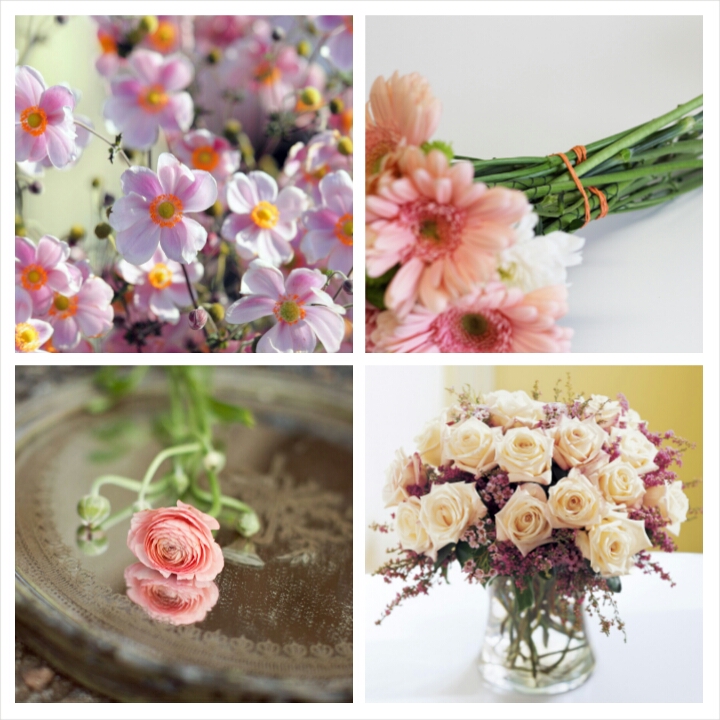
What you need
- Sharp secateurs or a florist’s knife — blunt scissors crush the stem so it drinks less water.
- A bucket or tall vase of clean water — for conditioning the flowers.
- Ribbon, twine or floral tape — to tie the bouquet.
- Wrapping — kraft paper, felt or floral film if it is a gift.
- Gloves — for roses and plants with irritating sap.
Choosing the flowers
For a first bouquet, one or two kinds of focal flowers, one filler and some greenery are plenty. Choose firm stems, fresh leaves and buds that are just starting to open. An odd number of flowers is a tradition rather than a floristry rule — in large bouquets nobody counts.

Preparing the flowers
- Strip leaves from the lower stems — everything that will sit below the tie point and in water.
- Cut stems by 2–3 cm at an angle and put them straight into water for 1–2 hours so they hydrate and firm up.
- Remove damaged outer petals from roses; thorns can be scraped off the lower stem with a knife.
Step-by-step assembly
- Hold the central focal flower in your left hand.
- Add stems around it at the same angle — this forms a spiral where stems do not cross in different directions.
- Alternate focal flowers, fillers and greenery, turning the bouquet as you go.
- Tie the bouquet at the point where the stems cross with ribbon or twine.
- Trim the stems to one length — below the tie they are usually about the same as the height of the flower head section, or slightly shorter.
For the full technique with a diagram, see Spiral bouquet technique.
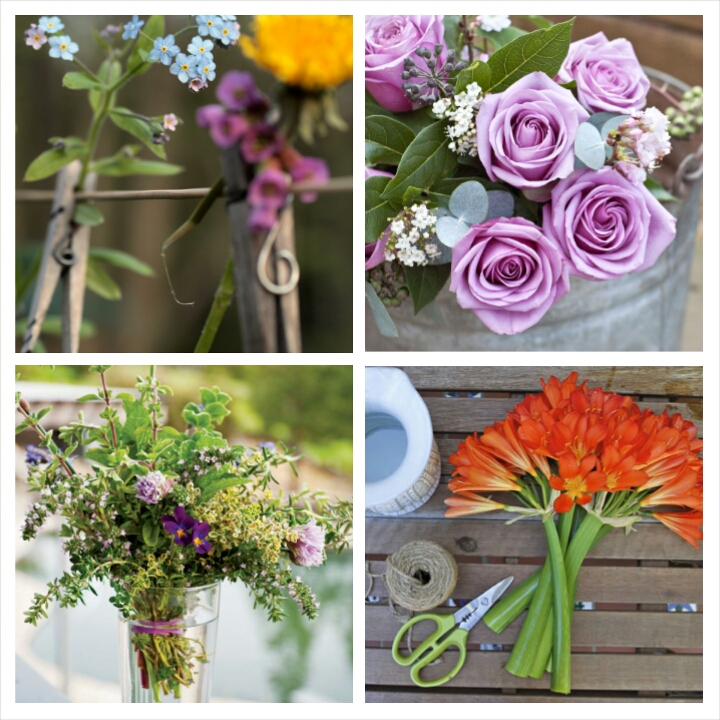
7 common beginner mistakes
- Too many flower types and colours — the bouquet looks busy.
- Leaves left in the water start to rot.
- Stems tied too tightly and crushed.
- All flowers at one level with no depth.
- No greenery — the bouquet looks bare.
- Flowers not hydrated before arranging.
- Stems cut with blunt scissors.
FAQ
Which flowers are best for a first bouquet?
Spray roses, alstroemeria, chrysanthemums, lisianthus and gypsophila — they are sturdy, last well and forgive mistakes.
How do I keep the bouquet fresh?
Change the water every 1–2 days, recut the stems and keep the bouquet away from radiators, direct sun and fruit.
How long does it take a beginner?
A small bouquet of 7–11 stems usually takes 20–30 minutes, including preparing the flowers.

View full-size photo
Author: Maria Svitlovir
Graduated from Taras Shevchenko National University of Kyiv, Institute of Biology and Medicine (2001). BSc in Biology, MSc in Horticulture. Writes about plants, works at a garden centre selecting and repotting plants, and contributes to plant reference guides.