
 Birthday
 Hydrangeas
The Netherlands (often called Holland) is synonymous with tulips. Here flowers aren't just grown: they're part of the economy, history, festivals and everyday life. Here's how tulips reached the country, what "tulip mania" was, when to visit Keukenhof, which flower parades are worth seeing and how the Dutch live with flowers at home.
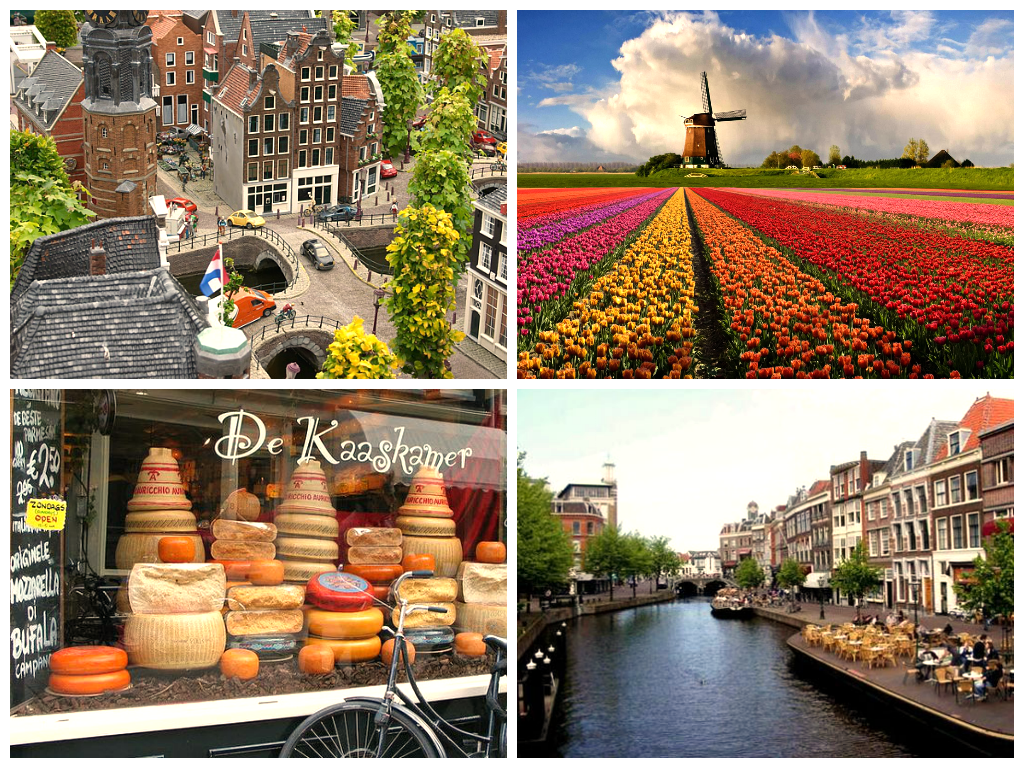
How tulips came to the Netherlands
Tulips come from Central Asia and reached Europe via the Ottoman Empire in the 16th century. In the Netherlands their story is linked to the botanist Carolus Clusius: in 1593 he took charge of Leiden University's botanical garden and planted bulbs he had brought from Vienna. In spring 1594 the country's first tulips bloomed in Leiden.
The flower quickly became a status symbol, and in the 1630s came the famous "tulip mania": prices for bulbs of rare streaked varieties such as 'Semper Augustus' soared to extraordinary sums. In February 1637 the market collapsed. Historians still debate how severe the crash was, but it is often called one of the first financial bubbles.
Keukenhof — the great spring garden
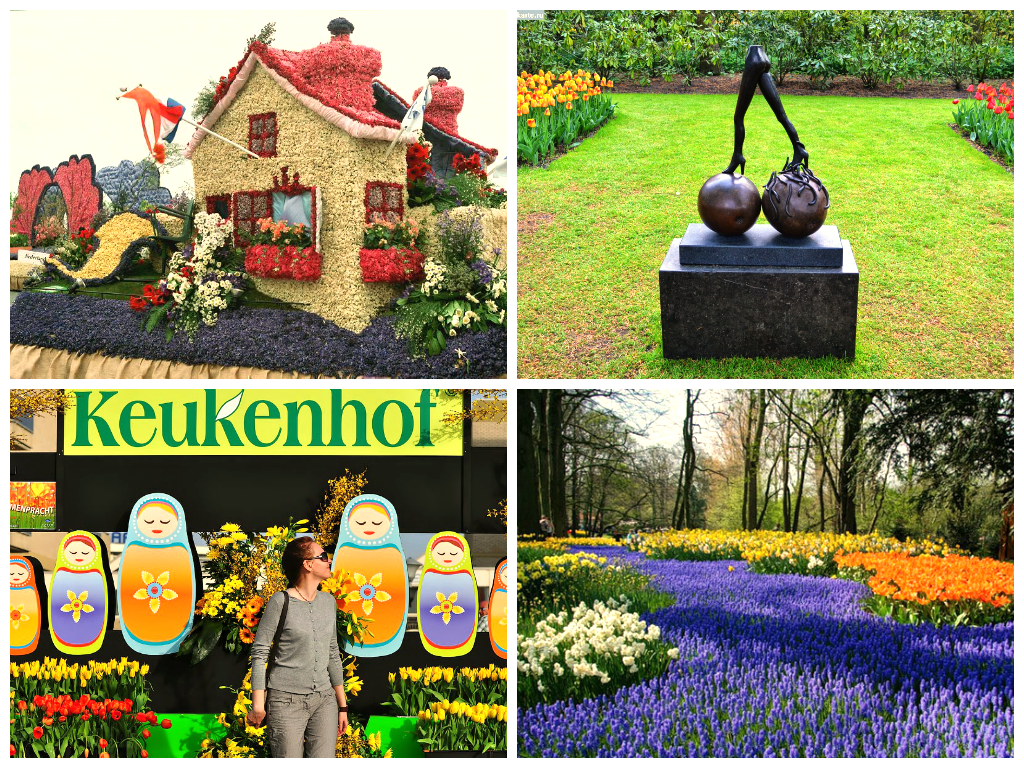
Keukenhof in Lisse, between Amsterdam and Leiden, is the world's most famous flower park. It opened in 1950 as a showcase for bulb growers. Around 7 million bulbs of tulips, daffodils, hyacinths and other spring flowers are planted each year, and pavilions host shows of orchids, lilies, roses and more.
The park is open only in spring, from roughly late March to mid-May. Mid-April is usually best for tulips, though the peak shifts with the weather in an early warm spring. Buses run from Amsterdam and Schiphol Airport. Around Keukenhof lie the striped fields of the Bollenstreek, the "bulb region" — perfect for exploring by bike.
Flower parades
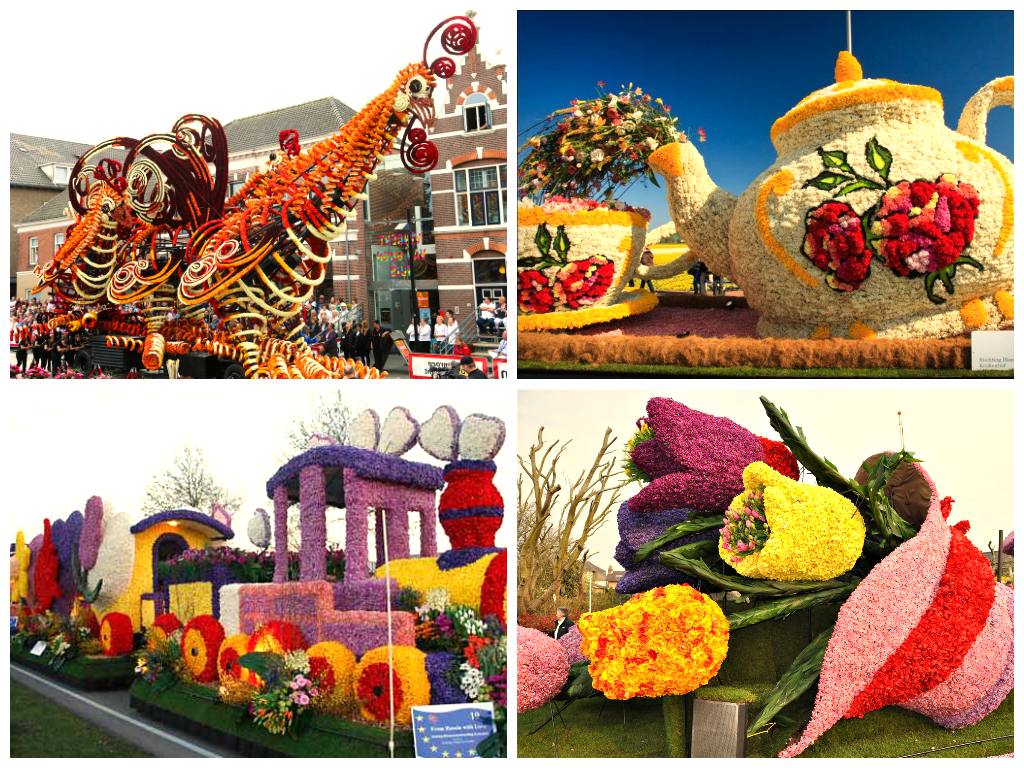
A Dutch flower parade is called a bloemencorso — a procession of floats entirely covered in flowers and turned into giant sculptures.
- Bloemencorso Bollenstreek takes place in April: the procession travels about 40 km from Noordwijk to Haarlem through the bulb district, passing Lisse. Floats are decorated with tulips, hyacinths and daffodils. The tradition dates back to the late 1940s.
- The Zundert corso, on the first Sunday of September, is one of the world's largest flower parades: villagers build floats from millions of dahlias, working on them for almost a year.
The Aalsmeer auction and the flower economy
The Netherlands is the world's largest exporter of cut flowers and flower bulbs. At the heart of the trade is the Royal FloraHolland auction in Aalsmeer near Amsterdam, one of the largest trading buildings in the world. It uses the "Dutch auction" system: the price on the clock falls until a buyer presses the button. A large share of the roses, tulips and chrysanthemums sold in Europe passes through Dutch auctions.
Flowers in Amsterdam
- The Bloemenmarkt on the Singel canal has operated since the 19th century, with stalls on barges selling bulbs, seeds and souvenirs. See also world flower markets.
- National Tulip Day falls on the third Saturday in January: Dam Square becomes a tulip garden where anyone can pick a free bunch.
- The Amsterdam Tulip Museum tells the story of the flower and tulip mania.
Flowers in everyday Dutch life
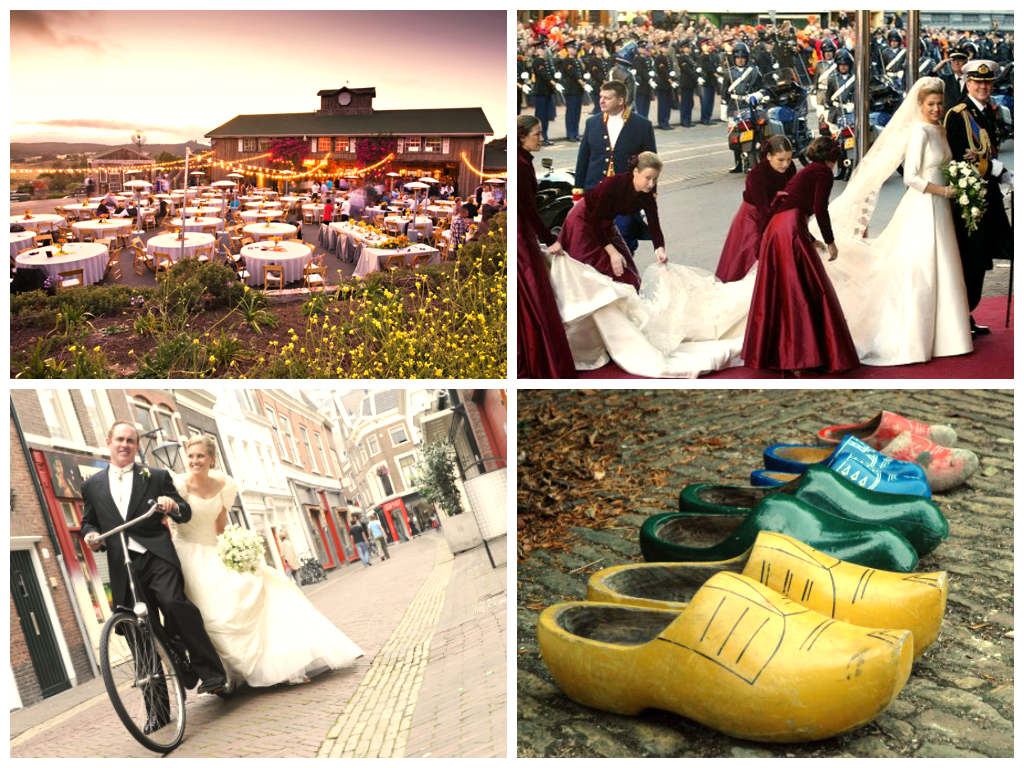
For the Dutch, a bouquet isn't just for special occasions. Flowers are bought with the groceries at the market or supermarket and put on the table for no reason. With growers so close, they're more affordable than in many countries. Guests often bring a small bunch, and windowsills and front gardens are full of blooms.
When to see the tulips
- Late March — crocuses and early daffodils.
- Early April — hyacinths, daffodils and early tulips.
- Mid-April to early May — peak tulip bloom.
If a trip isn't on the cards yet, create a tulip mood at home with a bouquet from our tulips. For more places to see flower fields, read flower fields of the world.
FAQ
When is Keukenhof open?
Every spring, roughly from late March to mid-May.
When do tulips bloom in the Netherlands?
The peak is from mid-April to early May, depending on the weather.
Who brought tulips to the Netherlands?
Their arrival is linked to botanist Carolus Clusius, who planted bulbs in Leiden's botanical garden; the first tulips bloomed there in 1594.
What was tulip mania?
A craze for rare tulip bulbs in the 1630s that ended in a price collapse in February 1637.

View full-size photo
Author: Maria Svitlovir
Graduated from Taras Shevchenko National University of Kyiv, Institute of Biology and Medicine (2001). BSc in Biology, MSc in Horticulture. Writes about plants, works at a garden centre selecting and repotting plants, and contributes to plant reference guides.


