
 Birthday
 Hydrangeas
In India flowers are part of everyday life: marigold garlands hang over doors and in temples, women weave strings of jasmine into their hair, brides and grooms exchange flower garlands, and during festivals streets are covered in floral patterns. Here are India's key flowers, their meaning in religion and daily life, wedding traditions, flower markets and the famous Valley of Flowers in the Himalayas.
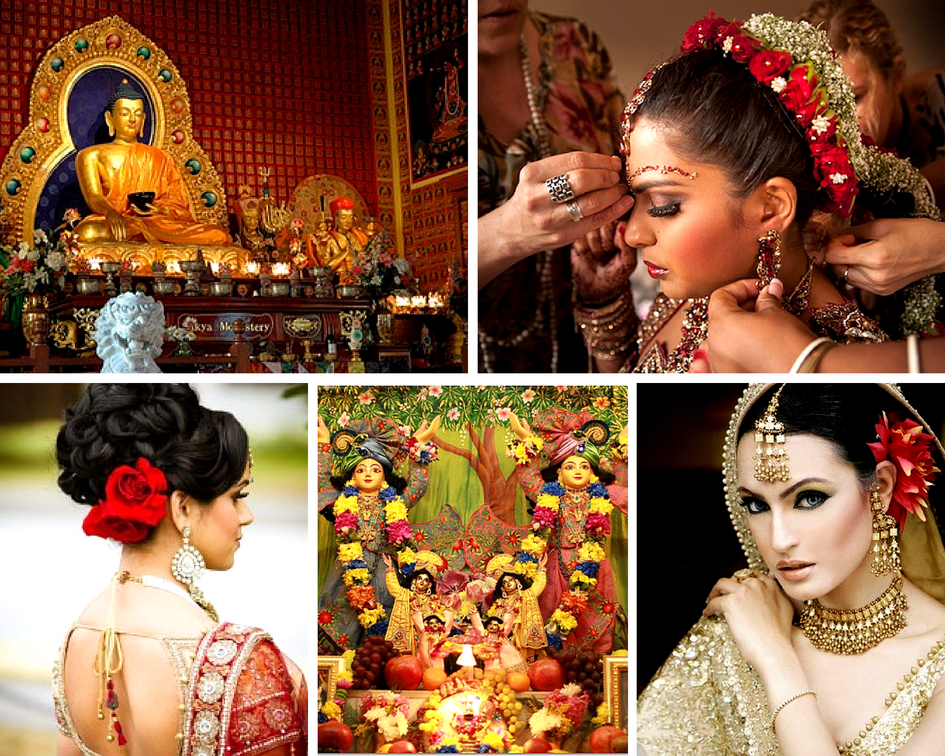
India's key flowers
Lotus — the national flower
The lotus is India's official national flower. It grows out of mud yet stays pure, so it symbolises purity, spiritual awakening and beauty. In Hindu iconography the goddess of prosperity Lakshmi and the goddess of knowledge Saraswati are shown on lotuses, and in Buddhism the lotus is a central symbol. It also inspired the famous temple in New Delhi — see flower-shaped buildings.
Marigold — the festival flower
Bright orange and yellow marigolds ("genda" in Hindi) are India's most widely used flower. They're strung into long garlands for temples, homes, weddings, the Diwali festival of lights and welcoming honoured guests. Interestingly, marigolds are native to the Americas and reached India via Portuguese traders — yet they became a symbol of Indian celebration.
Jasmine — the scent of everyday life
Especially in South India, women decorate their hair with a "gajra", a string of fresh Arabian jasmine buds. Madurai jasmine is so famous that it has protected geographical indication status. Flower strings are sold outside temples and in every market, and their scent is part of an Indian evening.
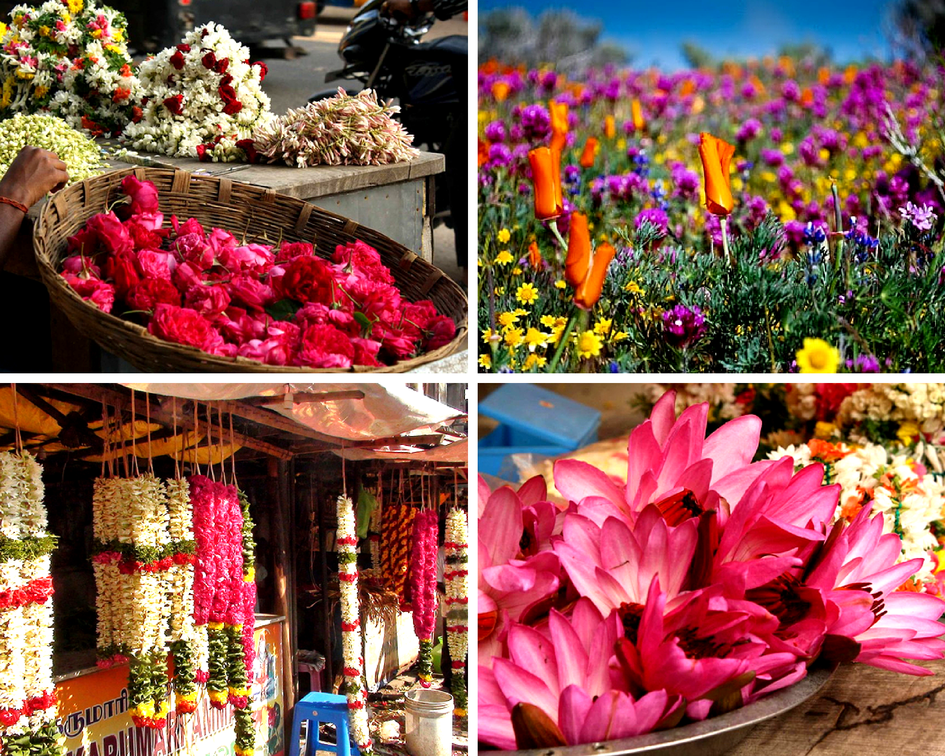
Hibiscus, rose and tuberose
Red hibiscus is traditionally offered to Ganesha and the goddess Kali. Rose petals go into gulkand (a sweet rose-petal preserve), rose water and decorations on sweets. Heavily scented tuberose ("rajnigandha", "fragrance of the night") is essential in garlands and ceremonial decor.
Flowers in temples and festivals
The morning puja, a daily offering to the deities, almost always includes flowers: they're placed before images of the gods, used to decorate home shrines and floated on sacred rivers. Only fresh, unwilted flowers are offered.
- Diwali, the festival of lights, means marigold garlands and rangoli — floor patterns of coloured powders and petals.
- Onam in Kerala is famous for "pookalam", huge flower carpets that families lay out in front of their homes on each of the festival's ten days.
- Holi, the spring festival of colours: traditionally dyes came from plants such as the orange flowers of the palash tree (Butea monosperma).
Flowers at an Indian wedding

An Indian wedding lasts several days and is unthinkable without flowers. A key moment is the jaimala (varmala): the bride and groom place garlands of roses, marigolds, jasmine or tuberose around each other's necks, expressing consent and mutual respect. Venues and marquees are decorated with floral curtains and arches, the couple is showered with petals, and the bride wears jasmine in her hair. European-style bouquets are increasingly popular, but garlands remain the main floral symbol of the wedding.
Flower markets
In India flowers are bought by weight — by the basket, sack or garland — rather than as bouquets. One of Asia's largest flower markets is Mullick Ghat in Kolkata by the Howrah Bridge, piled high with marigolds, roses and jasmine from dawn. Bengaluru's KR Market is equally famous. For flower markets elsewhere, see world flower markets.
The Valley of Flowers in the Himalayas
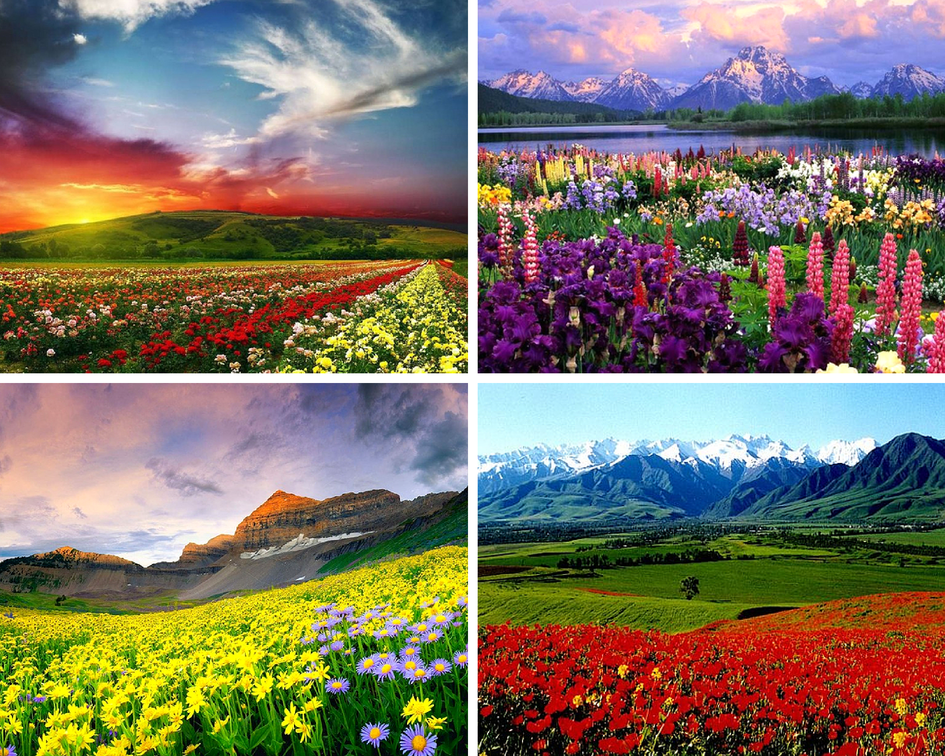
The Valley of Flowers National Park in Uttarakhand lies at roughly 3,200–6,700 metres and covers nearly 90 km². Together with neighbouring Nanda Devi National Park it is a UNESCO World Heritage Site. Peak bloom comes in the monsoon, in July and August, when the meadows fill with hundreds of species, including Himalayan poppies, primulas, bellflowers, anemones and rare orchids. The park is open to visitors roughly from June to October and is reached on foot. For similar places around the world, see flower fields of the world.
Giving flowers to Indian friends
- Choose bright colours — orange, yellow, red and pink are associated with joy and prosperity.
- White flowers are more often linked with mourning and farewells, so avoid them for celebrations.
- A garland or bouquet with jasmine and roses is a fitting gift for a wedding or festival.
You can create a similar mood with warm-toned roses and chrysanthemums. For another country's customs, read Chinese flower traditions.
FAQ
What is India's national flower?
The lotus, a symbol of purity and spiritual awakening.
Why are marigolds everywhere in India?
They're cheap, bright, long-lasting and traditionally used in garlands for temples, weddings and festivals.
What is jaimala?
A wedding ritual in which the bride and groom exchange flower garlands.
When is the best time to visit the Valley of Flowers?
July–August, during the monsoon, when flowering peaks.

View full-size photo
Author: Maria Svitlovir
Graduated from Taras Shevchenko National University of Kyiv, Institute of Biology and Medicine (2001). BSc in Biology, MSc in Horticulture. Writes about plants, works at a garden centre selecting and repotting plants, and contributes to plant reference guides.