
Echeveria is called the stone rose: its tight rosettes of fleshy leaves really do look like a flower carved from stone. They come in blue-grey, pink, lilac and near-black, with a waxy bloom or fuzz. Echeveria is one of the most popular succulents for windowsills and arrangements, but to keep the rosette compact it needs lots of light and the right winter care. Here is how to grow and propagate it.
Echeveria is a genus of succulents in the stonecrop family from the semi-deserts of Mexico and Central America. Common in shops:
Echeveria is often confused with houseleeks (Sempervivum), but houseleeks overwinter outdoors, while echeveria is tender and cannot take frost.
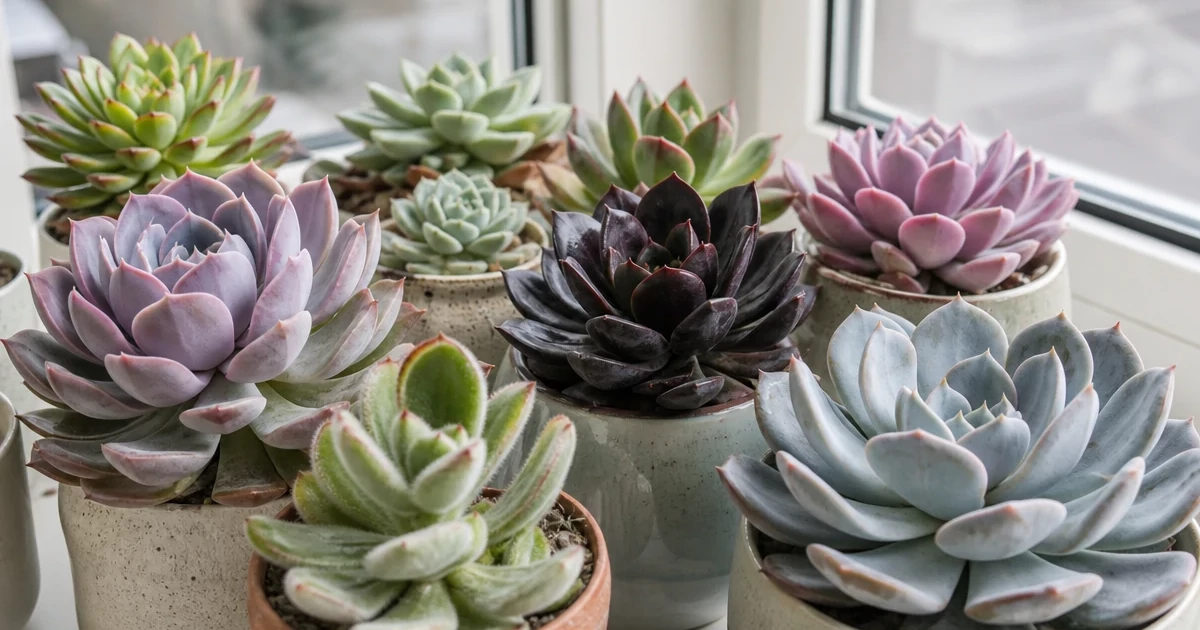
View full-size photoEcheveria rosettes of different varieties on a bright windowsill
Echeveria needs maximum light: a south or west window with several hours of sun. Bright light keeps the rosette compact and brings out pink and red tips. In summer it benefits from a balcony — acclimatise it to direct sun gradually to avoid scorch — and keep it out of the rain.
From spring to autumn water thoroughly, but only when the soil is completely dry — usually every 7–14 days depending on heat. Water around the edge or into the saucer, never into the rosette, as water in the centre causes rot. The waxy bloom (farina) protects against sun, so do not wipe it off or mist. Feed once or twice a season with cactus fertiliser.
In winter echeveria rests. Keep it on a bright, cool windowsill at 10–15 °C and water sparingly — a little every 3–4 weeks, just enough to stop the leaves wrinkling. In a warm room with short days it grows without light and stretches. If there is no cool spot, add a grow light.
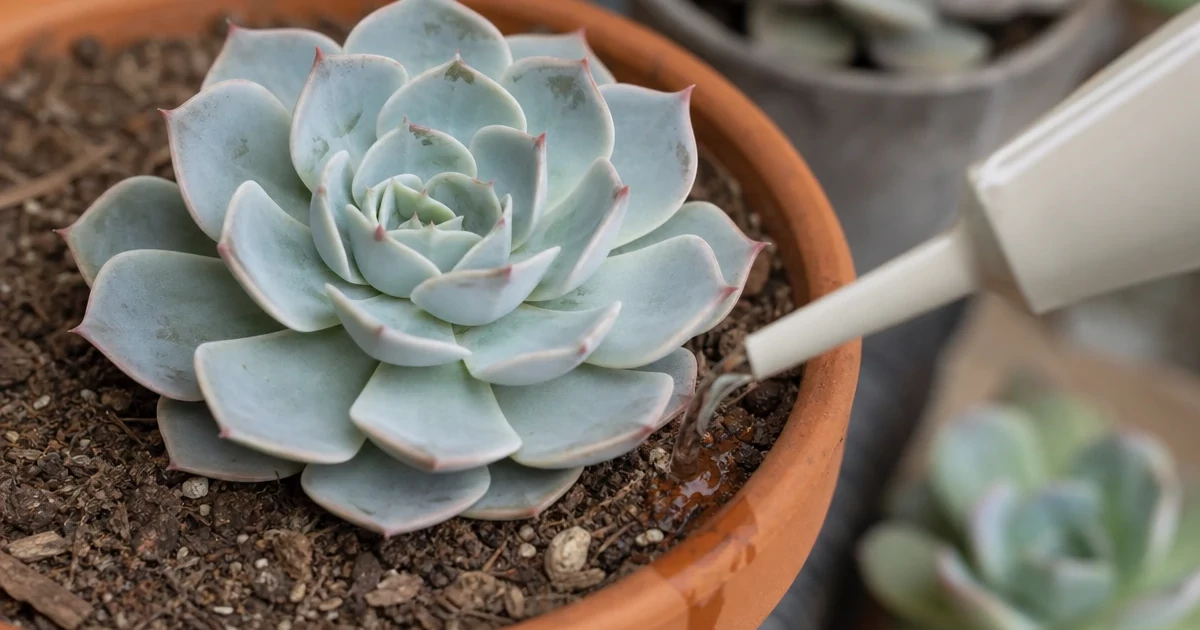
View full-size photoWater echeveria at the pot edge, avoiding the rosette
Use cactus and succulent compost with a third of perlite, pumice or fine grit. Choose a shallow pot with drainage; terracotta helps the soil dry faster. Repot in spring once the rosette fills the pot, usually every 2–3 years. Echeverias look great in mini gardens — see DIY succulent arrangements.
More in succulents at home and houseplant problems and symptoms.
In spring or summer echeveria may send up a long stalk of orange, pink or yellow bells; cut it off after flowering. Echeveria is considered non-toxic to people, cats and dogs. Browse succulents and other potted plants.
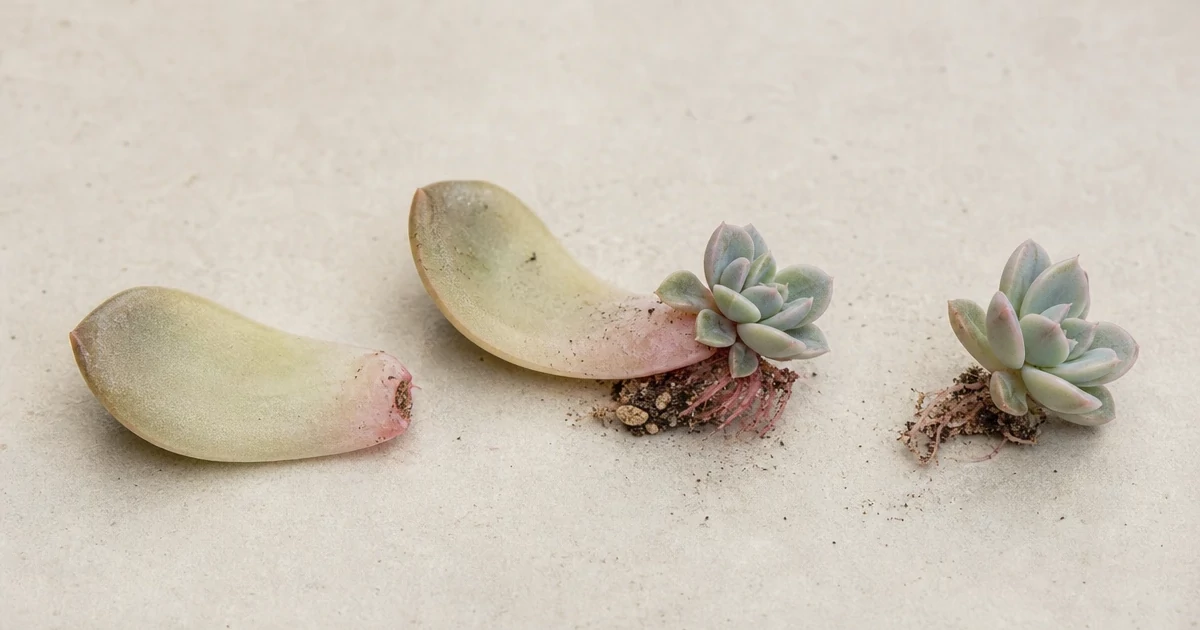
View full-size photoStages of echeveria propagation by leaf and offsets
In summer, when the soil is completely dry — roughly every 7–14 days. In a cool winter, a little water every 3–4 weeks.
Not enough light, especially in a warm room in winter. Cut and re-root the rosette.
Only for summer: it cannot tolerate frost, so bring it back inside in autumn.

Author: Maria Svitlovir
Graduated from Taras Shevchenko National University of Kyiv, Institute of Biology and Medicine (2001). BSc in Biology, MSc in Horticulture. Writes about plants, works at a garden centre selecting and repotting plants, and contributes to plant reference guides.
© Kyiv 2026 UFL Flower Shop

Trademark UFL №191476 is used under license of the rights holder.
All rights reserved. Any use of materials without a link to the site is prohibited.

 Birthday
 Hydrangeas