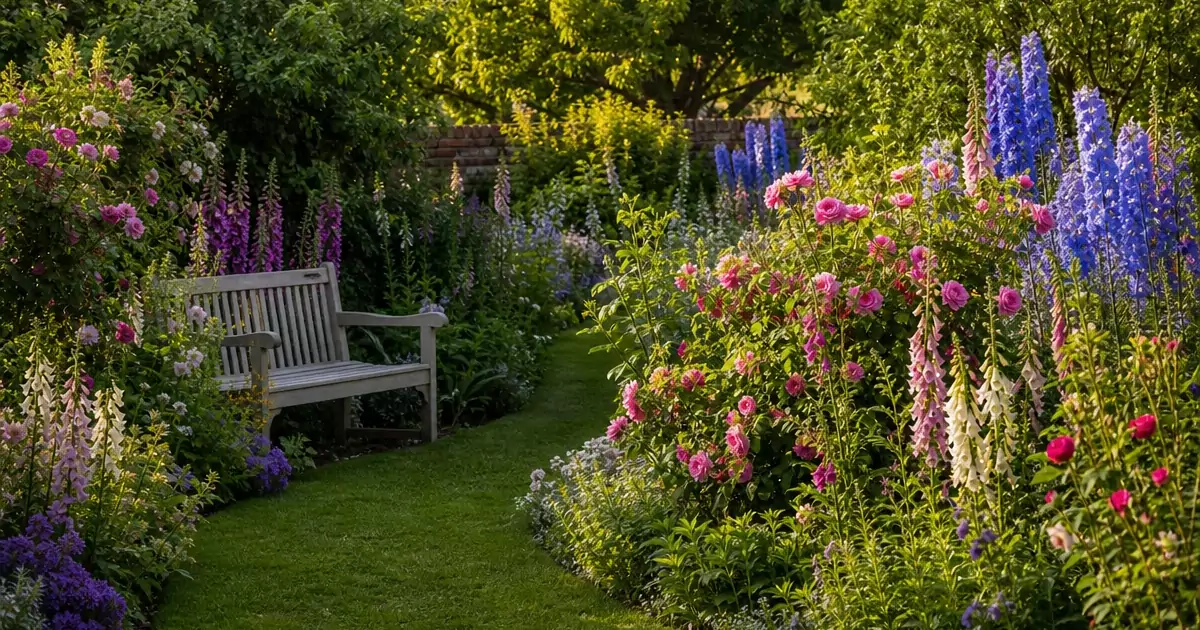
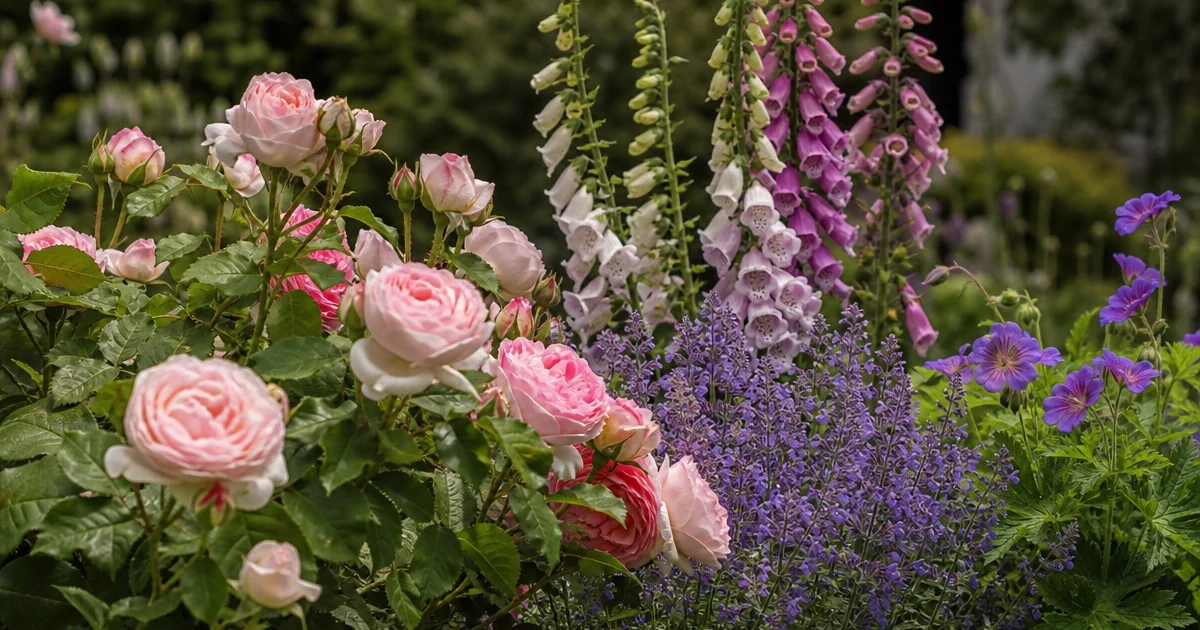
An English garden feels natural: flowers seem to grow of their own accord, roses climb the walls of an old house and a path leads to a cosy bench. Even a small courtyard can be styled this way. Here is how the English landscape and cottage gardens differ, which plants to choose and how to create a British courtyard atmosphere at home.
The landscape park emerged in 18th-century England as a reaction to rigid formal gardens: rolling ground, lakes, groups of trees and sweeping lawns. Its best-known designer was Lancelot “Capability” Brown.
The cottage garden is small, cosy and densely planted, with flowers, herbs and fruit mixed together by the house.
Key elements of an English-style garden
Which plants to choose
Roses — shrub and climbing roses with scent and old-fashioned flower shapes.
Clematis — on arches and fences, paired with roses.
Pots of different sizes with herbs and flowers create layers.
A bench under a rose arch is the heart of the garden.
Cottage garden: 7 rules
Dense planting with no bare soil.
A mix of flowers, herbs, shrub roses and even vegetables.
Tall plants at the back, low ones at the front, but no strict geometry.
Winding gravel or paved paths softened by plants at the edges.
A bench, an arch with climbers or an old fence as a backdrop.
Self-seeding — let foxgloves, poppies and forget-me-nots spread on their own.
Bloom from spring to autumn thanks to plants with different flowering times.
FAQ
Does an English garden suit Ukraine’s climate?
Yes, with hardy roses and perennials — but summers here are hotter and drier than in England, so you will need to water.
Is it hard to maintain?
A cottage garden needs regular attention: tying in, deadheading and dividing perennials.
Author: Maria Svitlovir
Graduated from Taras Shevchenko National University of Kyiv, Institute of Biology and Medicine (2001). BSc in Biology, MSc in Horticulture. Writes about plants, works at a garden centre selecting and repotting plants, and contributes to plant reference guides.





 Birthday
 Hydrangeas