
 Birthday
 Hydrangeas
Flowers don't have to sit on a table or windowsill. Hanging vases, moss balls, "flying" teacups and whole flower clouds under the ceiling create the illusion that plants are floating in the air. Such arrangements save space, transform a room and look great in photos. Here are floating flower ideas — from the simplest to real showstoppers — and how to make them yourself.
Ideas at a glance
Hanging vases and test tubes
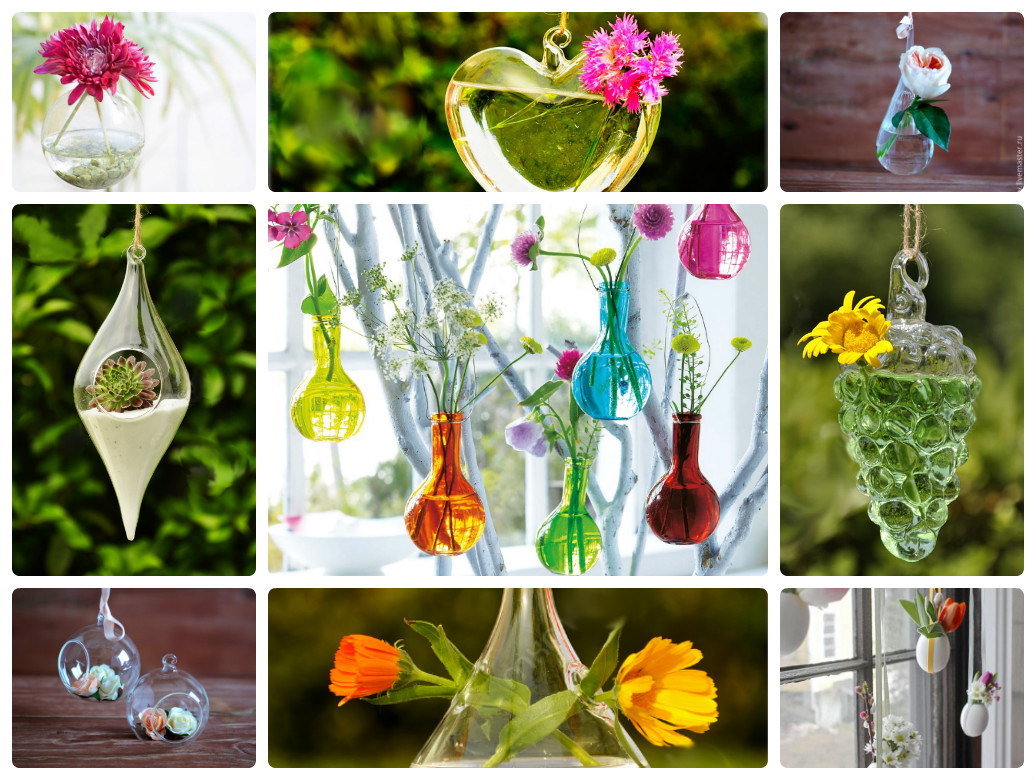
The easiest way to make a bouquet "float" is to hang a clear glass vase or bulb from a cord, chain or leather strap. Put one to three stems in it: eucalyptus, an orchid spray, a tulip, gypsophila. Pebbles or moss can go at the bottom.
An even lighter option is glass test tubes on a string or a wooden batten, one flower in each. This "garland" looks great in a window, a hallway or as wedding decor. Just fix the hook securely and change the water every 1–2 days, as the tubes hold very little.
Hanging planters and macramé
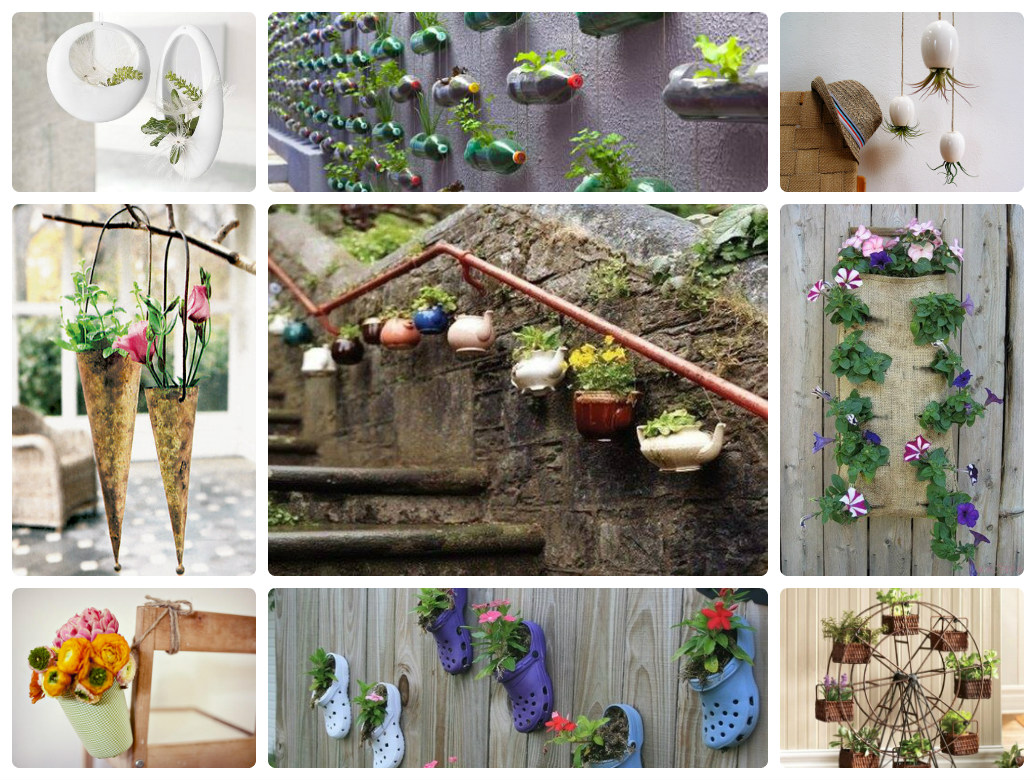
For houseplants, hanging planters work best. A cachepot (French for "hide the pot") is a decorative outer container for an ordinary pot with drainage. Trailing plants look especially good hanging: spider plant, pothos, tradescantia, ivy, rhipsalis.
Hangers can be knotted in macramé or made from baskets, burlap, glass or wood. For ideas and rules to prevent waterlogging, see DIY plant pot covers.
Kokedama — a plant in a moss ball
Kokedama is a Japanese technique in which a plant's roots are wrapped in a ball of soil covered with moss and bound with string. The ball is hung on a cord, so the plant seems to float without a pot.
- Mix houseplant compost with a little clay so it holds its shape.
- Take the plant out of its pot, shake off some soil and pack the mix around the roots to form a ball.
- Cover the ball with damp moss and wrap it tightly with jute twine or fishing line.
- Water by soaking: dip the ball in water for 10–15 minutes whenever it feels light.
Ferns, small-leaved ficus, peace lilies, spider plants and succulents all suit kokedama.
Air plants — no soil needed
Tillandsias, or air plants, are bromeliad relatives that grow on trees in the wild and absorb moisture through scales on their leaves. You can hang them in a glass globe, on wire or on a piece of driftwood. Care is simple: bright indirect light and a 20–30-minute soak in water once a week, after which the plant must dry thoroughly upside down.
Wire vase
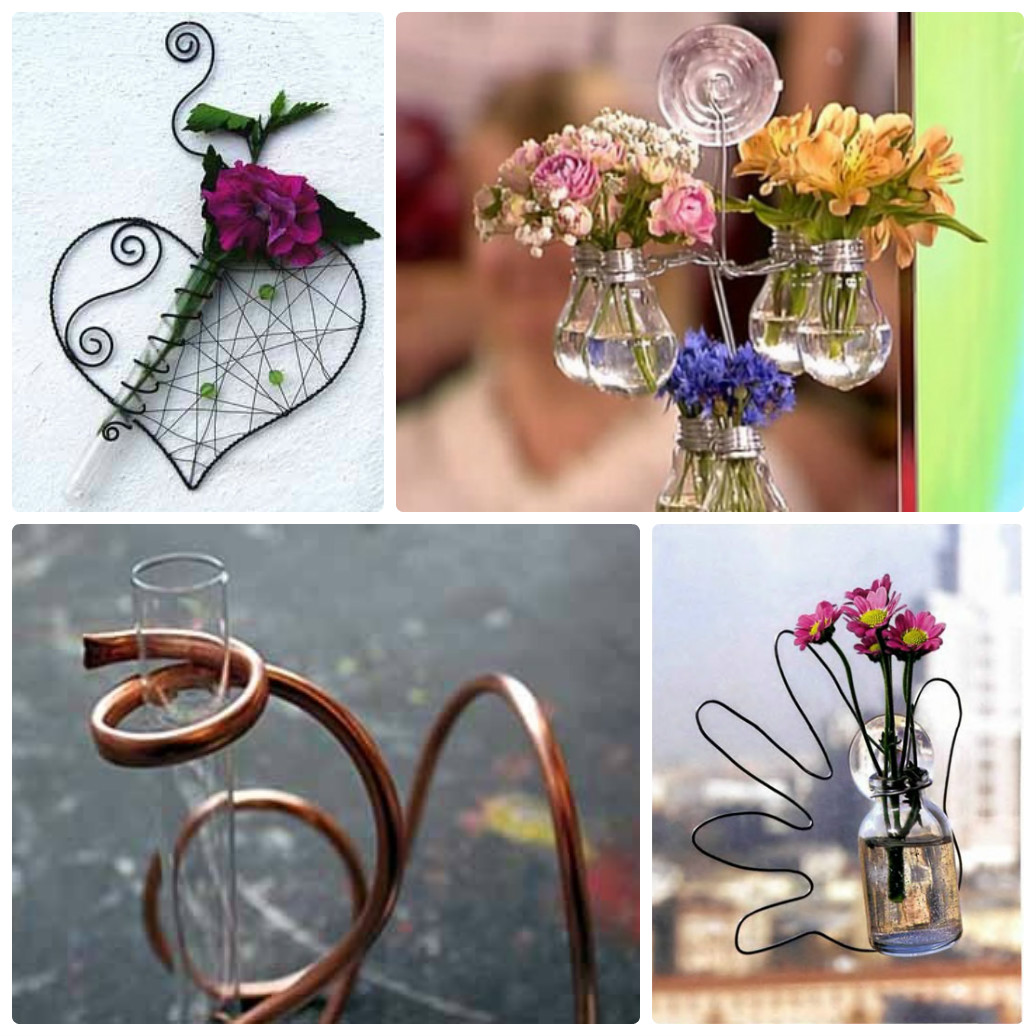
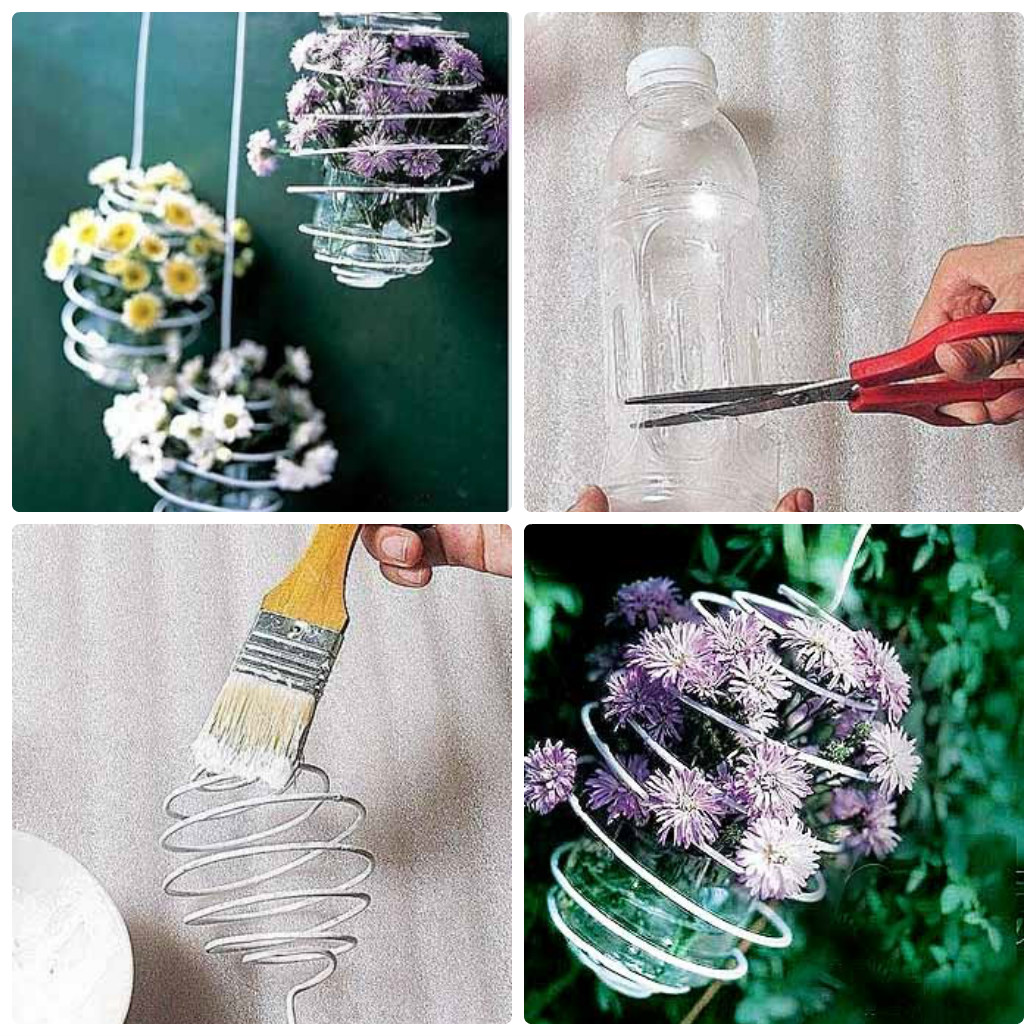
Take a slim glass tube and a length of thick aluminium or copper wire. Coil the wire into a spiral or loops that grip the tube, and the vase will seem to hang in mid-air on its wire frame. Stand it on a table or hang it up. Put a cut-down plastic bottle inside a wire spiral instead of a glass tube and you get a lightweight hanging vase. The wire can be painted any colour with acrylics.
Floating teacup
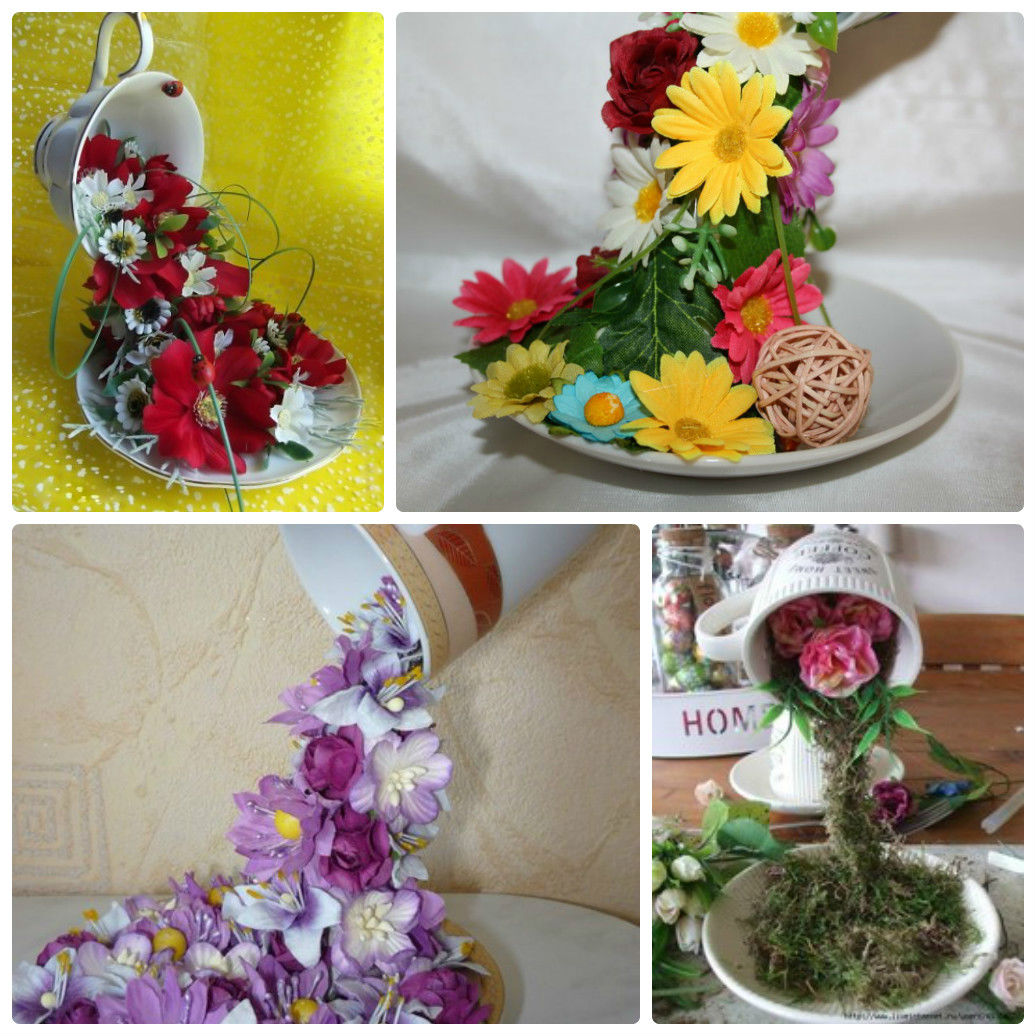
A showstopper: a teacup hovers above its saucer with a stream of flowers "pouring" out. The secret is a hidden support. Bend a thick wire or a metal fork, glue one end to the saucer and the other to the rim of the cup, then cover the support with small flowers, moss or petals to create a "waterfall". For a long-lasting piece use artificial or preserved flowers; fresh ones work for a single occasion. More on artificial flowers in artificial flower arrangements.
The "cut" vase
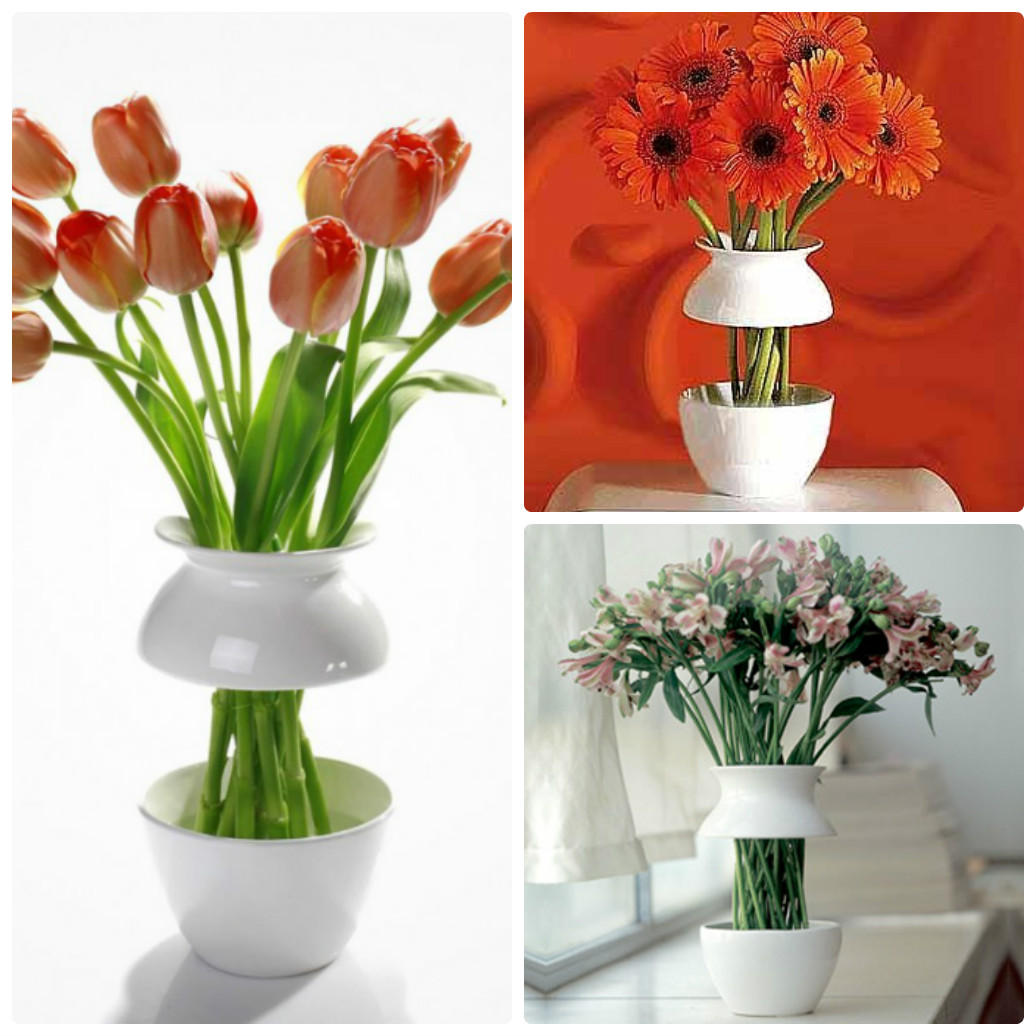
This is an optical illusion: the top of the vase seems to float above the bottom, held only by the flower stems. In fact the middle section is clear glass while the top and bottom are coloured. You can get a similar effect at home by painting the top and bottom of an ordinary glass vase with matte paint and leaving the middle clear.
Hanging flower installations
At weddings and in restaurants, "flower clouds" are popular: large arrangements hung from the ceiling above a table or arch. The base is a metal mesh or frame holding flowers in water tubes or floral foam — typically hydrangeas, gypsophila, roses, wisteria (often artificial) and greenery. For home, make a mini version: a wreath of dried flowers suspended above the table.
Safety and care
- Make sure the hook can hold the arrangement's weight with water or wet soil. Plasterboard needs special anchors.
- Don't hang glass vases where children or pets might knock them.
- Water evaporates faster from hanging containers, so top up more often.
- Consider light and warmth: it's usually warmer and drier higher up.
For any of these ideas you'll need flowers — choose from our orchids or potted plants.
FAQ
Which plants suit hanging planters?
Trailing ones: spider plant, pothos, tradescantia, ivy, rhipsalis; outdoors, petunias and bacopa.
What is kokedama?
A Japanese technique where a plant's roots are wrapped in a ball of soil and moss and hung without a pot.
How do you make a floating teacup?
With a hidden support of thick wire or a fork, disguised with flowers.
How do I care for air plants?
Bright indirect light and a weekly 20–30-minute soak, then let them dry thoroughly.

View full-size photo
Author: Maria Svitlovir
Graduated from Taras Shevchenko National University of Kyiv, Institute of Biology and Medicine (2001). BSc in Biology, MSc in Horticulture. Writes about plants, works at a garden centre selecting and repotting plants, and contributes to plant reference guides.