
 Birthday
 Hydrangeas
From the outside, a florist's job looks like pure creativity: beautiful flowers, bouquets, weddings and celebrations. In reality it is a profession where artistic taste meets botany, physical work and people skills. Here is what a florist actually does, which skills are needed, how to become one, and how to choose a good florist when ordering a bouquet or event decor.
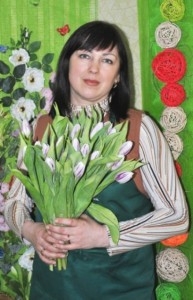
What is a florist
A florist is a specialist who creates bouquets and arrangements from fresh and dried flowers, plants and natural materials. Unlike a flower seller, a florist doesn't simply bunch flowers together: they plan the shape, colour, texture and purpose of an arrangement, know how to condition flowers so they last longer, and understand which plants work together.
The word "floristry" comes from the Latin flos, "flower". The art of arranging flowers developed in many cultures: Japanese ikebana with its restraint and symbolism, lavish European bouquets, and the rigorous German and Dutch schools with clear rules of composition.
What a florist does
- Making bouquets and arrangements — from small gestures to large corporate orders.
- Receiving and conditioning flowers — checking deliveries, trimming stems, stripping leaves and hydrating flowers in the cold room.
- Event decor — weddings, graduations, corporate events, shop windows and photo shoots.
- Advice — helping customers choose flowers for the occasion, budget and recipient.
- Caring for stock and plants — changing water, monitoring freshness, looking after potted plants.
Which skills are needed
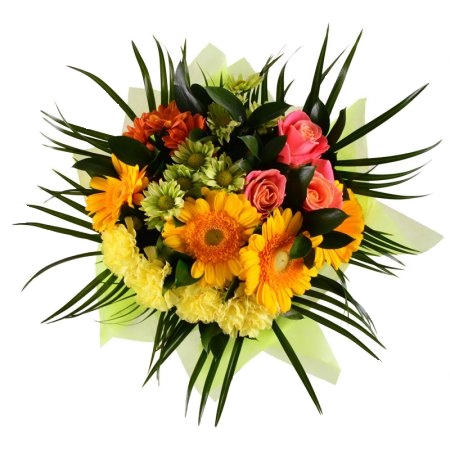
A florist needs a sense of colour and form, knowledge of varieties and their seasons, and an understanding of how different flowers behave in and out of water. Technical skills matter too: spiral bouquet technique, working with wire, floral tape and frames, and wrapping. For the basic technique, see how to make a spiral bouquet.
Stamina and organisation are just as important. Florists spend long hours on their feet in cool rooms with cold water, and on peak days — Valentine's Day, 8 March, the first day of school, graduations — they start early in the morning and finish late at night.
Areas of floristry
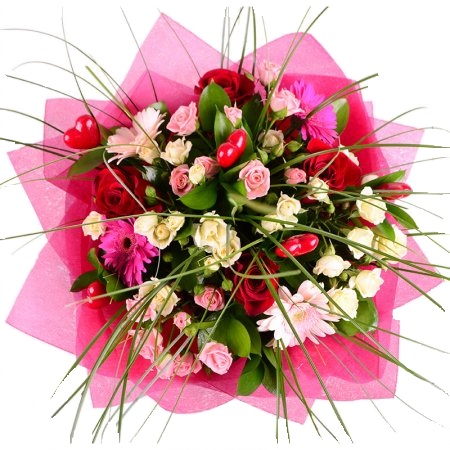
- Retail floristry — bouquets and arrangements for shop and delivery customers.
- Wedding and event floristry — bridal bouquets, buttonholes, venue decor, arches and tables.
- Interior floristry and plant design — plants and arrangements for offices, restaurants and hotels.
- Dried and preserved flowers — long-lasting arrangements and decor.
- Competition and exhibition floristry — complex signature pieces for festivals and shows.
How to become a florist
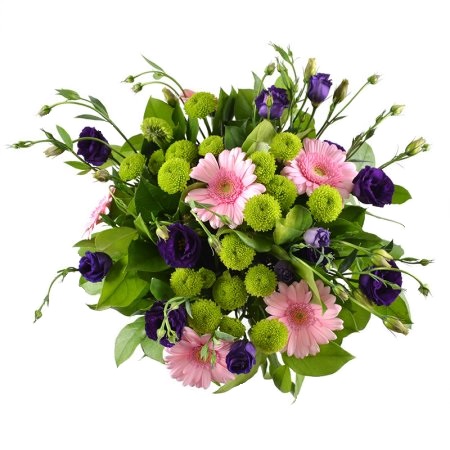
- Courses. Basic courses teach arranging technique, colour theory and cut-flower care. Good schools offer plenty of hands-on practice with fresh flowers.
- Work in a studio. The best experience is working as a florist's assistant: receiving and conditioning flowers and making first bouquets under supervision.
- Portfolio. Photos of your work help you find clients and jobs.
- Keep learning. Varieties, trends and techniques change, so florists regularly attend workshops and shows.
Sustainability matters more and more: many florists are moving away from floral foam to reusable bases, using seasonal and local flowers and paper wrapping.
How to choose a florist
- Look at their portfolio: the florist's style should match your taste.
- Ask which flowers will be used and whether a variety can be substituted if it isn't available.
- Book weddings and events well in advance — 1–2 months ahead.
- Ask how to care for the bouquet: a good florist will always advise you. For tulips, for example, see our tulip care guide.
Frequently asked questions
How is a florist different from a flower seller?
A florist creates an arrangement — planning its shape, colour and purpose — and knows how to condition flowers properly. A seller mainly advises and sells ready flowers.
How long does it take to train as a florist?
A basic course takes from a few weeks to a couple of months, but confidence comes with studio practice.
Is floristry hard work?
It is creative but physically demanding: standing for long periods, in cool rooms, with cold water, and rushed off your feet during holidays.
Do you need an art education?
Not necessarily, but a sense of colour and composition is important — it is developed through courses and practice.

View full-size photo
Author: Maria Svitlovir
Graduated from Taras Shevchenko National University of Kyiv, Institute of Biology and Medicine (2001). BSc in Biology, MSc in Horticulture. Writes about plants, works at a garden centre selecting and repotting plants, and contributes to plant reference guides.


