
 Birthday
 Hydrangeas
Prepared with UFL flower delivery. Flowers grow not only in soil, on rocks or in deserts but also in water. The most striking ones hold their blooms right on the surface while hiding roots and stems at the bottom. Here is which flowers grow on water, how a water lily differs from a lotus, and how to grow one in your own pond or even a tub.
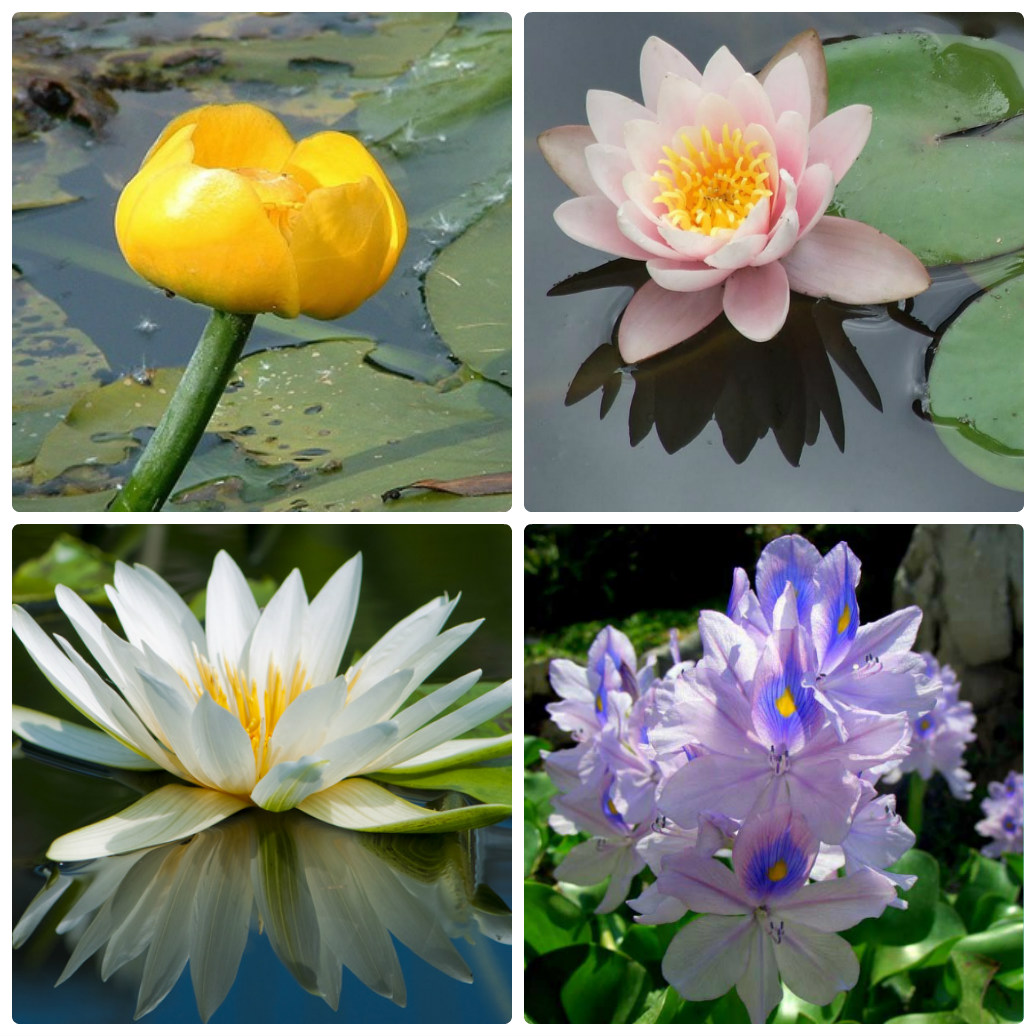
Pond zones: what grows where
Gardeners divide a pond into five zones by depth, and each zone suits different plants.
- Deep-water zone — 40–120 cm. Plants root at the bottom while leaves and flowers float: water lily, spatterdock, lotus.
- Shallows — 20–40 cm. Roots are underwater, most shoots above it: flowering rush, arrowhead, reeds.
- Marsh zone — up to 20 cm, with a water level that changes over the season: yellow flag iris, marsh marigold.
- Moist zone — just beyond the water. Plants tolerate flooding but dislike drought.
- Garden zone — the area around the pond.
Water lily (Nymphaea)
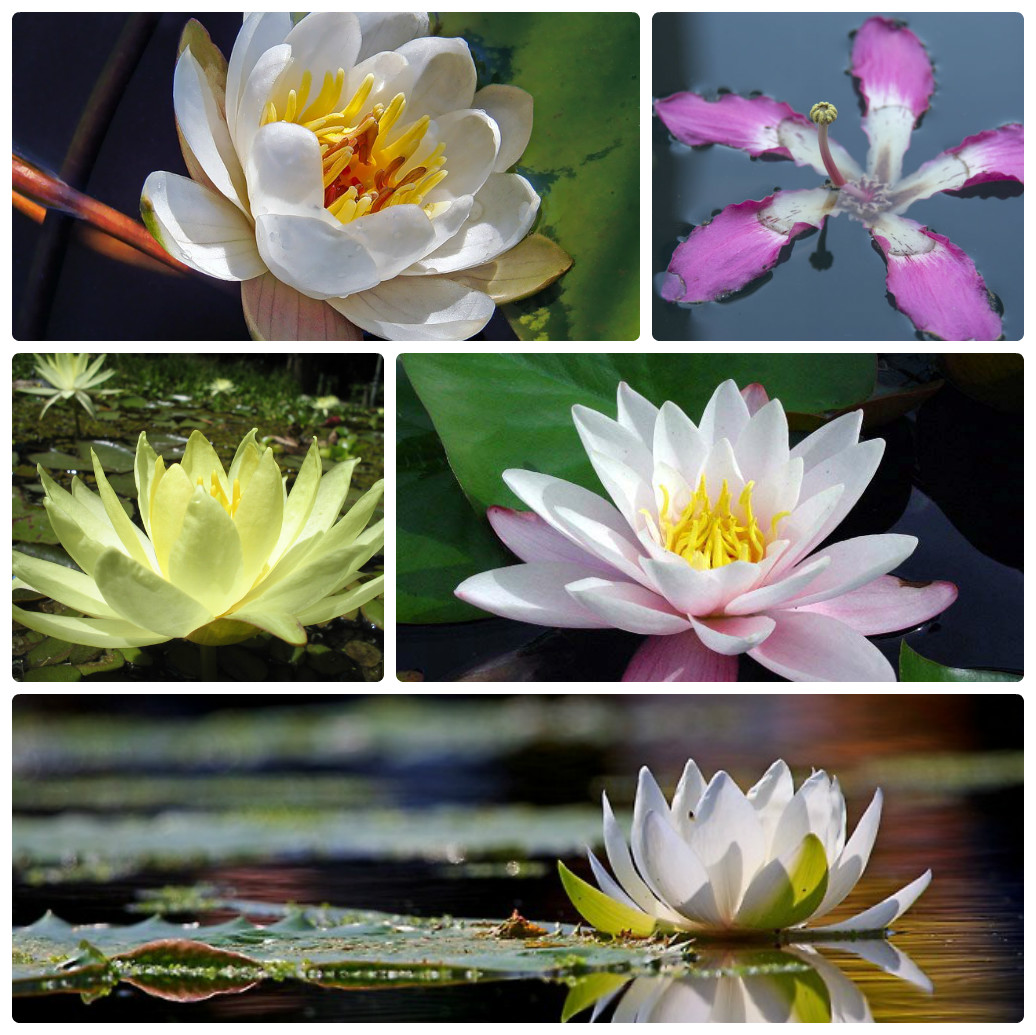
The water lily is the best-known and perhaps the most beautiful aquatic flower. The genus has about 50–70 species; white, pink, yellow and red flowers open in the morning and close towards evening. The white water lily is the most common in Ukrainian lakes and rivers. The Latin name Nymphaea comes from the nymphs — Greek spirits of rivers and springs.
The rhizome sits on the bottom up to 1.5 m deep, and the round, notched leaves float thanks to air channels in their stalks. Do not pick wild water lilies: a cut flower wilts within hours.
Lotus
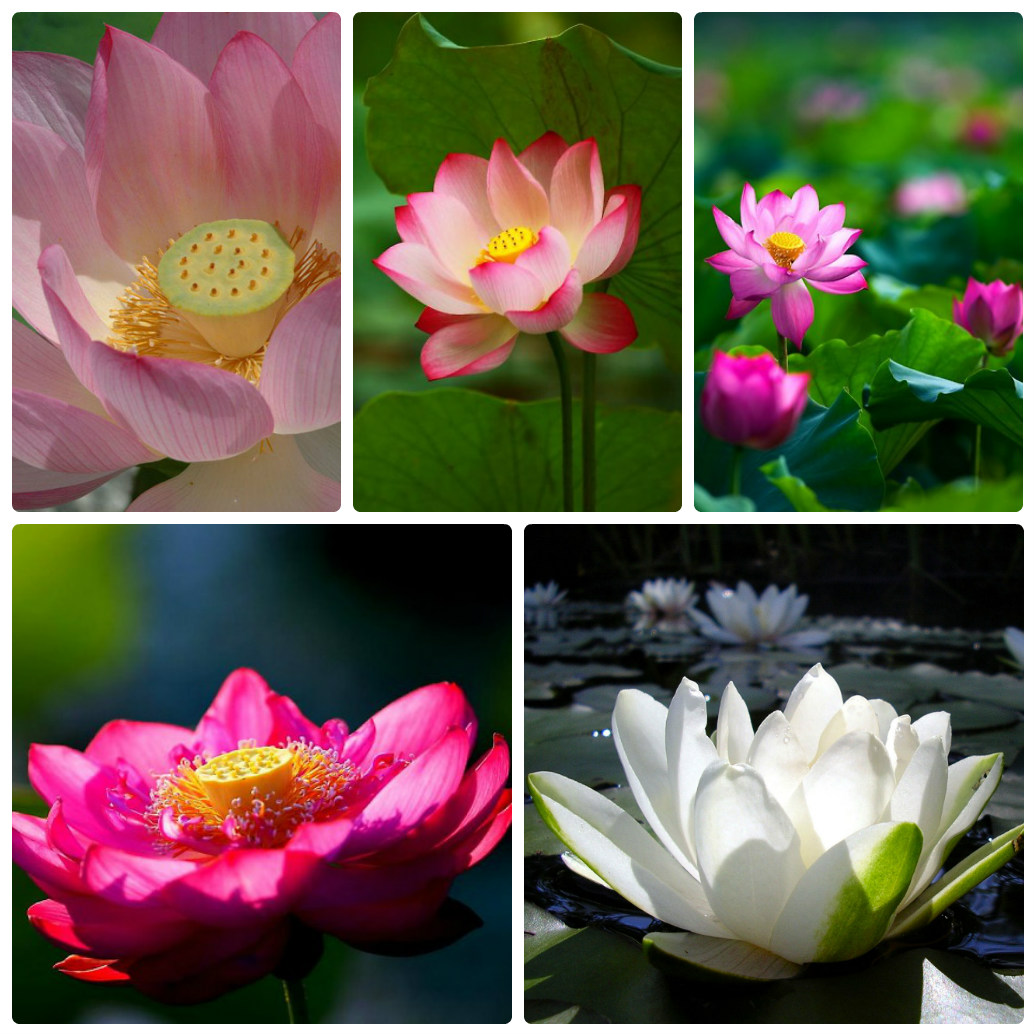
At first glance the lotus looks like a water lily, but it belongs to a separate family with only two species: the sacred (pink) lotus and the American yellow lotus. The key differences:
- lotus leaves and flowers rise above the water on tall stalks, while water lily ones lie on the surface;
- a lotus leaf is round with no notch and shows the «lotus effect» — water rolls off in beads, taking dust with it;
- the centre of a lotus flower is a flat seed head that looks like a shower rose.
In Buddhism and Hinduism the lotus symbolises purity: it rises from mud and stays unstained.
Frogbit
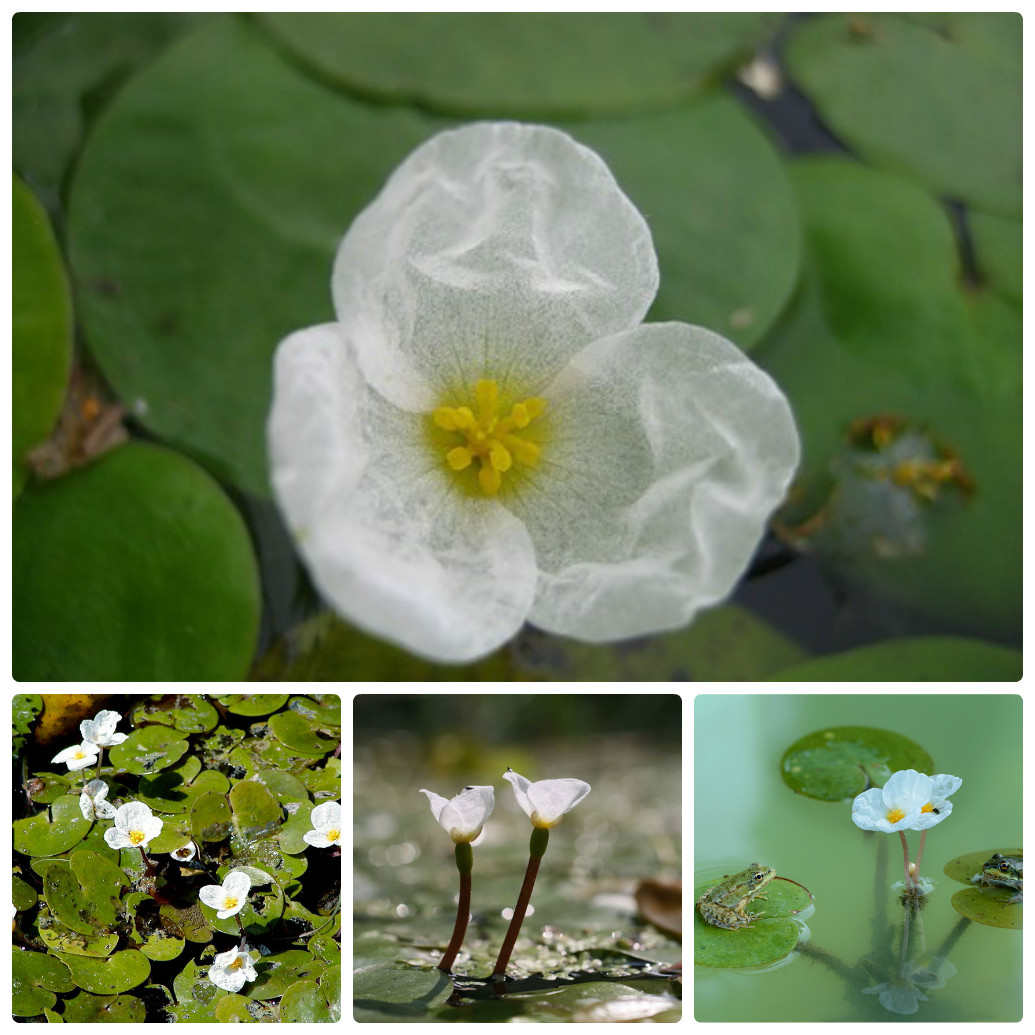
Frogbit is a small floating plant of ponds and oxbow lakes. Its round leaves look like a miniature water lily, and the flower has three white petals around a yellow centre. Frogbit does not root in the mud: in autumn it forms winter buds that sink to the bottom and float up again in spring.
Water hyacinth (Eichhornia)
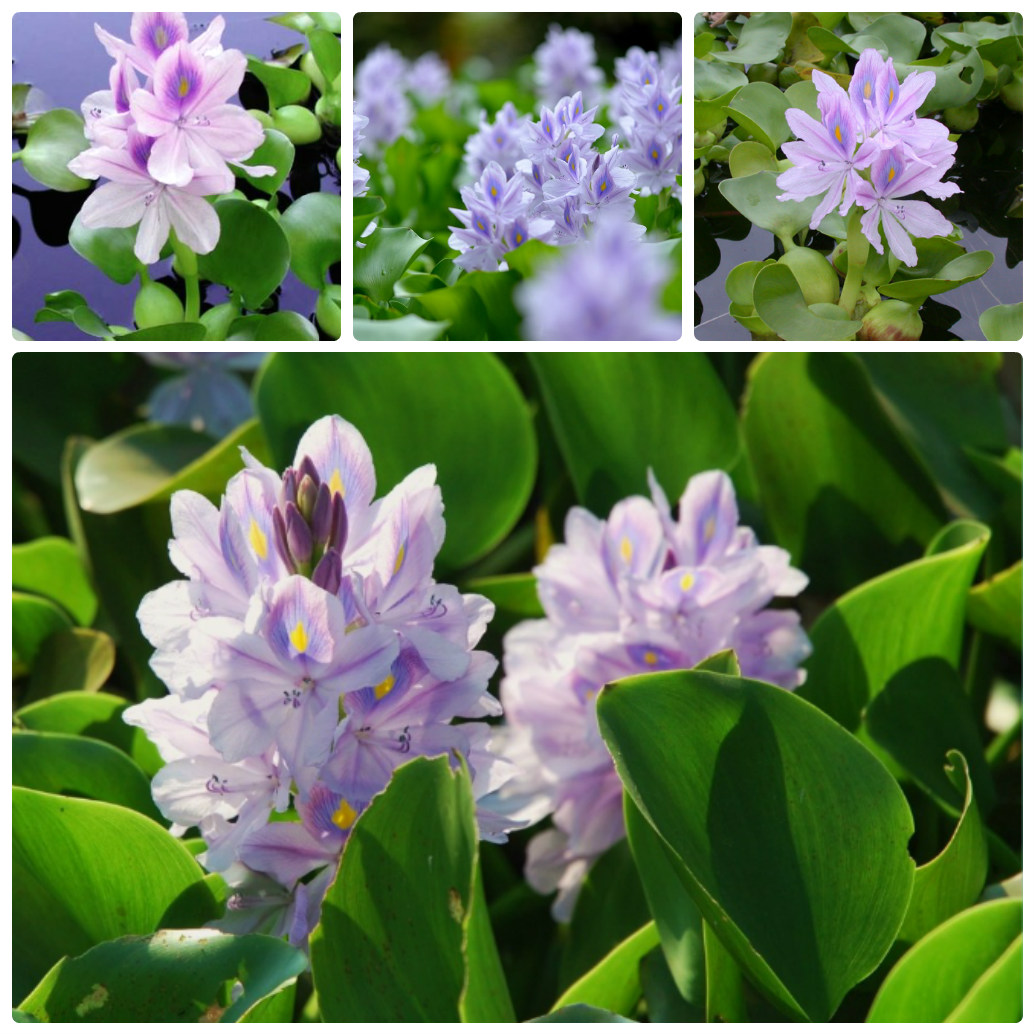
Water hyacinth floats on swollen, air-filled leaf stalks. Lilac flowers with a yellow spot form a spike reminiscent of a hyacinth. In the tropics it is one of the worst aquatic weeds and can cover a whole pond in a season. The EU lists it as an invasive species and bans its sale, so it must never be released into natural waters. It does not survive winter outdoors in Ukraine and is kept in aquariums and mini-ponds.
Other flowers that grow on water
- Yellow water lily (spatterdock) — a relative of the water lily with yellow, ball-shaped flowers, common in Ukrainian rivers.
- Flowering rush — pink umbels in the shallows, blooming June–August.
- Yellow flag iris — the yellow iris of riverbanks.
- Arrowhead — arrow-shaped leaves and white three-petalled flowers.
- Cape pondweed (Aponogeton) — fragrant white flower spikes on the surface; grown in ponds and aquariums.
- Water lettuce (Pistia) — a floating rosette of pale green leaves with inconspicuous flowers.
Some of these plants spread quickly, so in a garden pond they are planted in baskets and kept in check.
How to grow a water lily in a pond or tub
- Site — at least 5–6 hours of sun; in shade a water lily will not flower.
- Container — a tub or bowl 40–50 cm deep is enough for dwarf varieties; standard ones need 60–100 cm.
- Planting — in May, plant the rhizome in a mesh basket with heavy clay soil and top with gravel so the soil does not float away.
- Depth — start at 15–20 cm and lower the basket gradually once the leaves reach the surface.
- Winter — move the basket below the freezing line or store it in a cellar in damp sand or a bucket of water.
FAQ
What is the difference between a water lily and a lotus?
Water lily leaves and flowers float on the water, while lotus ones stand above it. A water lily leaf has a notch; a lotus leaf is a solid circle.
Can I put a water lily in a vase?
Only briefly — a cut flower lasts a few hours. For an indoor arrangement, orchids or flowers floating in a shallow bowl work better.
Which bouquet flowers love water most?
Hydrangea — its Latin name means «water vessel». Keep the stem deep in water and even mist the flower head. Order hydrangea bouquets with delivery in Kyiv.
Read also

View full-size photo
Author: Maria Svitlovir
Graduated from Taras Shevchenko National University of Kyiv, Institute of Biology and Medicine (2001). BSc in Biology, MSc in Horticulture. Writes about plants, works at a garden centre selecting and repotting plants, and contributes to plant reference guides.


