Flowers on a grave are a sign of remembrance and care, but not every plant copes with heat, drought and infrequent watering. Here are 12 easy plants for a grave with photos and names, ground-cover perennials that need no care, annuals for memorial days and dwarf conifers, plus tips on planting neatly and whether to plant within the first year.
More on this topic: funeral flowers, flowers for shade, low-maintenance garden.
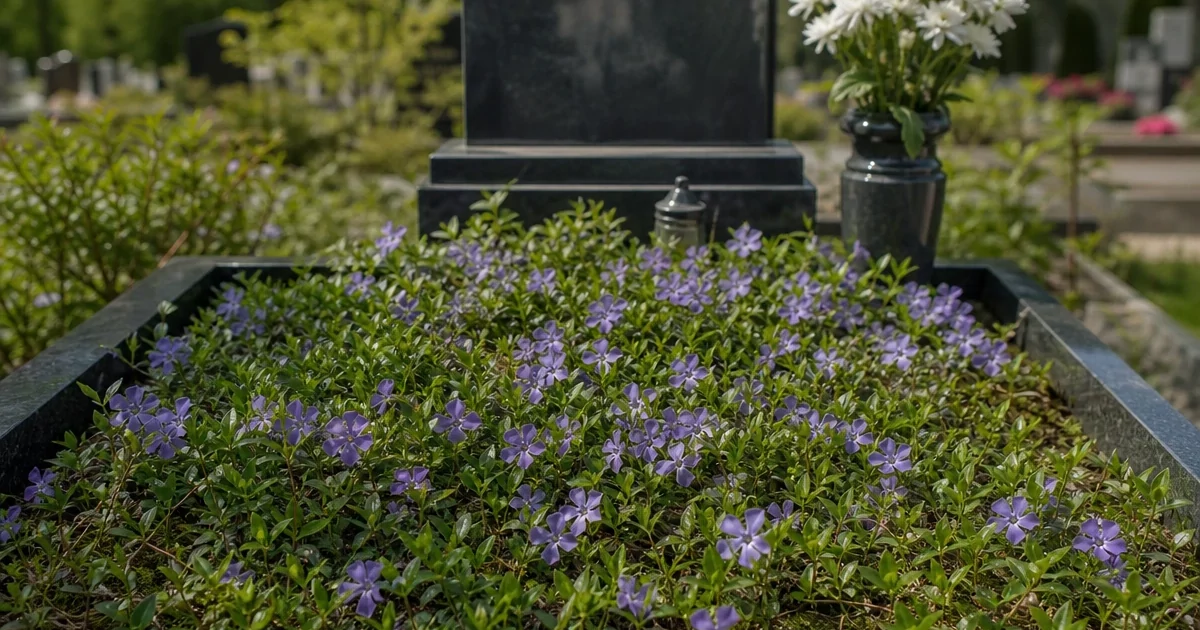
The traditional grave plant in Ukraine: an evergreen carpet with blue spring flowers, happy in sun or shade and maintenance-free, a symbol of eternal memory.
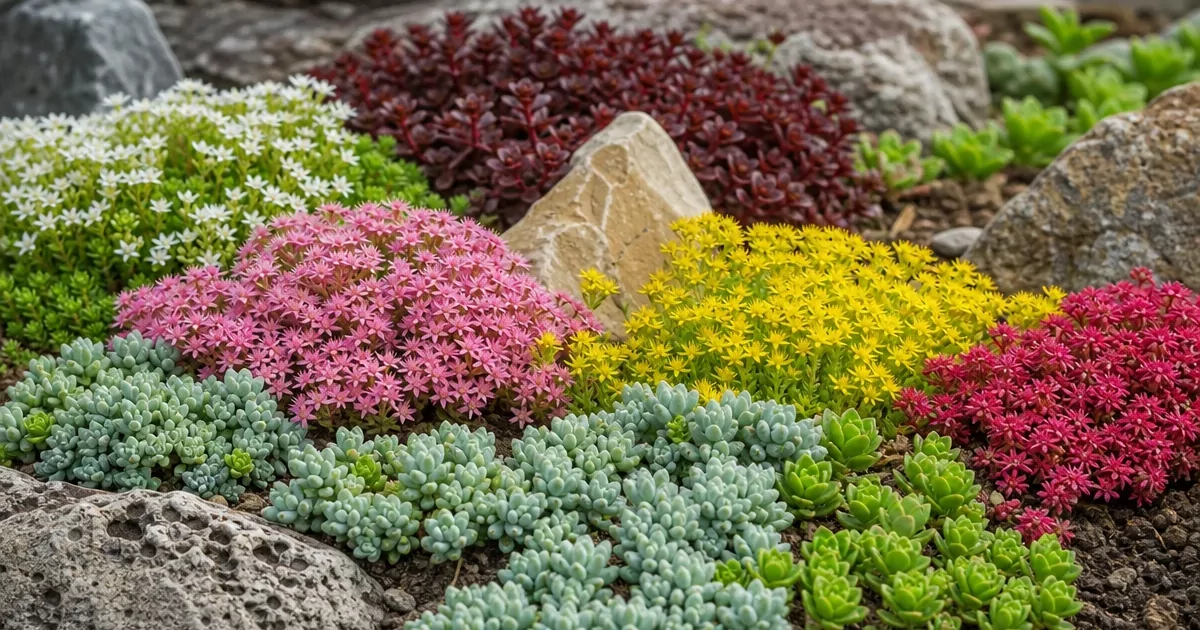
Succulent mats and clumps that tolerate heat and drought, flowering yellow, pink or red in summer and autumn.
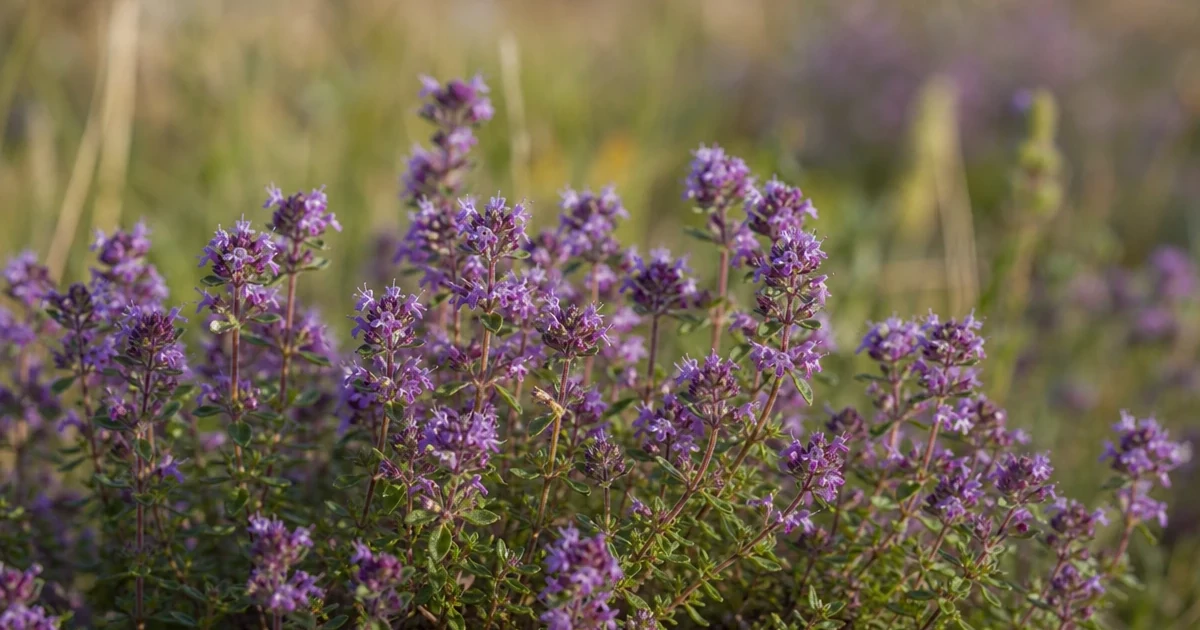
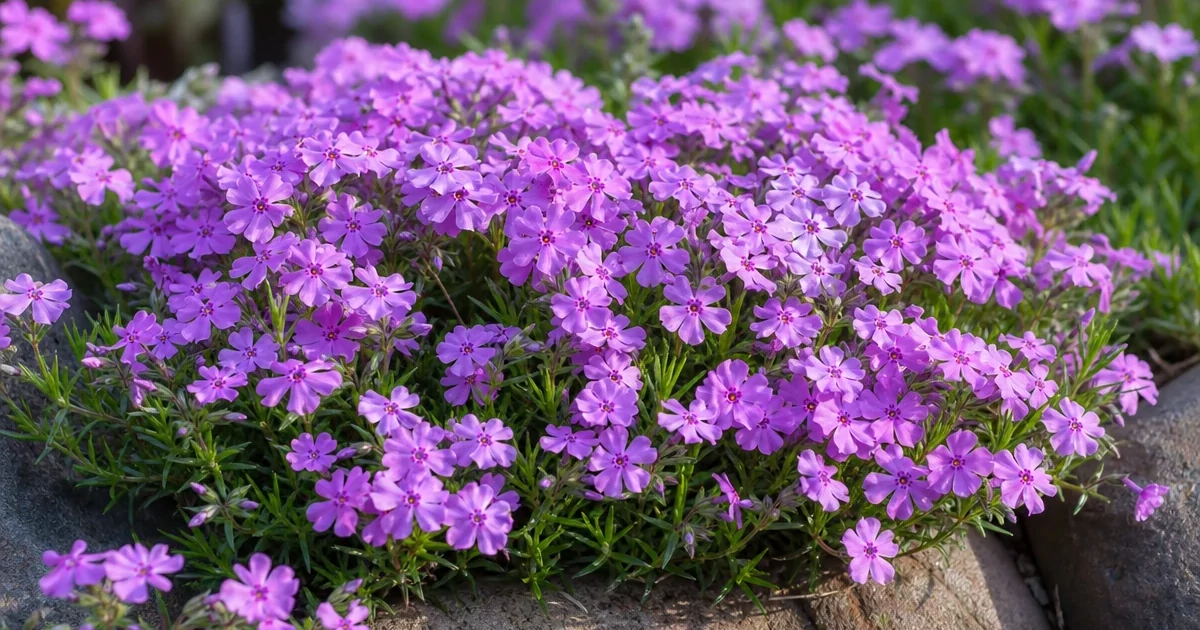
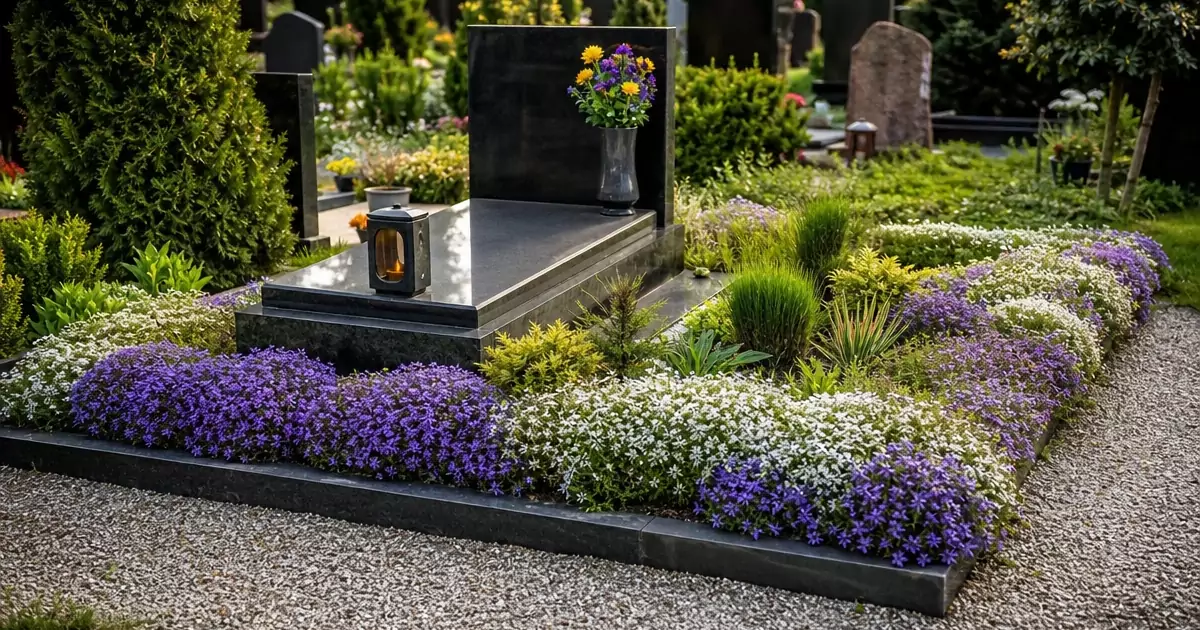
A fragrant mat of tiny lilac flowers in June–July for sunny, dry spots.
A dense cushion smothered in pink, white or blue flowers in May.
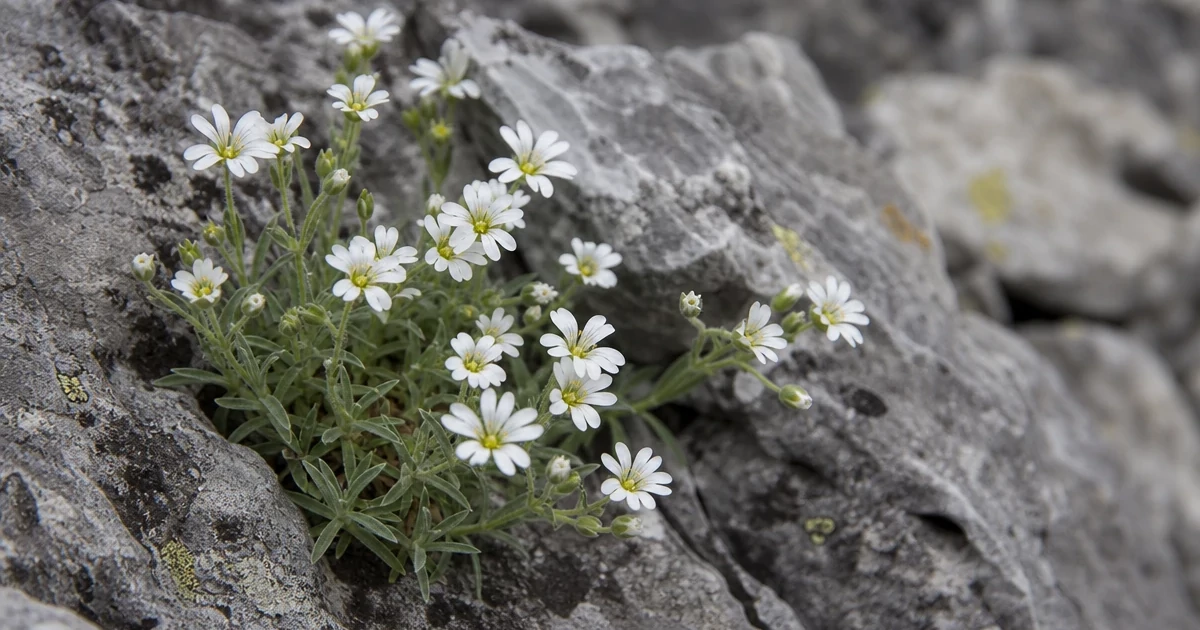
A silvery “snow” cushion with white flowers in May–June; tough and drought-tolerant.
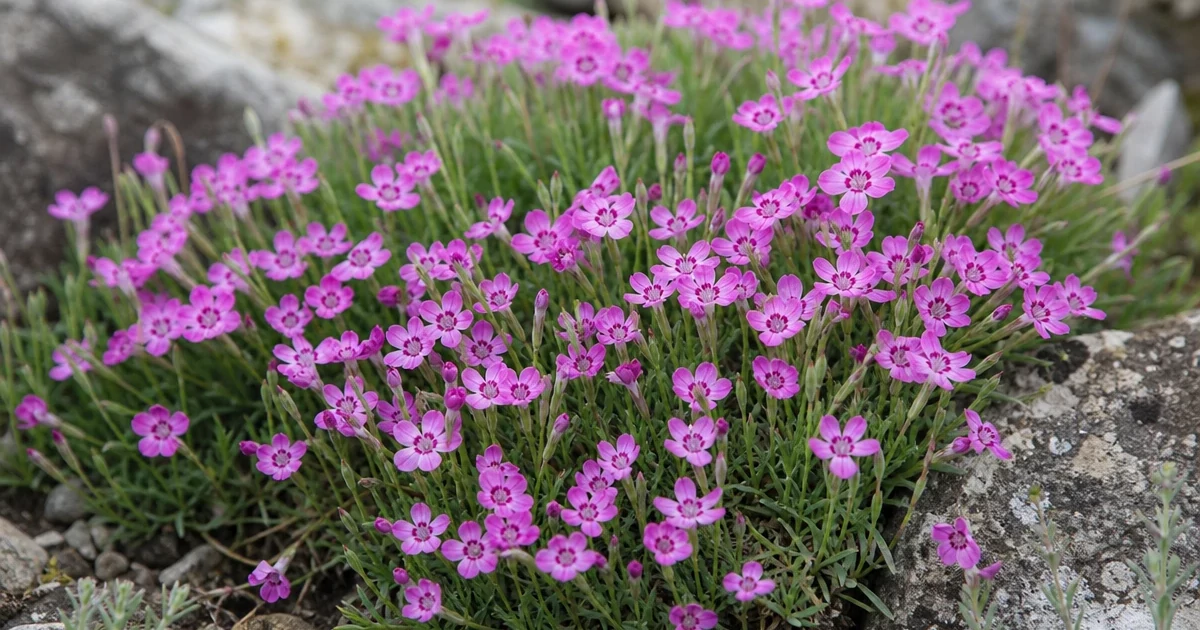
A low mat of small pink and red pinks all summer.
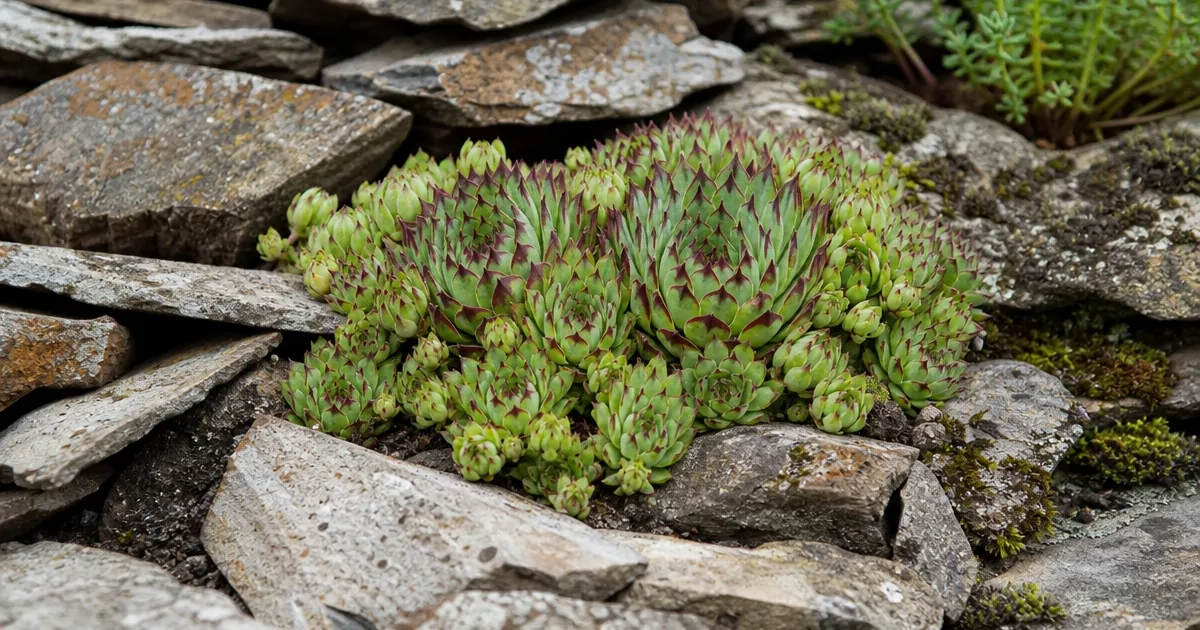
Rose-like rosettes in many shades that grow even in cracks between stones and need almost no water.
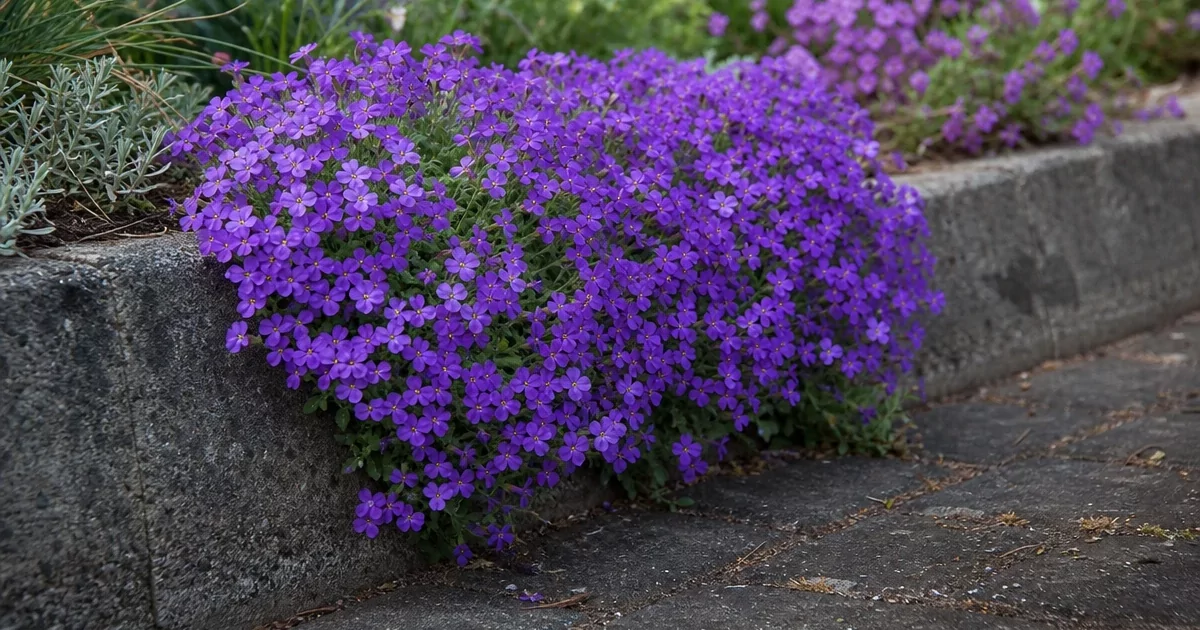
A cascade of purple or pink flowers in April–May, lovely spilling over an edge.
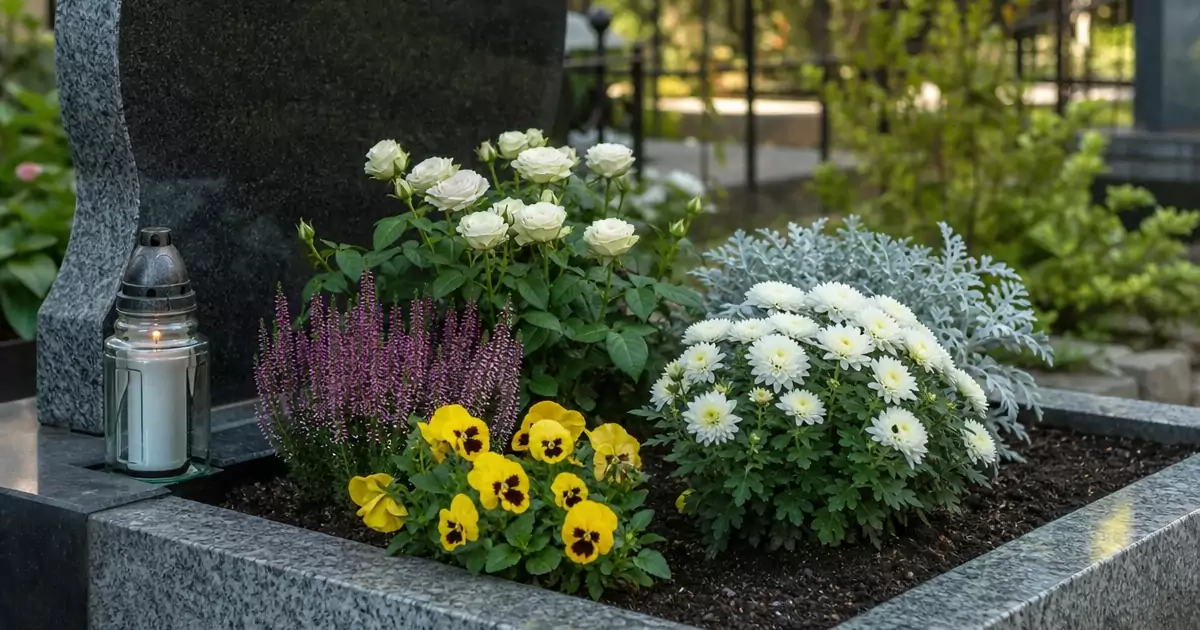
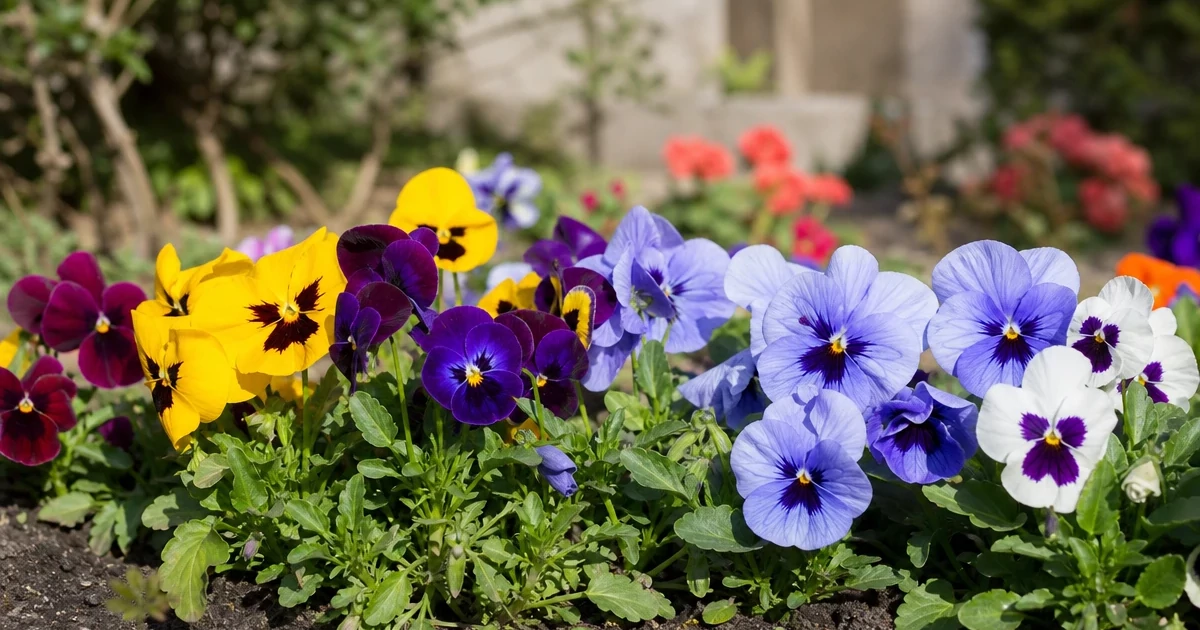
Easy early-spring and autumn flowers, often planted for memorial days.
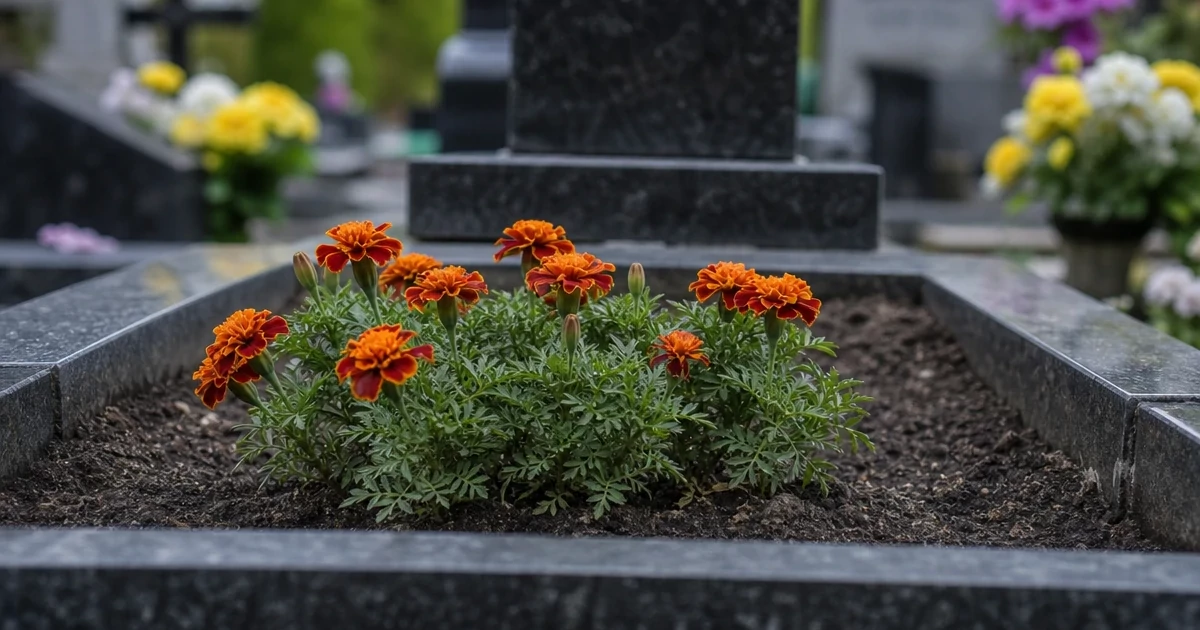
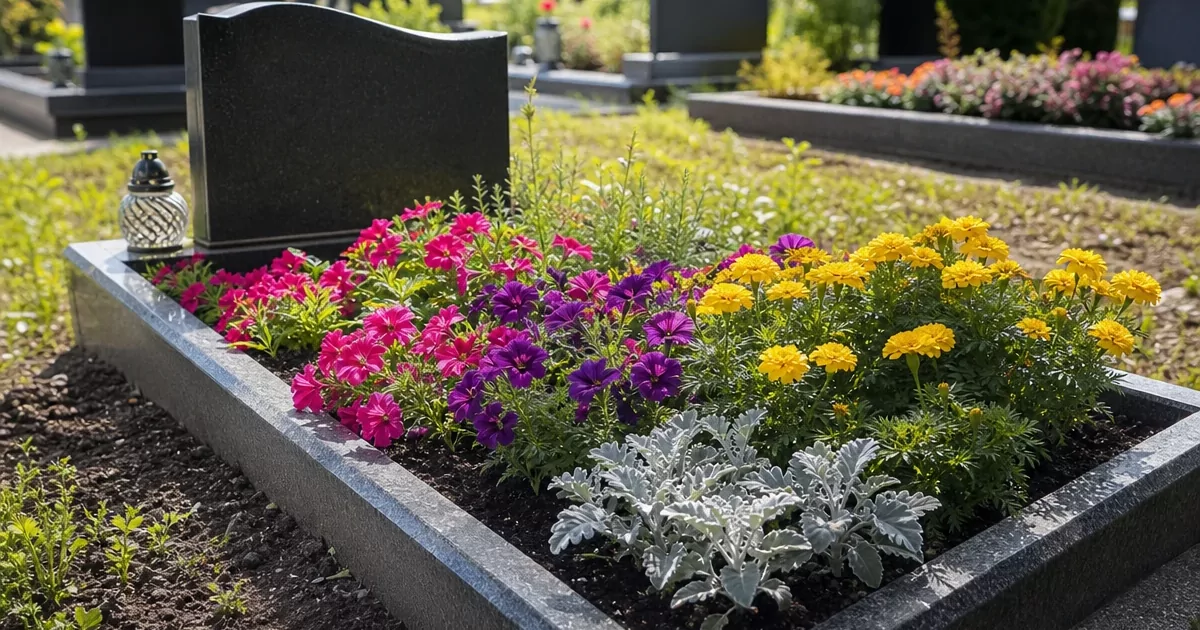
The most common grave annuals: they flower from June until frost and tolerate any soil.
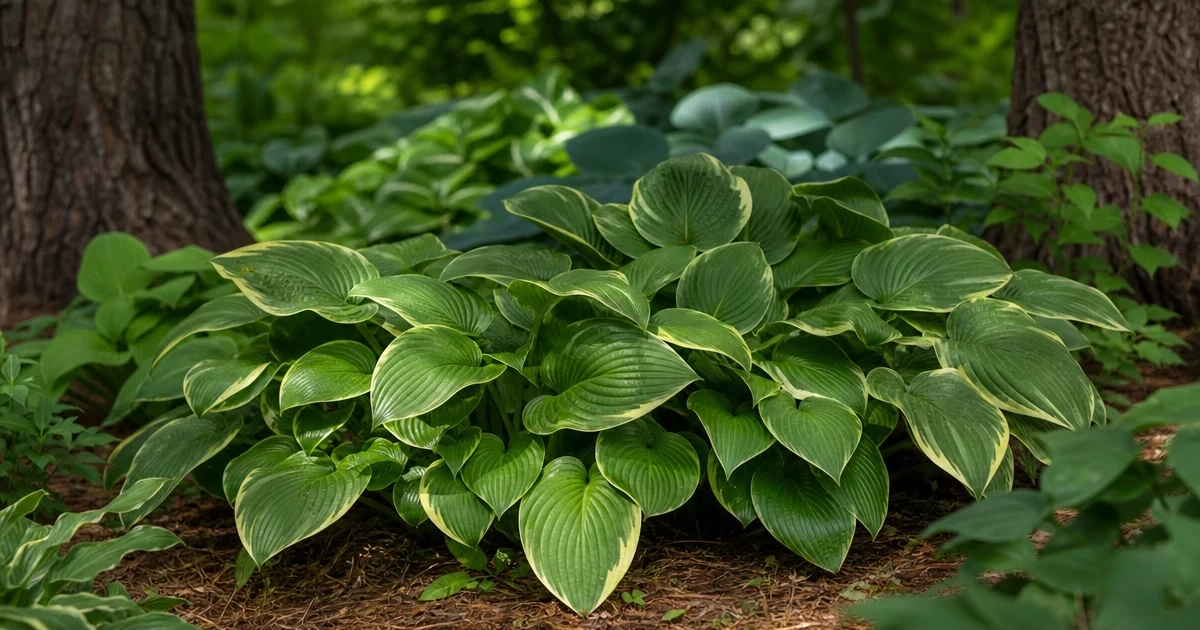
Under trees, hosta and periwinkle are best; see flowers that grow in shade.
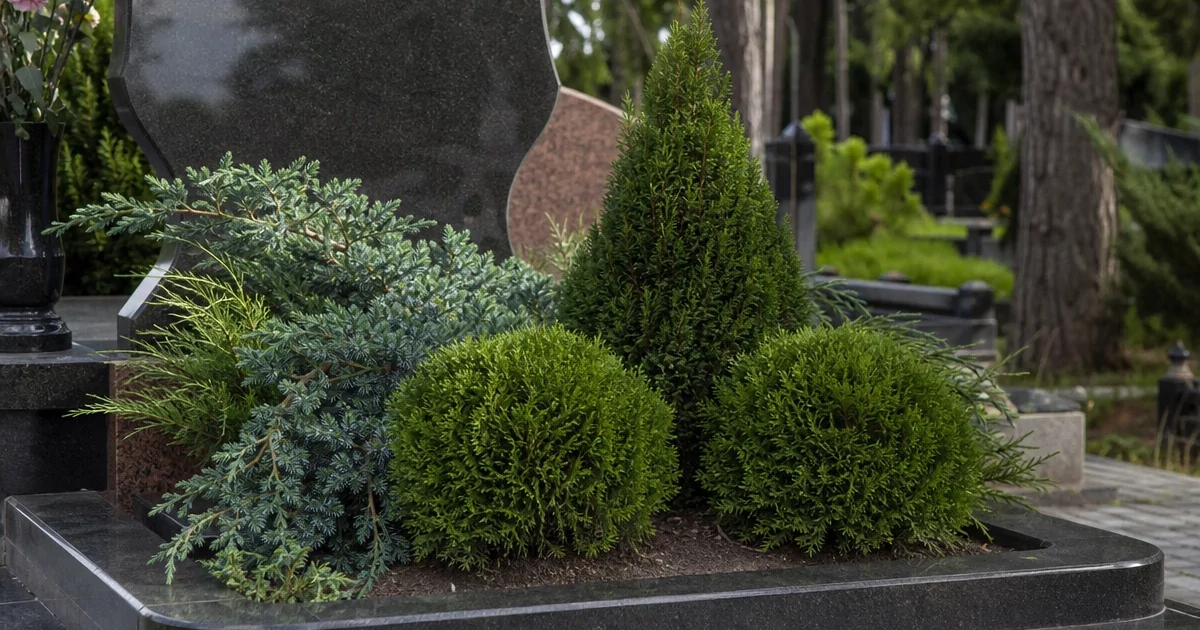
Creeping juniper or dwarf thuja stay green all year without spreading. Avoid tall trees and shrubs with strong roots, which can damage the headstone.
Stick to 2–3 plant types and one colour scheme for a tidy look.
Plant low ground cover around the edge and one accent in the middle: a dwarf conifer or a bed of annuals.
Match plants to the site: sun suits sedum, thyme and houseleek; shade suits periwinkle and hosta.
Bark or decorative gravel mulch keeps weeds down.
By tradition, permanent planting and the headstone wait about a year while the soil settles; until then, use pots or annuals.
The best planting times are spring (April–May) or early autumn (September).
Funeral flowers are a separate topic; see flowers for a funeral.
For a farewell or memorial day you can order a funeral bouquet or basket of carnations, chrysanthemums and roses.

See chrysanthemums and white roses.

Easy ground-cover perennials: periwinkle, sedum, thyme, moss phlox, houseleek; annuals such as marigolds and pansies.
By tradition, permanent planting waits about a year until the soil settles; until then use pots or annuals.
In spring (April–May) or early autumn (September).
Tall trees, shrubs with strong roots and invasive spreading plants.

Author: Maria Svitlovir
Graduated from Taras Shevchenko National University of Kyiv, Institute of Biology and Medicine (2001). BSc in Biology, MSc in Horticulture. Writes about plants, works at a garden centre selecting and repotting plants, and contributes to plant reference guides.
© Kyiv 2026 UFL Flower Shop

Trademark UFL №191476 is used under license of the rights holder.
All rights reserved. Any use of materials without a link to the site is prohibited.


 Birthday
 Hydrangeas