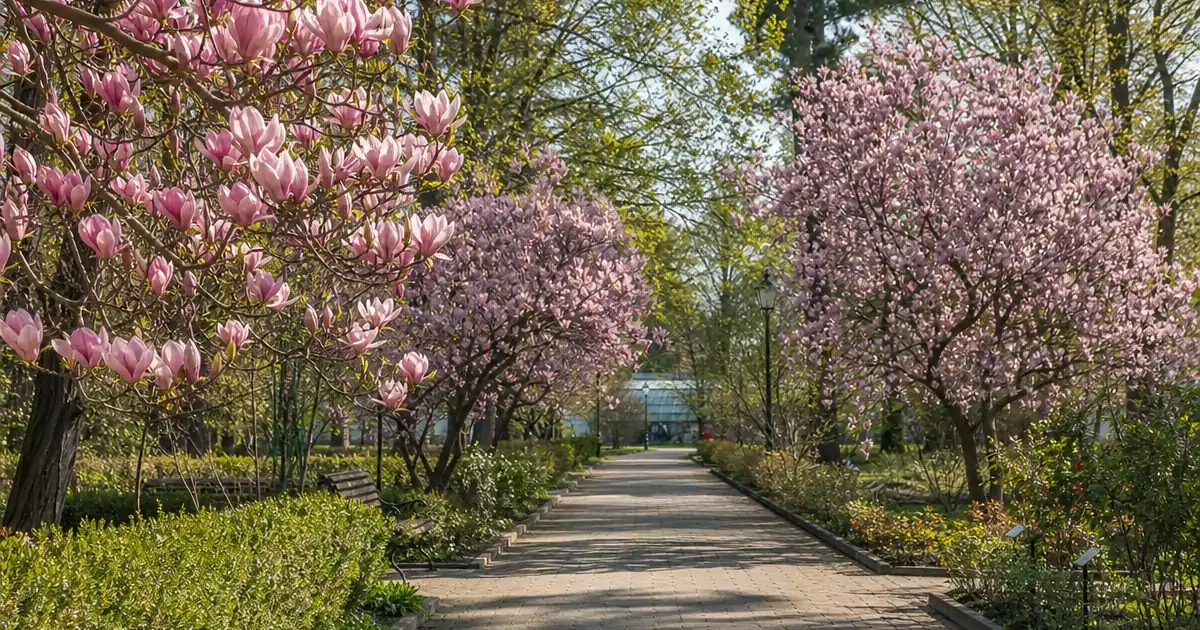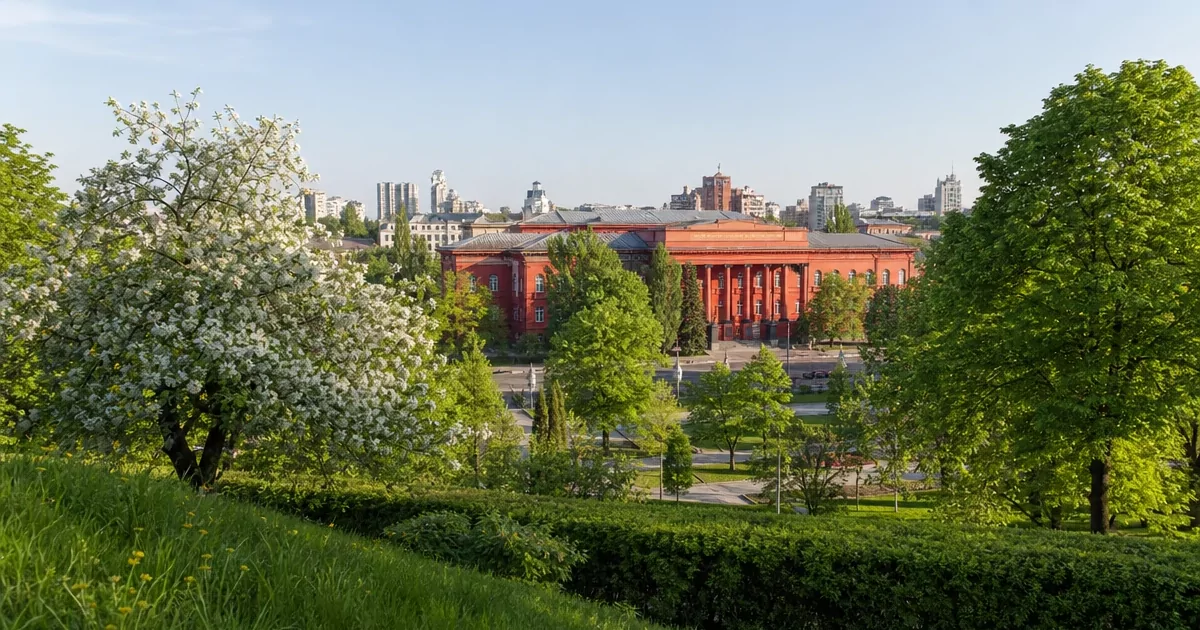
The Academician Oleksandr Fomin Botanical Garden (Fomin Garden) is Kyiv’s oldest botanical garden, founded in 1839 right in the city centre beside the university’s Red Building and St Volodymyr’s Cathedral. It has palms over 150 years old, thousands of cacti and succulents, and magnolias, lilac and rhododendrons in spring. Here is its history, what to see, what blooms when, how to get into the glasshouse and which collections matter most.
More on this topic: Hryshko Botanical Garden, when lilac blooms, houseplants, indoor palms.
The garden was founded on 22 May 1839 at Kyiv University. Its layout was designed by architect Vikentii Beretti, creator of the Red Building, and its first director was botanist Rudolf Trautvetter. Its first collections came from the closed Kremenets Lyceum — see our guide to Kremenets Botanical Garden.
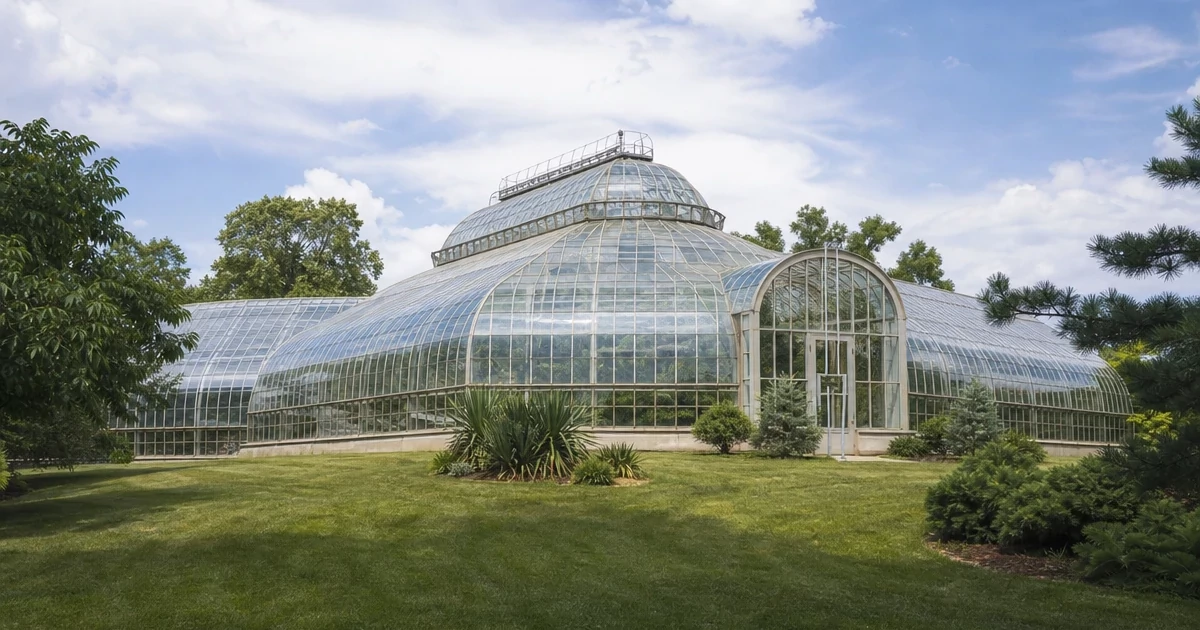
Through the 19th and 20th centuries the garden grew and gained new glasshouses, and in 1935 it was named after academician Oleksandr Fomin, the botanist who led it for many years. It survived both world wars and kept some plants over a century old. A new palm house over 30 m tall was built in the 1970s. Today the garden covers about 22 hectares and belongs to Taras Shevchenko National University of Kyiv. Other gardens in Ukraine are covered in botanical gardens of Ukraine.
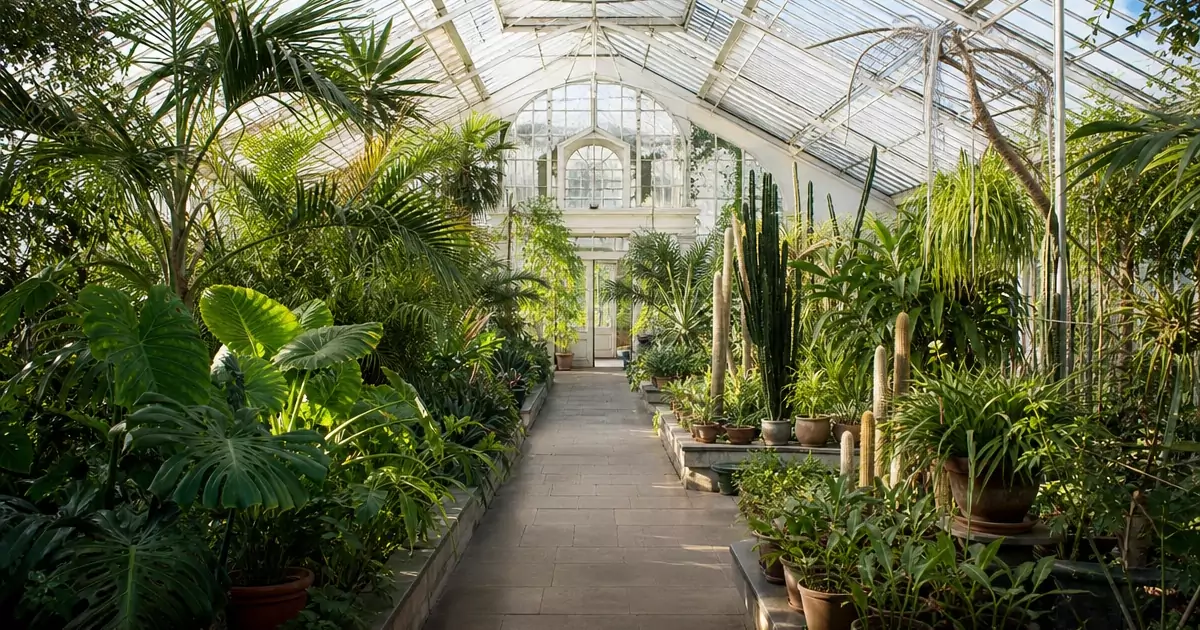
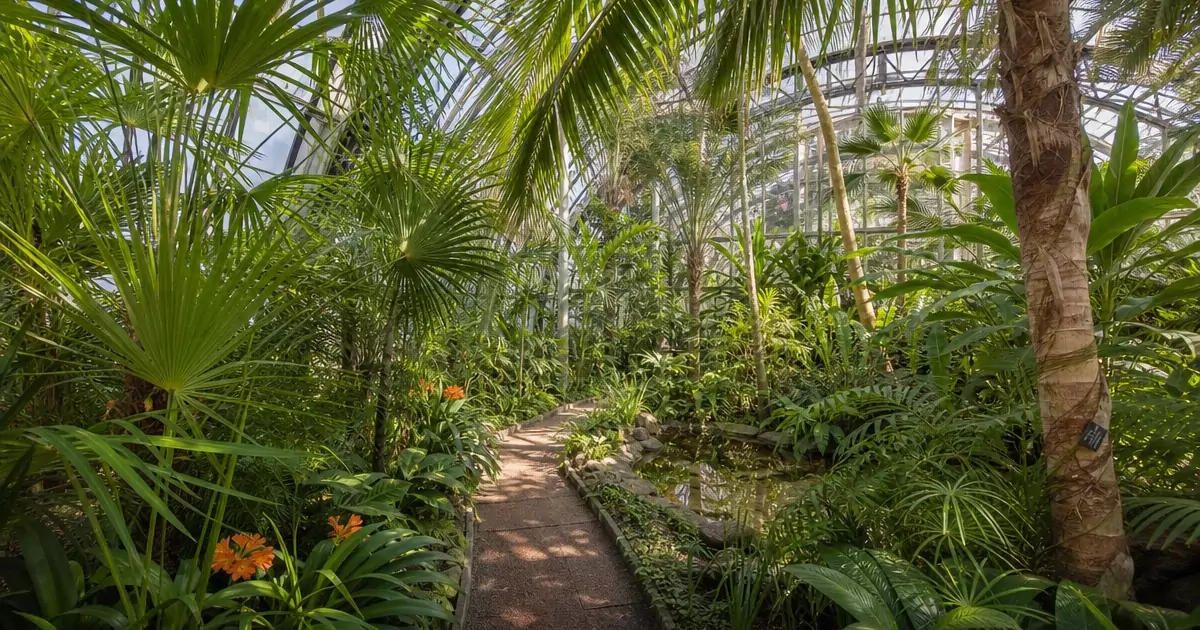
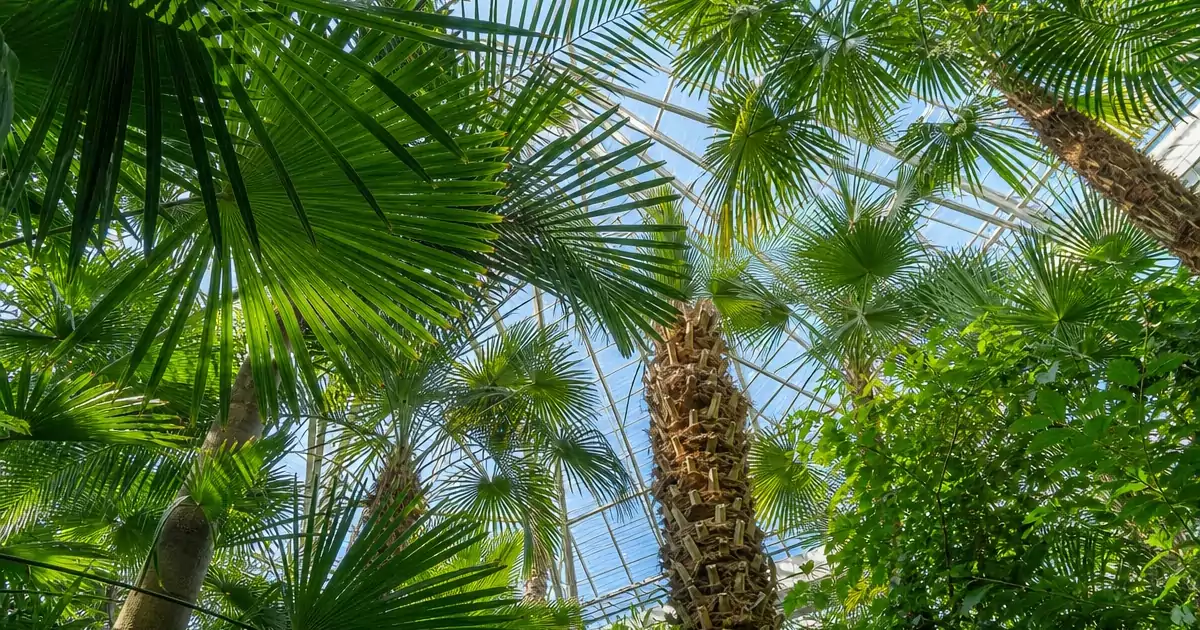
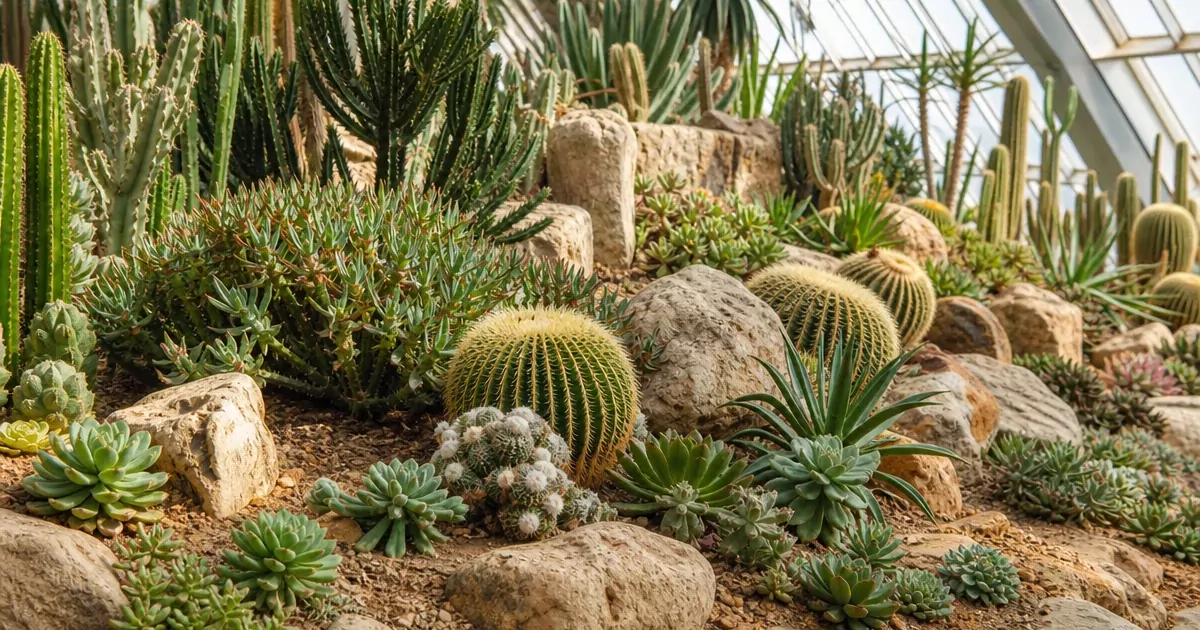
The collection holds about 8,000 plant species. Its pride is the 1970s palm house, over 30 metres tall, with 63 palm species, some 150–200 years old. Do also see the cactus and succulent collection of more than 2,500 species. To grow something similar at home, start with indoor palms.
Dates shift each year with the weather, so use the Kyiv bloom calendar as a guide:
All year — palms, cacti and succulents under glass; some tropical plants bloom even in winter.
Address: 1 Symona Petliury Street, Kyiv. One exit of Universytet metro station leads straight into the garden; the other entrance is through the arch opposite St Volodymyr’s Cathedral.
Grounds: at the time of writing, open daily for walks with free entry.
Glasshouses: by guided tour only. Group tours run daily except Monday at 11:00, 12:00 and 14:00; arrive 10 minutes early at the entrance to the research section on Symona Petliury Street. Groups of 10 or more can book a separate tour. Prices and times may change, so check before visiting.
Nearby are the university’s Red Building, St Volodymyr’s Cathedral, Shevchenko Park and the Golden Gate, so the garden fits easily into a walk around the historic centre. If you have a whole day for botany, compare it with the large Hryshko Botanical Garden in Pechersk: Fomin for a short central visit, Hryshko for half a day.
According to city guides and media, visitors most often praise:
Note that the glasshouse can only be visited on scheduled tours, so plan ahead.
More shots worth taking through the seasons:
[photo: inside the palm house, looking up]
[photo: the cactus collection]
[photo: the magnolia garden in April]
[photo: rhododendrons in May]
[photo: witch hazel in winter]
[photo: roses in summer]
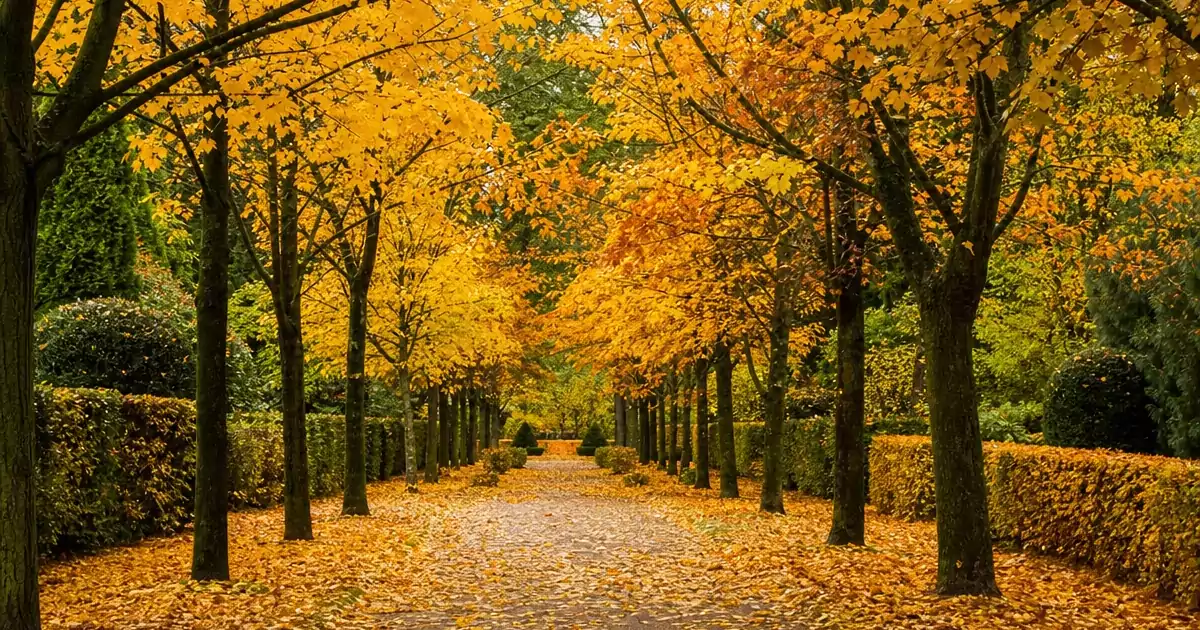
[photo: golden ginkgo in autumn]
[photo: chrysanthemums and asters in September]
Spring tulips, summer peony roses or a boxed bouquet: flowers delivered in Kyiv turn a walk in the garden into a real date.

See roses and flowers in a box.

In central Kyiv, 1 Symona Petliury Street, by Universytet metro.
At the time of writing, entry to the grounds is free.
On a guided tour, held daily except Monday; check the price with the garden.
Witch hazel, wintersweet and Viburnum × bodnantense outdoors, and tropical plants under glass.
Over 170 — one of Ukraine’s largest collections; peak bloom is in May.
About an hour for the grounds, 1.5–2 hours with a glasshouse tour.
April for magnolias, May for lilacs and rhododendrons; the glasshouses are worth it all year, especially in winter.

Author: Maria Svitlovir
Graduated from Taras Shevchenko National University of Kyiv, Institute of Biology and Medicine (2001). BSc in Biology, MSc in Horticulture. Writes about plants, works at a garden centre selecting and repotting plants, and contributes to plant reference guides.
© Kyiv 2026 UFL Flower Shop

Trademark UFL №191476 is used under license of the rights holder.
All rights reserved. Any use of materials without a link to the site is prohibited.

 Birthday
 Hydrangeas