Flowers at a funeral are a final sign of respect for the person and support for their family. Nobody wants to get it wrong at such a time, so it helps to know a few simple rules: how many flowers to bring, which colours are appropriate, how a wreath differs from a bouquet and what to say to the family. Below is calm, practical advice without superstition or unnecessary detail.
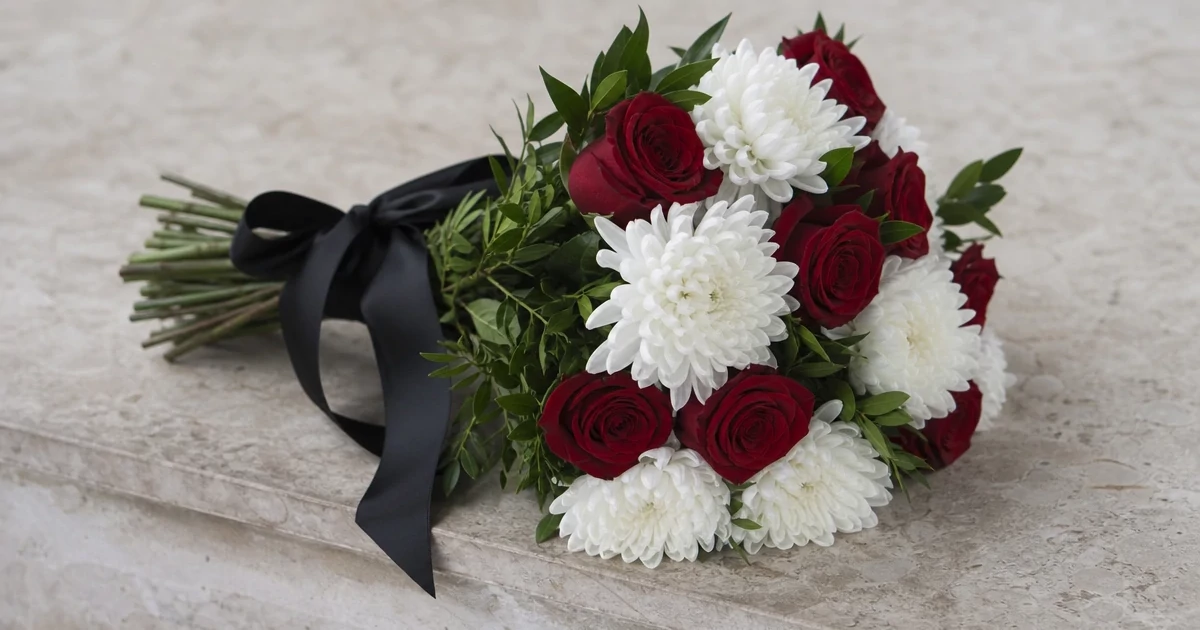
In Ukrainian and wider Slavic tradition, an even number of flowers is brought to a funeral: 2, 4, 6, 8, 10 or more. Odd numbers are associated with celebrations and the living. For large bouquets (more than 12 stems), baskets and wreaths the number no longer matters — what counts is a restrained look. From one person, 2–6 flowers are appropriate; from a family or team, a larger bouquet, basket or wreath.
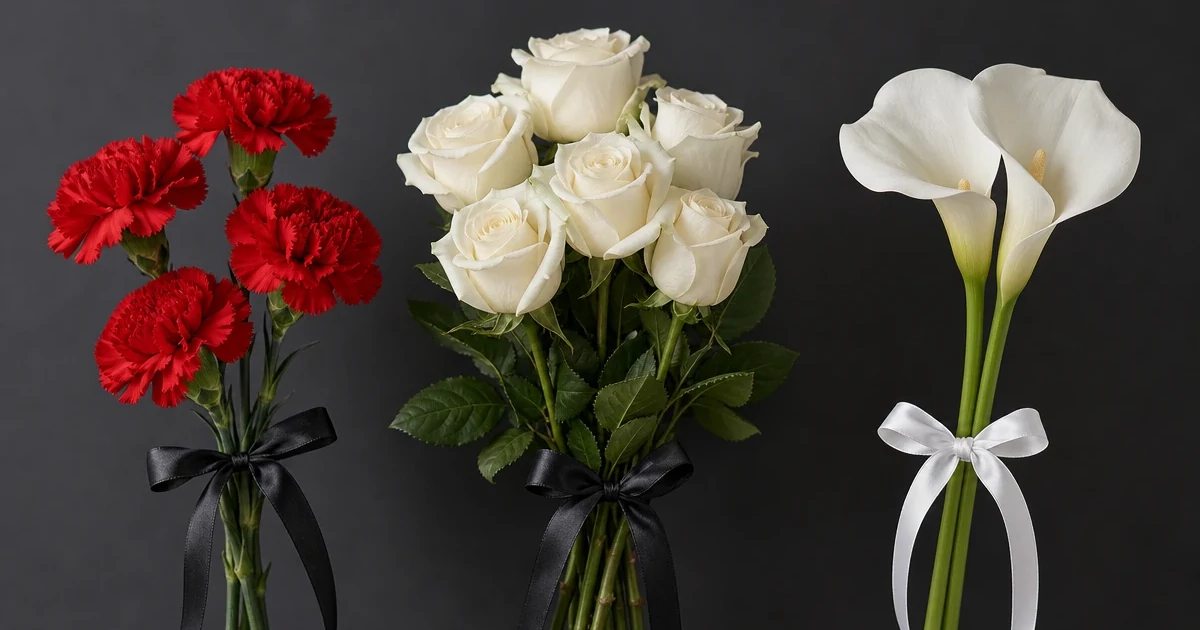
Avoid bright yellow, orange and mixed bouquets unless the family asks otherwise (for example, if these were the person’s favourite flowers).
For fallen defenders, red roses or carnations are usually chosen, sometimes with yellow-and-blue ribbons or flowers in the colours of the flag. Wreaths and large baskets are fitting from a unit or community. Words of support for the family are in condolences on the death of a soldier.
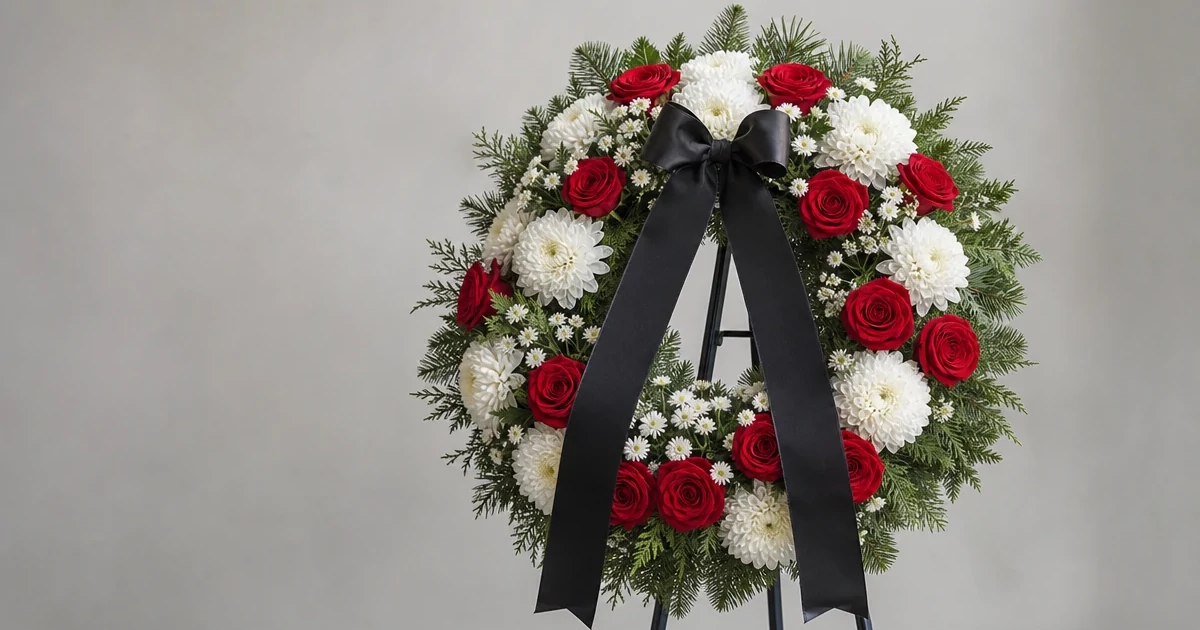
A wreath is a traditional sign of remembrance from family, friends, colleagues or the community. Fresh wreaths look natural but last only a few days; artificial ones last longer, though some communities and churches ask for fresh flowers only. A mourning ribbon is attached with an inscription such as «We remember. We grieve» and a signature — «From your colleagues», «From the family». Wreaths are usually ordered in advance and delivered to the place of farewell.
A few sincere words are enough: «I am so sorry for your loss», «He was a wonderful person», «I am here if you need help». More examples in short condolence messages and how to express condolences.
On memorial days and grave visits, flowers are also brought in even numbers. Over time, families often plant low-maintenance perennials on the grave — ideas in what to plant on a grave. Fresh flowers are usually left on the grave after the farewell, and wilted ones are removed on the next visit.
An even number: 2, 4, 6 or more. For large bouquets, baskets and wreaths the number does not matter.
Carnations, roses, chrysanthemums, callas and lilies in dark red, burgundy, white or lilac.
Something short: «We remember. We grieve» or «Eternal memory», plus who it is from.
Usually not — cut flowers are brought, and perennials are planted on the grave later.

Author: Maria Svitlovir
Graduated from Taras Shevchenko National University of Kyiv, Institute of Biology and Medicine (2001). BSc in Biology, MSc in Horticulture. Writes about plants, works at a garden centre selecting and repotting plants, and contributes to plant reference guides.
© Kyiv 2026 UFL Flower Shop

Trademark UFL №191476 is used under license of the rights holder.
All rights reserved. Any use of materials without a link to the site is prohibited.


 Birthday
 Hydrangeas