
 Birthday
 Hydrangeas
This article was prepared with the support of UFL flower delivery. The hosta (also called plantain lily or funkia) is a perennial from East Asia: in the wild it grows in Japan, China, Korea and the Kuril Islands along rivers and streams, at woodland edges and on mountain slopes. It's named after the Austrian botanist Nicolaus Host, while the name funkia honours the German botanist Heinrich Funck. In Japan, young hosta shoots are eaten as a delicacy.
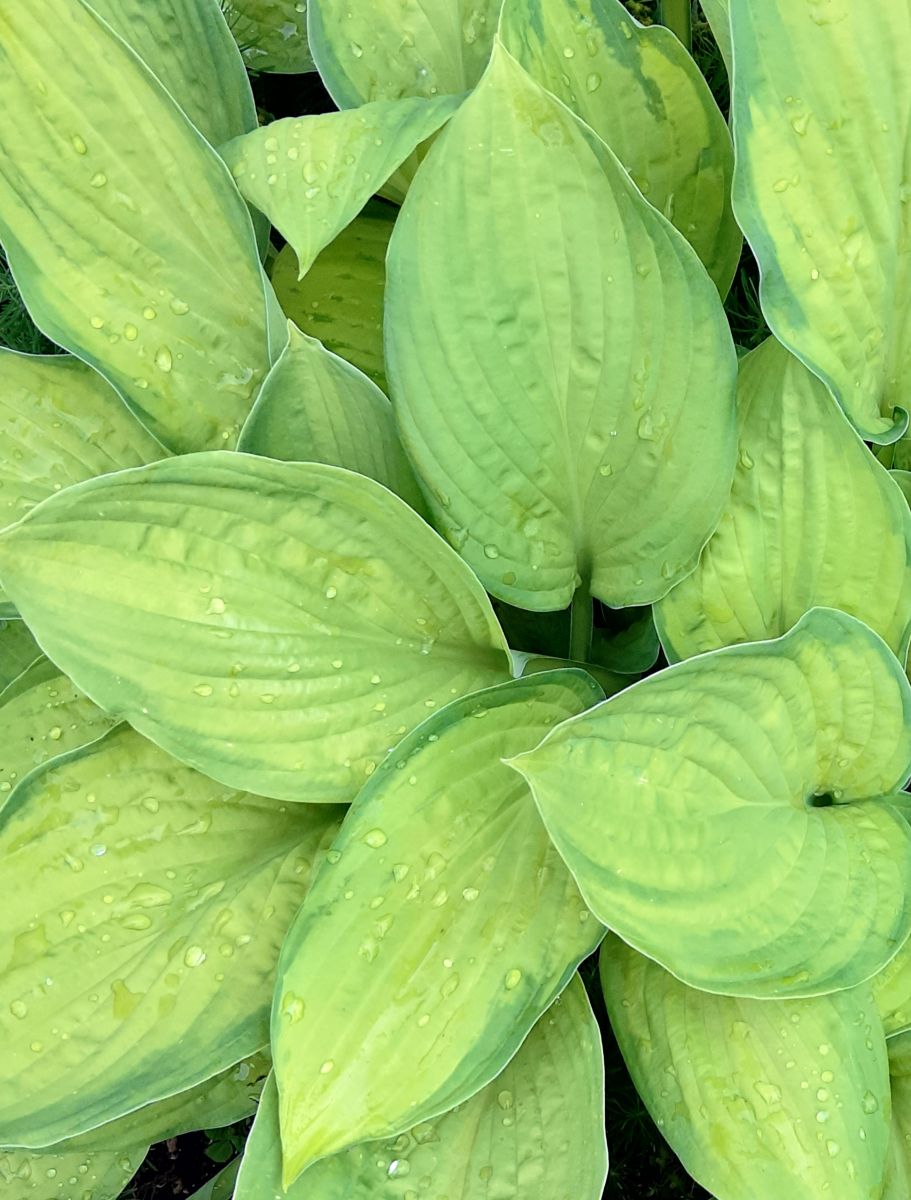
About the hosta
Today hostas are placed in the asparagus family (Asparagaceae); they used to be classed with lilies. There are about 45 species and over 5,000 registered cultivars, from tiny 10 cm plants to 1.2 m giants with leaves the size of a tray.
- Longevity. A hosta can grow in one spot for 15–20 years or more without being moved and reaches its peak in years 4–5.
- Leaves are the main attraction: heart-shaped, lance-shaped or round; smooth, puckered, glossy or waxy; green, blue, yellow, white or variegated.
- Flowers are funnel- or bell-shaped, white, lilac or purple, on tall stalks. Depending on the variety hostas flower from June to September, and some (H. plantaginea) are fragrant.
- Roots form a short rhizome with many cord-like roots that spread sideways.
- Hardiness is excellent: hostas overwinter in Ukraine without protection.
Hostas don't crowd out their neighbours, but as they spread they smother weeds. They have no medicinal properties.
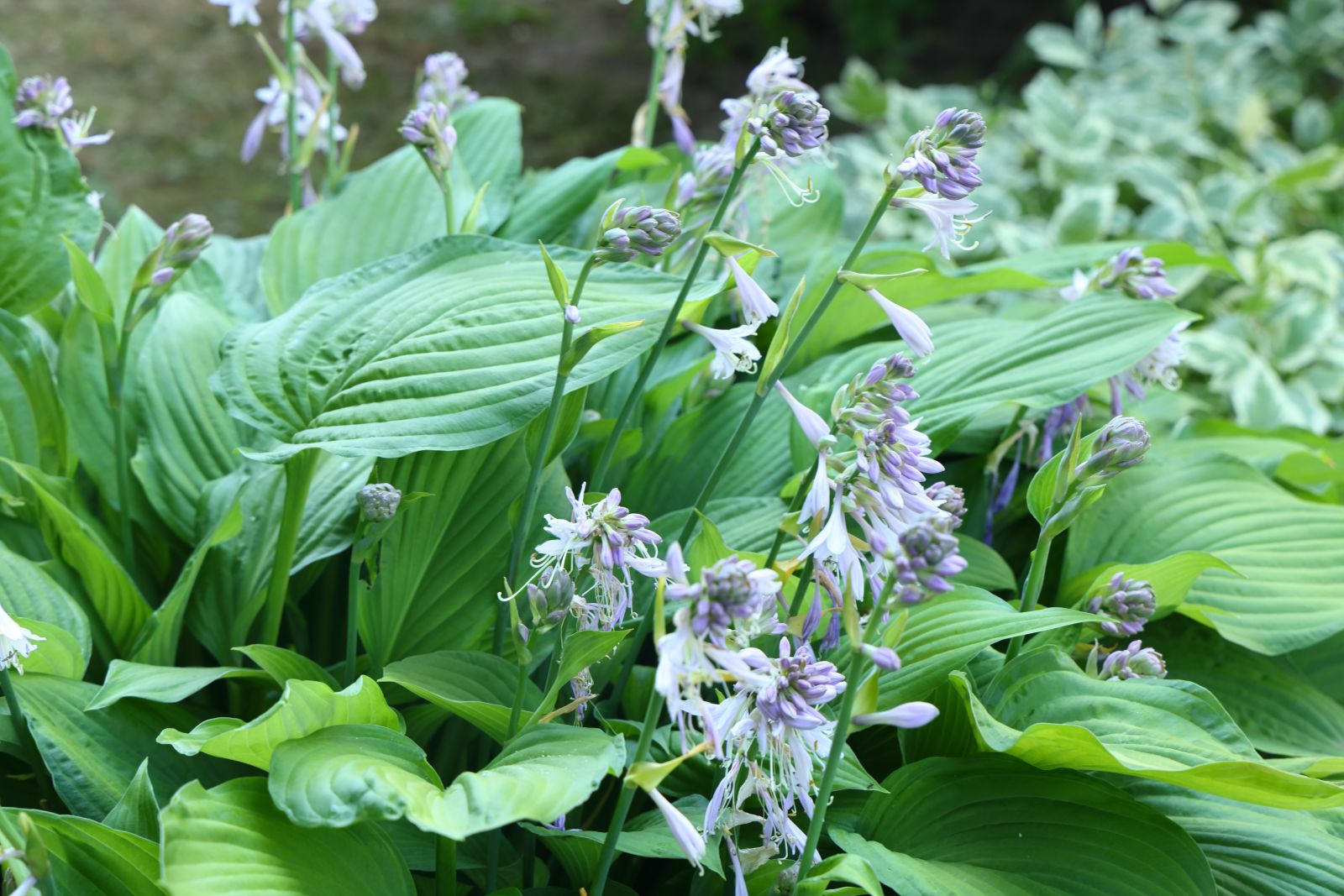
Planting
When to plant
The best times are May, once frosts are over and the soil has warmed, or late August to early September. Hostas need about six weeks to root, so finish autumn planting by mid-September. Container plants can go in all season.
Where to plant
The ideal spot is sheltered part shade: morning or evening sun and shade in the midday heat. In deep shade plants grow more slowly but the leaves are larger. Under trees with shallow roots, such as birch or maple, hostas struggle for moisture.
Soil
Moist, loose, rich in humus, slightly acidic to neutral (pH 6–7.5) and well drained. Improve poor sand and heavy clay with compost. For spring planting, spread about 10 cm of organic matter over the bed in autumn and dig it in.
How to plant
- Dig a wide hole: hosta roots spread sideways.
- Set the plant with its root ball so the crown is level with the soil.
- Backfill, firm gently and water well.
- Mulch with bark or compost.
- Spacing: dwarf 25–30 cm, medium 50–60 cm, large 80–100 cm.
In a sunny spot, shade new plants for the first few days. Remember that a variety's true colour, size and texture only fully show in years 3–4.
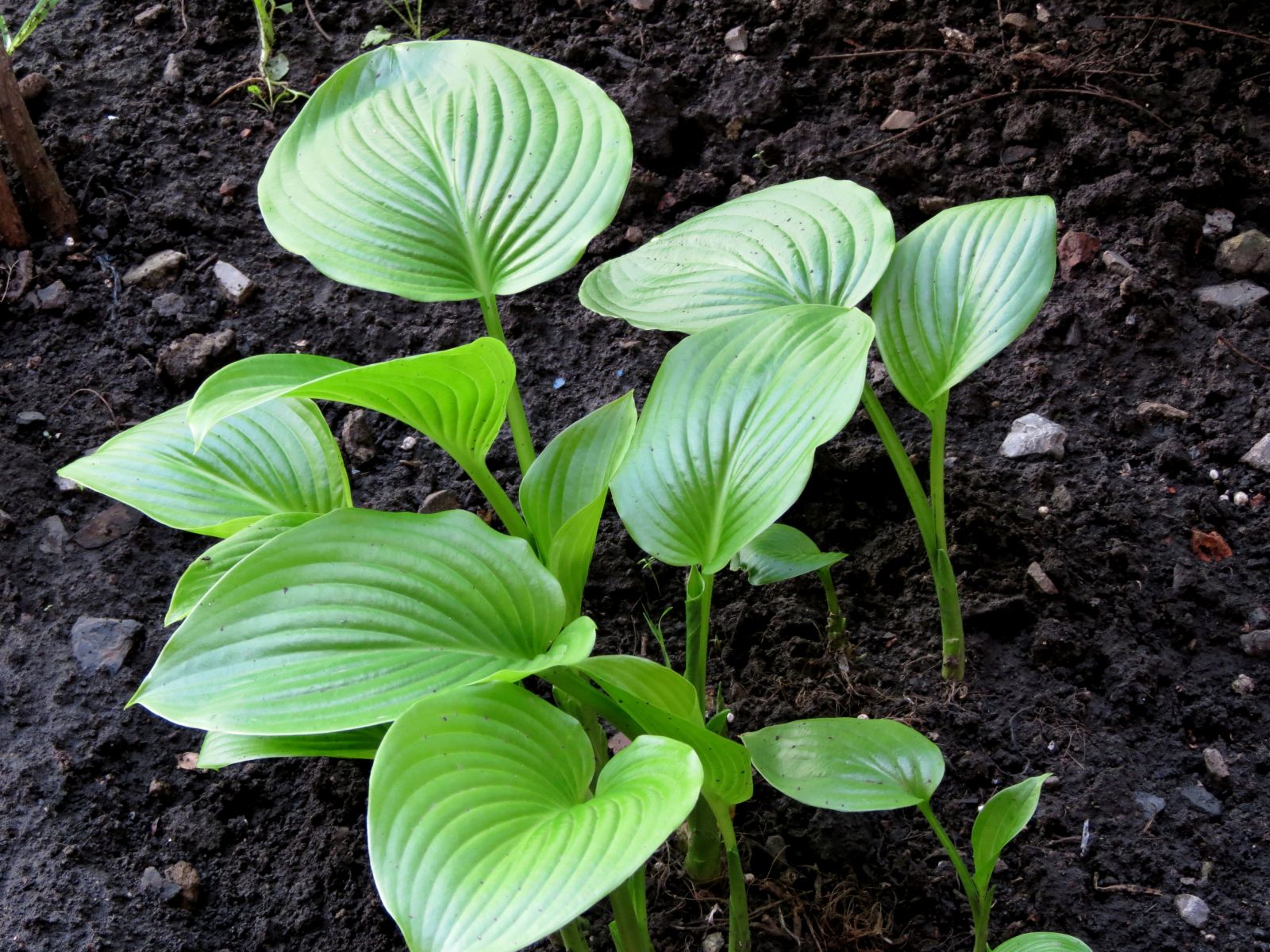
Hosta care
| What | How |
|---|---|
| Watering | Keep the soil consistently moist. In hot weather water deeply 1–2 times a week at the base, morning or evening. Drops on the leaves wash off the waxy bloom and cause scorch. Brown leaf tips mean the plant is short of water. |
| Mulch | Bark, compost or pine needles retain moisture and suppress weeds. |
| Feeding | Compost or a balanced slow-release fertiliser in early spring, and again in early summer. Stop feeding after mid-July so the plant can prepare for winter. In rich soil, feeding every 2–3 years is enough. |
| Flower stalks | Cut them after flowering so the clump doesn't flop and waste energy on seed. If you grow hostas for foliage, remove the stalks in bud. |
| Weeding | Only early in the season — later the clump smothers weeds itself. |
| Autumn and winter | Remove yellowed leaves in late autumn or leave them until spring as natural cover. No winter protection is needed. |
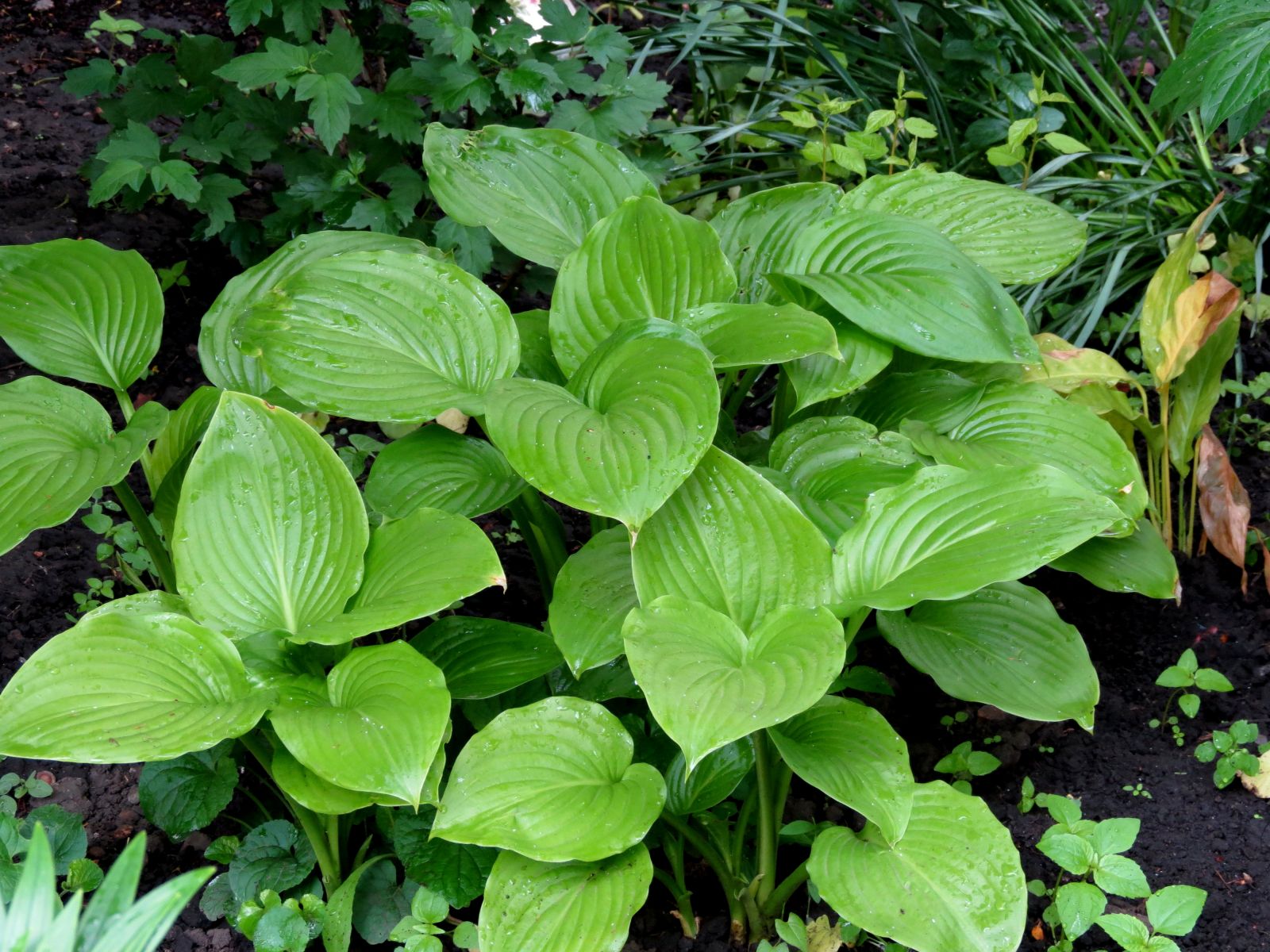
Propagation
Division
The simplest and most reliable method, and it keeps all the variety's traits. Divide 4–5-year-old clumps in spring as the shoots emerge, or from late August to mid-September. Water the clump, lift it half an hour later and cut it with a sharp knife or spade so each piece has at least one shoot with roots. Replant at the same depth, 20–30 cm apart, and water well. Divisions establish in a month and become lush clumps in 2–3 years.
Cuttings
From May to July, detach a young shoot with a piece of rhizome (a "heel"), cut the leaves back by a third and plant it in shade under a cut-off plastic bottle. Roots form in 2–3 weeks. You can take a cutting without lifting the parent plant.
Seeds
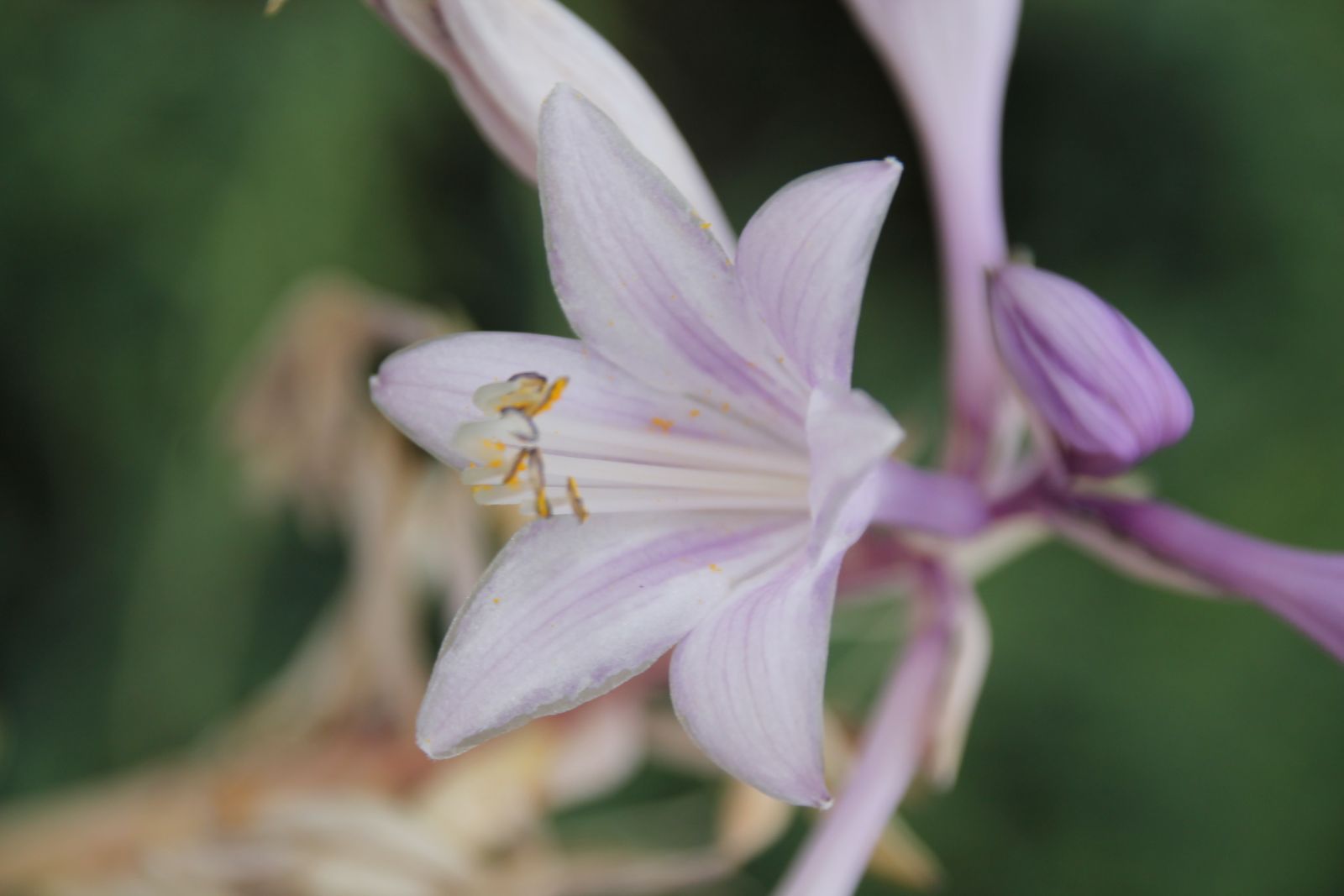
Seeds are used for species hostas and breeding new varieties: hybrid seedlings rarely match their parents and grow slowly. Chill the seeds in the fridge for a month and treat them with a growth stimulant.
- In late April or early May, fill a disinfected tray with drainage and a sterile mix of peat, perlite and vermiculite, and moisten it.
- Scatter the seeds, cover with a thin layer of mix and cover with film or glass.
- Keep at 18–25 °C; seedlings appear in 2–3 weeks.
- Shade seedlings from direct sun, ventilate and water moderately.
- Once the first true leaf appears, prick them out into individual pots and water from below.
- Harden them off by gradually removing the cover, and plant out when the weather is reliably warm.
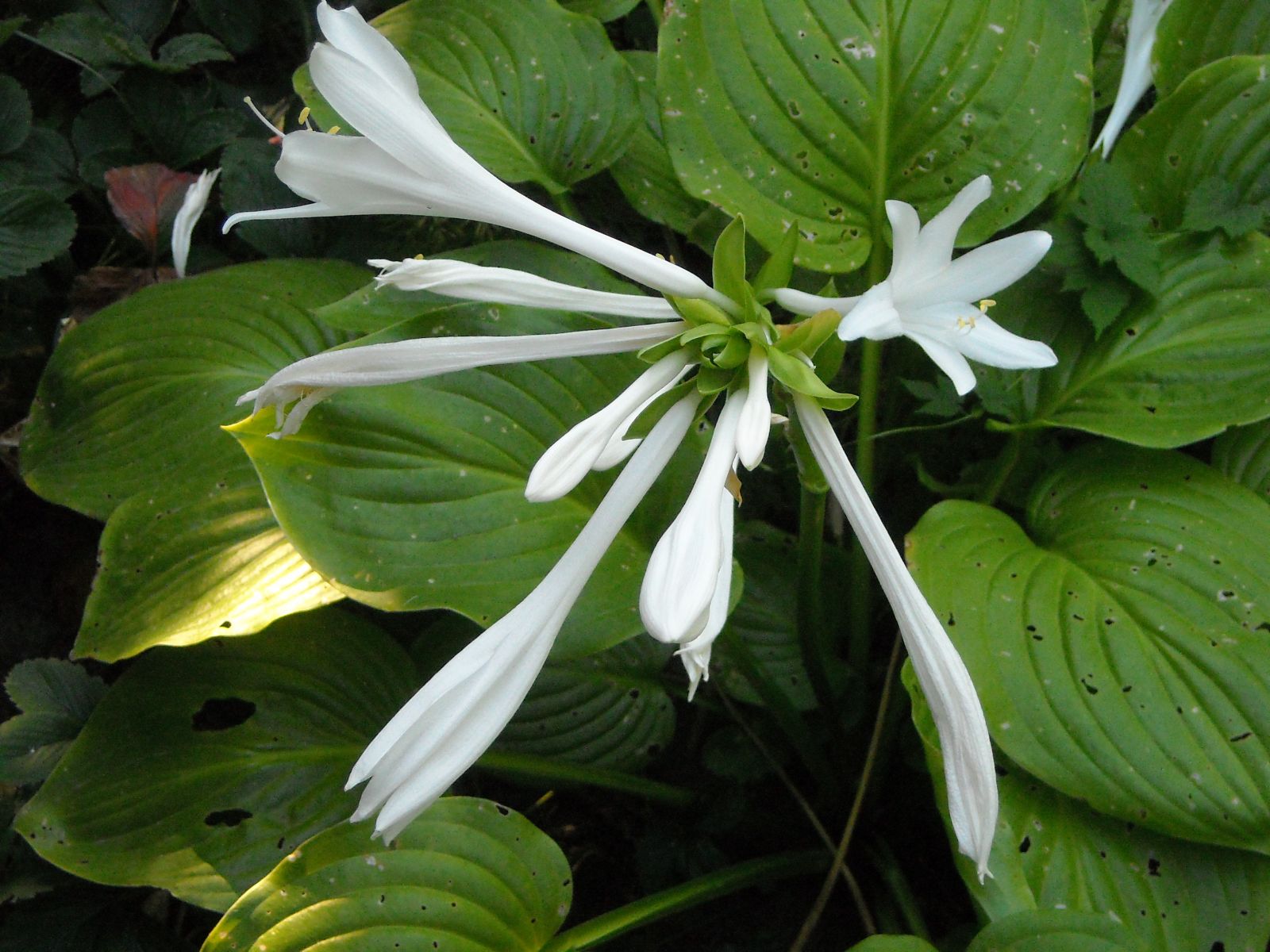
Pests and diseases
Hostas are tough, and most problems come from the weather or care mistakes.
- Slugs and snails are the main enemy, leaving large holes that never heal. Hand-pick them in the evening, set beer traps, mulch with pine needles or crushed shells, and use iron phosphate pellets, which are safer for pets than metaldehyde.
- Foliar nematodes cause yellow, then brown streaks between the veins. To check, chop a leaf finely and soak it in water — after half an hour you'll see tiny worms. There's no cure: destroy the plant and don't grow hostas there for several years.
- Hosta virus X (HVX) causes mottling and distorted leaves untypical of the variety. Destroy the plant and disinfect your tools.
- Phyllosticta leaf spot shows as brown spots with yellow edges on weak or frost-damaged plants. Remove affected leaves and spray with fungicide.
- Grey mould and sclerotinia rot the leaves and crown with a white cottony growth. Fungicides and careful watering help.
- Caterpillars, grasshoppers and beetles can strip leaves overnight; use an insecticide.
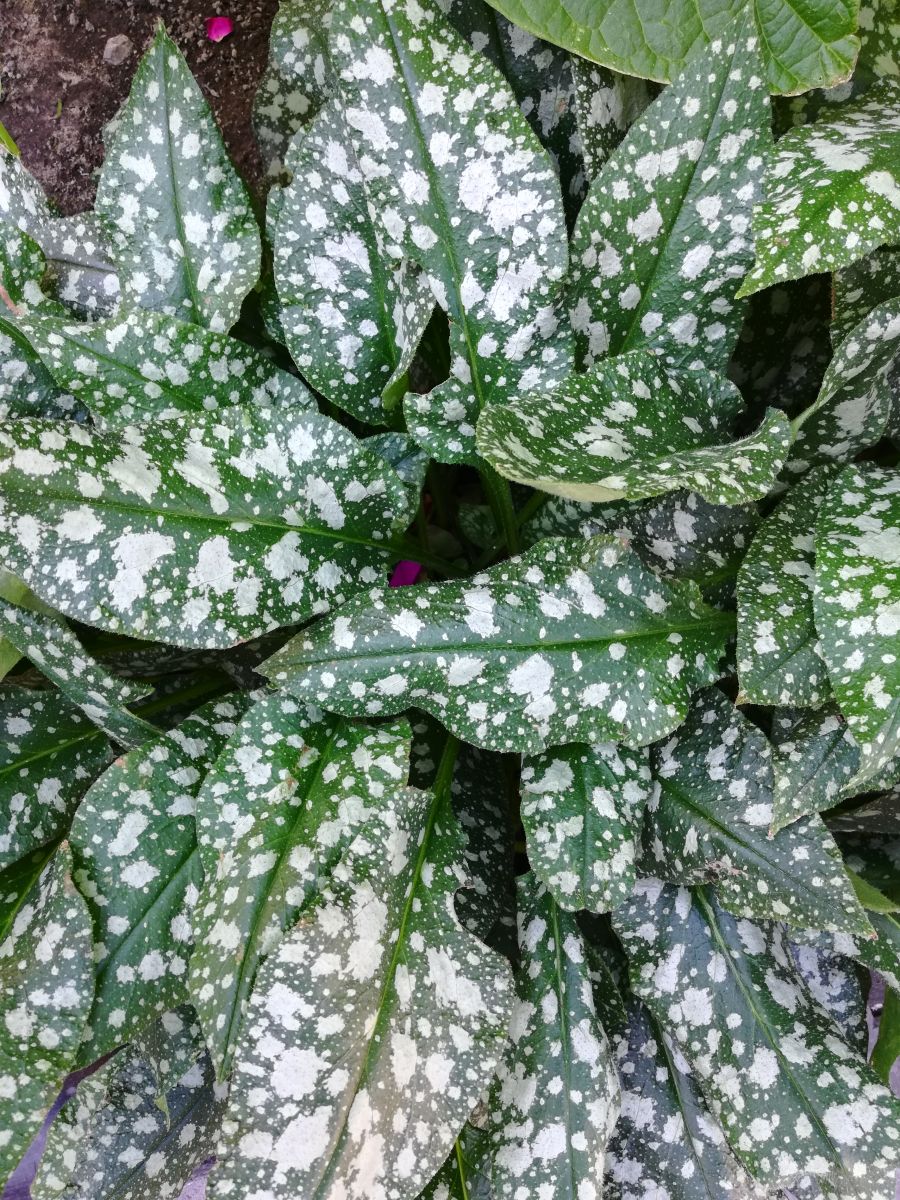
Popular hosta varieties
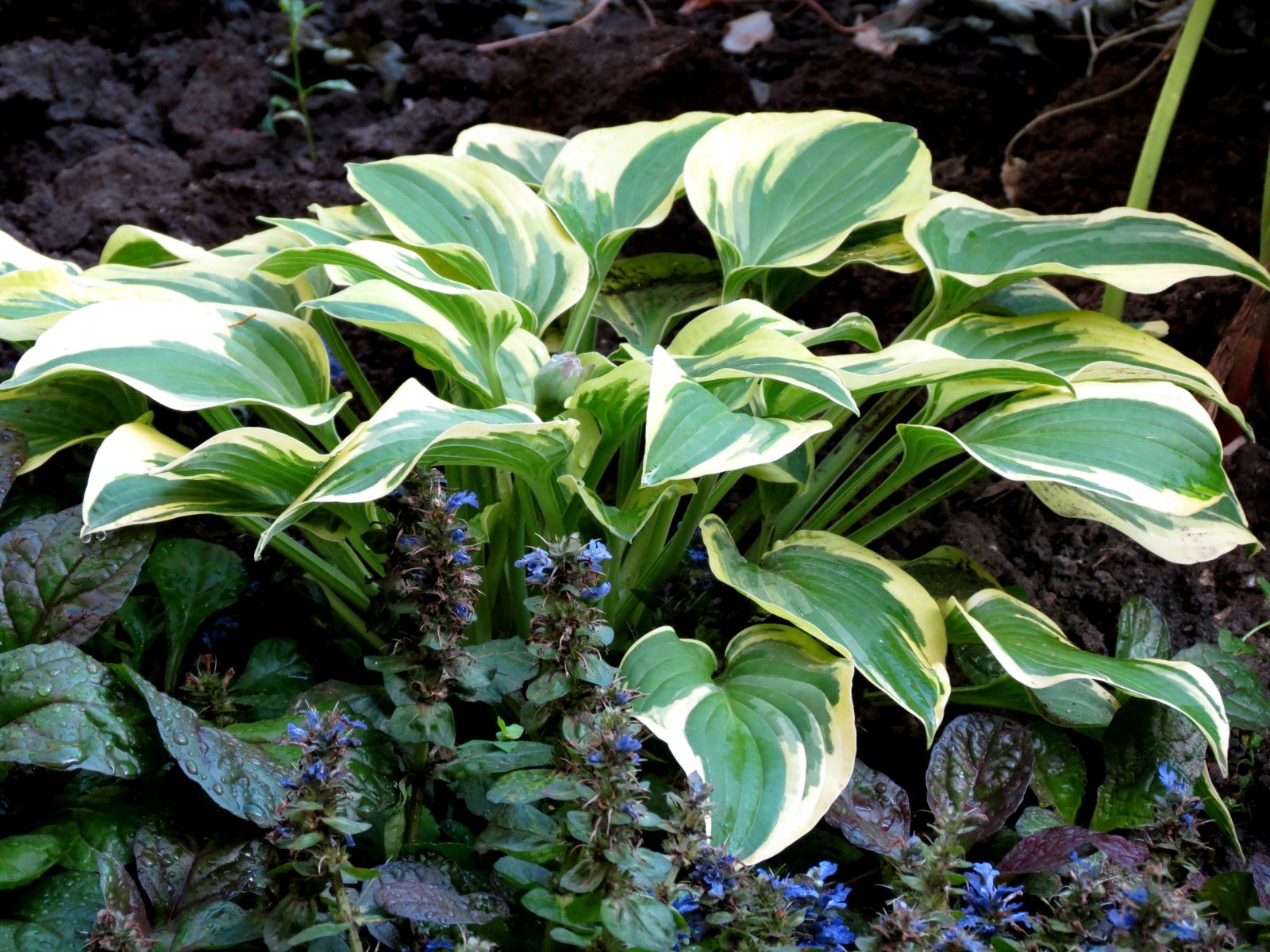
By leaf colour, hostas fall into groups: blue (glaucous, with a waxy bloom), yellow, green, variegated (with a light margin) and medio-variegated (a light centre with a green margin).
| Size | Height | Varieties |
|---|---|---|
| Dwarf | up to 10–15 cm | Blue Mouse Ears (leaves like mouse ears), Mighty Mouse |
| Small | 15–25 cm | Gold Standard (compact when young), Headsman's Blue, Pacific Blue Edger |
| Medium | 30–50 cm | June, So Sweet, White Feather, Night Before Christmas, Halcyon |
| Large | 50–70 cm | Francee, Patriot, Wide Brim, Golden Meadows |
| Giant | over 70 cm | Sum and Substance, Sagae, Blue Angel, Empress Wu |
- June is one of the best-known hostas: a golden-yellow centre with a blue-green margin, about 40 cm tall, with lavender flowers in July. Its colouring changes with the light.
- Siebold's hosta (H. sieboldiana) has large, thick, glaucous leaves, grows to 60–80 cm and bears pale lilac flowers. In strong sun the bloom wears off and the leaves turn green.
- Wavy hosta Undulata Mediovariegata, about 75 cm, has wavy leaves with a white centre and green margin. It spreads quickly.
- Thomas Hogg, about 50 cm, has pointed leaves with a white margin.
- Royal Standard, a hybrid of the fragrant hosta, has glossy green leaves and scented white flowers and tolerates more sun.
- Dream Weaver, about 60 cm, has dark green leaves with a feathered cream centre.
Hostas with red stems
Varieties with red or burgundy leaf stalks are especially striking against the greens of the garden and look lovely next to roses:
- Red October — narrow green leaves on bright red stalks;
- First Blush — thick oval leaves and red stalks;
- Purple Heart — a vase-shaped clump with a dark red blotch at the base of the leaves;
- Fruit Punch — bright green arrow-shaped leaves and burgundy stalks;
- Red Scorpion — a small clump with glossy wavy leaves and long purple stalks;
- Blueberry Muffin — compact, with bluish heart-shaped leaves on burgundy stalks;
- Azuretini — silvery-blue leaves with reddish stalks.
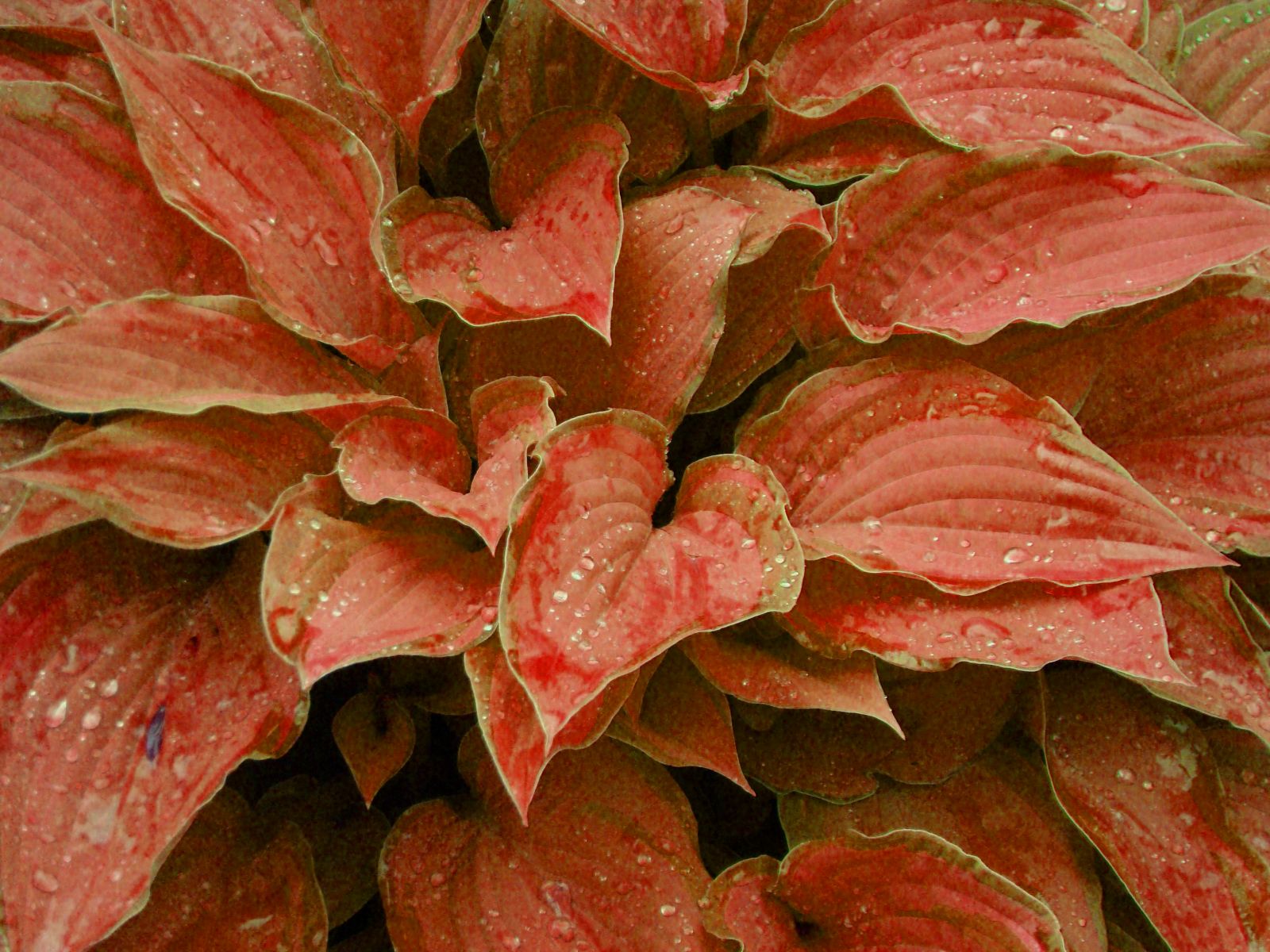
Hosta edging
Hostas make excellent edging plants: they're long-lived, hardy and hold their shape all season. It takes 2–3 years for an edging to fill in.
- Low edging (15–20 cm): Blue Mouse Ears, Pacific Blue Edger, Island Charm.
- Medium (40–50 cm): Diamond Tiara, El Niño, Gold Standard, Halcyon, June, Stiletto, Wide Brim, Wolverine, So Sweet.
- Tall (70–90 cm), to separate lawn and borders or under trees: Aureomarginata, Guacamole, Liberty, Sum and Substance, Sagae, Regal Splendor, Sun Power.

How to plan an edging:
- Sketch a plan and mark the compass points.
- Choose varieties for the light: yellow ones on the sunny side, blue ones in shade.
- Work out the number of plants from their mature width.
- Use a single variety or alternate two contrasting ones — it looks stylish without overloading the garden.
Hostas in floristry
Hosta leaves last a long time once cut and set off flowers beautifully, so florists use them in bouquets and arrangements. Small bouquets suit medium varieties with elegant leaves, such as blue Frosted Dimples or white-and-blue Ivory Queen. Warm golden bouquets pair with Morning Light and Dancing Queen, white ones with Night Before Christmas. Large arrangements use the giant leaves of Elatior and Golden Meadows.
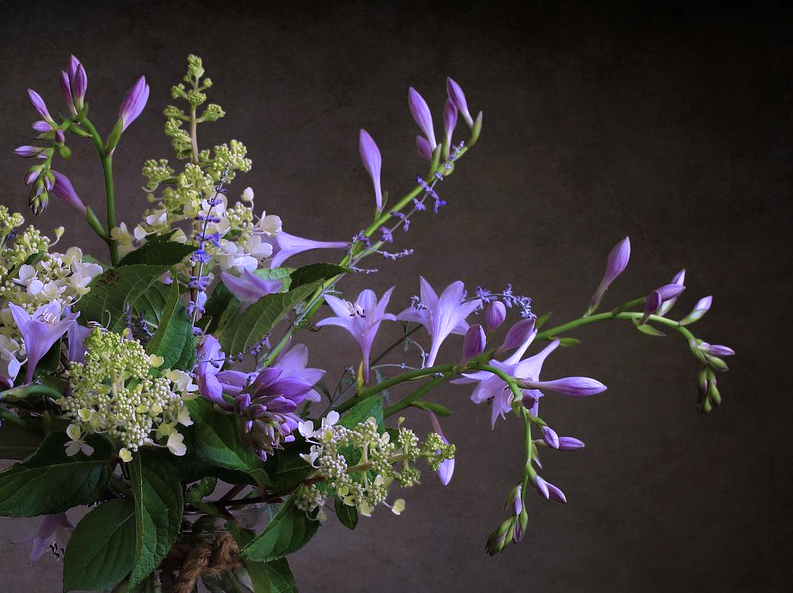
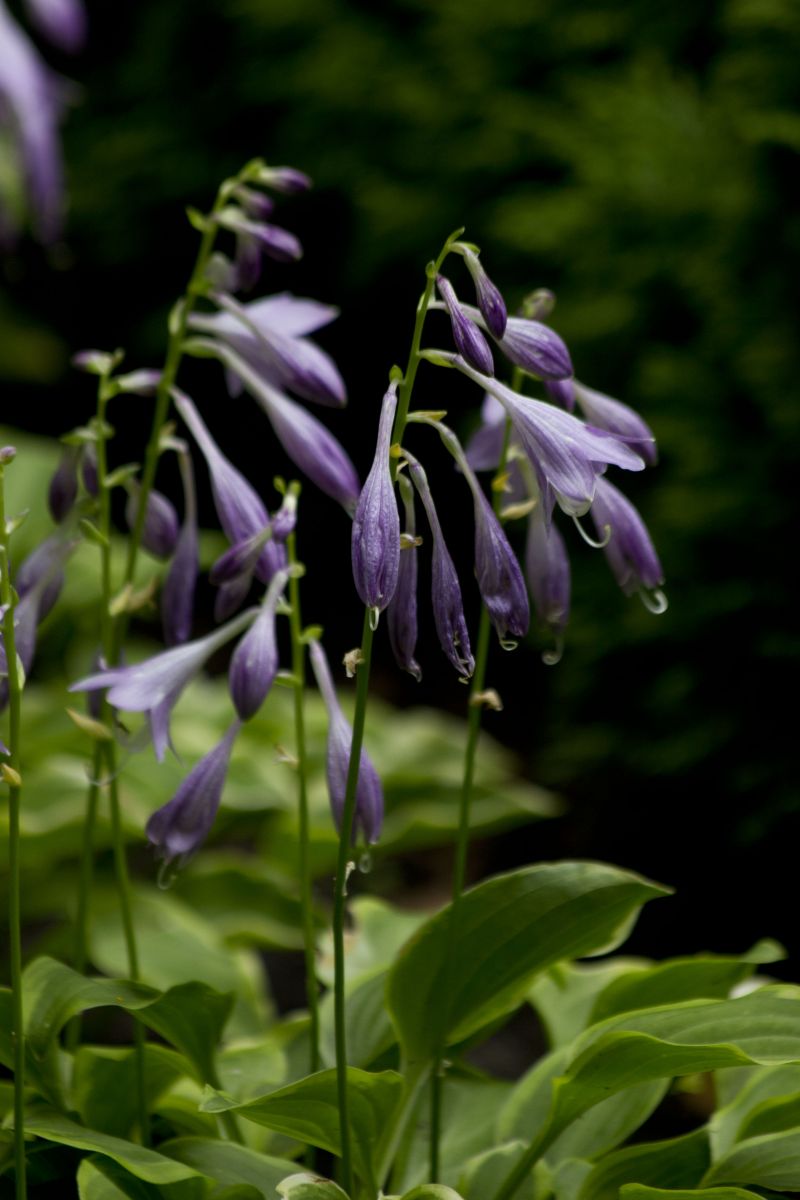
Bouquets with foliage, including hosta leaves, can be ordered from the UFL flower shop with delivery across Kyiv and Ukraine.
FAQ
Can hostas grow in sun?
Yellow and some green varieties (Sum and Substance, Royal Standard) tolerate sun if watered generously. Blue and variegated varieties need shade or part shade.
Do hostas need winter protection?
No, hostas overwinter in Ukraine without cover. Young divisions planted in autumn can be mulched.
Why are my hosta's leaf tips drying out?
Usually because of a lack of water or direct sun in hot weather.
Are hostas poisonous?
Not to people, but hosta leaves are considered mildly toxic to cats and dogs.

View full-size photo
Author: Maria Svitlovir
Graduated from Taras Shevchenko National University of Kyiv, Institute of Biology and Medicine (2001). BSc in Biology, MSc in Horticulture. Writes about plants, works at a garden centre selecting and repotting plants, and contributes to plant reference guides.


