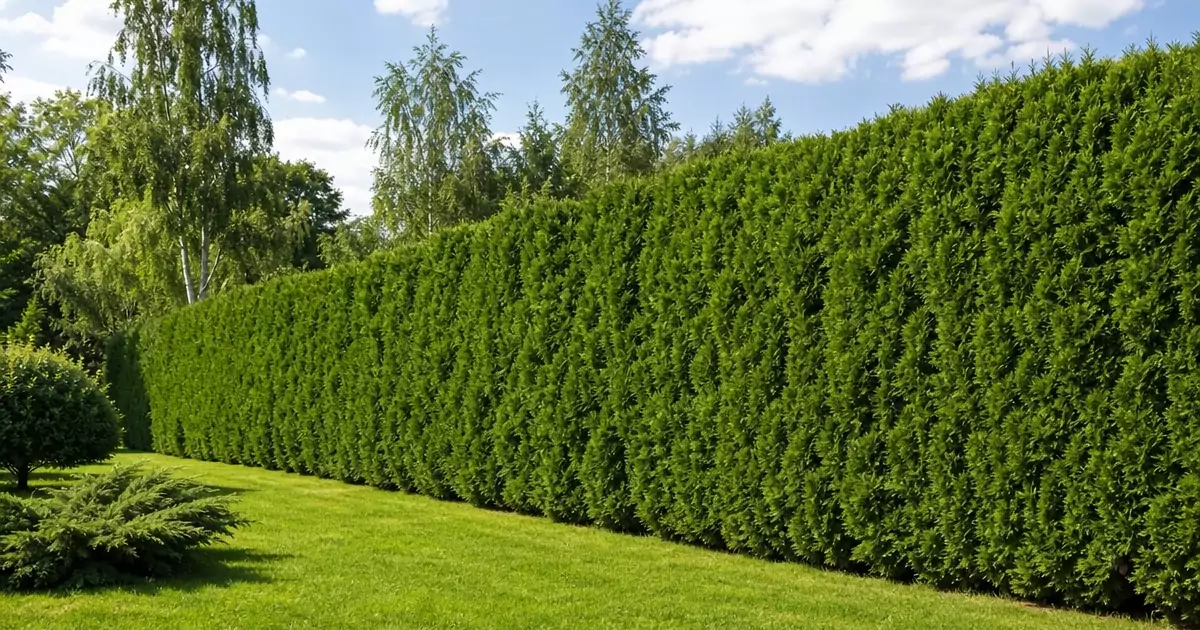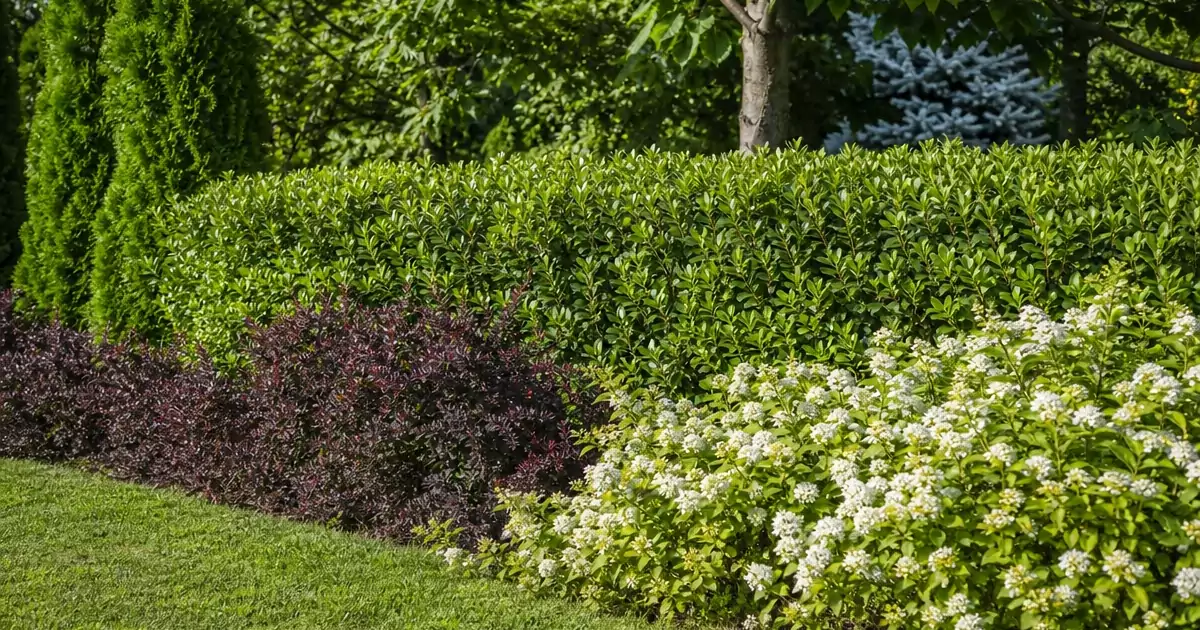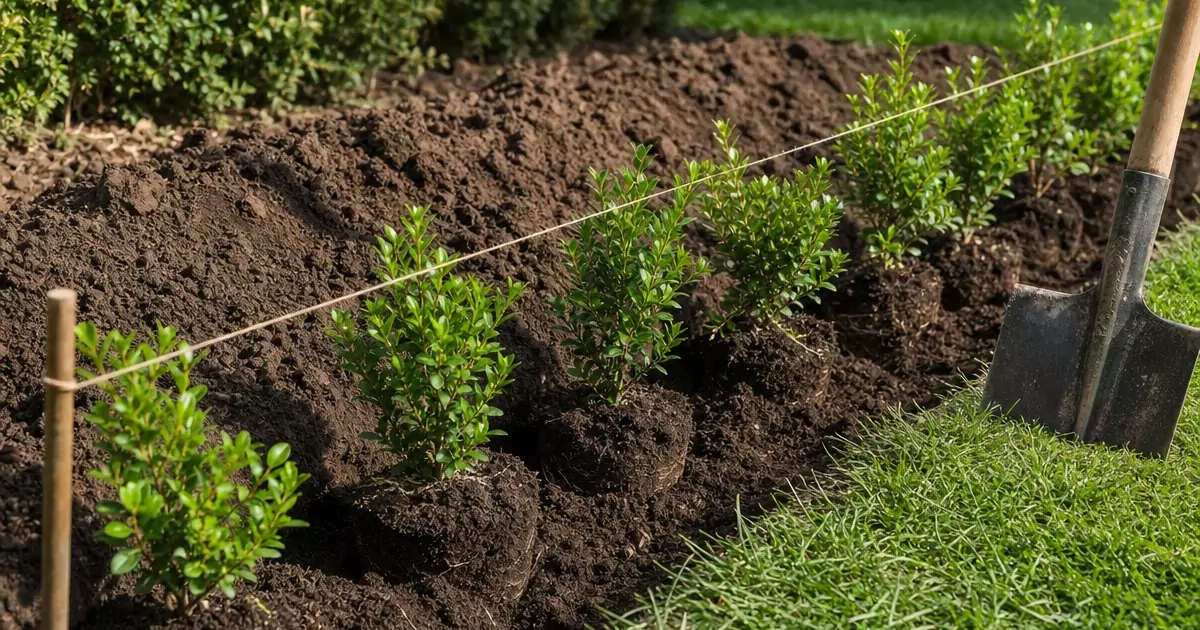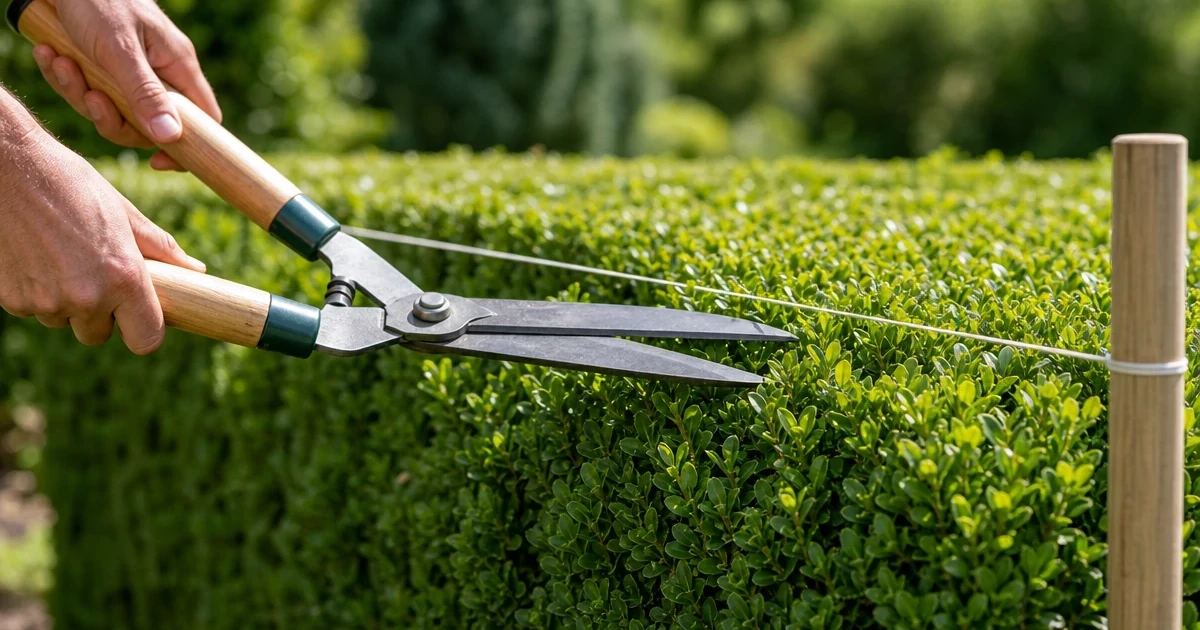
A hedge screens your garden from prying eyes, wind and dust, divides it into areas and gives birds a home. It can be a crisp clipped wall or a loose flowering strip. Here is how to choose plants for the height you need, how to plant a hedge and how to shape it so it stays dense from top to bottom.
Garden plants are in our potted plants section.
Consider the height you need, the light and how much time you want to spend clipping. Fast growers form a screen sooner but need trimming more often. Conifers give year-round cover; deciduous shrubs are cheaper and recover faster from clipping mistakes.
For choosing conifers see Conifers for the garden, and for shaped clipping see Garden topiary.
Privet and spiraea form a dense hedge in 2–3 years, thuja and hornbeam in 3–5; yew is slower.
Usually lack of light — it was clipped straight-sided or wider at the top. Trapezoid clipping and renovation pruning of deciduous shrubs help.

Author: Maria Svitlovir
Graduated from Taras Shevchenko National University of Kyiv, Institute of Biology and Medicine (2001). BSc in Biology, MSc in Horticulture. Writes about plants, works at a garden centre selecting and repotting plants, and contributes to plant reference guides.
© Kyiv 2026 UFL Flower Shop

Trademark UFL №191476 is used under license of the rights holder.
All rights reserved. Any use of materials without a link to the site is prohibited.

 Birthday
 Hydrangeas