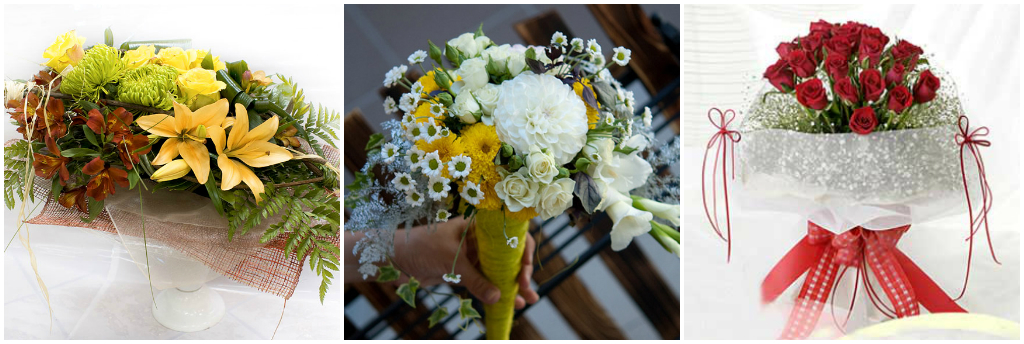
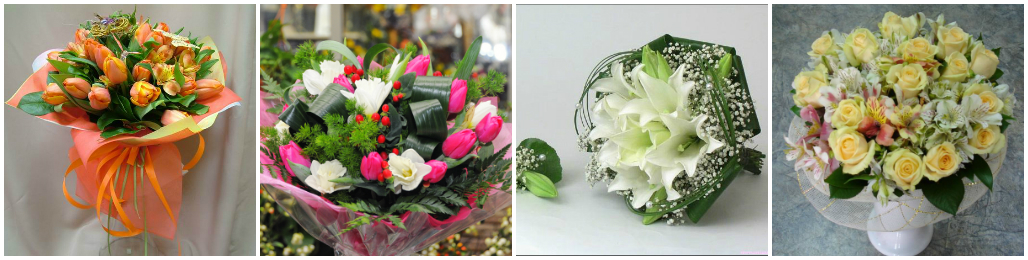
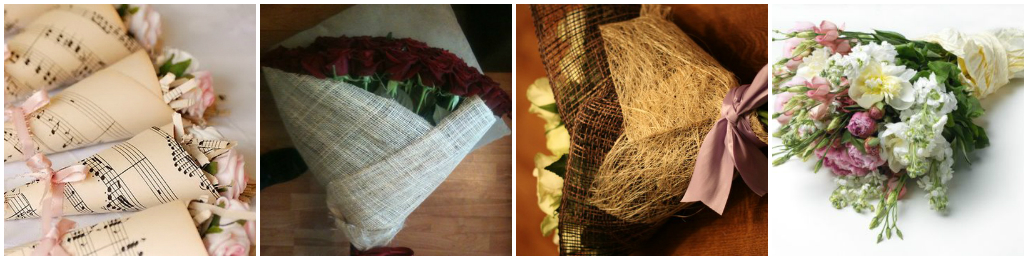
This article was prepared with the support of UFL flower delivery. Even the finest diamond needs a setting, and the same goes for flowers. A bouquet is only finished once it's wrapped: the wrapping supports the idea of the arrangement, protects the stems and petals in transit and makes the gift feel special. Here's how to choose materials and wrap a bouquet beautifully yourself.
Wrapping plays second fiddle. It should complement the flowers, not distract from them — paper should take up no more than a third of the visible bouquet.
Harmonious colour. Choose neutral shades (kraft, white, powder pink, grey) or match the flowers. Contrast is fine, but avoid clashing patterns.
Shape to suit the bouquet. A round bouquet suits "petal" wrapping all around; a tall, asymmetric one suits an envelope or loose wrap.
Natural materials are in: kraft paper, linen, jute, felt and cotton ribbon.
Less shine. Foil, glossy cellophane and plastic lace look dated.
No sticky tape on the stems — use floral tape or twine.
Versatile and eco-friendly; suits wildflower, men's and rustic bouquets.
Florist film (matt, tracing paper)
Water-resistant, modern and light; great for roses and peonies.
Tissue and rice paper
Thin and soft, forming airy "clouds" around delicate flowers.
Felt
Firm and holds its shape; good for autumn and winter.
Mesh and organza
Add lightness, but use sparingly.
Hatbox or basket
Flowers in floral foam don't need a vase — convenient for gifts and delivery.
How to wrap a bouquet, step by step
A water pack is essential if the bouquet will travel for more than an hour.
Prepare the flowers. Strip leaves from the lower stems (as high as will sit in the vase) and remove rose thorns. Stand the flowers in water for a couple of hours to hydrate.
Build a spiral bouquet. Add stems in a circle at the same angle, turning the bouquet in your hand. It will be full and stable, and the stems won't crowd each other.
Secure it. Wrap the binding point tightly with floral tape or twine. Cut the stems at an angle to one length with a sharp knife.
Add a water pack if the bouquet will travel: wrap the stem ends in damp cotton wool or foam and film.
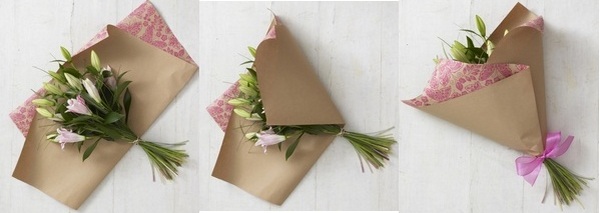
Wrap. Take 2–3 sheets of paper or film, fold each in half slightly offset, and wrap them around the bouquet like petals, securing each layer at the binding point. For a simpler look, wrap it in one large sheet as an envelope.
Finish with ribbon. Tie satin ribbon, jute or cotton tape in a bow over the binding point and add a card.
If you'd rather skip the wrapping, order a ready-made bouquet — UFL florists will arrange and wrap it beautifully, and a courier will deliver it. To see how a big bouquet is made, read how to make a 101-rose bouquet with step-by-step photos.
FAQ
What bouquet wrapping is in fashion?
Matt florist film, kraft and tissue in neutral shades, minimal shine and natural ribbons.
Should I remove the wrapping when putting flowers in a vase?
Yes — remove the paper and water pack, recut the stems and put them in clean water so they last longer.
Can I wrap a bouquet in newspaper?
Yes, newsprint or printed kraft is a trendy touch for retro and wildflower bouquets.
Author: Maria Svitlovir
Graduated from Taras Shevchenko National University of Kyiv, Institute of Biology and Medicine (2001). BSc in Biology, MSc in Horticulture. Writes about plants, works at a garden centre selecting and repotting plants, and contributes to plant reference guides.





 Birthday
 Hydrangeas