
 Birthday
 Hydrangeas
This article was prepared with the support of UFL flower delivery. Even the finest diamond needs a setting, and the same goes for flowers. A bouquet is only finished once it's wrapped: the wrapping supports the idea of the arrangement, protects the stems and petals in transit and makes the gift feel special. Here's how to choose materials and wrap a bouquet beautifully yourself.
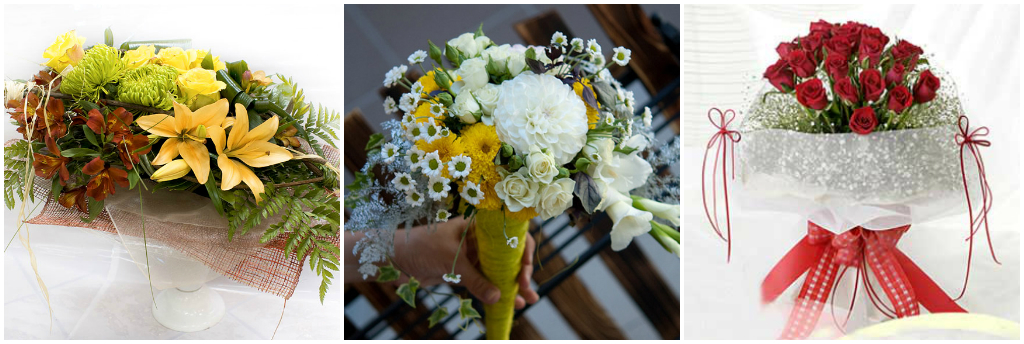
Florists' rules for wrapping
- Wrapping plays second fiddle. It should complement the flowers, not distract from them — paper should take up no more than a third of the visible bouquet.
- Harmonious colour. Choose neutral shades (kraft, white, powder pink, grey) or match the flowers. Contrast is fine, but avoid clashing patterns.
- Shape to suit the bouquet. A round bouquet suits "petal" wrapping all around; a tall, asymmetric one suits an envelope or loose wrap.
- Natural materials are in: kraft paper, linen, jute, felt and cotton ribbon.
- Less shine. Foil, glossy cellophane and plastic lace look dated.
- No sticky tape on the stems — use floral tape or twine.
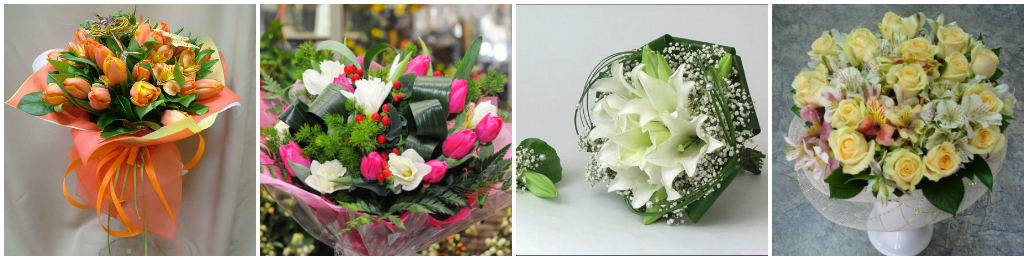
Wrapping materials
| Material | Features |
|---|---|
| Kraft paper | Versatile and eco-friendly; suits wildflower, men's and rustic bouquets. |
| Florist film (matt, tracing paper) | Water-resistant, modern and light; great for roses and peonies. |
| Tissue and rice paper | Thin and soft, forming airy "clouds" around delicate flowers. |
| Felt | Firm and holds its shape; good for autumn and winter. |
| Mesh and organza | Add lightness, but use sparingly. |
| Hatbox or basket | Flowers in floral foam don't need a vase — convenient for gifts and delivery. |
How to wrap a bouquet, step by step
- Prepare the flowers. Strip leaves from the lower stems (as high as will sit in the vase) and remove rose thorns. Stand the flowers in water for a couple of hours to hydrate.
- Build a spiral bouquet. Add stems in a circle at the same angle, turning the bouquet in your hand. It will be full and stable, and the stems won't crowd each other.
- Secure it. Wrap the binding point tightly with floral tape or twine. Cut the stems at an angle to one length with a sharp knife.
- Add a water pack if the bouquet will travel: wrap the stem ends in damp cotton wool or foam and film.
- Wrap. Take 2–3 sheets of paper or film, fold each in half slightly offset, and wrap them around the bouquet like petals, securing each layer at the binding point. For a simpler look, wrap it in one large sheet as an envelope.
- Finish with ribbon. Tie satin ribbon, jute or cotton tape in a bow over the binding point and add a card.
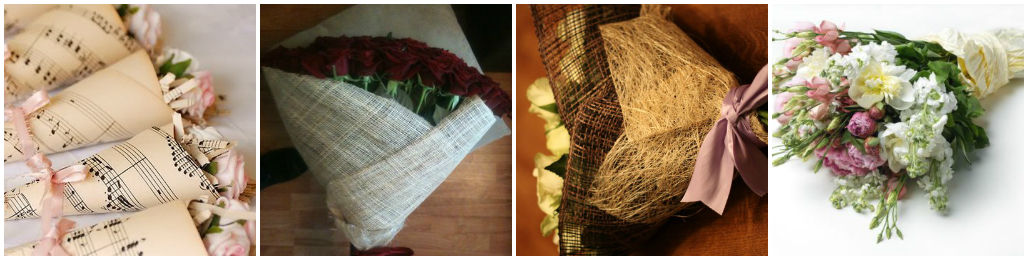
Finishing touches
- dried twigs, wheat ears, lavender or cotton for a natural style;
- berries, cones and cinnamon for autumn and winter bouquets;
- a card with warm words — a must;
- a gift bag or box sized to the bouquet — easy to carry and nothing gets crushed.
Common mistakes
- too much wrapping and decoration — you can barely see the flowers;
- sticky tape or staples on the stems;
- loud paper colours that clash with the flowers;
- no water pack on a long summer journey;
- paper taller than the flowers, hiding the bouquet.
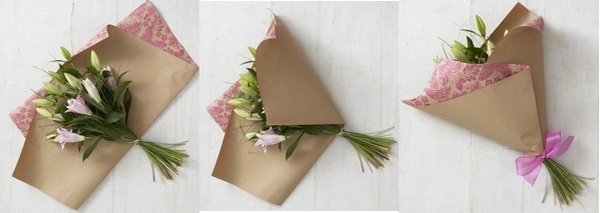
If you'd rather skip the wrapping, order a ready-made bouquet — UFL florists will arrange and wrap it beautifully, and a courier will deliver it. To see how a big bouquet is made, read how to make a 101-rose bouquet with step-by-step photos.
FAQ
What bouquet wrapping is in fashion?
Matt florist film, kraft and tissue in neutral shades, minimal shine and natural ribbons.
Should I remove the wrapping when putting flowers in a vase?
Yes — remove the paper and water pack, recut the stems and put them in clean water so they last longer.
Can I wrap a bouquet in newspaper?
Yes, newsprint or printed kraft is a trendy touch for retro and wildflower bouquets.

View full-size photo
Author: Maria Svitlovir
Graduated from Taras Shevchenko National University of Kyiv, Institute of Biology and Medicine (2001). BSc in Biology, MSc in Horticulture. Writes about plants, works at a garden centre selecting and repotting plants, and contributes to plant reference guides.