
 Birthday
 Hydrangeas
This article was prepared with the support of UFL flower delivery. The jostaberry (Ribes × nidigrolaria) is a hybrid of blackcurrant, European gooseberry and spreading gooseberry. Gardeners choose it for its hardiness, easy care, disease resistance and lack of thorns. It's also a handsome, spreading shrub that works well as a hedge.
History
Breeders tried to cross currants and gooseberries from the early 20th century — among them Ivan Michurin and the German geneticist Erwin Baur — but the hybrids were sterile. Success came to Rudolf Bauer of the Max Planck Institute for Plant Breeding Research in Cologne, who after decades of work introduced the first fruiting variety, Josta, in the 1970s. It's the result of conventional breeding, not genetic engineering: the hybrid's chromosome set was doubled to make it fertile.
The name combines the German words Johannisbeere (currant) and Stachelbeere (gooseberry).
Description
- Bush — vigorous and spreading, 1.5–2 m tall (sometimes 2.5 m) and as wide. Thornless stems.
- Roots reach 40–50 cm deep.
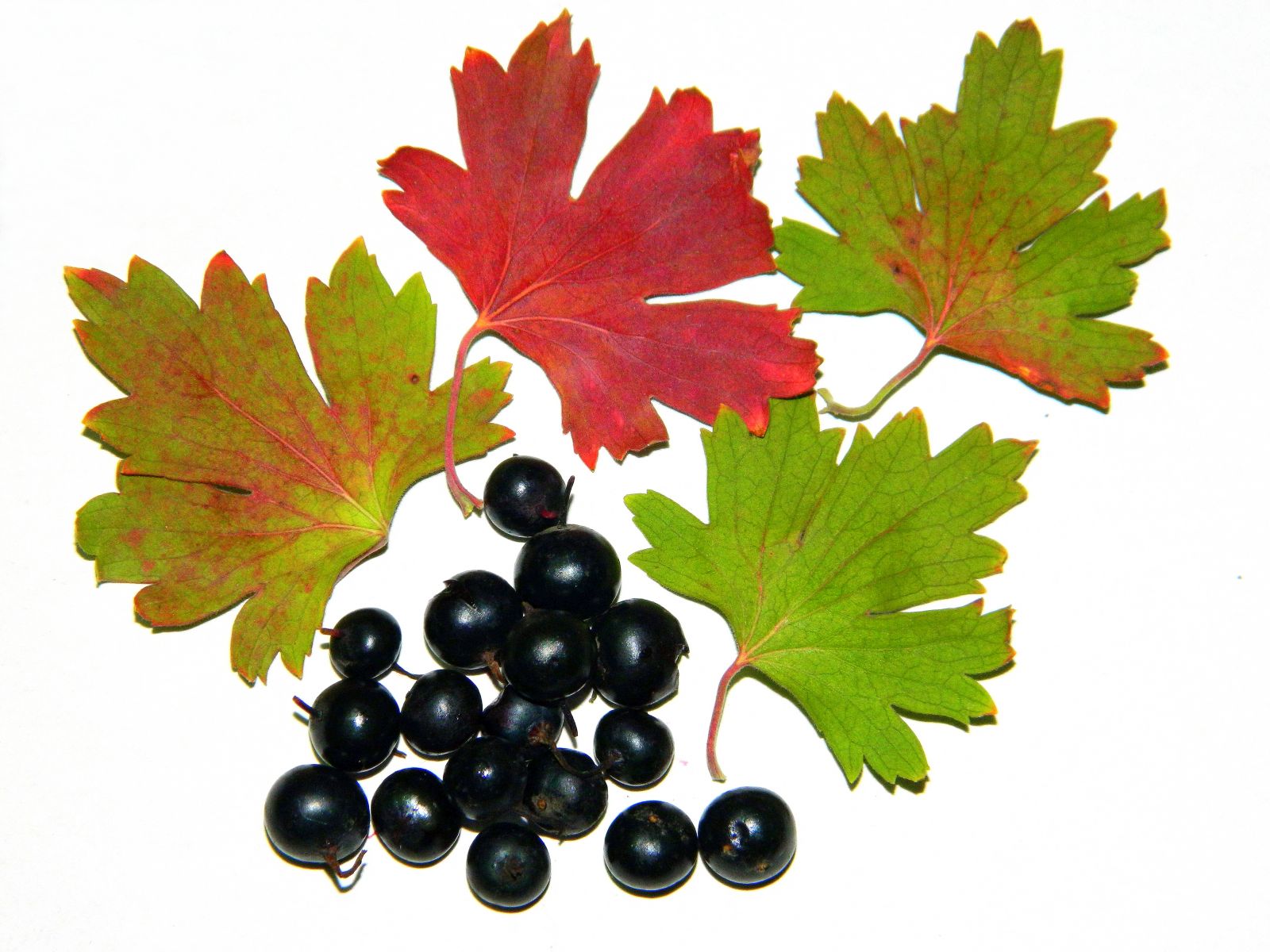
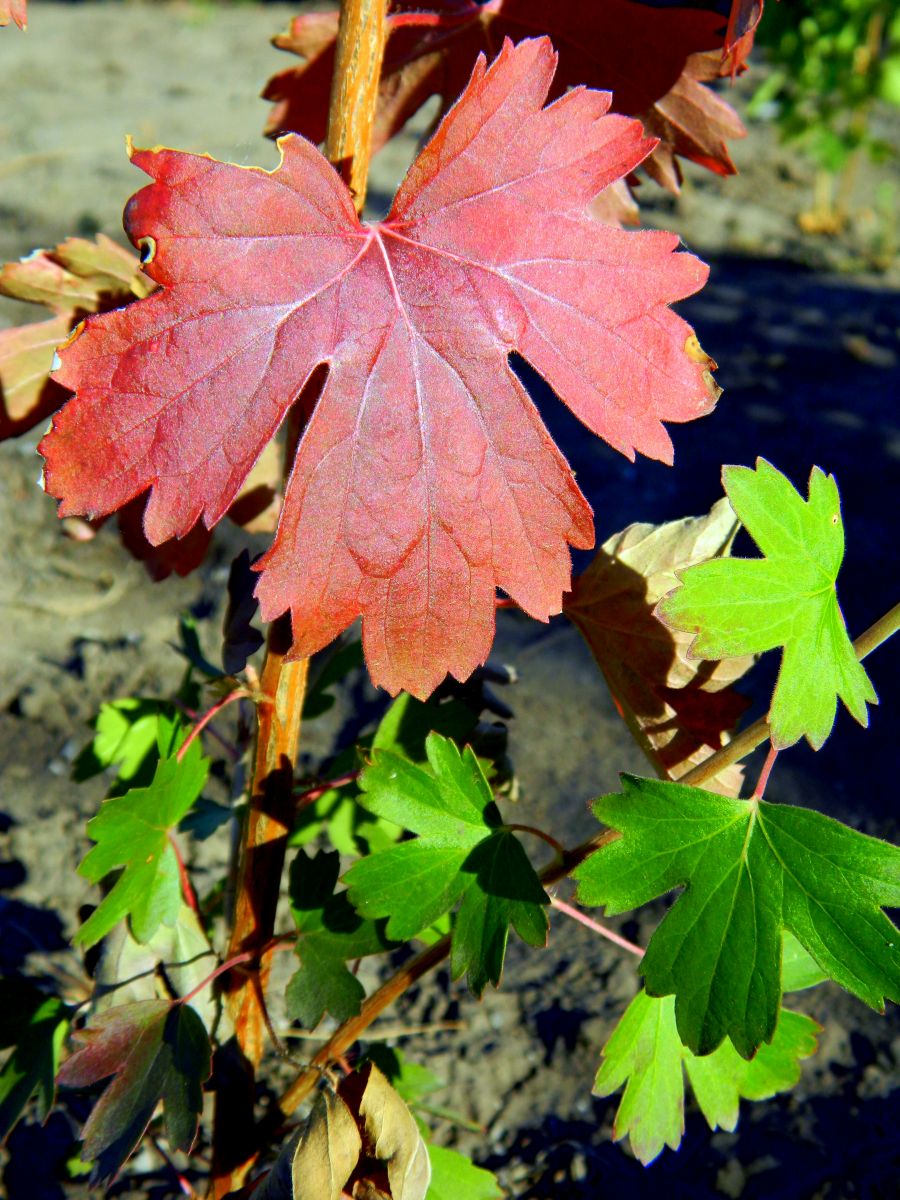
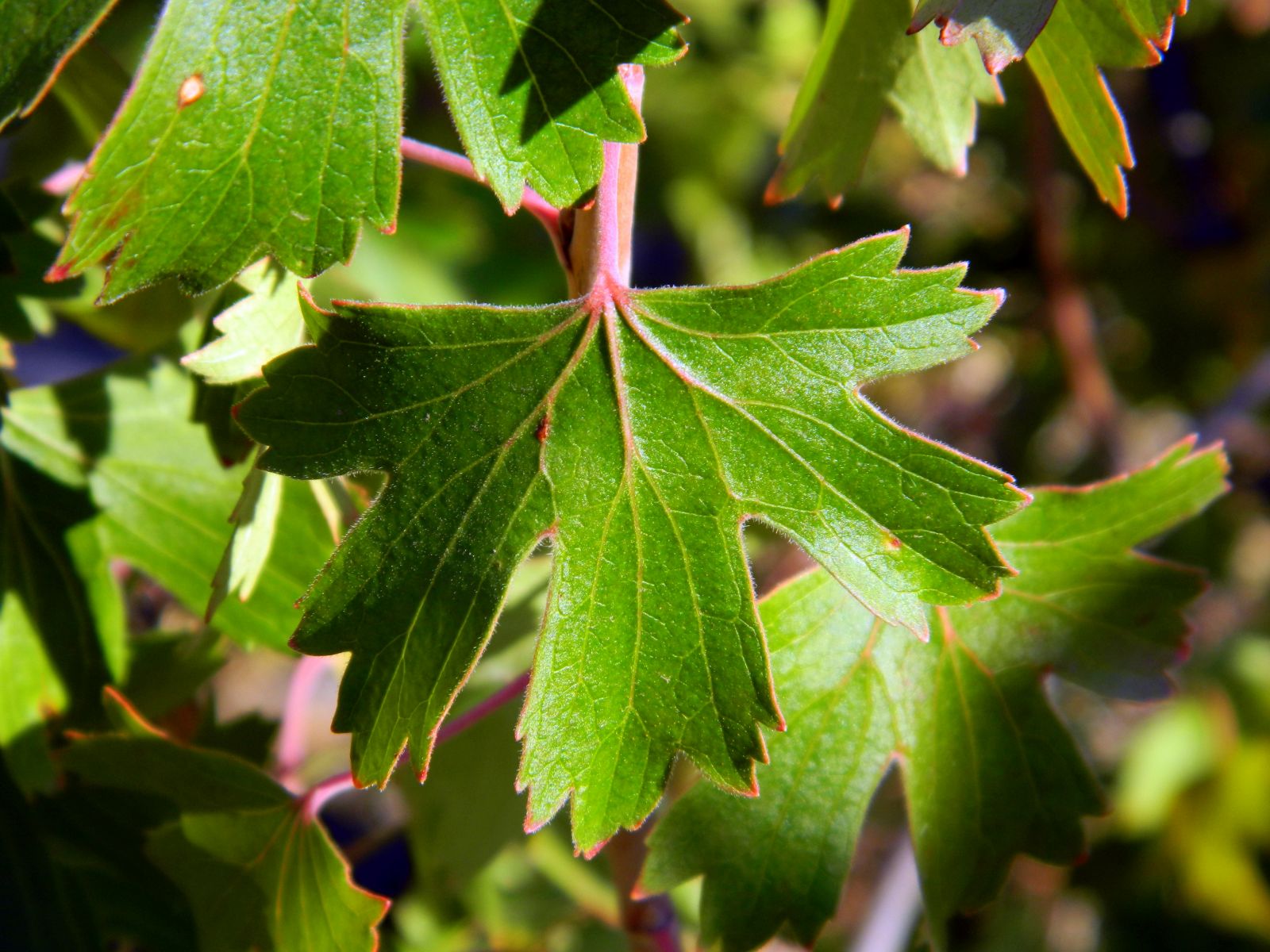
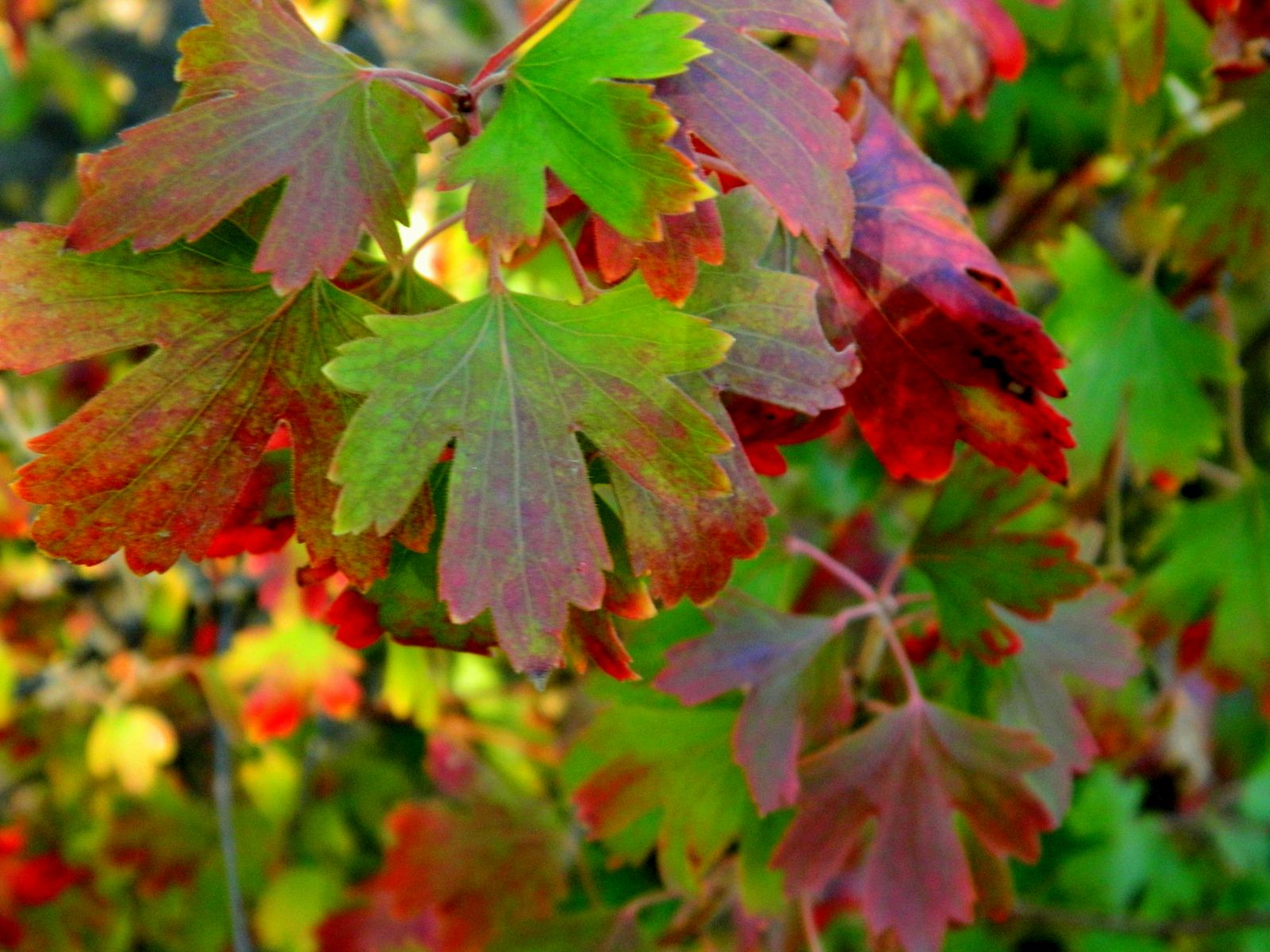
- Leaves — large and dark green, like gooseberry leaves, with almost no currant scent; they last until late autumn.
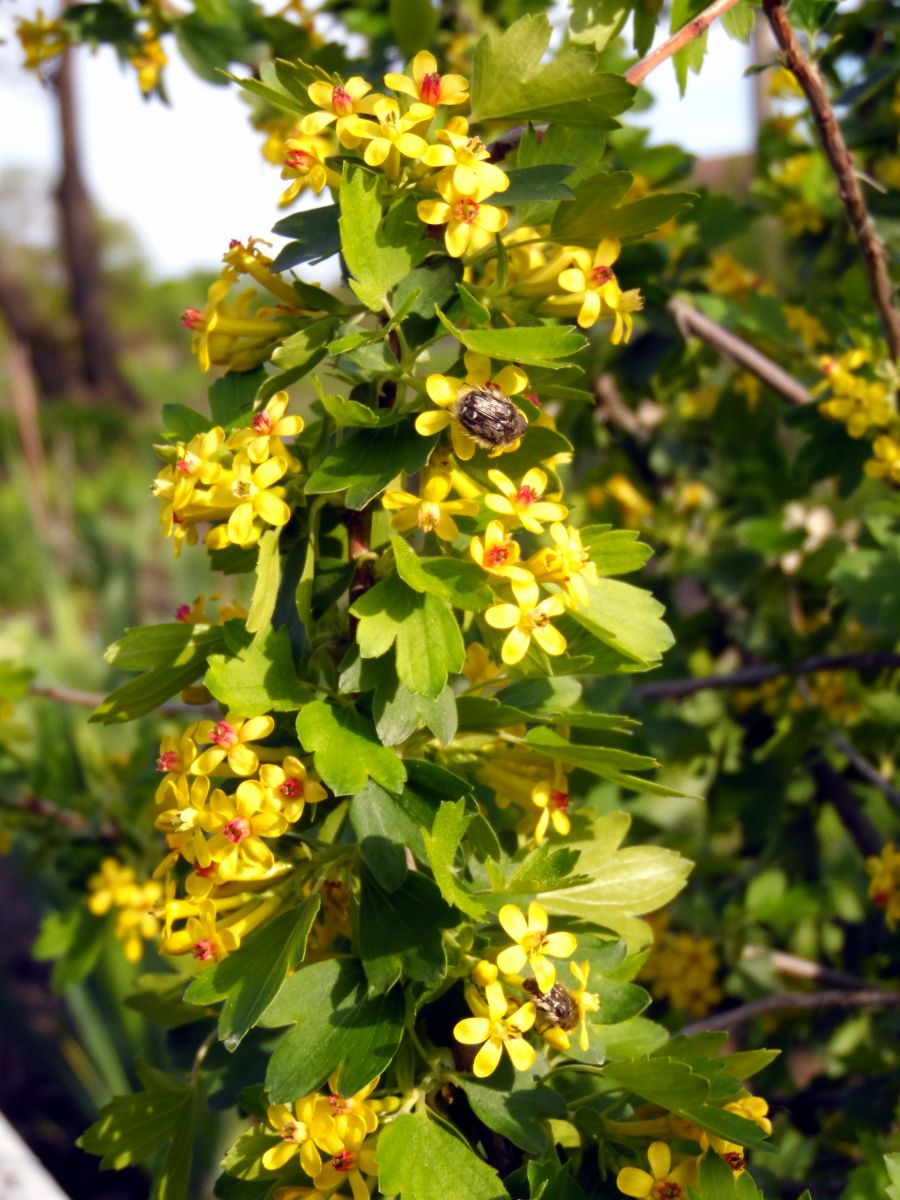
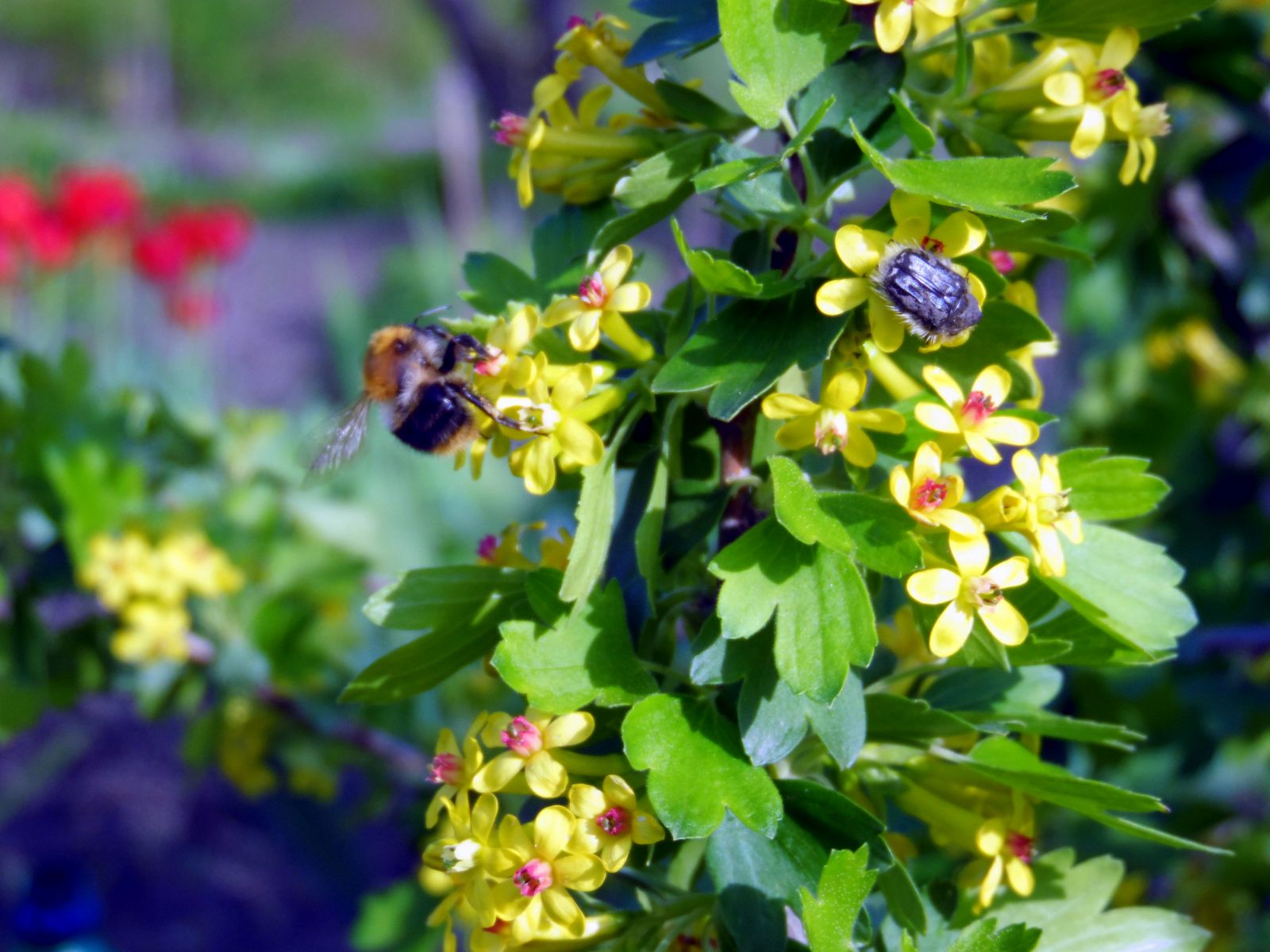
- Flowers — small, reddish-purple with a yellow centre, in late April to May.
- Berries — black-purple, cherry-sized (2–5 g), in clusters of 3–5. Sweet-tart with a hint of muscat: unripe berries taste more of gooseberry, ripe ones of blackcurrant. They ripen in July and rarely drop.
- Yield — first berries in year 2, full cropping from years 3–4, 5–10 kg per bush.
.jpg)
.jpg)
Popular varieties
Buffalo currant (golden currant), with long clusters of yellow flowers and smaller leaves, is sometimes sold as "jostaberry". True jostaberry varieties include:
| Variety | Origin | Features |
|---|---|---|
| Josta | Germany | The original; bush up to 2 m, large berries, 5–10 kg per bush |
| Jogranda | Germany | Very large berries, spreading habit, needs support |
| Jostine | Germany | More compact, sweet berries |
| EMB | United Kingdom | Lower bush (1.7 m), large gooseberry-like berries, disease-resistant |
| Krona | Sweden | Very hardy, medium berries |
| Rext | Russia | Bush about 1.5 m, large berries, pest-resistant |
.jpg)
Advantages
- hardy to −25…−30 °C, though flowers can be hit by late frosts;
- resistant to powdery mildew, big bud mite and reversion disease;
- undemanding about soil and care;
- thornless, so picking is easy;
- ornamental all season and good for hedging.
Benefits of the berries
Jostaberries are rich in vitamin C (more than gooseberries, less than blackcurrants), anthocyanins, flavonoids, potassium and fibre. They're eaten fresh, frozen or made into jam, compote and jelly — their firm skins hold their shape. Because of their acidity, people with gastritis or stomach ulcers should eat them in moderation.

Planting
Choosing a plant
Buy from a nursery. Bare-root plants should have firm, moist roots without dry or rotten sections, and greenish bark under the scales. Soak dried-out roots in water for a day before planting. Container plants can go in all season, avoiding heatwaves.
Site and timing
Jostaberry needs a sunny, sheltered spot without waterlogging. Plant in early spring before bud break or in early autumn — September, 3–4 weeks before frost. It's partly self-fertile, but with blackcurrants and gooseberries nearby as pollinators the crop is noticeably larger.
How to plant
- 2–3 weeks ahead, dig a hole 50 × 50 × 50 cm. Space bushes 1.5–2 m apart, or 0.5–1 m for a hedge.
- Mix the topsoil with half a bucket of compost, 100 g of superphosphate and 300–500 g of wood ash.
- Set the plant in, spread the roots and backfill, shaking gently to remove air pockets. Plant 5–7 cm deeper than it grew in the nursery.
- Firm the soil, water with a bucket of water and mulch.
- Cut the stems back to 3–4 buds.
On clay, add 10–15 cm of gravel or clay pebble drainage and mix sand and compost into the planting soil. On sand, add extra compost and a little clay at the bottom of the hole to hold moisture. In waterlogged ground jostaberry drops its fruitlets, and on dry sand the berries fall before ripening.
Care
| What | How |
|---|---|
| Watering | Keep the soil consistently moist, especially during flowering and fruit swell: 2–3 buckets per bush once a week in dry weather, morning or evening, into a trench around the drip line. |
| Mulch | 5–10 cm of manure, bark, straw or grass clippings keeps moisture in and weeds down. |
| Loosening | Shallow, 5–8 cm, after rain or watering if there's no mulch. |
| Feeding | Compost or manure in spring; after flowering a phosphorus-potassium fertiliser (20 g potassium sulphate and 30–40 g superphosphate per m²); 0.5 l of wood ash per bush in autumn. Excess nitrogen gives leaves instead of berries. |
| Pruning | In early spring and after leaf fall, remove broken, diseased, crowding and old (6–7+ years) stems. Heavy formative pruning isn't needed. |
Jostaberry can also be grown as a standard 80–90 cm tall: keep one strong stem, remove the rest and shape the head by pinching. This makes picking easier.
Propagation
- Hardwood cuttings. In autumn or early spring cut 15–20 cm lengths with 4–5 buds from one-year-old shoots. Plant at 45°, leaving 2 buds above ground, water and mulch.
- Softwood cuttings. In June take 10–12 cm shoot tips, leave the top 2 leaves and root them in a cold frame in moist peat and sand. Roots form in 2–3 weeks.
- Layering. In spring bend one-year-old shoots into 10 cm trenches, peg them down and cover with soil. Separate the rooted plants in autumn or the following spring.
- Division — when transplanting: lift the bush, split it into pieces with 1–2 strong stems and roots, and dust the cuts with charcoal.
Pests and diseases
Jostaberry has good immunity, but weakened bushes can get powdery mildew, anthracnose and rust, plus aphids, currant fruit moth, clearwing moth and occasionally big bud mite. To prevent problems:
- in early spring on dormant buds and in autumn after leaf fall, spray with 1% Bordeaux mixture or copper sulphate;
- cut out and burn affected stems and clear fallen leaves;
- if disease appears, use approved fungicides; against pests, biological products or insecticides, observing the harvest interval.
Winter preparation
In Ukraine jostaberry overwinters without protection. In autumn give the bushes a deep watering and mulch the root zone with 10 cm of organic matter. Young plants can be covered with conifer branches in their first winter and banked with snow.
FAQ
Does jostaberry need a pollinator?
It's partly self-fertile, but crops better next to currants and gooseberries.
Why isn't my jostaberry fruiting?
Young age, shade, too much nitrogen or late frosts during flowering.
Can jostaberry be grown as a hedge?
Yes — planted 0.5–1 m apart it makes a dense, thornless hedge that also gives berries.
A well-kept garden brings more than berries — delight your loved ones with a bouquet delivered by UFL.

View full-size photo
Author: Maria Svitlovir
Graduated from Taras Shevchenko National University of Kyiv, Institute of Biology and Medicine (2001). BSc in Biology, MSc in Horticulture. Writes about plants, works at a garden centre selecting and repotting plants, and contributes to plant reference guides.


