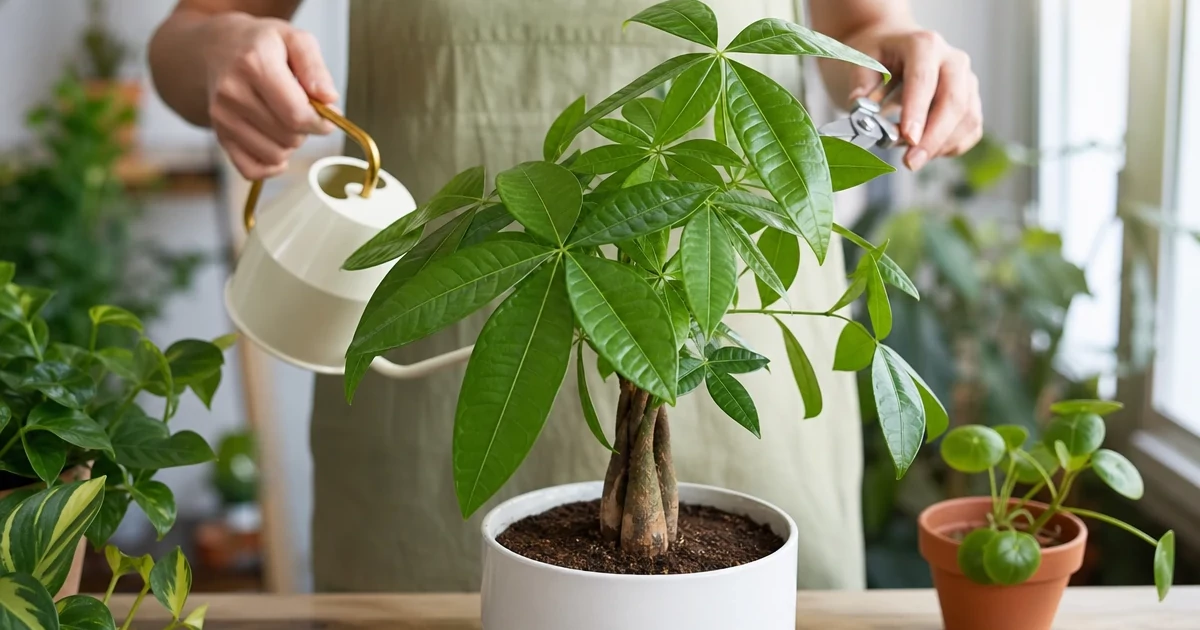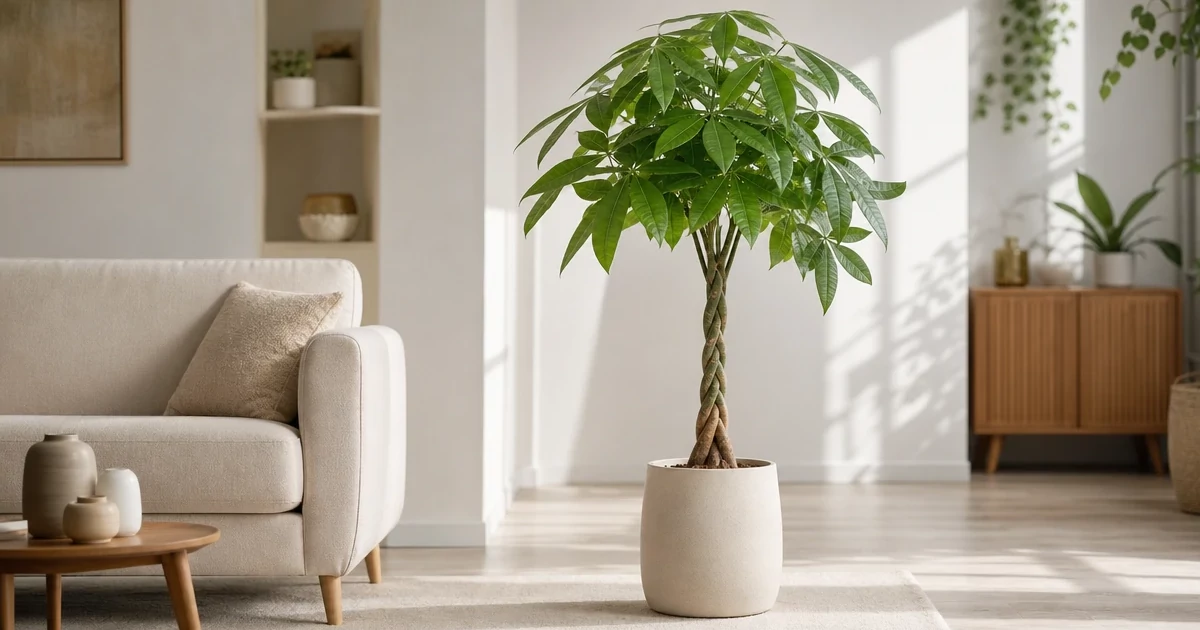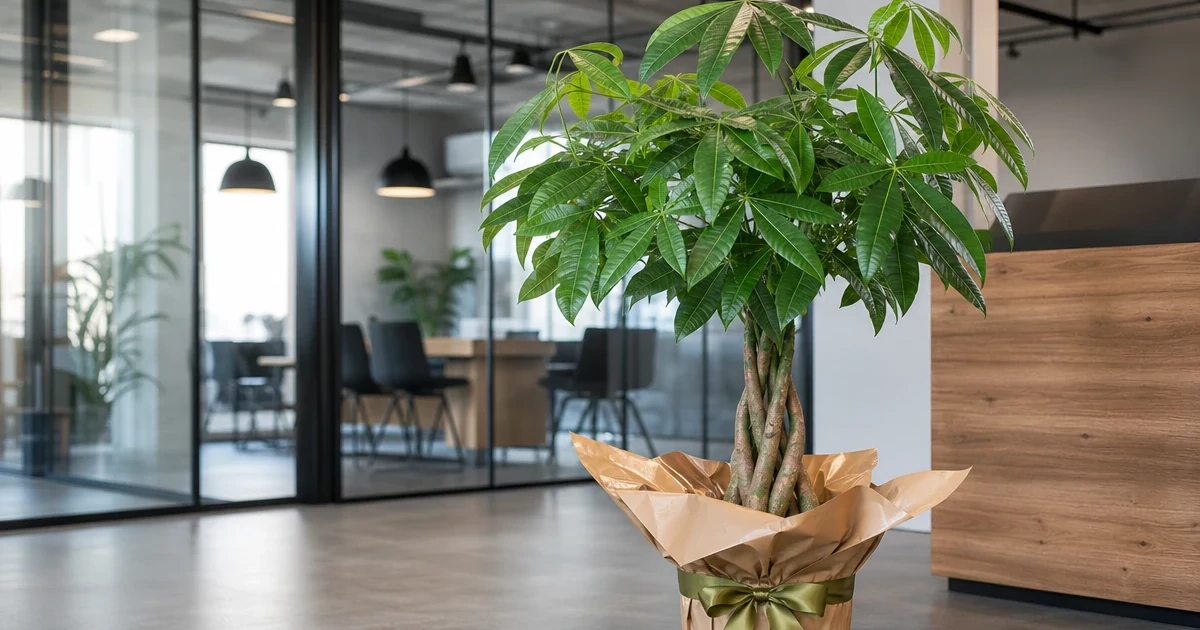
Pachira is a tropical tree with a braided trunk and hand-shaped leaves, often sold as the 'money tree'. It grows slowly, copes with dry indoor air and looks great in an office or living room. Here is how it differs from the jade plant, how to keep it from dropping leaves, how to water its swollen trunk and how braided pachiras are formed.
More on this topic: houseplants: names and care, plants that symbolise wealth, rubber plant.
Pachira aquatica grows in swampy tropical forests of Central and South America and reaches 15–20 m in the wild. Its seeds are edible, earning it the name Malabar chestnut.
Indoors it grows to 1–2 m. The swollen base of the trunk stores water, so it shrugs off a missed watering.
The braid isn't natural: growers plant several young trees together and plait them while the stems are flexible.
Pachira is non-toxic to cats and dogs.
Light: bright and indirect; a little morning or evening sun helps. In shade it gets leggy.
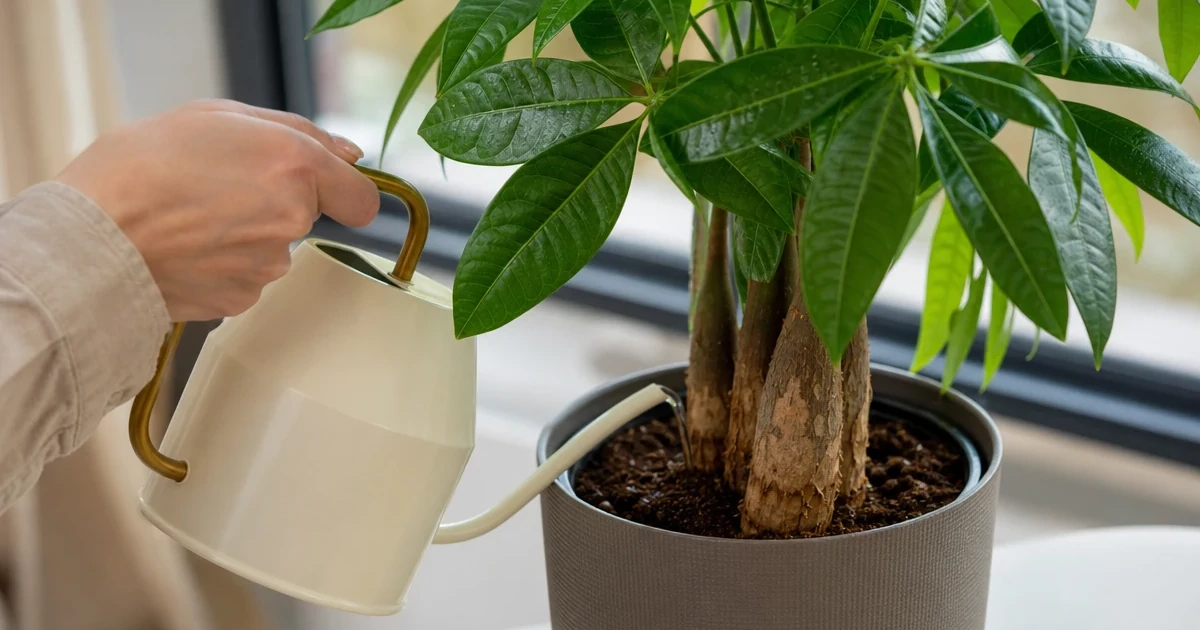
Water when the top 3–4 cm is dry, around the edge of the pot, not on the trunk; less in winter. Overwatering is the main cause of trunk rot.
Temperature: 18–25 °C, 16–18 °C in winter. Draughts and cold glass cause leaf drop.
Humidity: copes with normal room air but appreciates misting in the heating season.
Feeding: monthly, April to September, with foliage-plant fertiliser.
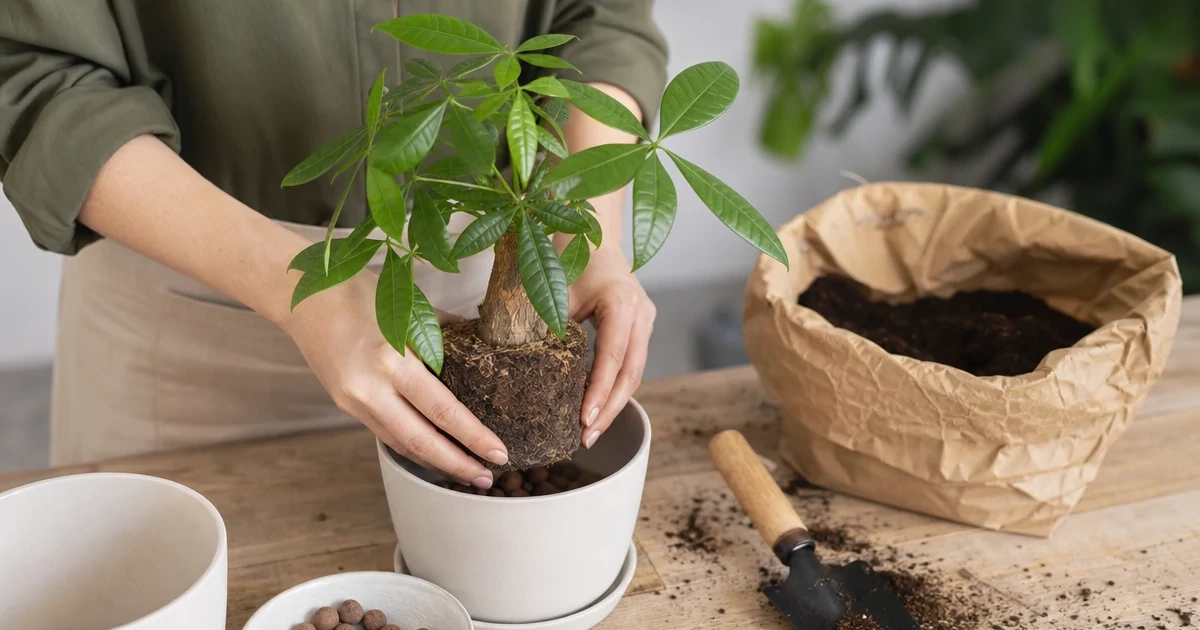
Repot every 2–3 years in spring into a small, well-drained pot; see how to repot a houseplant.
A pachira needs loose, free-draining soil: all-purpose foliage-plant compost with a third perlite or fine clay pebbles, or ready-made palm and dracaena mix. Use a heavy, stable pot only slightly wider than the root ball, with a drainage hole and a layer of clay pebbles at the bottom. An oversized pot and dense soil are the commonest causes of a rotting swollen trunk.
In spring shorten leggy shoots above a leaf; side branches will follow and the crown thickens.
Root 10–15 cm tips with 2–3 leaves in water or damp sand under a bag; roots appear in 3–6 weeks.
Cuttings won't develop the swollen bottle trunk; that only forms on seed-grown plants.
In the wild a pachira bears huge flowers up to 30 cm across, with narrow cream petals and hundreds of long stamens like a pompom, followed by nut-like pods. Indoors it flowers very rarely: it needs maturity, lots of light and space. People grow it for the foliage and braided trunk rather than the flowers.
In East Asia pachira symbolises money and luck: its five leaflets are linked to the five elements and the braided trunk to 'locked-in' prosperity.
That's why it's a popular gift for a business opening, housewarming or promotion. More such plants: plants that symbolise wealth.
Looking for a living gift that lasts for months? A potted orchid is a great choice for home or office.

See houseplants and orchids.

Yes, internationally; in Ukraine 'money tree' usually means the jade plant.
When the top 3–4 cm is dry: about weekly in summer, every 2–3 weeks in winter.
Overwatering has rotted roots and trunk; repot and water less.
No, it's considered pet-safe.
It is the botanical name of the species usually sold with a braided trunk. The similar Pachira glabra has paler trunks.

Author: Maria Svitlovir
Graduated from Taras Shevchenko National University of Kyiv, Institute of Biology and Medicine (2001). BSc in Biology, MSc in Horticulture. Writes about plants, works at a garden centre selecting and repotting plants, and contributes to plant reference guides.
© Kyiv 2026 UFL Flower Shop

Trademark UFL №191476 is used under license of the rights holder.
All rights reserved. Any use of materials without a link to the site is prohibited.

 Birthday
 Hydrangeas