
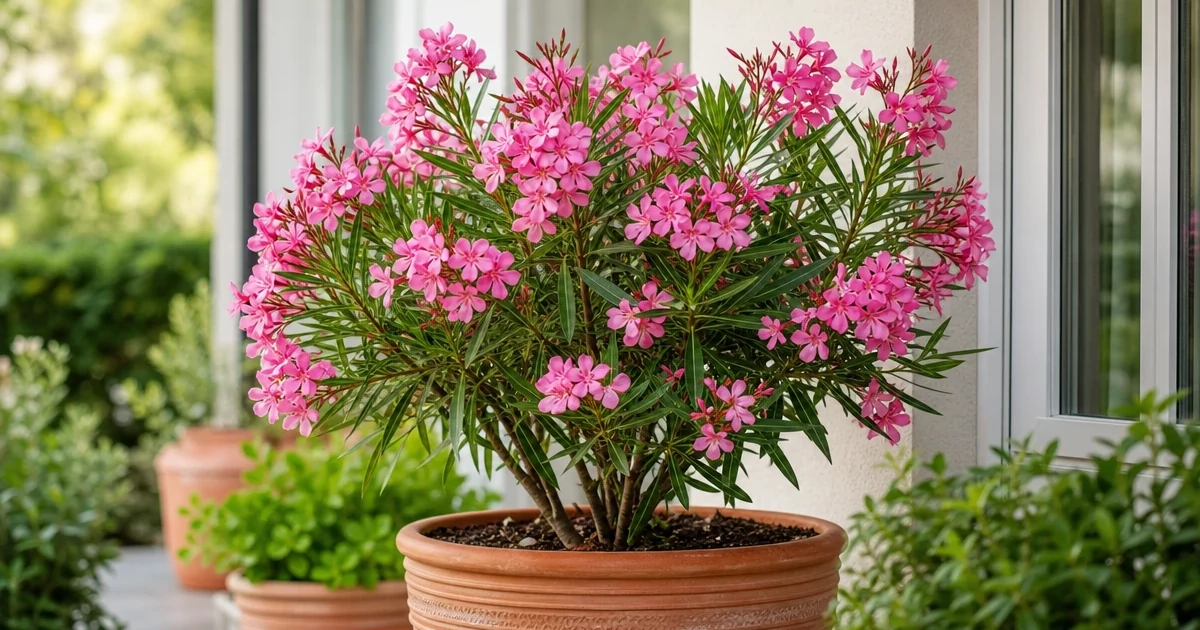
Oleander is a Mediterranean shrub that gives a terrace or balcony a holiday feel, covered from June to autumn in pink, white, red or cream flowers. In Ukraine it is grown mostly in large pots — outdoors in summer and in a cool, bright room in winter. Here is how to care for oleander so it flowers generously, and why it must be handled with care.
Every part of oleander — leaves, flowers, stems, roots and sap — contains cardiac glycosides (including oleandrin), dangerous to people and animals even in small amounts. So:
Oleander wants maximum sun: the sunniest spot on a terrace or balcony in summer, a south window indoors. In the wild it grows along rivers, so in hot weather water generously, sometimes daily; in summer a little water can stay in the saucer briefly. Feed every 2 weeks from spring to August with a flowering-plant fertiliser.
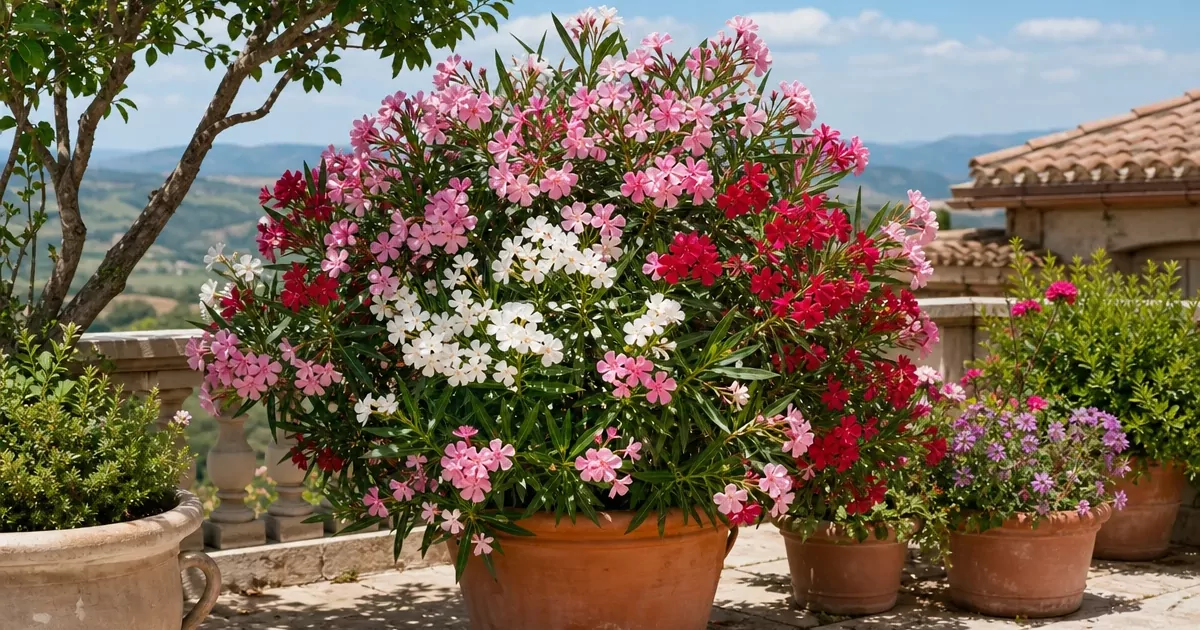
View full-size photoPotted oleander decorates a terrace or balcony with bright flowers.
Oleander tolerates only light, brief frosts, so bring it indoors in autumn before the cold arrives. The ideal winter spot is bright and cool, 8–15 °C — a glazed balcony, veranda or stairwell. Water moderately, letting the soil dry slightly between waterings. In a warm, dark room it stretches, drops leaves and flowers poorly the next summer.
Oleander flowers at the tips of the current year’s shoots, so pruning encourages blooms. After flowering (September–October) or in early spring, cut flowered shoots back by half and remove weak or crowded stems. Do not snap off flower heads that are still forming buds. Wear gloves.
Repot young plants every spring and mature ones every 2–3 years into a heavy, stable pot with drainage and rich compost mixed with sand or perlite. Root 15–20 cm cuttings in spring or summer in water with a few pieces of charcoal; roots appear in 3–4 weeks.
More balcony plants in balcony flowers; the full A–Z is in types of flowers.
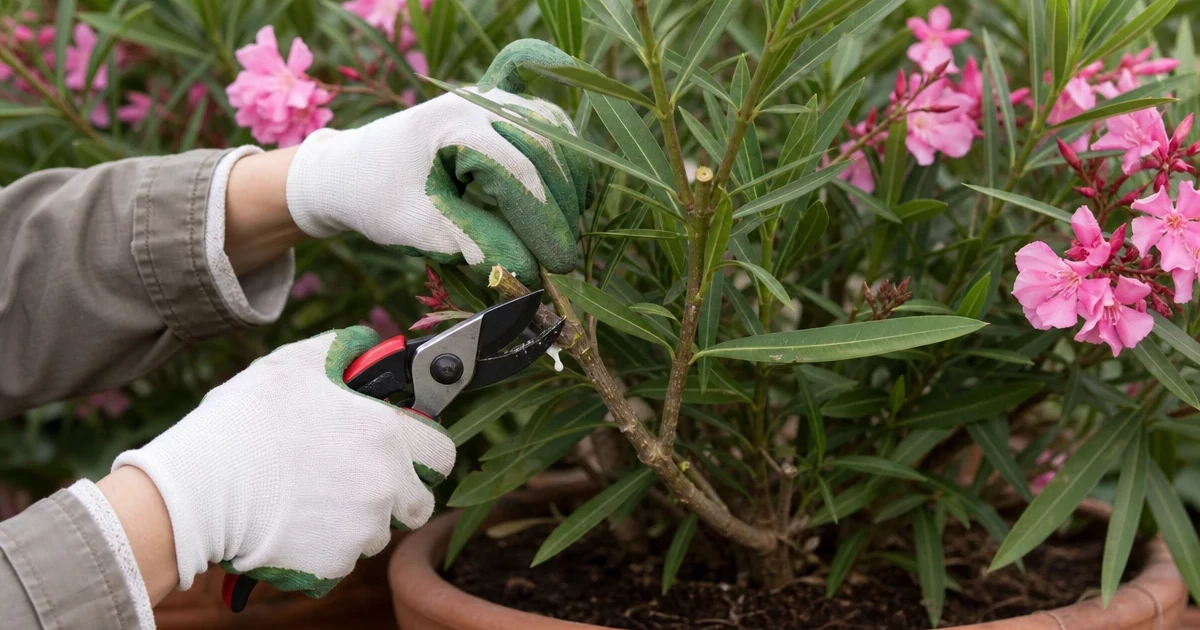
View full-size photoAlways prune oleander with gloves due to its toxicity.
Yes, but only out of reach of children and pets, with a bright, cool winter spot. Always wear gloves when handling it.
Not in most of Ukraine; it tolerates only light, brief frosts, so it is grown in pots.
Generously and often — daily in a heatwave. Water moderately in winter.

Author: Maria Svitlovir
Graduated from Taras Shevchenko National University of Kyiv, Institute of Biology and Medicine (2001). BSc in Biology, MSc in Horticulture. Writes about plants, works at a garden centre selecting and repotting plants, and contributes to plant reference guides.
© Kyiv 2026 UFL Flower Shop

Trademark UFL №191476 is used under license of the rights holder.
All rights reserved. Any use of materials without a link to the site is prohibited.

 Birthday
 Hydrangeas