
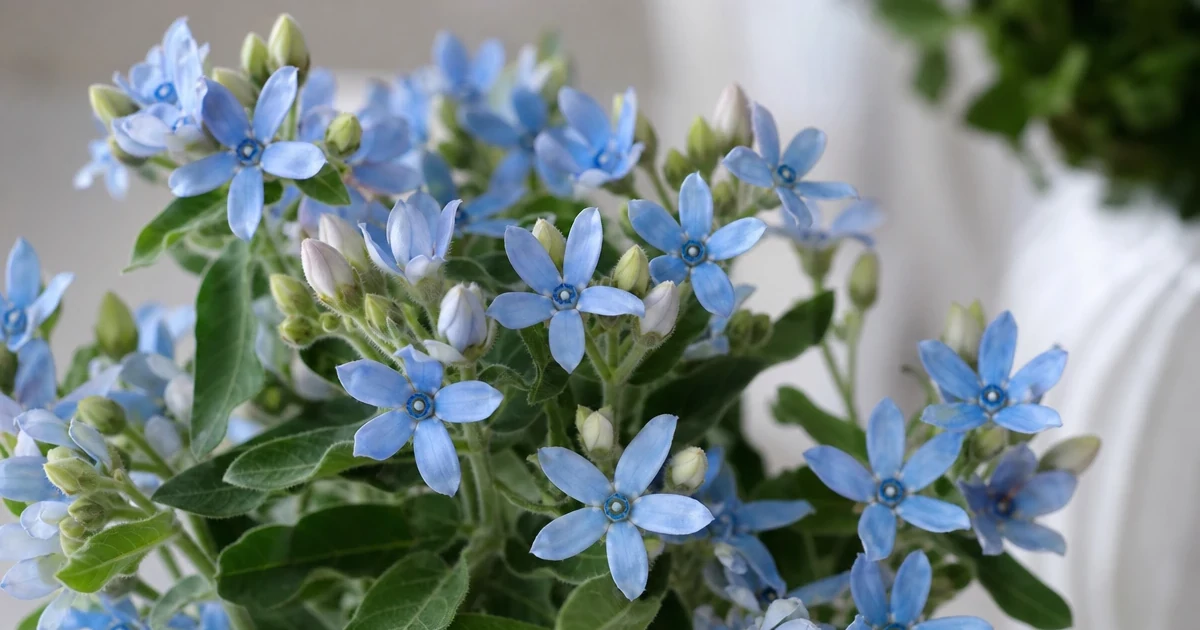
Oxypetalum is the soft blue “star” that makes a bridal bouquet or a spring arrangement look like a watercolour. True blue is rare among flowers, so florists value oxypetalum as a natural accent with no dye involved. Here is what the plant is, how to recognise it, what it pairs best with and how to keep it fresh in a vase for longer.
Blue oxypetalum (Oxypetalum coeruleum, known in older references as tweedia, Tweedia caerulea) is a subshrub of the dogbane family native to South America. In the wild it is a twining vine with downy grey-green leaves; for cut flowers it is grown in greenhouses, so florists can get it all year round.
The flowers are five-petalled stars 2–3 cm across, gathered in small clusters. Buds are pinkish, open flowers are pure sky blue and turn lilac as they age. Besides the classic blue, there are white and pink varieties.
Like many plants in the dogbane family, oxypetalum releases milky white sap when cut. It sets quickly and blocks the stem, so the flower drinks less water. To prevent this:
The sap can irritate the skin, so people with sensitive skin should wear gloves and avoid touching their eyes.
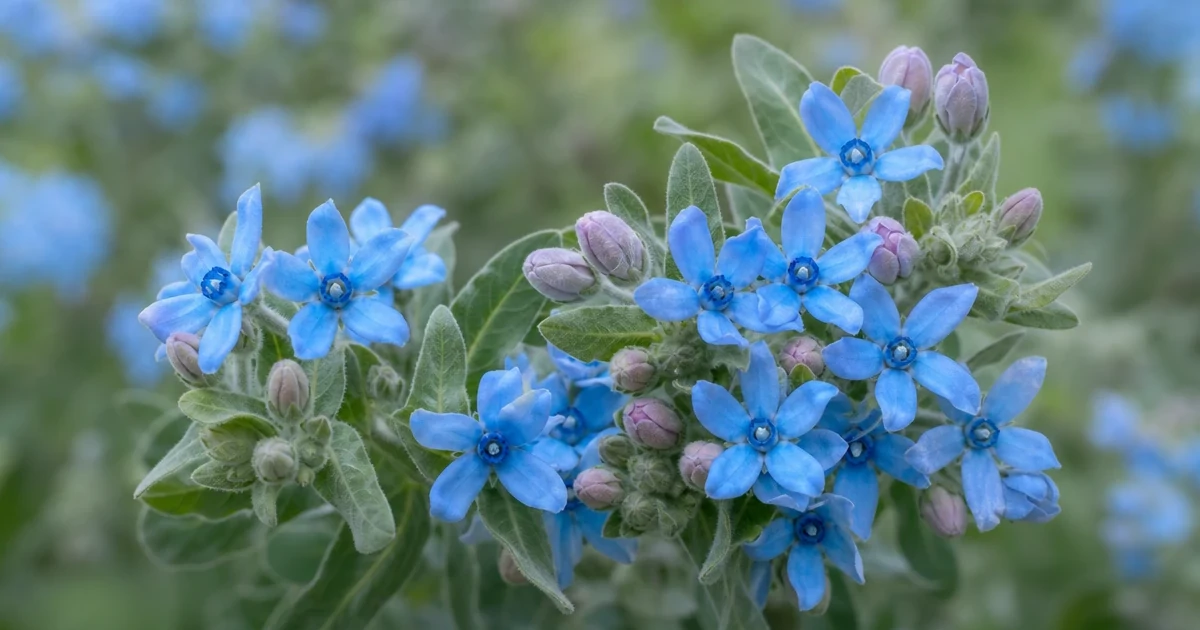
View full-size photoOxypetalum features five-petalled blue flowers in clusters.
Oxypetalum works best as an accent: a few stems stand out more than a large amount, because the small flowers get lost in a mass.
With the cut treated properly, oxypetalum usually stays fresh for about a week, and new buds keep opening. To make it last:
Thanks to its rare blue colour, oxypetalum is a favourite for bridal bouquets, buttonholes and table decor. It is light, has no strong scent and photographs beautifully. If you are planning a wedding bouquet, check availability in advance: oxypetalum is imported and florists keep limited stock. See ready-made options in bridal bouquets.
Other flowers and greenery for bouquets are listed in our florist’s glossary.
Tweedia (Tweedia caerulea) is an older name for the same species. It is also called blue star.
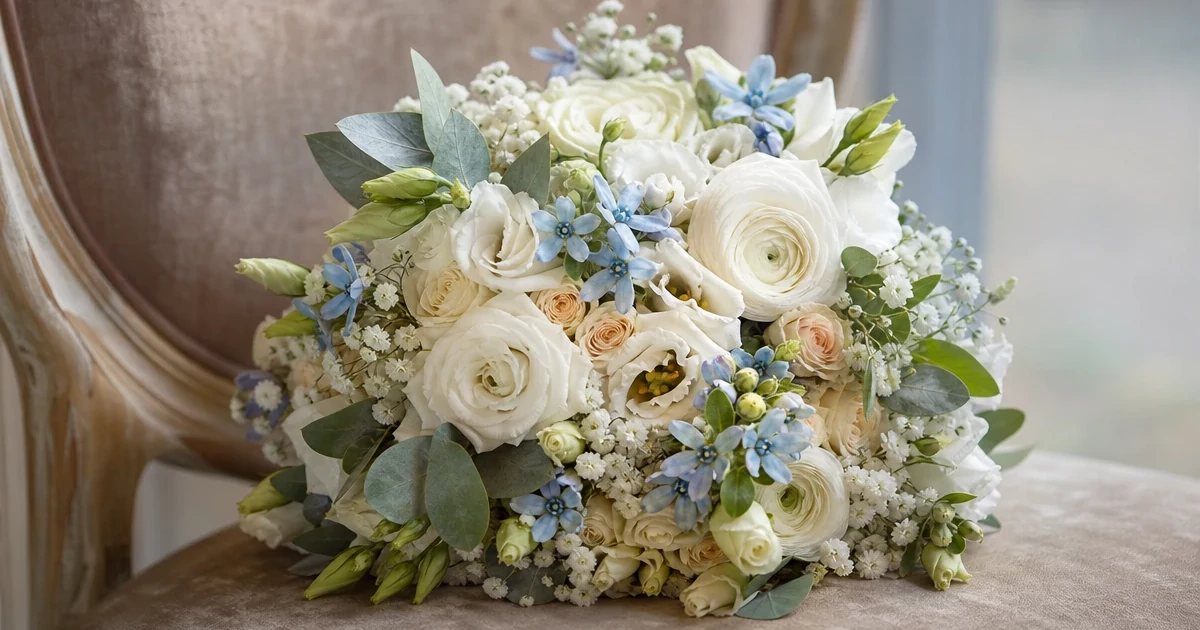
View full-size photoOxypetalum adds a blue accent to bridal bouquets.
Yes, there are white and pink varieties, but classic blue is the most popular.
Usually because milky sap blocks the cut. Rinse the cut under warm water and recut it each time you change the water.

Author: Maria Svitlovir
Graduated from Taras Shevchenko National University of Kyiv, Institute of Biology and Medicine (2001). BSc in Biology, MSc in Horticulture. Writes about plants, works at a garden centre selecting and repotting plants, and contributes to plant reference guides.
© Kyiv 2026 UFL Flower Shop

Trademark UFL №191476 is used under license of the rights holder.
All rights reserved. Any use of materials without a link to the site is prohibited.

 Birthday
 Hydrangeas