
 Birthday
 Hydrangeas
Some plants are easy to mistake for a stone, a bird, a pair of lips or even a piece of meat. Sometimes the likeness exists only in our eyes; sometimes it is a clever evolutionary strategy — hiding from grazers, catching insects or fooling pollinators. Here are the most remarkable plant "look-alikes", why they look the way they do, and how to tell real facts from viral photos.
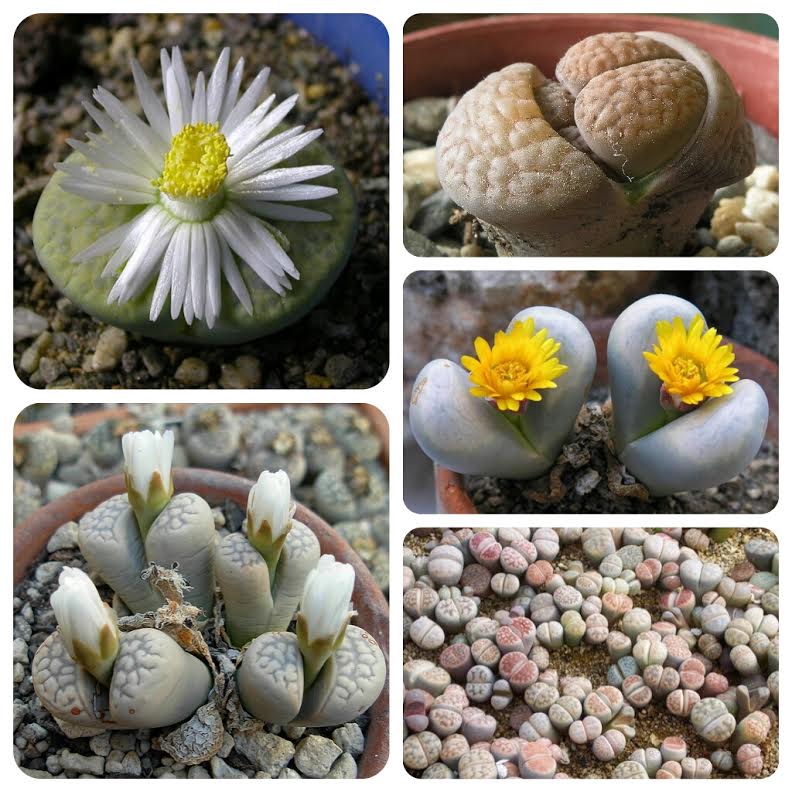
Camouflage: lithops, the "living stones"
Lithops grow in the stony deserts of South Africa and Namibia. Their two fleshy leaves are almost buried, and their colour matches the surrounding pebbles, so animals searching for moisture in a drought pass them by. According to a well-known story, the British naturalist William Burchell picked one up in 1811, thinking it was an odd pebble. In autumn a yellow or white daisy-like flower appears between the leaves. At home lithops need full sun, sandy compost and very little water.
Traps: carnivorous plants
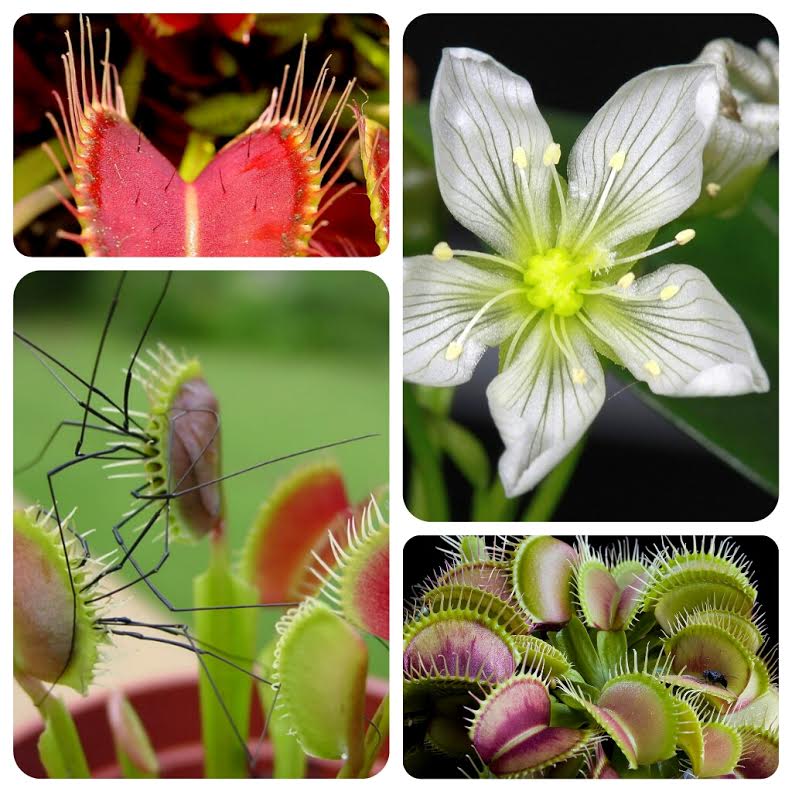
Venus flytrap
In the wild it grows only in the bogs of North and South Carolina in the USA. The trap snaps shut when an insect touches the trigger hairs inside twice in quick succession, so the plant doesn't waste energy on raindrops. At home, water it only with distilled or rainwater and never feed it.
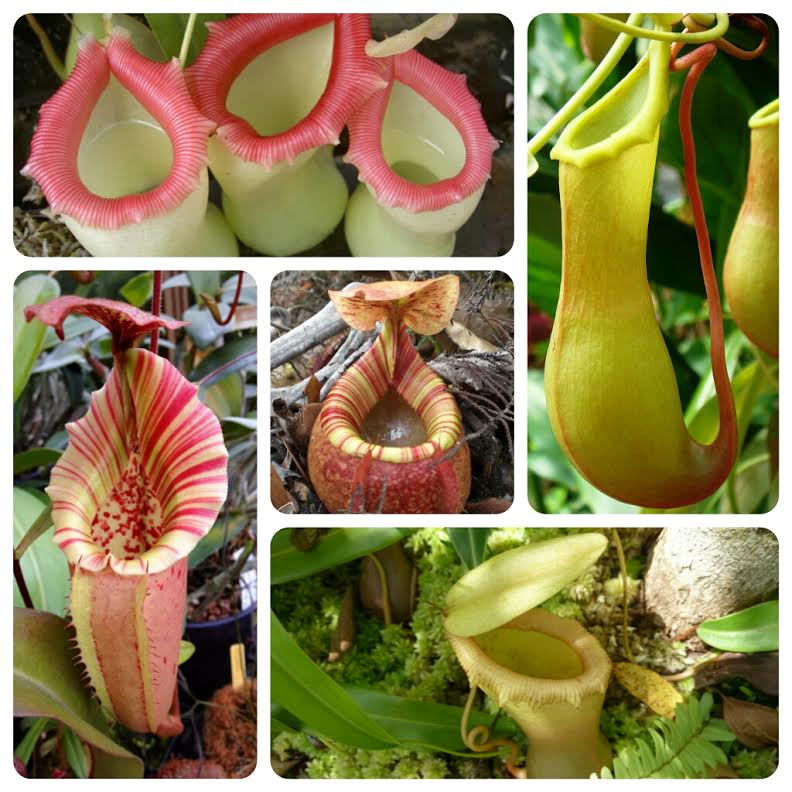
Pitcher plant (Nepenthes)
The leaves of tropical nepenthes form pitchers with slippery walls and digestive fluid. Insects lured by nectar fall in. Some species on Borneo even serve as a "toilet" for tree shrews, getting nitrogen from their droppings.
Fooling pollinators
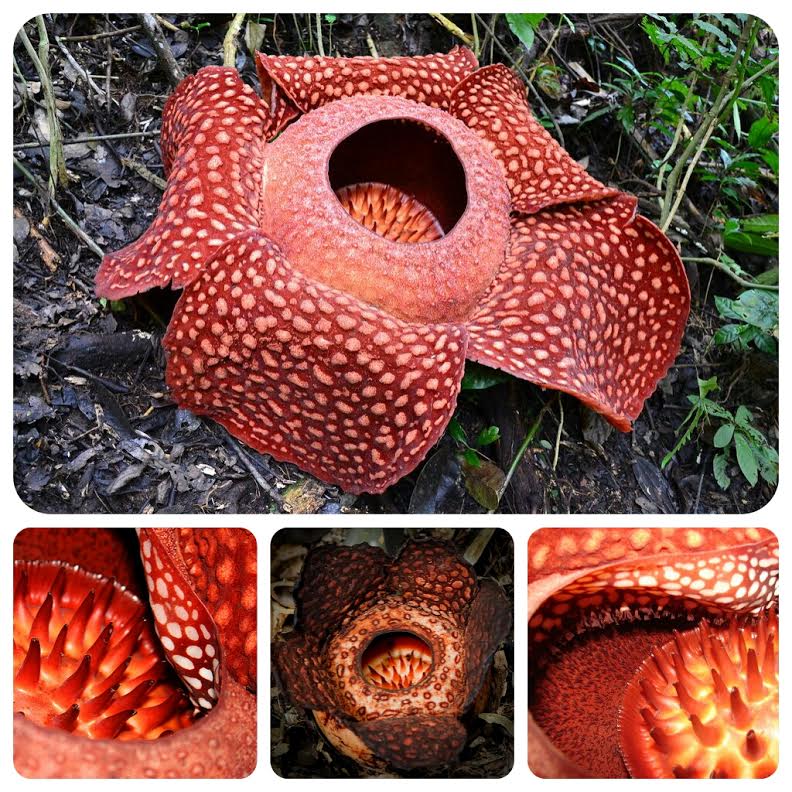
- Rafflesia arnoldii (Sumatra, Borneo) — one of the largest flowers in the world, up to 1 m across. It has no leaves, stems or roots and lives as a parasite on a vine. Its smell of rotting meat attracts pollinating flies.
- Titan arum (Amorphophallus titanum) — the "corpse flower", with an inflorescence up to 3 m tall. It blooms rarely and for only 1–2 days, so every flowering in a botanical garden draws queues.
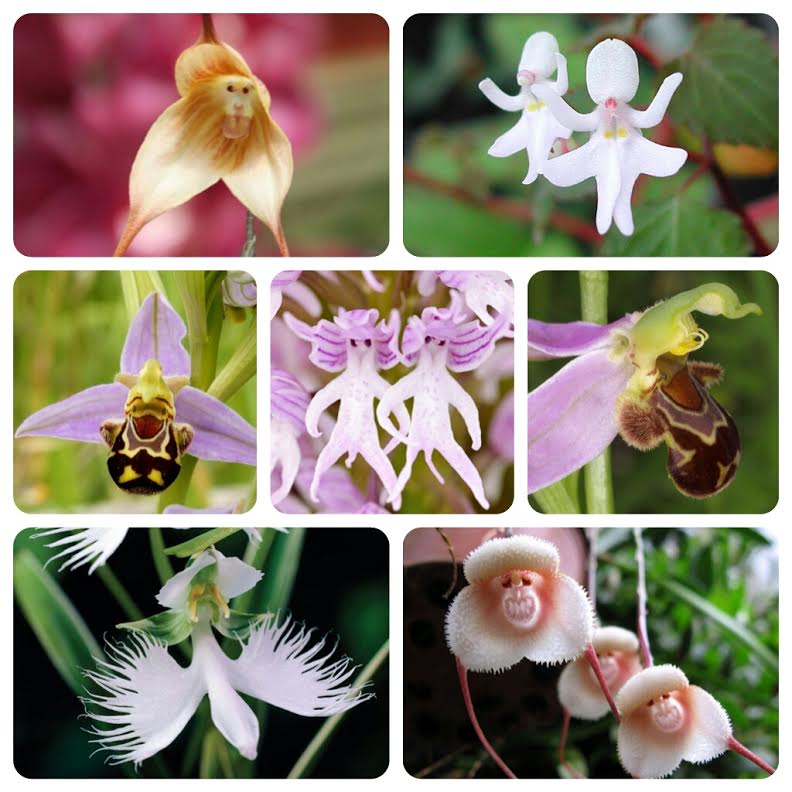
- Deceptive orchids — ophrys resembles a bee, and other orchids look like monkey faces or dancing figures. See our article on unusual orchids.
Pure coincidence
Sometimes a flower's shape is not meant to deceive — we simply recognise familiar objects in it:
- Bleeding heart (Lamprocapnos) — pink heart-shaped flowers on arching stems.
- Hot lips (Palicourea elata) — red bracts that look like painted lips.
- Calceolaria — pouched "slipper" flowers.
- Strelitzia (bird of paradise) — the flower looks like the head of an exotic bird.
- Tacca (bat flower) — dark wing-like bracts and long "whiskers".
- Snapdragon — dried seed pods look like tiny skulls.
- Jade vine — turquoise claw-shaped flowers; see our article on the jade vine.
Social media myths
Photos of the "parrot flower" (Impatiens psittacina) go viral regularly. The plant does exist in Myanmar and Thailand, but many viral images are edited: real flowers are smaller and the resemblance to a bird is modest. Before buying "skull flower" or "monkey orchid" seeds online, remember that such names are often used to sell ordinary seeds with photoshopped packaging.
FAQ
Which of these plants can I grow at home?
Lithops, Venus flytrap, nepenthes, strelitzia and calceolaria. Rafflesia and titan arum are not grown at home.
Are carnivorous plants dangerous to people or pets?
No: the traps are designed for insects and cannot harm a person or a pet.

View full-size photo
Author: Maria Svitlovir
Graduated from Taras Shevchenko National University of Kyiv, Institute of Biology and Medicine (2001). BSc in Biology, MSc in Horticulture. Writes about plants, works at a garden centre selecting and repotting plants, and contributes to plant reference guides.


