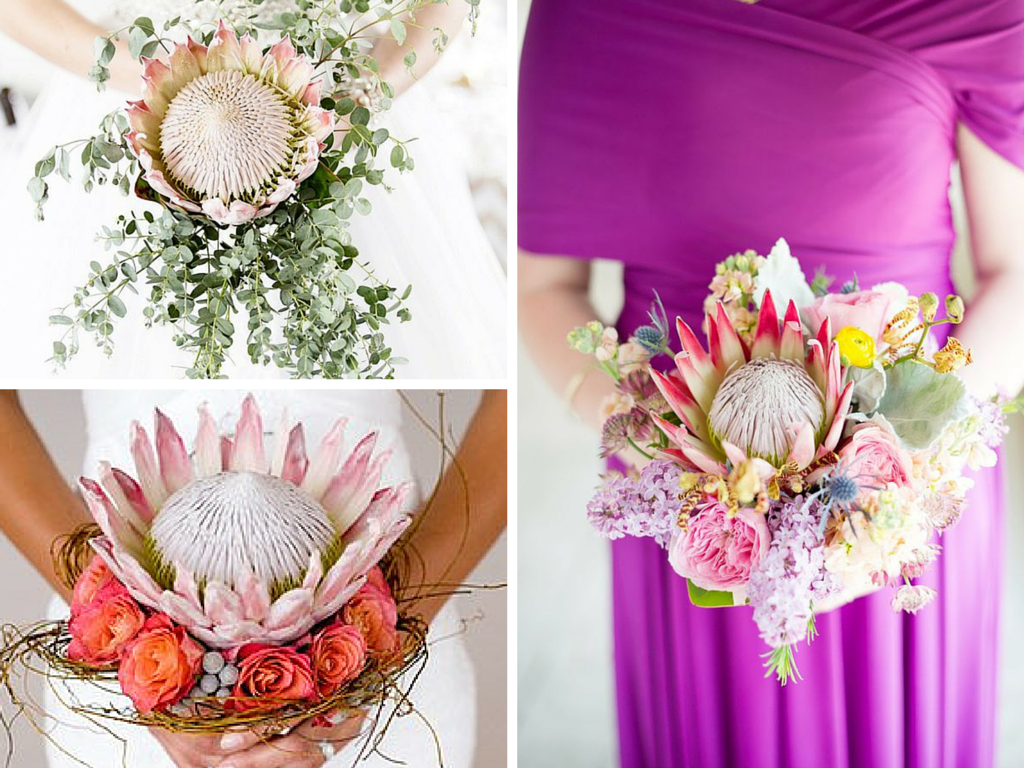
Protea is one of the most striking flowers in modern floristry: its large, cup-shaped head with stiff pink, cream or red bracts looks almost sculptural and lasts longer in a vase than most roses. Here is what this plant is, which proteas most often end up in bouquets, how to make them last and whether you can grow one at home.
Protea is a genus of evergreen shrubs in the family Proteaceae with a little over a hundred species. Almost all of them grow in southern Africa, most in the Cape Floristic Region, where the hard-leaved fynbos vegetation lives through dry summers, cool wet winters and periodic wildfires. Many proteas are adapted to fire: their seeds stay locked in dry flower heads for years and are released after a fire, when the ground is clear and enriched with ash.
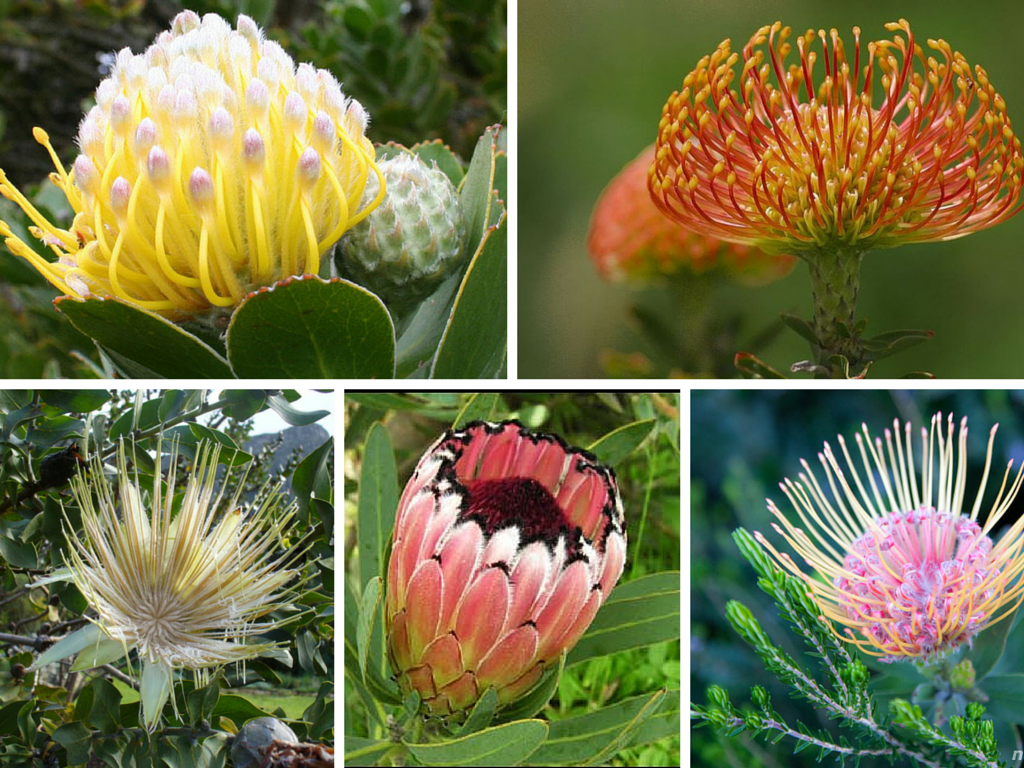
What we call a protea flower is actually a flower head: hundreds of tiny tubular flowers are packed in the centre, and the colourful "wrapping" around them is made of bracts. These give the protea its recognisable look and do not drop after cutting.
The genus was named by Carl Linnaeus after Proteus, the Greek sea god who could change his shape. The hint is clear: protea species are so different that it's hard to believe they are related — some look like an artichoke, others like a sea urchin, a slender goblet or a fluffy star.
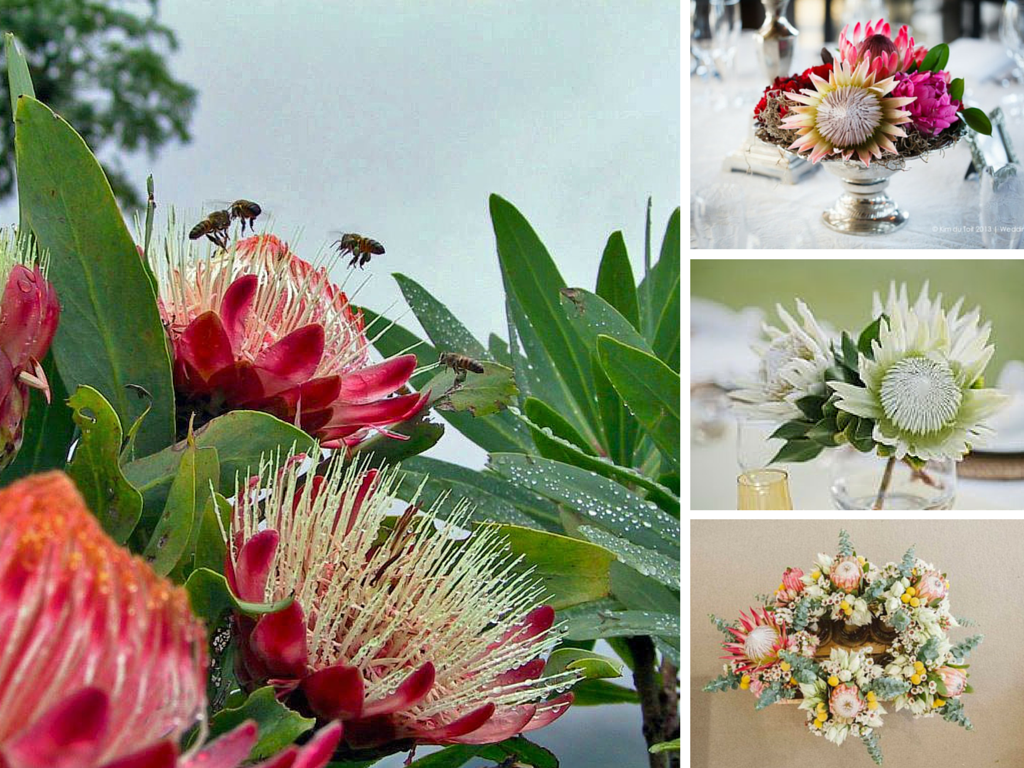
King protea (Protea cynaroides) is the best known. Its head can reach 30 cm across, and it is South Africa's national flower — the national cricket team, the Proteas, is named after it. In a bouquet the king protea is always the star; it needs only greenery and a few textured stems.
Pink Ice is a popular garden hybrid with soft pink bracts edged with silvery hairs. More compact than the king protea, it pairs beautifully with roses, eucalyptus and dried flowers.
Sugarbush (Protea repens) has a narrow, goblet-shaped head in white, pink or red. Its flowers are so rich in nectar that South African farmers once boiled it down into a syrup known in Afrikaans as bossiestroop.
Oleander-leaved protea (Protea neriifolia) has elongated heads with a "beard" of dark hairs along the bracts and is one of the most decorative cut varieties.
The same bouquets often include protea relatives from the same family: Leucospermum, or pincushion protea, and Leucadendron, with bright leaf-like bracts. Florists use them as accents and for texture.
The heads of many proteas are filled with sweet nectar. It feeds South African birds — Cape sugarbirds and sunbirds — which pollinate the plant as they move from flower to flower. Some low-growing species with flowers near the ground are even pollinated by small rodents. Hence the king protea's popular name at home: the honeypot.
Protea is one of the longest-lasting cut flowers: with proper care it stays fresh for 2–3 weeks and then turns into a dried flower. A few simple rules:
Protea leaves sometimes blacken before the flower head fades. This is common in cut proteas and is linked to a shortage of sugars in the stem. Simply remove the darkened leaves — it hardly affects the flower's looks.
Protea dries with almost no loss of shape, which makes it a favourite for dried arrangements and interior bouquets. When the flower starts to lose its freshness, remove extra leaves, tie the stems together and hang them upside down in a dry, dark, well-ventilated place for 2–3 weeks. The colour will fade slightly, but the shape stays, and the dried flower will last for years. Keep it out of direct sunlight so the colour doesn't bleach.
Yes, but it's a job for experienced gardeners. Protea cannot survive hard frosts, so in colder climates it is grown in containers: outdoors on a sunny terrace in summer and in a bright, cool room in winter. The key conditions:
Grown from seed, protea takes several years to flower, so most people enjoy it in bouquets.
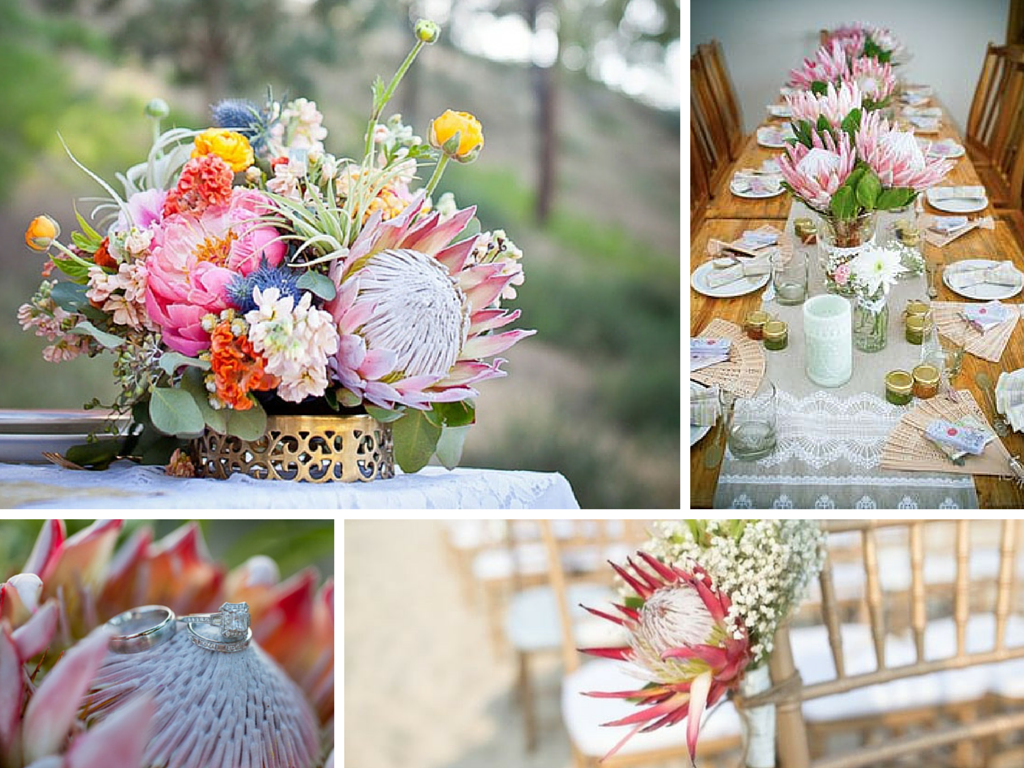
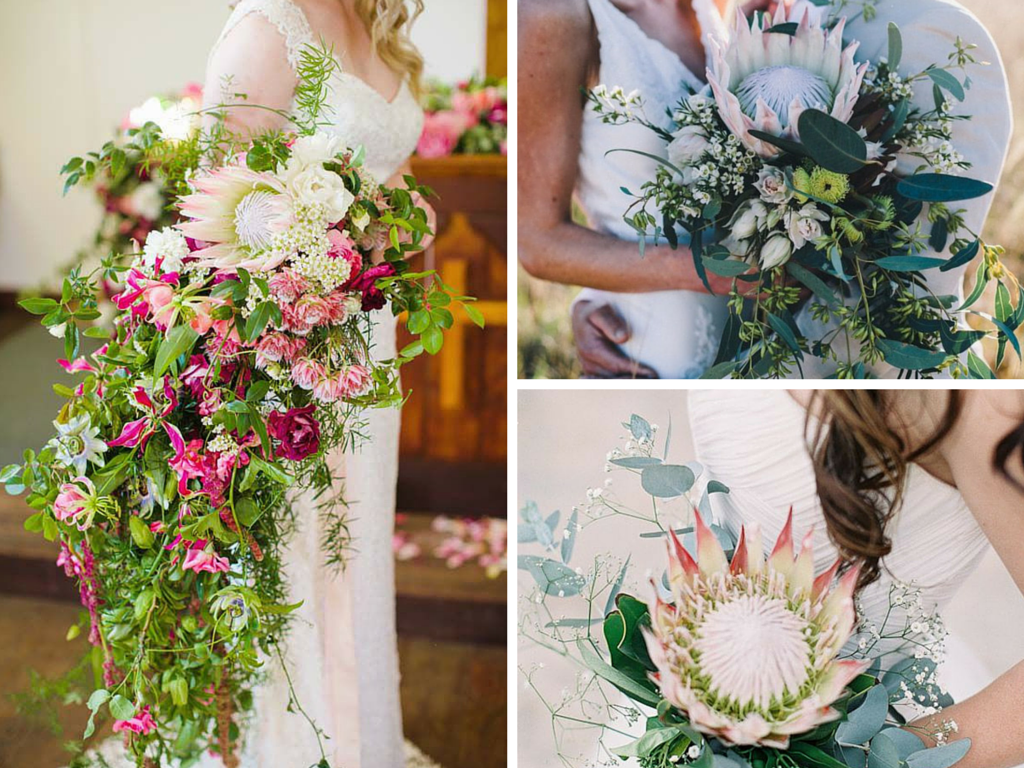
Protea is an increasingly popular choice for the bridal bouquet, buttonholes and boho-style table decor. It is tough, tolerates heat and stays fresh for a long time — a real advantage on a long celebration day. Thanks to the myth of Proteus, the flower symbolises change, courage and diversity, so it is often given to mark a new chapter in life: a wedding, a housewarming or a promotion. Read more about what plants mean in our article on the language of flowers.
Protea's best partners are eucalyptus, roses, carnations, dried grasses, pampas grass and its relative Leucadendron. For inspiration, browse our selection of the most beautiful bouquets or our guide to types of flowers.
Protea is a statement flower, so it needs calm partners. The classic pairing is with eucalyptus, dried flowers, pampas grass and bunny tails: a stylish boho arrangement that lasts well and dries beautifully. For a softer mood add cream roses, lisianthus or ranunculus in powdery shades. A single large king protea looks striking even on its own with a few stems of greenery.
With fresh water and regular trimming, 2–3 weeks — after that you can dry it.
It's common in cut proteas. Remove the darkened leaves, keep the bouquet cool and change the water.
It won't survive the winter outdoors. Grow it in a container and bring it indoors for the cold season.
Change, courage and diversity — after the Greek god Proteus, who could change his shape.

Author: Maria Svitlovir
Graduated from Taras Shevchenko National University of Kyiv, Institute of Biology and Medicine (2001). BSc in Biology, MSc in Horticulture. Writes about plants, works at a garden centre selecting and repotting plants, and contributes to plant reference guides.
© Kyiv 2026 UFL Flower Shop

Trademark UFL №191476 is used under license of the rights holder.
All rights reserved. Any use of materials without a link to the site is prohibited.


 Birthday
 Hydrangeas