
 Birthday
 Hydrangeas
Every December “Carol of the Bells” rings out around the world — in films, adverts, concerts and shopping centres. Few people know that it is the Ukrainian “Shchedryk”, a folk New Year song arranged by the composer Mykola Leontovych. Here is how a song from a Ukrainian village became one of the most recognisable melodies on the planet.
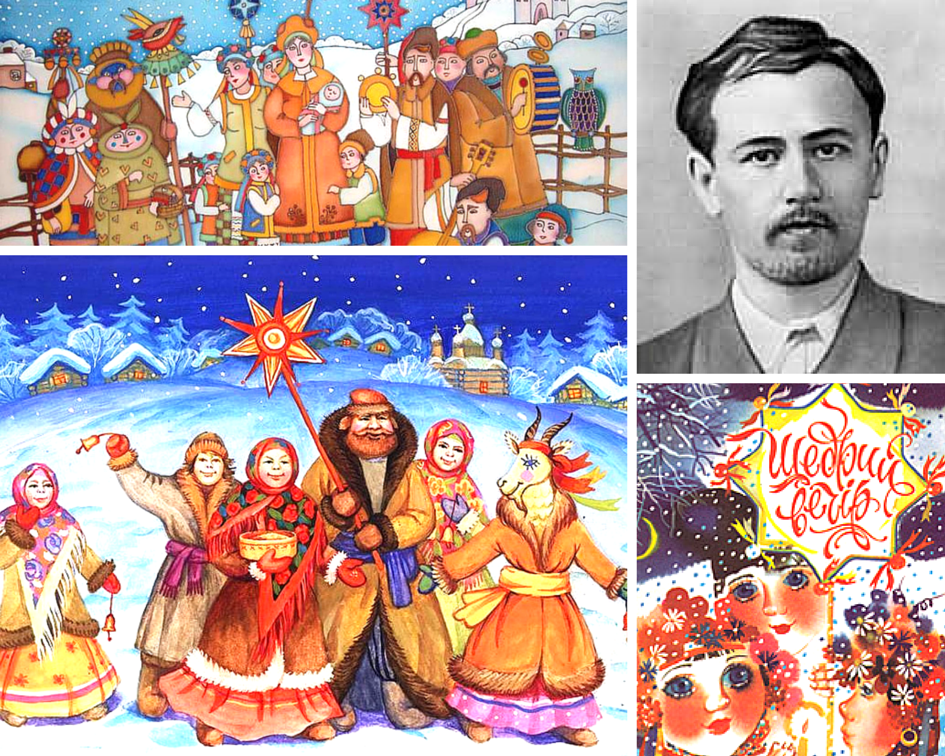
What is a shchedrivka?
Shchedrivky are ritual songs sung in Ukraine on Generous Eve, the night before New Year. In “Shchedryk” a swallow flies to the master of the house and promises a bountiful year: new lambs, prosperity and a beautiful wife. The swallow is a spring image — in ancient times the Slavic new year began in spring, and the motif survived in the song. The melody is built on a repeating four-note figure, which is what makes it so catchy.
Mykola Leontovych and the first premiere
Composer and choral conductor Mykola Leontovych worked on his arrangement for almost twenty years, producing five versions. It was first performed by the Kyiv University choir in December 1916 and became popular at once. In 1921 Leontovych was murdered by an agent of the Soviet secret police.
How Shchedryk became Carol of the Bells

In 1919 the Ukrainian Republic Capella, led by Oleksandr Koshyts, set off on a world tour to introduce Ukrainian culture and independence to the world. “Shchedryk” was a huge success in Europe, and on 5 October 1922 it was performed at Carnegie Hall in New York. In 1936 the American choral conductor Peter Wilhousky, of Ukrainian descent, wrote English lyrics about ringing Christmas bells — and “Carol of the Bells” was born.
Today the melody is heard in films (Home Alone, for example), TV series, adverts and hundreds of versions from choral to rock and electronic. In 2010 the Ukrainian plasticine animation “Shchedryk” by Stepan Koval was released, with the song performed by Oleh Skrypka.
Generous Eve: Ukrainian traditions
Generous Eve (Shchedryi Vechir) is celebrated on New Year’s Eve — since the 2023 move to the new church calendar on 31 December (previously 13 January). Girls go from house to house singing shchedrivky and wishing the hosts prosperity, while masked young men “lead Malanka”, a lively folk performance. The next morning boys “sow” homes with grain for a good harvest. The evening is also one of the main nights for fortune-telling — see Christmastide fortune-telling.
FAQ
Who wrote Shchedryk?
The words and tune are folk; the famous choral arrangement is by the Ukrainian composer Mykola Leontovych.
When was Shchedryk first performed in the US?
On 5 October 1922 at Carnegie Hall, by Oleksandr Koshyts’s choir.
When are shchedrivky sung?
On Generous Eve, the night before New Year — now 31 December.
Festive winter bouquets are available with delivery in Kyiv from UFL.

View full-size photo
Author: Maria Svitlovir
Graduated from Taras Shevchenko National University of Kyiv, Institute of Biology and Medicine (2001). BSc in Biology, MSc in Horticulture. Writes about plants, works at a garden centre selecting and repotting plants, and contributes to plant reference guides.