
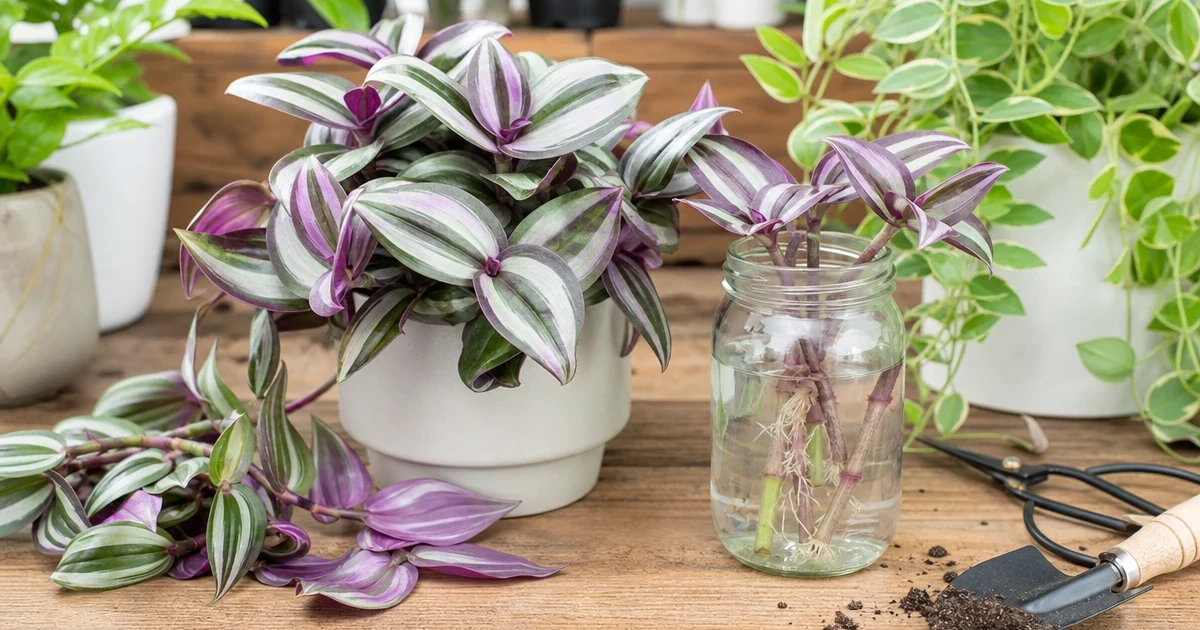
Tradescantia is one of the easiest and most rewarding houseplants. Its stems quickly cascade, its leaves can be green, striped, silvery purple or pink, and a new plant grows from a cutting placed in a glass of water. Here are the popular types, the care basics and how to bring back a tradescantia that has become leggy and bare.
Tradescantia is a genus of herbaceous plants in the spiderwort family (Commelinaceae) from the Americas. The most common indoor types are:
Tradescantia likes bright indirect light, which keeps variegated and purple types colourful; in shade they turn green, stems stretch and the plant loses shape. Gentle morning or evening sun is fine in summer, but midday sun scorches the leaves. It looks best in a hanging basket or on a shelf — see trailing houseplants. Keep it at 18–25 °C, not below 12 °C in winter.
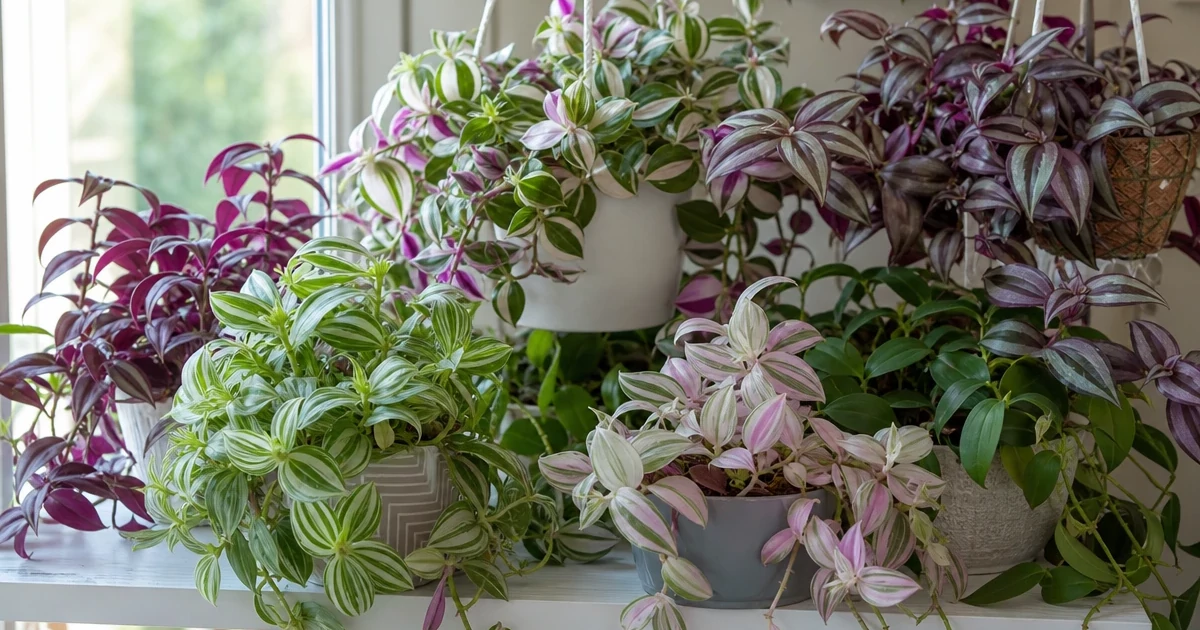
View full-size photoTradescantia varieties show a range of leaf colors.
Water generously in summer as soon as the top layer of soil dries; in winter let a third of the pot dry out. Waterlogging rots stems at the base. Purple heart and white velvet cope with drought better than thin-leaved types. Feed every 2 weeks from spring to autumn with a foliage-plant fertiliser — too much nitrogen turns variegated leaves green.
For a bushy plant, put 5–7 rooted cuttings in one pot. Oyster plant is propagated from side rosettes; white velvet from cuttings, kept on the dry side.
Over time the stems go bare at the base — natural for a fast grower. Pinch out the tips regularly to encourage branching. If the plant has lost its looks, take cuttings, root them and replant them densely in the same pot with fresh compost. Many growers refresh tradescantia this way every 1–2 years.
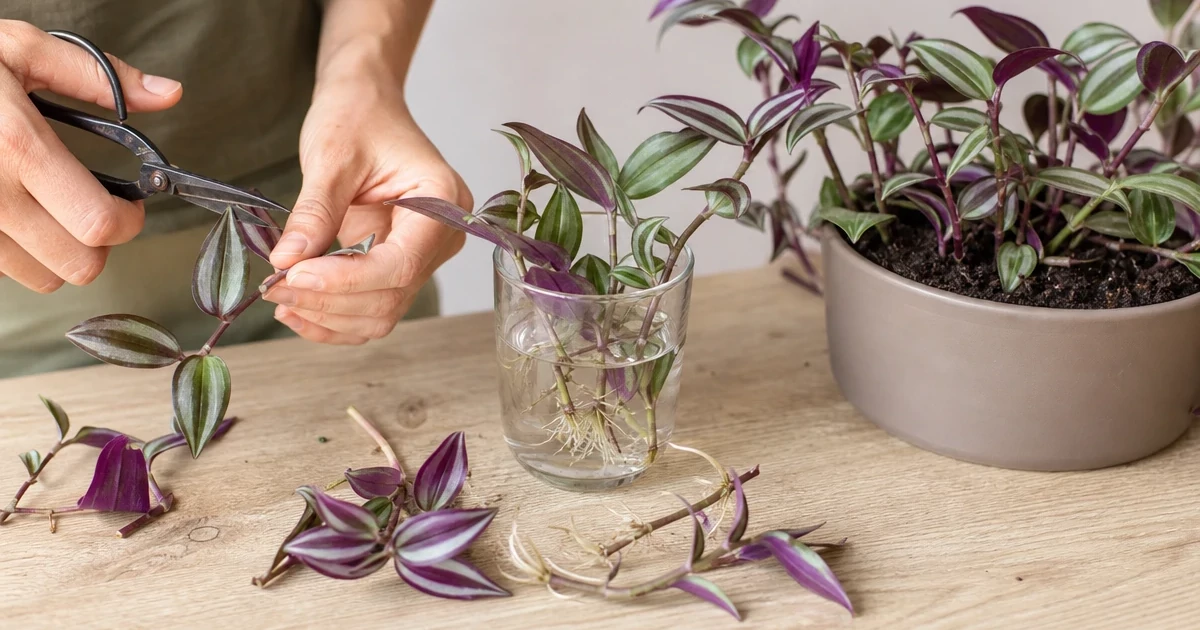
View full-size photoPlant several cuttings together for a bushy tradescantia.
More in houseplant problems and symptoms.
Besides indoor types, there is garden spiderwort — Tradescantia virginiana and its hybrids (Andersoniana Group). It is a hardy perennial 40–60 cm tall with narrow leaves and three-petalled blue, purple, pink or white flowers from June to August. It likes moist soil and part shade and is propagated by division in spring.
Tradescantia is not highly poisonous, but its sap can irritate the skin of people and pets — especially purple heart and oyster plant. Wear gloves when pruning and hang it where the cat cannot chew it. For more compact shelf plants, see small houseplants; browse potted plants.
Usually too little light or too much nitrogen. Move it closer to a window and remove all-green shoots.
In water, roots appear in 5–10 days, making it one of the easiest plants to propagate.
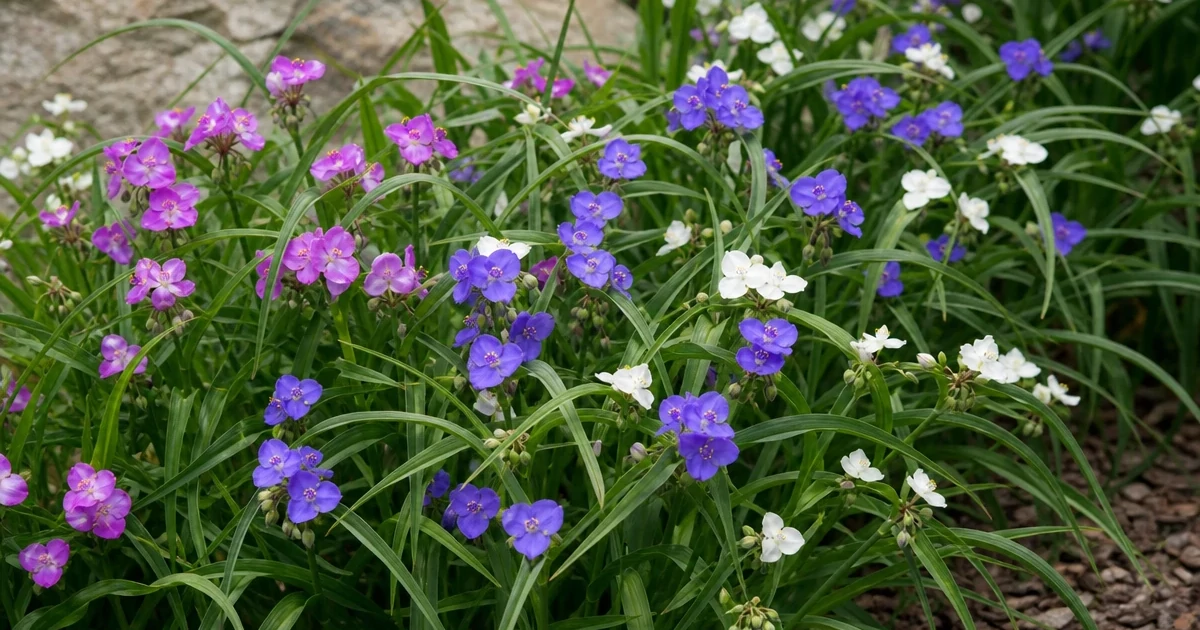
View full-size photoGarden tradescantia blooms from June to August.
Green forms tolerate light shade, but variegated and purple types need bright indirect light.

Author: Maria Svitlovir
Graduated from Taras Shevchenko National University of Kyiv, Institute of Biology and Medicine (2001). BSc in Biology, MSc in Horticulture. Writes about plants, works at a garden centre selecting and repotting plants, and contributes to plant reference guides.
© Kyiv 2026 UFL Flower Shop

Trademark UFL №191476 is used under license of the rights holder.
All rights reserved. Any use of materials without a link to the site is prohibited.

 Birthday
 Hydrangeas