
 Birthday
 Hydrangeas
This article was prepared with the support of UFL flower delivery. Two-tone roses are the result of decades of breeding: two or three shades, a contrasting edge or stripes in a single flower. Striped roses have been known since the Middle Ages, while the most popular modern varieties appeared in the second half of the 20th century. Today they come from leading breeders such as Meilland (France), Kordes and Tantau (Germany) and David Austin (UK), and cut-flower varieties are grown on farms in the Netherlands, Ecuador and Kenya.
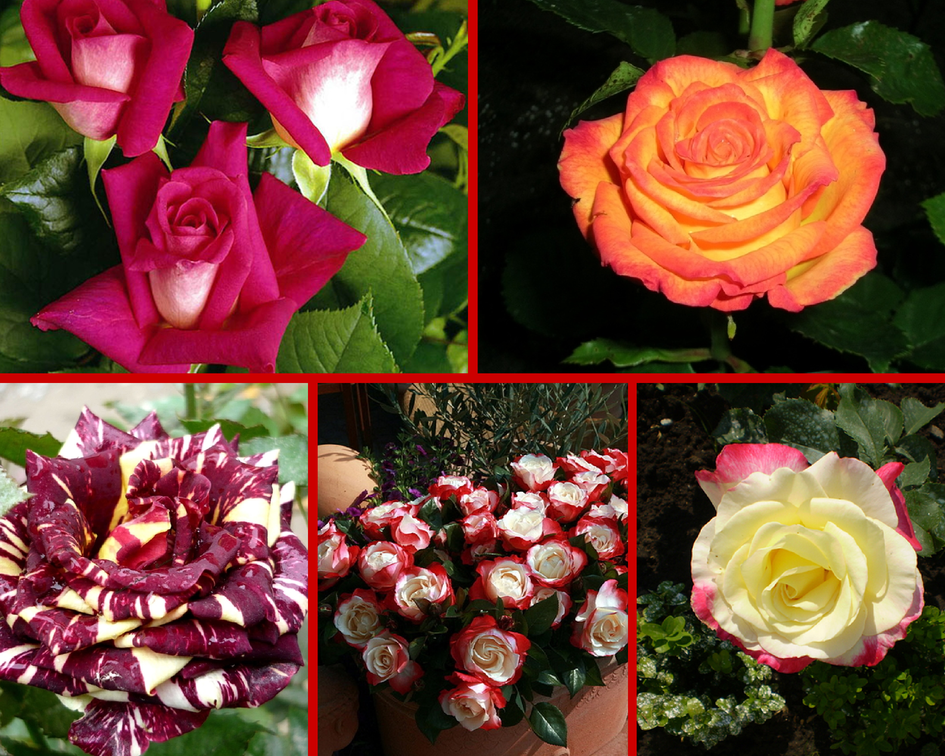
Types of two-tone colouring
The best two-tone rose varieties
| Variety | Colouring | Notes |
|---|---|---|
| 'Double Delight' (1977) | creamy white with a raspberry edge | strong fragrance, edge deepens in sun, Rose Hall of Fame |
| 'Peace' / 'Gloria Dei' (1945) | yellow with a pink edge | one of the most famous roses of the 20th century, a symbol of the war's end |
| 'Chicago Peace' (1962) | pink with a yellow-copper base | a sport (mutation) of 'Peace', brighter than the original |
| 'Nostalgie' (Tantau) | cream with a cherry edge | globular flower, does well in Ukraine |
| 'Osiria' (Kordes) | velvety red with a silvery-white reverse | a striking bicolour, fragrant |
| 'Love' (1980) | red with a white reverse | grandiflora, long flowering |
| 'Masquerade' (1949) | yellow → pink → red | the classic colour-changer, floribunda |
| 'Handel' (1965) | cream with a pink edge | climber, up to 3–4 m |
| 'Rosa Mundi' | pink striped with white | an old Gallica rose known since the 16th century |
| 'Abracadabra', 'Hocus Pocus' (Kordes) | dark red with yellow and white flecks | every bloom is unique, popular as cut flowers |
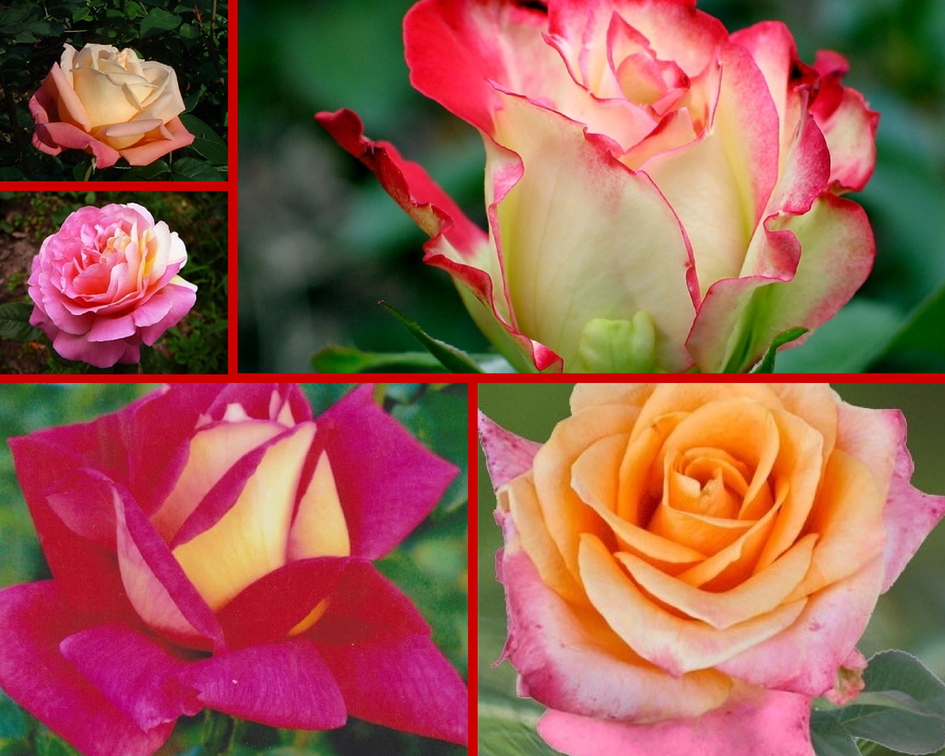
'Double Delight'
One of gardeners' favourite varieties. The name reflects its two strengths: contrasting colour and a strong spicy-fruity fragrance. The raspberry edge depends on sunlight, and in shade the flower is almost white. It is prone to powdery mildew, so give it an airy spot.
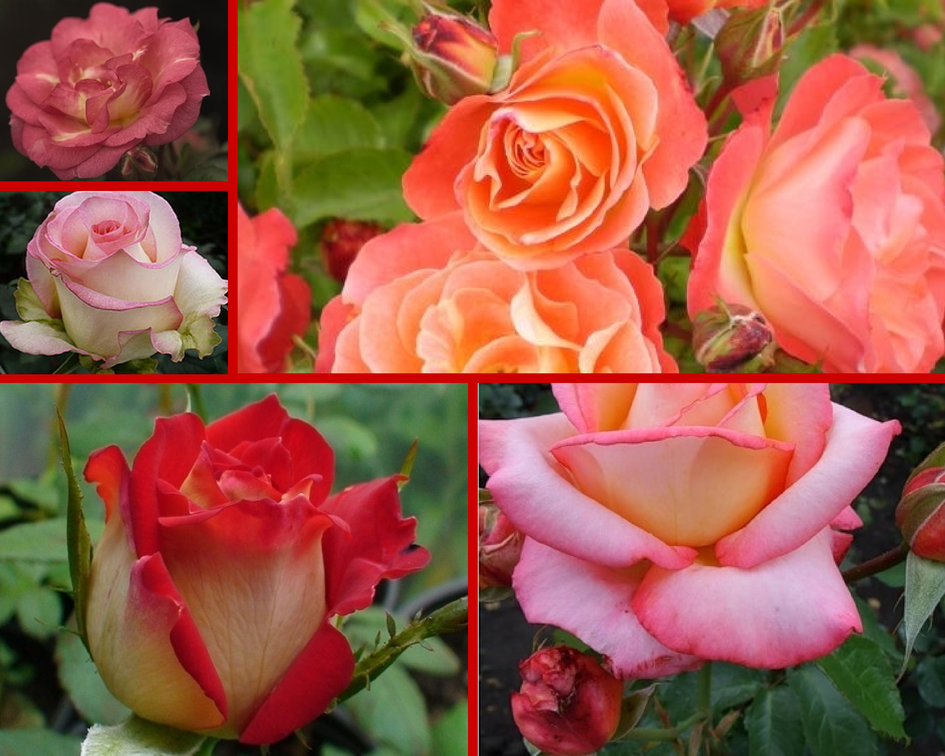
The 'Peace' family
'Peace' was bred by Francis Meilland before the Second World War and received its name on the day Berlin fell in 1945. Dozens of varieties descend from it, including 'Chicago Peace', a brighter sport with pink petals and a yellow heart.
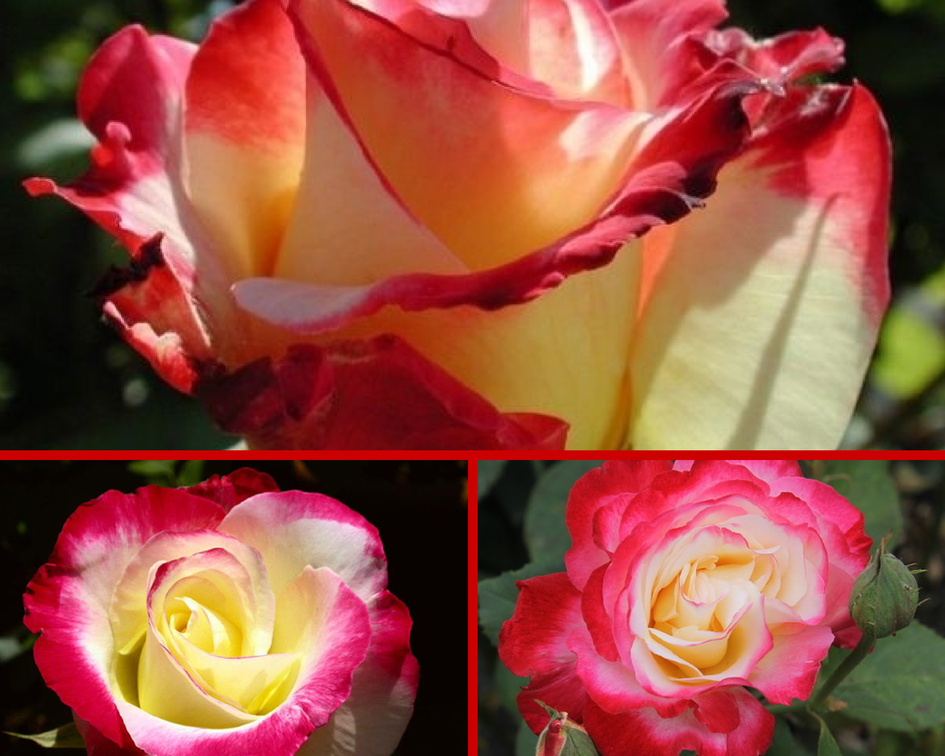
How to grow two-tone roses
- Sun. At least 6 hours of direct sun: in many varieties the colour contrast only develops in good light.
- Soil. Fertile, loose and slightly acidic; plant in spring or in September–October.
- Care. Water at the base, feed with nitrogen in spring and potassium and phosphorus in summer, and deadhead spent flowers.
- Winter. Hybrid teas in Kyiv and further north should be earthed up and covered.
Two-tone or dyed?
"Rainbow" and bright blue roses are made by feeding dyes through the stem or a split stem. A natural two-tone rose has a clear natural pattern, while a dyed one has unnaturally vivid colours and tinted veins. Even the famous "black" roses of Halfeti are not truly black, as we explain in our article on the Halfeti black rose.
FAQ
What does a bouquet of two-tone roses mean?
In the language of flowers such roses symbolise unity, harmony between two people and joy, which is why they are popular for anniversaries and weddings.
Why does a rose change colour?
In colour-changing varieties anthocyanin pigments build up in sunlight and as the flower opens.
Will the colouring stay if I take cuttings?
Yes, vegetative propagation keeps the variety. Plants grown from seed usually do not repeat the two-tone pattern.
For more inspiration see the most beautiful roses, and for ready bouquets browse roses with delivery in Kyiv.

View full-size photo
Author: Maria Svitlovir
Graduated from Taras Shevchenko National University of Kyiv, Institute of Biology and Medicine (2001). BSc in Biology, MSc in Horticulture. Writes about plants, works at a garden centre selecting and repotting plants, and contributes to plant reference guides.


