

Is it “vybach mene” or “vybach meni”? “Vybachaius” or “pereproshuiu”? These questions come up for anyone apologising in Ukrainian — in an email, on a gift card or in conversation. The short answer: the correct forms are “vybach meni” (вибач мені), “vybachte meni” (вибачте мені) and “pereproshuiu” (перепрошую). Below we explain why, and how to avoid other common mistakes.
The Ukrainian verbs vybachaty (to excuse) and probachaty (to forgive) take the dative case: you forgive to whom — meni (me), tobi (you), mami (mum). So the standard forms are:
“Вибач мене” (vybach mene) appeared under the influence of Russian “извини меня”, where the verb takes the accusative. In standard Ukrainian it is considered non-normative, so in letters, cards and formal settings write “вибач мені”.
The reflexive ending -sia means an action directed at oneself, so “вибачаюсь” (vybachaius) literally sounds like “I excuse myself”. Use these instead:
Both are correct but carry different shades. Вибач (vybach) is neutral, close to “sorry” or “excuse me”, and works for small and serious matters alike. Пробач (probach) is deeper and more emotional, closer to “forgive me”, and is used when asking to let go of real guilt. With strangers, Ukrainians usually say “вибачте” or “перепрошую”.
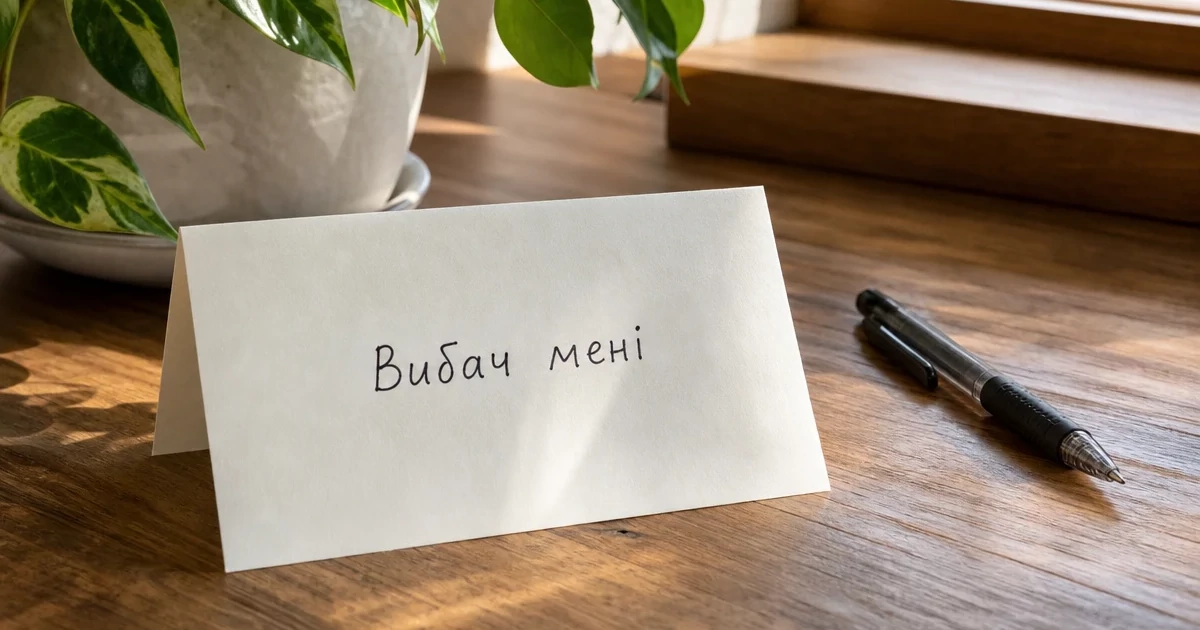
View full-size photoApology card written in Ukrainian.
More workplace examples are in our business apology guide.
| Incorrect | Correct |
|---|---|
| Вибач мене | Вибач мені |
| Вибачте мене, будь ласка | Вибачте мені, будь ласка / Перепрошую |
| Вибачаюсь за запізнення | Перепрошую за запізнення / Вибачте, що запізнився |
| Приношу вибачення | Прошу вибачення / Перепрошую |
| Пробач мене | Пробач мені |
Short and correct: “Пробач мені. Я тебе кохаю” (Forgive me. I love you), “Вибач мені за вчорашнє” (Sorry about yesterday), “Мамо, вибач мені, будь ласка” (Mum, please forgive me). For more phrases, see how to say sorry and sorry in different languages.
“Vybachte meni” (вибачте мені) is correct because the verb takes the dative case. “Vybachte mene” is a calque from Russian.
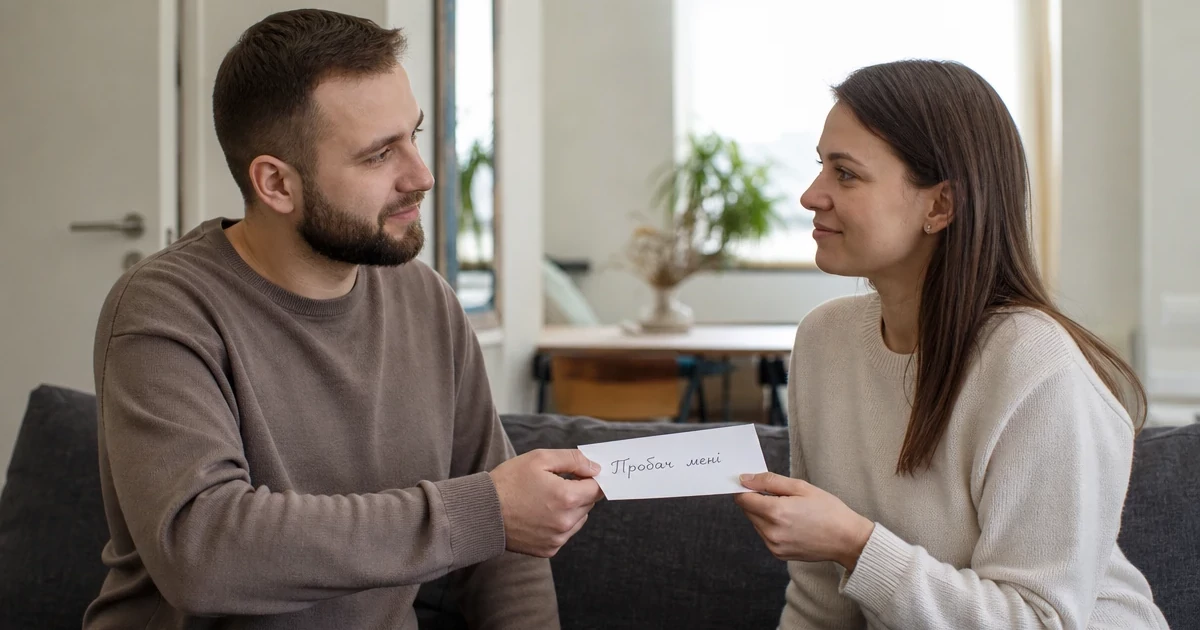
View full-size photoApology between close people in Ukrainian.
“Перепрошую” (pereproshuiu) — to get attention, pass by or apologise for a small inconvenience.
“Пробач мені” (probach meni) informally, or “пробачте мені” (probachte meni) formally.

Author: Maria Svitlovir
Graduated from Taras Shevchenko National University of Kyiv, Institute of Biology and Medicine (2001). BSc in Biology, MSc in Horticulture. Writes about plants, works at a garden centre selecting and repotting plants, and contributes to plant reference guides.
© Kyiv 2026 UFL Flower Shop

Trademark UFL №191476 is used under license of the rights holder.
All rights reserved. Any use of materials without a link to the site is prohibited.

 Birthday
 Hydrangeas