
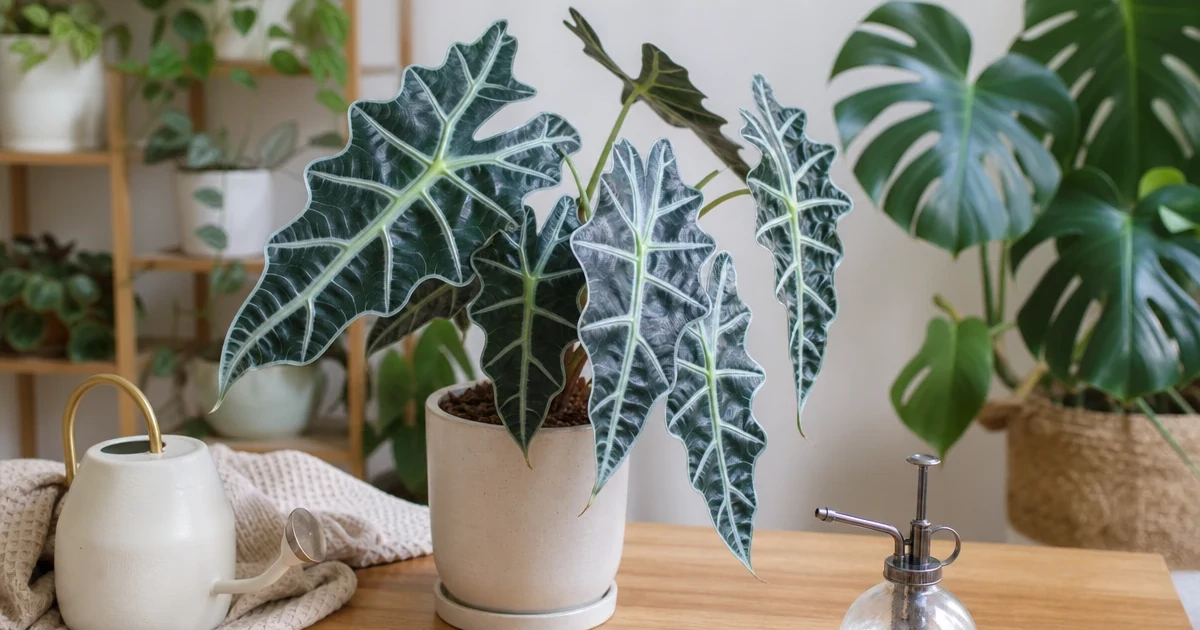
Alocasia is a tropical plant with huge, sculpted arrow- or heart-shaped leaves. Dark glossy leaves with pale veins, velvety “dragon scales”, striped stems — alocasias have become some of the most popular collector plants. They also have attitude: they can suddenly drop leaves or go dormant for winter. Here is how to care for alocasia so it thrives rather than just survives.
Alocasia is a genus of the arum family from tropical Asia and Australia, related to colocasia and xanthosoma. The most common in shops are:
Alocasia needs bright indirect light: 1–2 m from a south window or near an east or west one. Direct sun scorches; in shade the stems stretch and new leaves shrink. Keep it at 20–27 °C, not below 18 °C — cold and draughts trigger leaf drop. Aim for humidity of 60% or more; a humidifier works best. Do not mist velvety types.
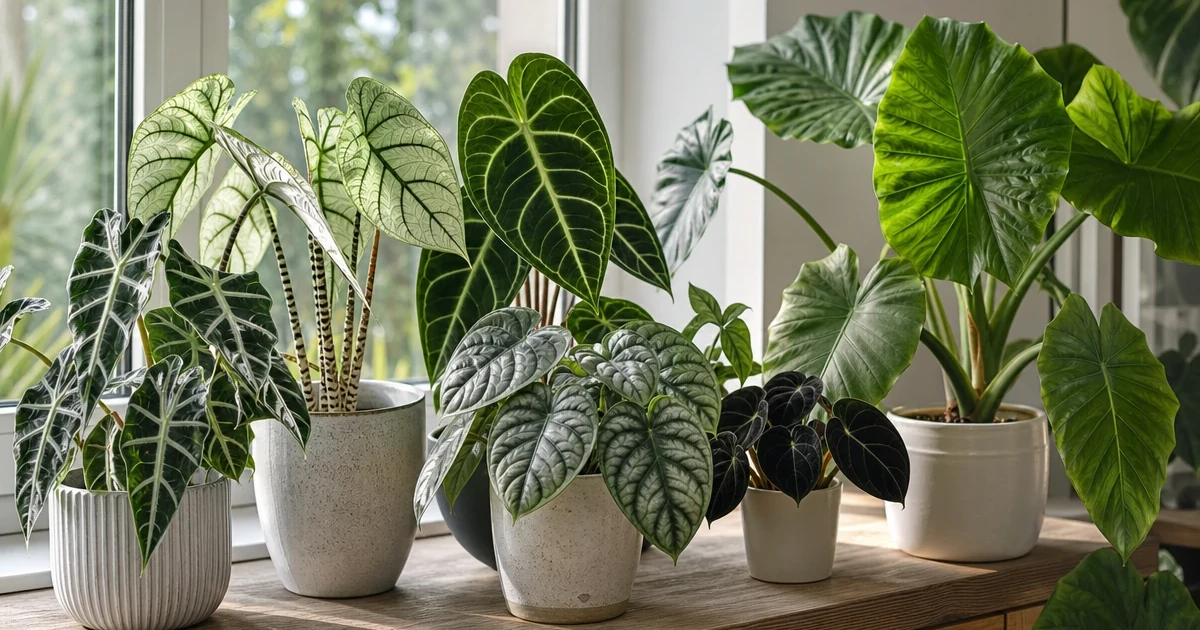
View full-size photoAlocasia types: Polly, Zebrina, Frydek, Dragon Scale, Black Velvet, and giant taro.
Keep the soil lightly moist, never soggy. Water when the top 2–3 cm are dry and always empty the saucer — the rhizome rots easily. Water less in winter when growth slows. Use soft, room-temperature water. Droplets on leaf tips in the morning are guttation, the plant shedding excess water; they contain sap, so keep pets away. Feed every 2 weeks from spring to autumn.
The key is an airy, fast-draining mix: an aroid mix of houseplant compost, bark, perlite and a little sphagnum or coir. Choose a pot with large drainage holes, not too big. Repot every 1–2 years in spring when roots fill the pot. See how to repot houseplants.
Alocasia usually holds only 3–5 leaves: when a new one grows, the oldest yellows and dies — that is normal. In winter, with low light and cooler rooms, some types drop almost all their leaves and go dormant. Do not throw the plant away: the rhizome is alive. Keep it warm and bright, water sparingly so the soil never fully dries, and stop feeding. New shoots will appear in spring.
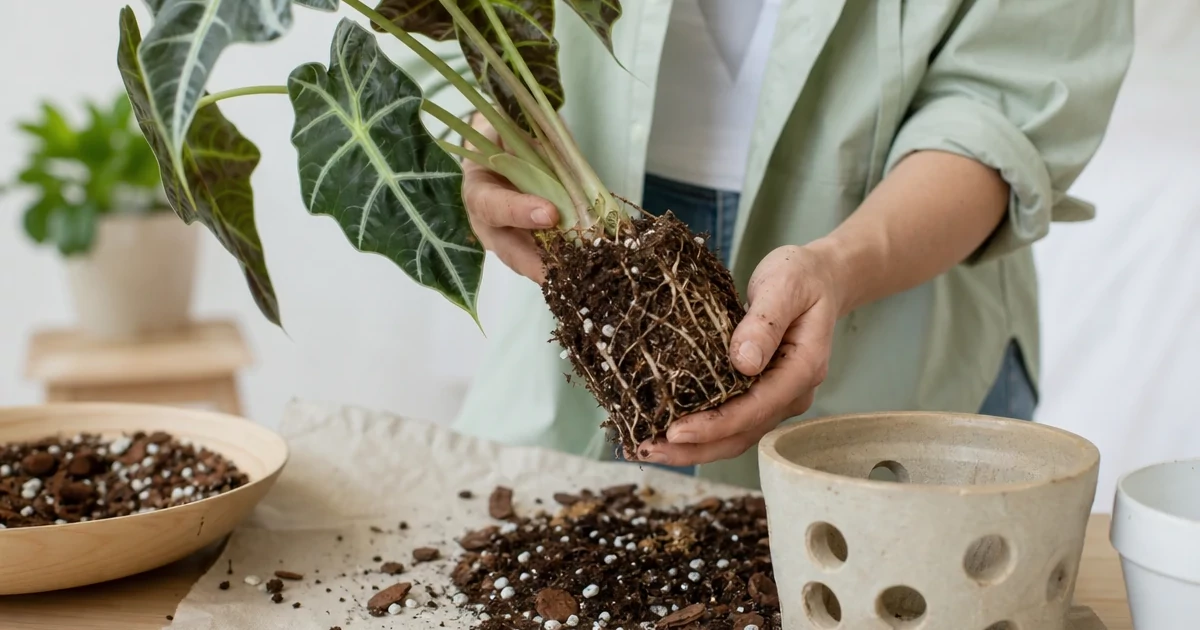
View full-size photoAlocasia needs airy soil and drainage holes in the pot.
More in houseplant problems and symptoms.
All parts of alocasia contain calcium oxalate crystals. The sap irritates skin and eyes, and if chewed causes intense burning and swelling of the mouth. It is dangerous for cats and dogs. Keep it away from children and pets, wear gloves and wash your hands after repotting. Other bold foliage plants: monstera and more foliage houseplants; browse potted plants.
Droplets on leaf tips are guttation — the plant releasing excess water after heavy watering or in high humidity. It is not a disease, just a hint not to overwater.
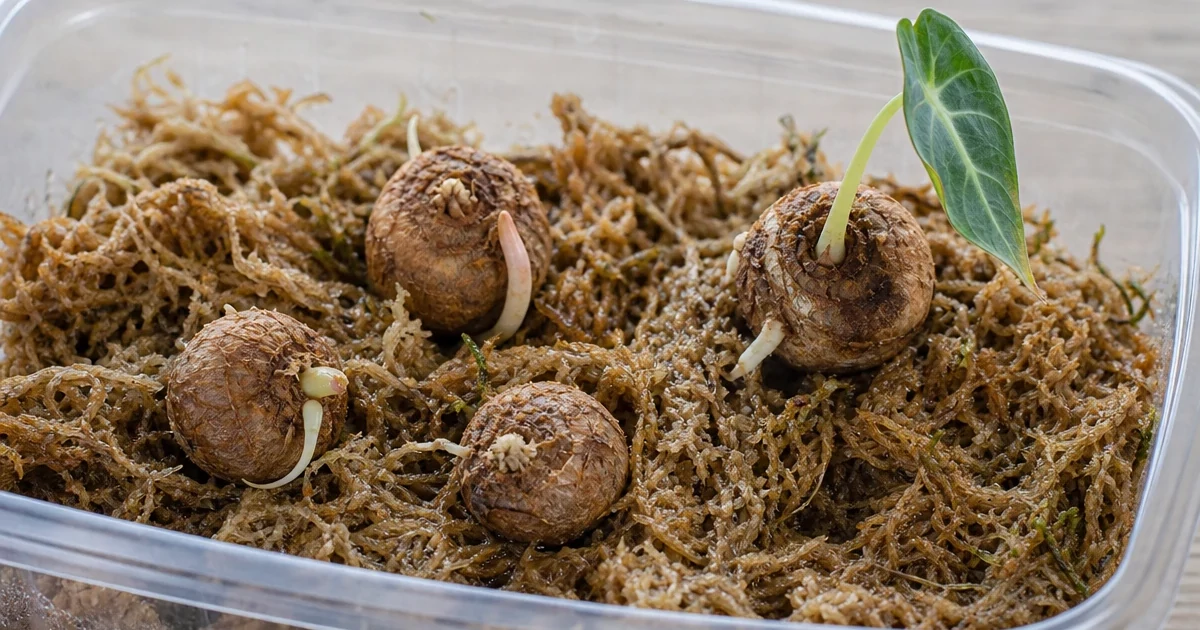
View full-size photoAlocasia propagation by corms in a moist environment.
Usually 3–5. When a new leaf appears, the oldest often dies back.
Yes, if the rhizome is firm and not rotten. Keep it warm and water sparingly — it will regrow in spring.

Author: Maria Svitlovir
Graduated from Taras Shevchenko National University of Kyiv, Institute of Biology and Medicine (2001). BSc in Biology, MSc in Horticulture. Writes about plants, works at a garden centre selecting and repotting plants, and contributes to plant reference guides.
© Kyiv 2026 UFL Flower Shop

Trademark UFL №191476 is used under license of the rights holder.
All rights reserved. Any use of materials without a link to the site is prohibited.

 Birthday
 Hydrangeas