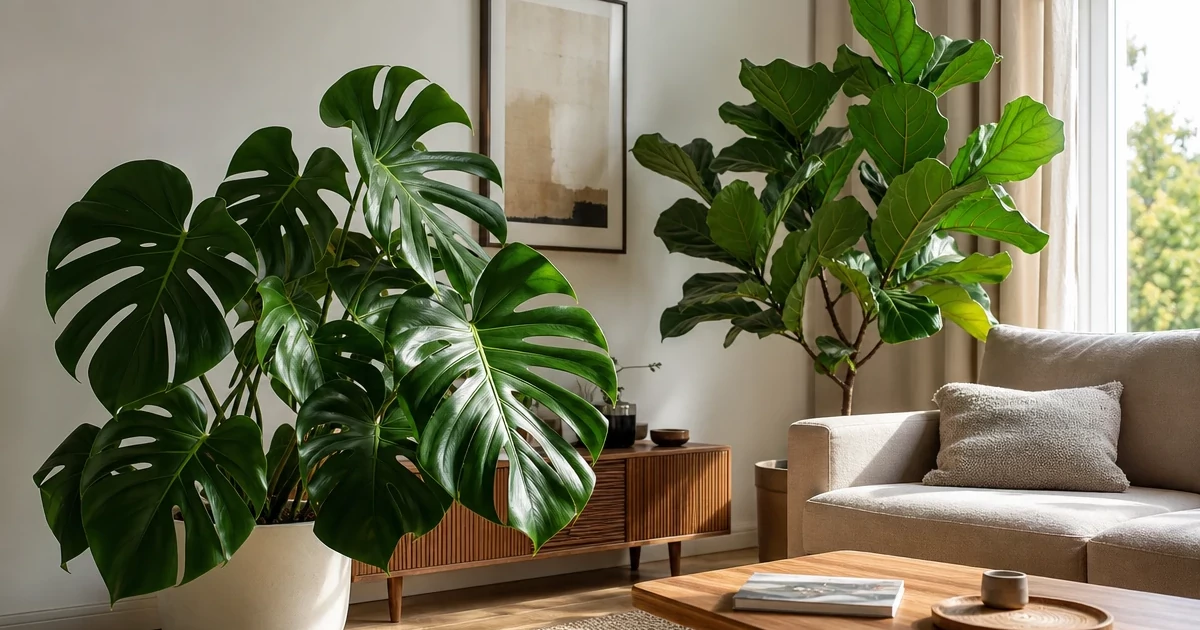
This article was prepared with the support of UFL flower delivery. Houseplants are loosely divided into flowering plants and foliage plants. Foliage plants are prized for their leaves: plain green or variegated, patterned or velvety, feathery or sword-shaped. Many flower rarely or inconspicuously, but they look striking all year, cope better with low light and usually live longer than flowering plants. More plants with names and tips in our houseplant catalogue.
| Plant | Light | Watering | Cats and dogs |
|---|---|---|---|
| Weeping fig, rubber plant | bright indirect | moderate | sap is irritant |
| Monstera | bright indirect | moderate | toxic |
| ZZ plant | shade to partial shade | sparing | toxic |
| Snake plant | any | sparing | toxic |
| Cast-iron plant | shade | moderate | safe |
| Prayer plant, calathea | partial shade | frequent, soft water | safe |
| Spider plant | partial shade to bright | moderate | safe |
| Boston fern | partial shade | frequent, humid air | safe |
| Peperomia, pilea | partial shade | moderate | safe |
| Cordyline | bright indirect | moderate, humid air | toxic |
| Oyster plant (Tradescantia spathacea) | bright indirect | moderate | sap is irritant |
| Croton | sun | moderate | toxic |
| Bay laurel | sun | moderate | toxic |
| Jade plant (money tree) | sun | sparing | toxic |
| Norfolk Island pine | bright, cool winter | moderate | best kept out of reach |
The "indoor Christmas tree" from Norfolk Island, one of the few conifers that grows well indoors. It likes bright light and a cool winter (10–15 °C) and hates dry heat from radiators. At the holidays you can decorate it with light ornaments instead of a cut tree.
Native to tropical Asia and Oceania, with variegated sword-shaped leaves in green, pink and purple. It needs warmth (not below 16 °C), humid air and protection from draughts. It is often confused with dracaena, but cordyline leaves have stalks and its roots are white.
A Mediterranean tree that reaches 1.5–2 m in a tub. It takes clipping well and can be shaped into balls, pyramids and standards. Put it on the balcony in summer and keep it somewhere bright and cool (5–12 °C) in winter. Its leaves are the familiar bay leaves.
A rosette of stiff leaves, green on top and purple underneath. Small white flowers appear at the leaf bases inside boat-shaped bracts. It is undemanding, but the sap can irritate skin.
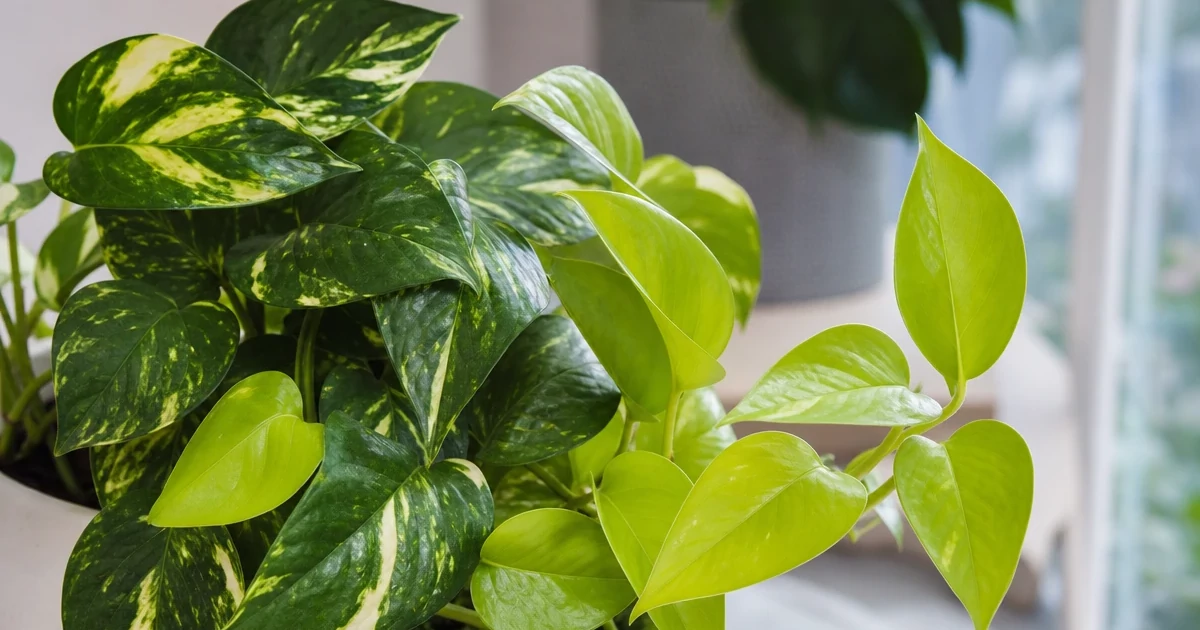
Variegated cultivars have little chlorophyll in the pale parts of the leaf, so they need more light. In shade, new leaves turn green as the plant reverts to its original form to feed better. If an all-green shoot appears on a variegated pothos, ficus or dracaena, move the pot nearer the window and cut out the green stems, or they will gradually take over. Fully white leaves with no green are short-lived; that is normal.
Discover more in our articles on snake plant types, Swedish ivy and carnivorous plants. If you have allergies, see our guide to allergenic houseplants. For one of the most popular vines, see pothos varieties and care.
ZZ plant, snake plant and cast-iron plant, which tolerate shade and infrequent watering.
Spider plant, prayer plant, calathea, Boston fern, peperomia, pilea and cast-iron plant.
Choose a green friend among our houseplants with delivery in Kyiv from UFL.

Author: Maria Svitlovir
Graduated from Taras Shevchenko National University of Kyiv, Institute of Biology and Medicine (2001). BSc in Biology, MSc in Horticulture. Writes about plants, works at a garden centre selecting and repotting plants, and contributes to plant reference guides.
© Kyiv 2026 UFL Flower Shop

Trademark UFL №191476 is used under license of the rights holder.
All rights reserved. Any use of materials without a link to the site is prohibited.


 Birthday
 Hydrangeas