
Gloxinia is one of the showiest flowering houseplants: large velvety bells in purple, red, pink or white, often speckled or white-edged, open above a rosette of velvety leaves. The secret to generous flowering is the right rhythm: active growth in spring and summer and a proper winter rest for the tuber. Here is how to care for gloxinia through the year.
Florist’s gloxinia is Sinningia speciosa, a tuberous plant of the gesneriad family from Brazil. The name “gloxinia” comes from an older classification and has stuck. The plant forms a round, flat tuber that sends up a rosette of velvety leaves each spring. Varieties may be single or double, solid-coloured, white-throated, edged or speckled.
Gloxinia needs plenty of indirect light — 12–14 hours a day. An east or west window is ideal; a south one needs shading at midday. Without enough light the stem stretches, leaves point upwards and buds fail to open. A grow light helps early in the season. Keep it at 20–25 °C while growing and flowering.
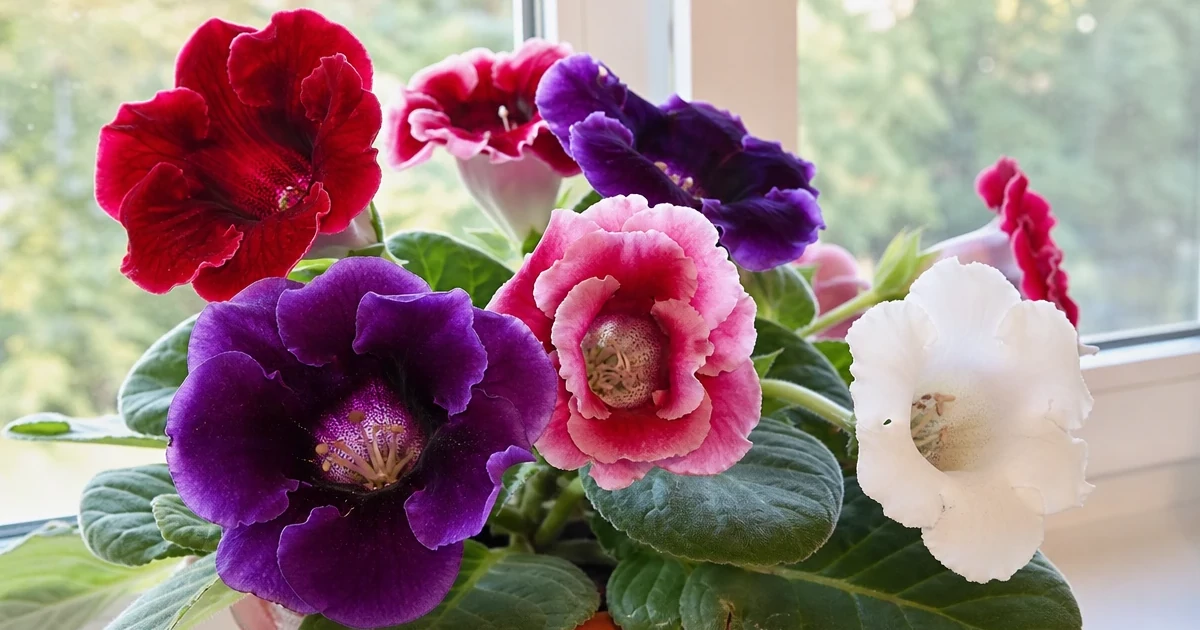
View full-size photoGloxinia blooms above a rosette of velvety leaves.
Water with tepid, rested water around the edge of the pot or into the saucer, keeping water off the tuber, leaves and flowers — droplets spot and rot the velvety surface. Keep the soil evenly moist but never waterlogged. Do not mist; raise humidity with a pebble tray instead. From the first buds until flowering ends, feed every 10–14 days with a high-potassium flowering-plant fertiliser.
Strong plants can flower twice a season. When the first flush is over (usually in June), cut the stem back, leaving 2–4 lower leaves. Side shoots will grow from the leaf axils — keep the 1–2 strongest. Feed the plant and new buds appear within weeks. The second flush is usually smaller.
In autumn, around September–October, gloxinia stops flowering and the leaves gradually yellow — it is preparing to rest. Reduce watering, and once the top growth has fully died back, cut it off, leaving a 1–2 cm stub. Then either:
Dormancy lasts 3–4 months. First-year seedlings sometimes keep their leaves through winter — do not force them to rest.
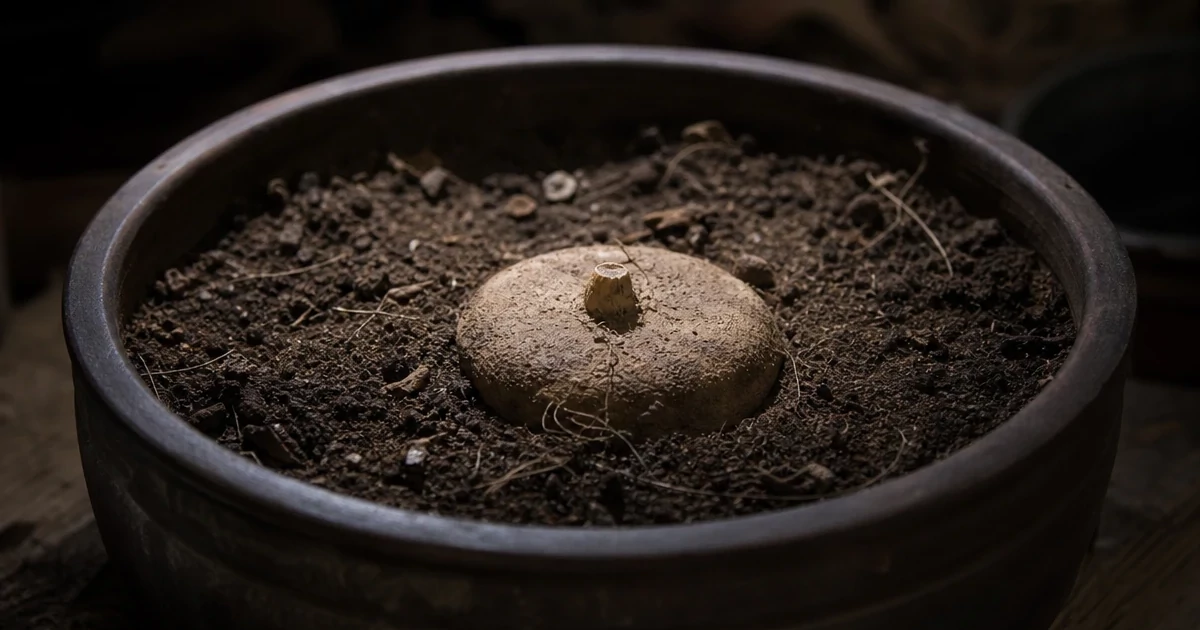
View full-size photoGloxinia tuber stored dormant for winter.
In late February or March shoots appear on the tuber. Inspect it: cut any soft or rotten patches back to healthy tissue and dust with charcoal. Plant the tuber hollow side up in loose, rich African violet or flowering-plant compost, covering it by just 1 cm. Use a wide, shallow pot 4–6 cm wider than the tuber. Water sparingly until leaves appear. See how to repot houseplants.
More in houseplant problems and symptoms.
Gloxinia (sinningia) is considered non-toxic to people, cats and dogs, so it suits homes with pets. It is often given instead of a bouquet — a flowering plant that lasts for months. More ideas: winter-flowering houseplants and houseplant names and care; browse potted plants.
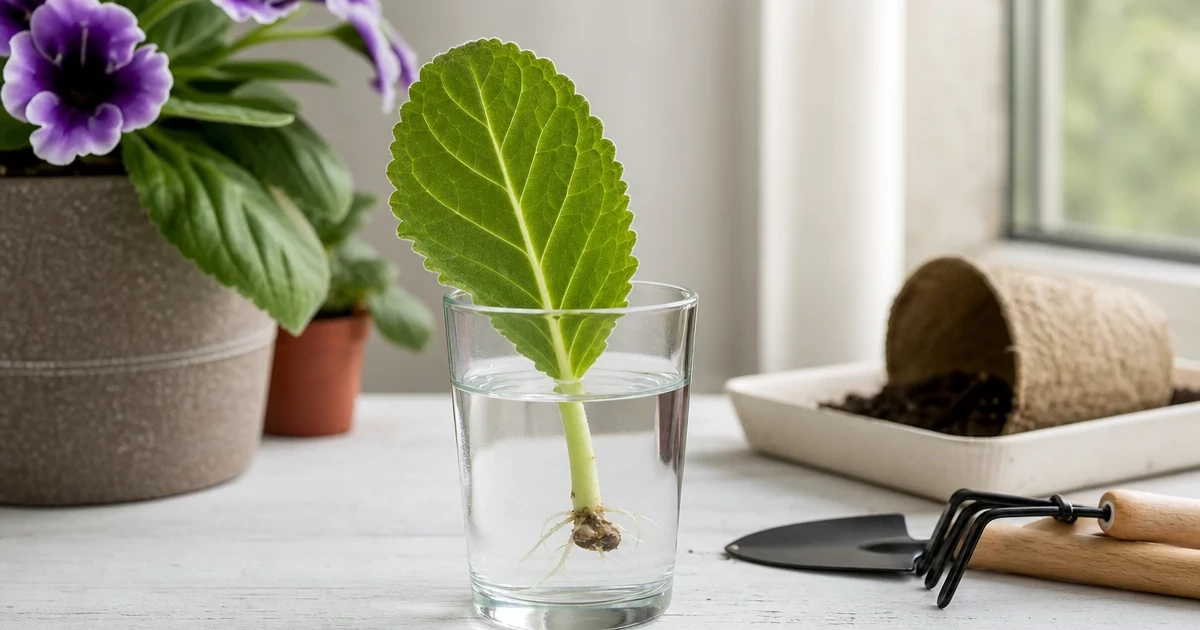
View full-size photoGloxinia leaf cutting forming roots and a tuber for propagation.
Usually in September–October, when the leaves yellow after flowering. Dormancy lasts 3–4 months.
Mature plants need it; without rest the tuber weakens and flowering declines. First-year seedlings are the exception.
Too little light. Move it somewhere brighter or add a grow light; a leggy stem can be cut back.

Author: Maria Svitlovir
Graduated from Taras Shevchenko National University of Kyiv, Institute of Biology and Medicine (2001). BSc in Biology, MSc in Horticulture. Writes about plants, works at a garden centre selecting and repotting plants, and contributes to plant reference guides.
© Kyiv 2026 UFL Flower Shop

Trademark UFL №191476 is used under license of the rights holder.
All rights reserved. Any use of materials without a link to the site is prohibited.

 Birthday
 Hydrangeas